

Tanya Byrne – Follow Me Down
Posted 13th November 2013
Category: Reviews Genres: 2010s, Mystery, Social
4 Comments
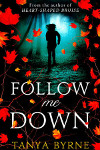
Down in the woods where everyone goes…
Publisher: Headline (Hachette)
Pages: 454
Type: Fiction
Age: Young Adult
ISBN: 978-0-755-39307-7
First Published: 9th May 2013
Date Reviewed: 7th November 2013
Rating: 4/5
Adamma started school at Crofton College in England when her father, a Nigerian ambassador, moved country once again. More familiar with the US, Adamma is somewhat surprised by the reality of the British boarding school, but she finds a friend in Scarlett, a girl who is obviously not prim and proper but not necessarily bad either. The village in which the College is situated is dinky and quiet, but where there are many young people there is surely to be an issue someday.
Follow Me Down is a mystery that twists and turns, ties itself in knots deliberately, and uses red herrings to the extent you wish other mysteries would whether or not you work it out early on. Told via two time instances – the before and after, that descend towards the two mystery threads simultaneously – the story is a quick read whilst sporting a lot of suspense.
Let’s deal with the mysteries first. Byrne has made a valiant effort to stop the reader from truly working them out, in particular the later of the two, and it must be sad that even if you do work them out, it’s quite likely you will still doubt yourself. Byrne’s use of twists and the structure that affords a lot of ambiguity are two of the highlights of the book and worthy of inclusion in the ‘reasons you should read this book’ stakes. Some may find the twists and red herrings annoying, and it must be said that the ending is just as ambiguous as the overall structure – there is an ending but a lot is left unsaid.
But it’s easy to say that the author’s intention may not have been to shock or surprise as much as to study social conventions and ever-present issues. The ‘initial’ heart of the mystery, a possible rape, whilst surrounded by the ‘thriller’ threads, is studied as though it might form the basis of an essay. The book delves into the reasoning victims can be wary of telling the police what happened, it casts a light on the concept of linking clothing and drunkenness with fault, and it also shows how the perception of other women can be an issue where instead there should be support. This spotlight doesn’t run the entirety of the book, but it does cause you to wonder whether your approach to the story and your belief that it’s a ‘simple’ mystery to be enjoyed, is correct.
Going back to the ‘reasons you should read this book’, perhaps the most compelling aspect of Byrne’s creation is her handling of culture and contrasts. The origins and cultural influences of the characters mean that Follow Me Down is a true blend, and Byrne makes every effort to get it right. Adamma is from Nigeria but has spent a lot of time in the US – her narration, when she speaks of herself, is naturally peppered with American terms as well as the understandable various comparisons between England and the States. Her American terminology and nature is matched by her Nigerian roots – she often speaks to her mother in Igbo, for example. This is matched by the British characters – when Adamma relates their conversations they always use the British terms for everything. This approach is a delight in a world where a lack of correct dialect is rife, and it means that the parts of Adamma’s nature – her Nigerian birth, her American schooling, her English Sixth Form years – are each given equal baring. As a study in diversity with characters being ‘different’ just because, it is excellent.
There are some flaws in the plan – there are strange turns of phrase and ways of describing actions, for example Adamma lifts her eyelashes instead of opening her eyes, and these seem stylistic choices rather than dialect ones. There is some repetition and curious uses of emphasis. There are occasions where people don’t speak as you’d expect them to – using very colloquial language where they otherwise use an ‘older’ style, for example – and this can be jarring. Yet as a whole the writing is simply different, not bad, and just something to get used to.
It would be fair to say that if you’re going to find Follow Me Down difficult, it’s likely going to be dissatisfaction with the ending. As Byrne ceases use of red herrings and the answer is allowed out into the open, it may not be as clear as you feel it ought to be. It will be obvious what’s happened, in a literal sense, but it may seem as though Byrne is still trying to hold things back. This isn’t a book for people who like stories neatly tied at the end.
Follow Me Down is in many ways abstract. It is ambiguous and written in a style very much its own. But it also packs quite a punch long before the mysteries are resolved and is a shining example of cultural differences in one place done well. It is a quick read whilst not being particularly fast-paced, it explores the thin line between love and hate, and it makes a very good attempt (and is successful in many ways) at confounding the reader.
The best way to conclude is to say this book is like Marmite. You’ll either love it or hate it, but even if you hate the story you will likely love other aspects of it.
I received this book for review from Headline.
Related Books
None yet.
Tom Kizzia – Pilgrim’s Wilderness
Posted 8th November 2013
Category: Reviews Genres: 2010s, Angst, Domestic, Law, Political, Psychological, Social, Theological
2 Comments
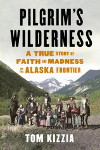
When God is no longer that man in the sky but the father of a family that has no choice but to follow him.
Publisher: Crown Publishing (Random House)
Pages: 296
Type: Non-Fiction
Age: Adult
ISBN: 978-0-307-58782-4
First Published: 16th July 2013
Date Reviewed: 30th October 2013
Rating: 4/5
Tom Kizzia recounts the story of the ‘Pilgrim’ family who appeared at first to be naïve wannabe pioneers in rural Alaska, but later proved to be problematic to the National Park Service, the local residents of McCarthy, and a group of people with a horrific secret.
Pilgrim’s Wilderness is the generally well-paced and well-written tale of a family that was not all what they seemed to be. Including tales of what came before McCarthy, and his own then-present reporting of the Pilgrims for the newspapers, Kizzia creates a strong and shocking story, reminding you that appearances can be deceptive.
Kizzia’s approach to the work is one of the biggest, if not the biggest, recommendations for it. Kizzia’s approach is both biased and highly objective. And whereas a bias can often detract from unpersonal non-fiction, here it is necessarily apt. The actions of Bob Hale (‘Papa Pilgrim’) warrant an incredible and understandable bias against him, and it is to Kizzia’s credit that he, the writer, stays away from slandering. Kizzia could not help but be biased, it would be intolerable any other way, and it is interesting that it may take the reader a while to realise why.
This is because for a long while the issues are all to do with land ownership and the way many dislike governmental take overs of land in the name of preservation. Kizzia is fair here, telling the reader why the Pilgrims had a good claim, and why the National Park Service had a right to feel irritated. He includes the various thoughts of the long-term residents of McCarthy. But the reader who is still on this section, if they haven’t realised where the Pilgrim’s tale is headed, may see Kizzia’s bias as unfair – it will all depend on which side of the debate (parkland or private property) they fall. Kizzia includes, one can assume, the whole debate, but he is bias towards the National Park Service whilst giving the Pilgrims’ opinions plenty of time.
Depending on how much prior information the reader has, it may only be after other details of the Pilgrims’ lives begin trickling into the narrative that Kizzia’s viewpoint can be truly appreciated. Providing all sides and quoting everyone when your story has a darkness to follow is admirable, and for all Papa Pilgrim and others’ thoughts on Kizzia’s reporting, he has strayed from the traditional picture of the entertainment-creating out-for-himself journalist.
Quotations are another element that should be noted. Kizzia’s book is full of the words of others; his sources are identified, his commentary backed up, and his views of people as objective as possible when possible. Crucially, he includes the words of the Pilgrim children, and rather than just telling the reader that they changed, he often writes in a way that almost hands the narrative over to them. It is obvious from the specifics of the writing style that Kizzia went straight to the primary sources whenever he could.
By now it will come as no surprise to say that the darkness in the tale is one of abuse. Whilst Papa Pilgrim based his life and rulings, in his mind, on a literal reading of the Bible, this was a man who acted in every way but the way his God wanted. Kizzia does not gloss over facts.
Referring once more to Kizzia’s style, the author has made a brilliant contrast, showing that whilst the Pilgrims did not live a truly Christian life (at least not so long as their father was controlling them) there are other families of similar appearance who do. When the Pilgrim children finally saw freedom it was in the form of a family who were not so different. The Buckinghams wore (and presumably still wear) the same sorts of clothes, share the same deference to gender roles, put God first, live in a cabin, and promote the virtuous way of life – but they are as different to Papa Pilgrim and his views as chalk and cheese. It is perhaps surprising to hear that the Pilgrim children did not escape their father to be introduced to the mainstream way of life but simply to a positive version of their own, and yet it feels very appropriate. These children were so far from twenty-first century life with its television, video gaming, sexual liberation, and shopping, that there is no saying how they would have faired, but the Buckinghams’ similar (but true) focus on God enabled them to stay true to who they had become. In any other book, the Buckinghams may have been regarded as a worry, given the Pilgrims’ background, but Kizzia shows that just because people do not meet expectations, that they share a visual similarity to problematic cases, it does not mean they are the same.
There are but a few places where Kizzia’s work is brought below masterpiece level. There is a lot of superfluous information in the book, of other people’s pasts and of Alaska, that could have been edited out to keep the pace of the narrative going – especially when those people play only a bit-part. There is a constant switch back and forth between eras of the Pilgrim family’s movements that becomes confusing to follow. And there is the unfortunate story of Kizzia’s wife who died from cancer. Sally’s life is of course important to discuss, but the tale of a law-abiding beloved wife who died of cancer included in the story of a lying, cheating, sexual and domestic abuser who raped his children and had no connection to Sally, is out of place. A memoir would be wonderful.
But, as suggested by this review, the work is, as a whole, an excellent one. Kizzia has given a long-lasting voice (as opposed to disposable daily news) to the children and wife of Bob Hale, as well as a voice to McCarthy. His handling of the subject matter and his approach to it are superb and it is safe to say that this book is one that won’t leave you any time soon.
Pilgrim’s Wilderness suggests reflection, asks for empathy, and relates triumph in the face of adversity. It is a difficult book to read, but it is a story that begs to be heard.
I received this book for review from Crown Publishers.
Related Books
None yet.
Debbie Dee – Tiy And The Prince Of Egypt
Posted 18th October 2013
Category: Reviews Genres: 2010s, Adventure, Domestic, Historical, Political, Romance, Social
2 Comments
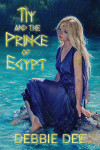
A fine story to introduce readers to ancient Egypt.
Publisher: (self-published)
Pages: 275
Type: Fiction
Age: Teen/YA
ISBN: 978-1-49230-609-2
First Published: 27th September 2013
Date Reviewed: 16th October 2013
Rating: 4/5
Twelve-year-old Tiy went to the bank of the Nile with her parents to watch the Royal barge as it sailed past, but when her curiosity wasn’t sated by the far off sight, she ran further downriver for a better glimpse. Hot on her tail was a sandstorm. As the prince and his friends leave the barge to play, Tiy has a choice to make – use her knowledge to save them and potentially harm herself, or leave them to their fate. She chooses to save them and her act of selflessness will be rewarded in ways she would never have imagined.
Tiy And The Prince Of Egypt is a story to fill in a gap history forgot. In writing her tale, Dee has relied on the history she was able to find (this is suggested in the author note) and constructed a story for young readers from what was left out. The target audience means that the book is by nature quite simple, lacking in detail, and often convenient.
And that is the way it should be. For the older reader, who must be referred to as this reviewer is one, the book may prove an incredibly easy read, but it would be impossible not to say that Dee has written something that is likely to open up the world of ancient history to her young audience. From the features of the story, one couldn’t recommend this to young children unless they were advanced for their age, but for the slightly older reader the book should prove appealing.
Just as she did in The Last Witch, Dee doesn’t coddle her reader. The violence of history, such as punishment for treason, is included as it surely would have been in the day – discussed as simply as if it were a question of who wanted coffee, and carried out without further thought.
It is this, along with the romance in the book, that sets it up as an older child’s read. There is no sex in the book, but there are scenes that might invite questions. The romance is drawn out and full of all the hearts and flowers. The theme of love envelopes the entire story; the characters are seventeen by the end of the tale.
There is not all that much action in the book, a lot of the time is spent on Tiy’s thoughts and day to day life with Amenhotep, but what action there is is thrilling. And whilst Tiy can be foolish and unthinking, she is generally a strong person.
What brings the book down a few notches are the errors and uses of modern day language. Perhaps many readers will not notice the language, but the keen historian will. The errors are of course a bigger draw back here than they might have been otherwise due to the target audience.
Besides the errors, the book is a fine story that will delight any reader looking for boys, adventure, royal status and to be a little awed. It is as much a fantasy as a regular story as much of what happens would never happen in real life, but reality wouldn’t be as appealing.
Tiy And The Prince Of Egypt blends a good dose of history with fun fiction and the sort of fantasy you look for.
I received this book for review from Sage’s Blog Tours.
Related Books


Andrew Blackman – On The Holloway Road
Posted 11th October 2013
Category: Reviews Genres: 2000s, Commentary, Law, Philosophy, Political, Social, Spiritual
5 Comments

A trip for freedom.
Publisher: Legend Press
Pages: 202
Type: Fiction
Age: Adult
ISBN: 978-1-90655-808-2
First Published: 2009
Date Reviewed: 7th October 2013
Rating: 5/5
Jack lives a monotonous life. He wakes up in his mother’s house, tries to continue writing his novel, fails, goes out every now and then, rinse and repeat. One evening he decides to eat a dreary kebab in a dreary shop but his meal is interrupted by Neil Blake, a man of a similar age who has led a more colourful, slightly illegal life. Whisked away by Neil’s friendly nature, Jack finds himself at pubs and parties. Then Neil suggests a trip to Scotland.
On The Holloway Road is a clever and well written book, inspired by Kerouac’s On The Road, that deals with the themes of life and freedom. Written in hindsight from Jack’s perspective, the story is slow, aptly lazy in its pace at times, and a little satirical.
The characters are complete opposites, and not supposed to be liked particularly. Neil is impulsive, he dislikes any limitations placed upon him by outsiders, and he is full of charm, but he can be thoughtless and selfish. Indeed he would laugh at being told to think about repercussions – the reader is likely to think ahead and question Neil’s decisions, and it is exactly that action that Neil would denounce. Neil lives in the moment, lives for freedom, has experienced the other side of the coin and sees its flaws. In comparison, Jack has little will, in fact what will he does have is a side effect of his spending time with Neil. Jack is content in his monotony, his typical life that fits neatly into the slot, and though he isn’t happy he won’t do anything to change that.
Jack’s overall dullness is a major reason the book is slow. Rather than an error on the part of the author, the pace is a decided upon element that shows you just how different Jack and Neil are. Neil’s dialogues are fast paced and full of words, as Jack says, but it is the difference in nature that allows the reader to see where Jack’s safe life might be too safe, whilst of course showing that Neil falls a bit too much towards the other extreme. The book is very much a character study as well as a different take on Kerouac.
It is character-driven, and it is plot-driven, yet at the same time it would be difficult to say that there is a plot as such. The plot is vastly in the realm of the book’s themes. Blackman has crafted a commentary, a very sharp commentary that strikes at the heart of current political, social, and law elements that protect/hinder (depending on the way you see it) the people of the United Kingdom. Through Neil and Jack, Blackman shows the limits of the people’s freedom, the limits imposed by the government and councils. There are many scenes where Jack finally lets go a little, Jack the good lawful if boring citizen, and is rewarded by a penalty of the exact type the duo are trying to escape. As an example, a trip to a country park costs them £100 in car parking fines when they get back to the car and notice the fine details of the parking space.
Freedom here is woven into the larger political context. The story shows the differences between someone who is institutionalised, or just used to, the way of the land, and another who isn’t. And of course what is interesting as well as understandable is the way it’s the person who has been to jail that wants to be free, especially as it is a freedom in lifestyle that Neil wishes for (in other words Neil isn’t wanting the ability to go and kill someone). It’s the case that everywhere they go, Neil says they are or should be free. The government soon tells them they aren’t.
Leaving my Figaro marooned in the grass, I walked forward to get a better look. Warnings were being shouted through a megaphone. Acts of Parliament were being invoked. Arrests were being promised. The appearance of fairness, of reason. Disperse now. A chance to avoid arrest.
And if reason failed, as it surely would, then violence would be justified. Protocol would have been followed. The blows of the batons would have legal sanction, while any retaliatory violence would be grounds for prosecution.
Jack is no one without Neil, and indeed it comes as no surprise to understand, through Jack’s words, that he relies on Neil to ‘live’. It’s one of those things you know instinctively, and it just takes Jack’s words to cement it. And as for Neil, it seems that freedom he wants is nowhere – no matter restrictions or not, you get the sense he will always be against something. In this way the ending is very appropriate, the particular ending for him says a lot about the character and what Blackman is trying to say.
To refer to the inspiration, Kerouac’s On The Road is used both behind the scenes, so to speak, and in the story as an element in itself. Jack and Neil listen to the audio book whilst travelling; it is almost a double usage of the work, between the tape cassette and Blackman’s references to it as the author. It forms a lot of the philosophy and quotations are borrowed and reworked so that they fit in with Neil and Jack.
As the book reaches its ending, another clever aspect becomes apparent. The way it is written, the way the story is referenced, makes it seem possible that it could be about Blackman, that it could be about anyone. Twisted into the last chapters is the final resolution – the answer to what happens after the book concludes, there is even a hint as to what happens a lot further down the line. If only Jack takes the chance.
It seems he did, or perhaps he hired Blackman to do it for him as the author clearly knows more than Jack, just as Neil does. Blackman is almost the unbiased third party, the person in the middle of the two.
On The Holloway Road is superb. It is likely to appeal most to British readers, as they will be able to relate to the political details well, but the references to Kerouac and the commentary will interest readers of other nations too. And the theme of freedom is universal as are likely some of the civil elements.
I know the author as a fellow book blogger.
Related Books

Speaking to Andrew Blackman about On The Holloway Road, and A Virtual Love (spoilers included)
Charlie Place and Andrew Blackman discuss life on the road, following in Jack Kerouac’s footsteps, offline and online identity, writing an entire book about a character but never giving them a voice, current climate change activism, and withholding – for very good reason – the endings your readers expect.
If you’re unable to use the media player above, this page has various other options for listening.
Bee Ridgway – The River Of No Return
Posted 7th October 2013
Category: Reviews Genres: 2010s, Comedy, Fantasy, Historical, Romance, Social
5 Comments
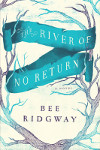
Forward to the past. (Reverse that and you’ll see the inspiration.)
Publisher: Michael Joseph (Penguin)
Pages: 546
Type: Fiction
Age: Adult
ISBN: 978-0-718-176-983
First Published: 28th March 2013
Date Reviewed: 26th September 2013
Rating: 4/5
As Nick was about to die, attacked in battle in the 1800s, he disappeared. He reappeared, alive, in the 21st Century, found by a group calling themselves the Guild. The Guild promises Nick $2million a year and sends him to South America for training where there are fellow surprised time travellers from every decade. The Guild teaches their members how to live in 2013 and then sends them off to use their education. That was fine with Nick, millions of dollars and a free reign sounded – and was – great for ten years, but now the Guild want him to return to headquarters and forget every rule they taught him. The Guild’s enemies are getting stronger, and Nick has a part to play in stopping them.
The River Of No Return is an imaginative and rather funny book that deals with a particular sort of time travel, the sort where you’re not going to meet different versions of yourself and where history isn’t to be changed unless the world is about to end.
The story is contained to a few people and only a couple of different times, meaning that the narration is pretty straight forward. This may mean disappointment for some readers, as other times are referred to and it’s safe to say where time travel is concerned the future is a magnet to our interests, but there appears to be a sequel in the works. In fact it’s worth commenting on the ending of the book. Ridgway creates a crafty ending the likes of which means the story could definitely do with a sequel, but if none were written she’s left you enough information for you to construct a conclusion.
She reminded him of modern women. The way she stood so confidently, the way she met his eye like an equal, the way she spoke unblushingly of the sex she was not having with her cousin.
It takes a good while for the humour to show itself. Indeed the cover and first several chapters do not in any way suggest that the book will be humorous. When it enters it is laugh out loud and rather clever, although there are occasions where it could be considered too much.
So to the affects of time travel on the characters. Nick, the nobleman, fits right into life in the 21st century. So changed is he, so happy with his new era, that his return inevitably results in plenty of thoughts about women, equality, voting, and so forth. And Ridgway creates the ideal romantic partner for him. Yes, it may seem convenient and unrealistic that Julia, the 1800 woman who may or may not be a time-manipulator (unknowingly), is ahead of her era, but Ridgway sets the foundation of the relationship in the days before Nick’s jump, so that it is more a simple case of two like-minded people getting together. Nick may not have been as modern in his youth as he obviously is in adulthood, but the flashbacks portray enough ambivalence to his situation ‘back then’ and enough remembrance of the younger Julia to suggest that, traveller or not, the pair would have got together.
“Demand you back? You’re a full-grown woman. You can do as you choose…” Even before the words were out of his mouth, Nick realized that the sentence he had just spoken only made sense after two centuries of struggle that had yet to happen.
The affects of the 21st century form a lot of the comedy. Like other ‘jumpers’, Nick is trained to be a modern man, with all the knowledge of beyond 1800s history and pop culture that that entails. In preparation to jump back again, to the 1800s, he has to re-train himself in the art of being a nobleman. Modern phrases and cultural references inevitably slip out whilst back in the past, and it happens a lot, but Ridgway’s particular usage of the theme stops it becoming annoying. As said above, the humour as a whole can become too much, but this takes a while to happen if indeed it does at all for the individual reader.
However it must be said that Nick does forget a crucial part of his 21st century life – sex in 2013 involves a foil packet, sex in 1815 involves no discussion of Nick’s new knowledge and it is left out of the book completely. Although this is only one instance of forgetfulness, the potential impact of such spontaneity, which Nick would ‘now’ know about, ought to have been addressed. His partner may be a virgin, but Nick isn’t and his nature suggests he would consider STDs. And as Ridgway has created no space for a pregnancy in her novel, regardless of the fact that a pregnancy is neither here nor there unless the author includes one, Nick would have surely thought of it, and likely his 1800s partner, too.
Julia has courage and guts, but she’s not superwoman. She is the realistic, if such a word can be used, result of a woman from a good, happy background, with a fantastical talent she cannot understand.
The book spends time on the concept and storytelling device of good versus evil, but Ridgway twists it to suit the people she has created. Unless things change drastically in any sequels, this isn’t going to be, and isn’t here, your typical science fiction save-the-world-from-the-bad-guys series. And it’s undeniably refreshing.
The book dips a bit towards the end, becoming, if not predictable, rather convenient. The reader may work the secrets out beforehand, but either way it does have the possibility of changing your thoughts as to whether or not you’d like to read further books about this world. It creates an expectation of an epic continuation but may seem too drastic a change, as such, to some readers. In many ways the sudden unveiling of answers and new plot points is a pity.
But overall The River Of No Return will delight. It will bring embarrassment to anyone who worries about laughing over a book in public, which should be considered a positive factor, and sate the appetites of those who love time travel novels but are a little worn. The River Of No Return is long, but then so is history. And if the title has you in mind of Marilyn Monroe, never fear – that is exactly what happened to Ridgway, too.
Related Books