





Eloisa James – When The Duke Returns
Posted 19th October 2015
Category: Reviews Genres: 2000s, Comedy, Domestic, Historical, Romance, Social
Comments Off on Eloisa James – When The Duke Returns

When baring your knees would result in people thinking you were Tarzan.
Publisher: Avon (HarperCollins)
Pages: ???
Type: Fiction
Age: Adult
ISBN: 978-0-061-24560-2
First Published: 25th November 2008
Date Reviewed: 14th October 2015
Rating: 3.5/5
…So the Duke of Cosway turned up to Lord Strange’s party and bundled Isidore away. Now he’s back, however, and looking worse for wear with his un-Georgian way of dressing and general indifference to social mores, Isidore’s not sure she wants him. Simeon agrees with her that an annulment is best, but there are things to see to in the meantime, namely the stench in his house due to his parents’ lack of care. As Isidore comes to see, Simeon’s not bad looking for his lack of wigs and hair powder, and as Simeon comes to see, Isidore may not be the docile wife he was expecting but he likes her all the same.
When The Duke Returns is the fourth book in James’ Desperate Duchesses series and continues straight on from the previous, Duchess By Night.
This is a good book, on par with the rest if not the best, pardon the rhyme, though it isn’t quite as funny. After a while of thinking I realised it’s meant to be funny, but the subplot of the sewage pipes leaking all over the house leans more on the side of icky. It’s true the start of this series saw cow pat discus, but that was simply silly and not so literally wretched.
The characters, however, are fair as I’ll be repeating later on. Isidore is a fun heroine if misguided and silly, and Simeon, whose first name I’m using regardless of the fact his society says it’s not correct, is a breath of fresh air, somewhat literally, in a world where all heroes up to now have been clad in breeches. His liking for simple clothes means he’s a bit more modern and understandable in the context of our present day. The rest of the characters, the heroes and heroines of the other books ensure we’ve something of a soap opera on our hands and round it off with a wig on top. (The secondary plot here, the lead-in for book five, is Jemma and Elijah. As such there is quite a bit of time spent on them and sidekick Villiers.) The servants also get their time, in particular butler Honeydew whose not-quite-subtle attempt to get his master and mistress sharing a bed affords a smile.
I’d like to address the views of Buddhism and the ‘exotic’ here as I expect some will wonder about what reads as offensive – James writes in context, placing the sorts of views people had in the 1700s into her fiction so the characters are racist and prejudice on occasion as befits their period.
The relationship is average but the sex scenes are well written – comparable to the previous book. The writing on the whole is excellent, a couple of info-dumps aside, and as always you can trust that most of the background context is factual with some artistic license thrown in for good comedic measure.
But the pattern established early on in the series is very noticeable here. Indeed the characters leap off the page, the sex occurs after a fair period of courting, the history is good to read and the books are hilariously funny – but all stories suffer from a lack of conflict when it comes to the conflict – a conflict-less conflict, if you will. The couples argue over… well, this is my point. They argue over nothing at all really, and it’s most pronounced here in When The Duke Returns. Isidore is angry because she wants more say, Simeon changes from being pretty free and easy to wanting some control in domestic affairs, but neither convinces. Yes, they clash a bit and get angry over things as every couple does, but the question of divorce seems more an author convenience, a ploy to keep the book going. They have sex, say it’s not working, talk of divorce, and the cycle begins again.
Ultimately the book is a good read with a pinch of ‘get to the point already’ where the previously fun Isidore becomes annoying and the previously interesting Simeon becomes insipid. The ending is fun but too silly and wrapped up as quickly as Simeon gets wrapped up in Isidore’s skirts.
When The Duke Returns is an okay addition to the series and the sex is certainly steamy, but the format is wearing.
Related Books


Tracy Rees – Amy Snow
Posted 9th October 2015
Category: Reviews Genres: 2010s, Angst, Domestic, Historical, Romance, Social, Spiritual
Comments Off on Tracy Rees – Amy Snow
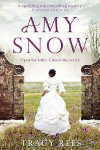
Guided to change.
Publisher: Quercus
Pages: 551
Type: Fiction
Age: Adult
ISBN: 978-1-784-29145-7
First Published: 9th April 2015
Date Reviewed: 8th October 2015
Rating: 4/5
Aurelia, heiress to her parents’ fortune, finds a baby in the snow and takes her home. Her parents are furious but they love their daughter and give in to her pleas to keep the child. And so the girl grows up amongst the servants in the kitchen and later with Aurelia as a companion. Later, Aurelia becomes sick and goes travelling whilst she still can, stating she’ll be a few months but remaining away for longer. Upon her death Amy is thrown out of the house with the ten pounds left to her. Only it’s not ten pounds, it’s more, and Aurelia is sending her on a journey from beyond the grave.
Amy Snow is a long historically-rich story of self-discovery and friendship. Written with close attention to detail it is as much about the Victorian period as it is the mystery.
Because, truly, the mystery isn’t much of one. The story is simple and the answers very predictable but this was the intention – Amy works out the most likely scenario long before she learns it officially; this leaves her able to contemplate what happened otherwise. You could call this a cosy mystery – the answer is not imperative, though of course you want to know it, and the pacing is slow. But that is the beauty of the book.
Why? Because it’s not the mystery you want to read this book for, it’s its atmosphere. Amy Snow is a blending of Jane Eyre and any work of Austen. It is a classic Victorian novel written in the 21st century. It’s not perfect – there are some anachronisms, for example – but this book is the book for any reader who has looked at their finished collection of 19th century British novels and wished those authors were still writing today. It’s quite the feat.
So it’s a slow novel, full of waiting around and going to balls and dressing up. It’s got your evil Lady and your awesome elder who defies convention. It’s got your respectable gentleman suitor and your average shopkeeper’s son suitor. It’s got letters and calling cards and upstairs downstairs and your walking around looking at bonnets in the window and exclaiming at their beauty. Rees has worked hard to get it right. Yes there are anachronisms and even more exclamation marks than the Victorians used (this is something you get used to as you settle down into it) but by and large the writing style fits beautifully. It’s obvious that Rees has spent time working through the differences between modern and Victorian speech, and it lets you get pulled back in time. Amy Snow is not as confident as Elizabeth Bennet and whilst she is in a not dissimilar situation to Miss Eyre she spends too much time on herself; but she can be placed beside these two heroines with ease as far as feelings go.
Before I leave off from the writing I want to show you an example of Rees’ metaphors. She favours a certain sort of style that is quite fun, however much it becomes noticeable later on for its repeated use:
He proceeds to grill Mr Garland as thoroughly as a fish for his views about the railway.
The mystery in this book takes second place to Amy’s self-discovery. Aurelia’s treasure hunt, as it were, is important and ought to be followed, but Amy’s journey towards acceptance and who she wants to be takes centre stage. Amy’s journey whilst journeying is of course set apart from Aurelia. It comes with the baggage of knowing she wasn’t wanted by anyone but her friend and is something Aurelia knew but would never understand completely due to their difference in station. Amy struggles with her sudden fortune. At home with the relatively wealthy but down-to-earth family who accept that she would prefer to wear more modest dresses, she finds it difficult adjusting to her next situation which requires her to mix with the upper echelons and dress accordingly. Rees’ novel is somewhat the Cinderella story but unlike Cinderella, Amy can’t simply abandon her past. She has to learn for herself that Aurelia, by giving her riches, is giving her a choice – she can live as a virtual Lady; she can be amongst the gentry; she could become a servant. Aurelia was a Lady who wanted to be independent, see the world, speak to those lower than her, but could do none of those things precisely because she was a Lady. In Amy she posthumously lives her dream.
The self-discovery is where the main flaw of the book lies, one I must discuss if I’m to be objective. (This book left me in raptures, I loved it and it’s joined my all-time favourites, but I can’t deny there are flaws.) A lot of Amy Snow is composed of naval-gazing. Amy thinks a great deal, she over-thinks, re-hashes, and whilst it’s very realistic and happens to the best of us when in a situation where we have to choose and aren’t sure, or have had a sudden change that we’re adjusting to, it doesn’t work in a book. It becomes boring, as do her moans that she doesn’t want to keep following Aurelia’s treasure hunt. If you’re enjoying the rest of what the book does, it’s not going to be enough to make you abandon it, but it does affect it.
Apart from the anachronisms and exclamation marks there are sentences that use American grammar. As the spelling is American it can be assumed the erroneous grammar is not accidental, though of course it should be.
There are some very convenient second meetings where people Amy leaves behind just happen to turn up where she travels to – absolutely understandable when she’s mixing in high society and it’s a high society person she sees as they tended to stick together across the country, but less believable when it’s your average Joe. In this way you’ll need to put on your Rochester’s-voice-echoes-all-these-miles-away hat – is it lovely or just deus ex machina?
Lastly, there are many proof reading errors, distinct from the copy editing problems.
Amy Snow is a trip to the classics section of the bookshop. It’s a dream of a book for anyone who wants their Victorian-setting 21st century novels to be wonderful. It has the sort of epic story vibes, romanticism, that tend to make half of all readers swoon and the other half label it sappy. It’s both phenomenal and flawed.
This reviewer read the epic story and swooned just as she did when she read Brontë; her opinion on whether or not one should read this book is of course going to be ‘yes’ and for that reason she’s going to suggest you decide for yourself.
Related Books
None yet
Speaking to Tracey Rees about Amy Snow, Florence Grace, The Hourglass, Darling Blue, and The House At Silvermoor (spoilers included)
Charlie and Tracy Rees discuss Richard, Judy, Dickens, Austen, and Brontë – not all at once – coffee houses in Victorian times, landslides and hourglasses, changes to the Yorkshire mines in the late 1800s to early 1900s, and the inclusion of the average person in historical fiction.
If you’re unable to use the media player above, this page has various other options for listening.
E Lockhart – We Were Liars
Posted 28th September 2015
Category: Reviews Genres: 2010s, Domestic, Social, Spiritual
2 Comments

Be aware that whilst I don’t discuss the ending here, I do talk about some of the themes. Some genre tags have been left out on purpose.
If you’re not happy or having trouble you sweep it under the rug and plaster a big ol’ smile on your face.
Publisher: Hot Key Books
Pages: 223
Type: Fiction
Age: Young Adult
ISBN: 978-1-471-40398-9
First Published: 13th May 2014
Date Reviewed: 23rd September 2015
Rating: 5/5
The Sinclair family holidays on their private island every summer. It’s a paradise where they can enjoy their time away from the world. Have fun, spend time together, not discuss anything of importance. Because the Sinclairs don’t do problems. They are normal, perfect, wealthy, and heaven forbid anyone who rocks the boat.
I knew within the first few pages of this book that it was going to be exceptional. I’ve never experienced that before – going in knowing nothing but recognising excellence straight away. The best way to describe We Are Liars is to say that it’s uniquely unique – there’s the thought that all stories have been told, all books now just variations, but this one seems far from it. The basics may have been told but the way Lockhart handles the situations makes it individual. You’ve never read a book like this.
The author favours a particular style of writing. She uses the same colloquialisms as many others but you’d be hard-pressed to be unable to tell it apart from the rest. Lockhart interweaves her prose with the concept of poetry, pieces of sentences set one line after the other without applying the same amount of effort, so to say, as your usual poet does. The poetry aspects do read as poetry but whether there’s rhyming or a steady pace is not important, rather Lockhart uses the concept of poetry to get the reader focusing their attention on the exact words, thoughts, she wants you to focus on, to emphasise her meaning. It’s amazing.
Both plot and characters are important to Lockhart, who greatly favours showing. So much does she show, in fact, that you may well miss the hints she provides as to what happened. But this is not a bad thing. The author abides by the sentiment expressed by one of her characters, who says:
“Someone once wrote that a novel should deliver a series of small astonishments.”
This well describes Lockhart’s method: draw the story out. Let the findings start small, slowly building before the crescendo. Slow it down without increasing the word count. This method means you’ll think you’ve discovered the essence of the book only to realise there’s far more to it, and far more to that and so on. Even though there’s a definite end to the book that rests on plot, mini themes abound and are important.
Most obviously there’s privilege. The whole set up, the private island with its big houses and staff and owners who have enough money to be able to call the island a summer holiday home whilst owning even more property elsewhere, is almost unbelievable. The set up is paradise for rich white people, people who don’t even know the names of the staff who’ve stocked their fridges for years. Lockhart need say little; whilst it may be fun, an escape from the reader’s own life to read about this ideal, it’s also uncomfortable.
Uncomfortable on its own and because of the way white is supreme. You could almost call this book delicious in its handling of the subject of racism. By this I mean there’s a lot of racism but it drifts out, ripples in a soft, slow, motion. It’s the subtle sort, the oh my gosh darling we must be polite but try not to shake their brown hands sort. Thus Lockhart demonstrates the sort of prejudice that can be difficult to call out because it’s deftly handled by those who own it, deniable because it’s kept under the surface. Warnings, such as the hints at what could happen to those who overstep their mark are couched in nice terms that fly over others’ heads.
“Watch yourself, young man,” said Granddad, sharp and sudden.
“Pardon me?”
“Your head. You could get hurt.”
“You’re right,” said Gat. “You’re right, I could get hurt.”
“So watch yourself,” Granddad repeated.
This deals with Gat, the only non-white family member on the island whose presence signals a new episode of sorts to this pristine family. As he says himself, he is Heathcliff, a good person, family – sort of – who is expected to become angry in time and ruin things because that’s what outsiders are supposed to do.
Along with privilege and trying to keep everyone away from the family comes the drive to be ‘normal’. You cannot show feelings, no one is an addict or a criminal, everything must be nice, normal, at all times. The media and the world must see perfection. This has a huge affect on the family. Your father leaves? No tears, pick yourself up. Don’t reference your dead grandmother. Forgetting people is a large part of keeping up appearances – taking down photographs is very important. We see the affects mostly in our narrator, Cadence, who finds it difficult to stay silent, who grieves for longer than she would if she were allowed to express her thoughts. A lot of metaphorical bleeding and falling goes on in this book.
The island is a paradise away from the world that never changes and can’t be ruined by life in general but as Cadence says in one of the many variations of a fairy tale she writes (in order to further explain situations):
If you want to live where people are not afraid of mice [Gat], you must give up living in palaces.
I can’t neglect friendship here. It’s what holds the novel together from the beginning, the emergence of a generation that sees the falsehood in the world their parents have created. The title has as much to do with the teenagers – literally the liars – as with the whole family. The false happiness shrouded by a one-upmanship as the sisters try to gain daddy’s love and property.
If you work out the truth of what happened before it’s revealed you may find it easier, if you don’t, and in a way I hope you don’t because it would lose its impact, it’s both satisfying in a literary way and emotionally draining. Lockhart provides all the answers, preferring to restrict vagueness to the middle of the story, leaving the end complete. You need to know what happened to understand a lot of this book and to appreciate what Lockhart is saying about impact.
We Were Liars is awesome. Individual, beautiful, wretched, poetic and embedded in life as much as it’s a blissful escape from it. Let the prose warm you as the story leaves you chilled. Even paradise must face reality.
Related Books
None yet
Amy Stewart – Girl Waits With Gun
Posted 16th September 2015
Category: Reviews Genres: 2010s, Crime, Domestic, Historical, Social
2 Comments

Taking on a rich lout.
Publisher: Houghton Mifflin Harcourt
Pages: 416
Type: Fiction
Age: Adult
ISBN: 978-0-544-40991-0
First Published: 1st September 2015
Date Reviewed: 15th September 2015
Rating: 3/5
1914: Constance and her sisters were riding their buggy when a car hit them. The owner, the manager of a silk factory, is unwilling to pay the damages and soon the girls find themselves being harassed by his group of thugs. The law courts and detectives aren’t interested and there’s little the police can do until a threat is put into action.
Girl Waits With Gun is an historical novel loosely based on true characters. Constance Kopp and her sisters are people history has forgotten. Presumably the beginning of a series, the book focuses on the sisters’ lives before Constance became a deputy.
Though there is of course a lot of almost forced helplessness, warranted for the time, the book goes a long way in showing the way women could on occasion take control of their destinies. Constance, Norma, and Fleurette are quite fearless and whilst Fleurette is flighty, Norma’s seriousness and Constance’s common sense add up to a good team. That it’s based on truth only makes it better. The social elements are well shown – the frustration of not being listened to compounded by a villain who won’t give up. Stewart talks you through the process of the courts and all the things that wouldn’t happen today.
Great is the application of humour. There are some very funny scenes, particularly near the start, that beg to be highlighted. The domestic/social issue Stewart has added, the fate of unwed mothers, holds much promise and is a good feature, as is the way she moves the sisters from the emotional and social isolation their mother’s worries left them living in to a more open environment. (In this respect, aside from Constance’s later role as deputy sheriff, Fleurette is served best, her extroversion suddenly given full reign and her desires to be the centre of attention taking to the stage, almost literally.) The sisters have been written very well; they read as real as they obviously were and interesting enough that you’ll likely want to do some research.
The book is evidently the introduction for a series; there is a lot of information in it. This means all the ground work is set and in all likelihood the next books will be thrilling, but it also means that Girl Waits With Gun is missing the necessary grip it needed in order to keep the suspense up and the plot moving forward at a steady pace. The thrill, the mystery and suspense that should have accompanied the constant threats of Kaufman’s men is not here; instead we have a general lack of the feeling of danger – staying at home, not being watched over enough – and a pacing that’s frustratingly slow.
A lot of the problem is that Stewart has focused this book on the before – the events before Constance Kopp became a deputy sheriff – and has thus had to create most of the back story. There is a lot of detailing and telling, little showing. There is a lot of repetition, odd grammar choices and anachronisms. Had the book been reduced by half it wouldn’t be so noticeable, nor would the plot meander so much.
If you like learning about the era and about women who broke the mould, you may enjoy Girl Waits With Gun, but know that the title relates more to later events, at least as far as exceptions of action go. It’s a fair story but most will want to wait until book two.
I received this book for review from Historical Fiction Virtual Book Tours.
Related Books
None yet
Judy Chicurel – If I Knew You Were Going To Be This Beautiful, I Never Would Have Let You Go
Posted 9th September 2015
Category: Reviews Genres: 2010s, Angst, Domestic, Historical, Social, Spiritual
Comments Off on Judy Chicurel – If I Knew You Were Going To Be This Beautiful, I Never Would Have Let You Go

Hot summers, long titles, and all that life throws at you.
Publisher: Tinder Press (Headline)
Pages: 326
Type: Fiction
Age: Adult
ISBN: 978-1-472-22168-1
First Published: 30th October 2014
Date Reviewed: 7th September 2015
Rating: 4/5
It’s 1972 and Katie has lived in Elephant Beach on Long Island all her life. It’s nothing special, but it’s home for her and her friends. The prospects aren’t great unless you’ve the money and status to bag a better education, and most people end up at the local college. Getting high is pretty much assumed, cigarettes are smoked by everyone, and everyone’s got secrets.
If I Knew You Were Going To Be This Beautiful, I Never Would Have Let You Go is a book somewhere between a novel and short story collection, that looks at life in a fictional town in the 70s and life at the time for those coming of age.
There is a basic plot running through this book but it’s best viewed as a series of vignettes, indeed if you focus on the idea of a novel having a plot and a main character, you’re going to be disappointed. The stories are mainly set over one summer, with breaks for memories and considerations and reports of the future, and whilst you hear everything from Katie she’s no more important than anyone else. Katie may be the one whose thoughts you know and whose future you’re more invested in by virtue of intimacy, but Chicurel has worked on the whole. It would be fair to say that this book straddles contexts – a book for book’s sake, nostalgia, and a bit of a study.
Not a study as in get your pen and paper and write an essay, more a look at the issues of the time. These are teens still getting to grips with who they are, working through that time between childhood and adulthood and, for many of them, they’re trying to work through the poor hand life has given them, though they don’t always recognise it as such. The drugs keep them living life happy and although the future is discussed, told to us by Katie, everyone is living for the ‘now’. It’s best to. They know they’ve few prospects and that’ll be hard getting out, getting away, though there are possibilities. Many will die young through their various abuses. What all these teens do have, though, is friendship. Lots of it, lots of loyalty. There is a bit of a contrast with the kids from ‘the Dunes’. Chicurel shows us the privileged, the teenagers that turn to hippie living, throwaway boyfriends of less privileged backgrounds and protests for things they don’t have knowledge of, teenagers that were always going to end up as rich as their parents and do.
A new thought occurred to me, that women had all this drama, all this waiting and hoping and crying over things we’d been told, raised on, warned about, these monumental milestones that ended up lasting only minutes in our lives and were never, ever as wonderful or horrible as you thought they would be.
In a way it can seem like there’s a lot going on here, but it works in context. Suicides, overdoses; what we would now call ‘care in the community’; secret abortions where names must not be exchanged (the quote above is from such a scene); running away for a better life to never find it; PTSD. Everything is handled well and with respect in every way.
The affect of the Vietnamese war on mental health is the thread that continues from start to finish. A couple of the characters are veterans and dealing with scars, physical, mental, emotional. Not only does Chicurel detail these changed lives, she shows well how people back home might try but can’t quite understand what would have happened. The veterans, both young, behave in ways unconsidered and the easiest way to show you how the teens are incapable of understanding is to say that Katie fancies Luke something rotten, dreams about their lives together, but thinks trying to get him to notice her will work. You see that Luke doesn’t care but it’s not because he doesn’t like Katie, it’s because he’s got little left.
And there is a smigin of a theme of identity, of finding one’s place. Katie was adopted and wonders about her birth mother – what she’s doing, if she misses her child. The title of the book relates to this.
There are chances gained in this book, but not too many. To make everything work out in the end for everyone would be to negate the very real circumstances the book is grounded in.
I think it’s worth stating that there is a lot of swearing in this book and a lot of very casual ‘yeah, man’ language. I’m stating this, particularly the swearing, because it should be seen in context. Chicurel isn’t aiming to shock or offend, rather she’s setting the book in its era, in its place.
If I Knew You Were Going To Be This Beautiful, I Never Would Have Let You Go. gives you something to think about. There’s nothing we can change now, of course, but it makes you think about similar circumstances nowadays and how the way things are, the privilege, the support, hasn’t really changed all that much and should have. It may not have an ending as such and it may be but a set of memories, but it’s a good read. As much as it isn’t a happy book, it is full of sunshine and friendship. That others would dismiss the friendship and say that it’s a bad place be damned.
I received this book for review from the publisher.
Related Books
None yet.


