




Jane Austen – Sense And Sensibility
Posted 11th May 2010
Category: Reviews Genres: 1810s, Romance, Social
1 Comment

Before she wrote as Jane Austen, one of England’s most famous writers was entitled “A Lady”.
Publisher: (Numerous, but I’d wager Vintage would be a good one)
Pages: N/A
Type: Fiction
Age: Adult
ISBN: N/A
First Published: 1811
Date Reviewed: 30th April 2010
Rating: 3/5
Having now read Pride And Prejudice and Persuasion it was only right I continue on in my task to become well acquainted with each of Austen’s works.
Elinor and Marianne are two very different sisters with very different tastes in men but neither of them realise that what seems to be is not always what is. When Elinor falls for Edward Ferrars and Marianne for Willoughby the future looks bright for both of them but they live in ignorance of the secrets of their lovers.
It is quite clear from the writing and plot development that this is the work of a person still coming to understand themselves as a writer. At 20 years of age and in a society where people tended to keep solely to their communities it’s understandable that Austen’s work would be less polished than many debut writers of today; however that’s not to say it’s awful, there may well be some awkward moments where better editing would have sufficed in bringing the story to a higher level, but the overall quality speaks of promise rather than imminent failure.
The issues to be addressed therefore are as follows: the storyline. It takes a good third or so of the book for the story to pick up and gain momentum and indeed any reasons for continuing. The story drags its feet behind the family on their various trips to and from their friends’ abodes with no sign of being anything more than a look at a number of incredibly regular and boring existences. Austen should have combated this by inserting more points of interest, as she later did for Pride And Prejudice.
The other issue is confusion, and I have found this to be discussed in biographies so I know that my saying so is not completely in error. Austen seems not to know whether she likes Elinor or not. Elinor comes across as a sensible, kind soul and then suddenly turns round and tells her sister not to write to their mother because she is writing to their mother already. It may be that at the time Marianne was in the full throws of passion for Willoughby but the way in which Elinor communicates her response is downright nasty and by that very effect confusing. It comes without warning.
Something that Austen excels in, however, is in articulating rivalries and the eternal struggle women have had with each other when it comes to loving the same man. She tells us from the beginning when a character is perhaps not telling the full truth in order to be spiteful, and then proceeds to cleverly trick us into not believing her (Austen) before bringing it all together nicely, but without any hint of “I told you so”.
Austen, as in her other novels, presents age-old issues between the relations of men and women. Her male characters are as dastardly as any character in a British soap opera (I’m thinking of Eastenders, since you ask) and as confusing to women as many men in real-life (and probably British soaps too).
There is not much time given to describing locale although in a way that’s an asset because it lets you form your own imagination while concentrating on the action, or lack of it. Sense And Sensibility, perhaps more so than Austen’s later novels, is character based. With fewer characters than some of her novels but at the same time with more issues presented, it all comes together, after that first dull third, to create a busy narrative.
There are some fantastic quotations to be had in this book:
The ivory, the gold, and the pearls, all received their appointment, and the gentleman having named the last day on which his existence could be continued without the possession of the toothpick case, drew on his gloves with leisurely care, and bestowing another glance on the Miss Dashwoods, but such a one as seemed rather to demand than express admiration, walked off with an happy air of real conceit and affected indifference.
But of the writing otherwise I’m afraid I have to revert back to the negative, at least for the most part. There are a few errors that could’ve done with a once over and throughout the book there seems a problem with was/were and gave/given. I can’t say this for certain, because I know that the book is set mostly in the country and people quite possibly spoke very differently there at that time but it is difficult to read a book by someone held in esteem when they are delivering dialogue, of people with money, that reads like the spoken word of people nowadays who are considered lacking in education. To read sentences beginning with the like of “you was going to” and “I have gave him” makes for a distraction from an otherwise engaging story. So I would like to be able to trust that this is simply the cause of accents and not something that should have been vastly edited.
With Sense And Sensibility, Austen obtained on a big undertaking, to write her first full-length novel, and to fill the pages with a work that would stand equal in entertainment on shelves dominated by male authors. That she succeeded is far from debatable but that this is the best example of her writing is not. Sense And Sensibility is an average novel but one which proclaims the possibilities for later perfection – which as we all know, happened.
Related Books


Jane Austen – Pride And Prejudice
Posted 6th May 2010
Category: Reviews Genres: 1810s, Romance, Social
1 Comment
Does one ever have a need to introduce Austen? I would say not. But I will say that for once I am damned proud to be English.
Publisher: (Numerous, but I’d wager Vintage would be a good one)
Pages: N/A
Type: Fiction
Age: Adult
ISBN: N/A
First Published: 1813
Date Reviewed: 13th February 2010
Rating: 5/5
Pride And Prejudice has delighted readers for almost two hundred years. It is studied in schools (a pity because it may mar an otherwise potential fan’s interest) and discussed on a consistent basis. The expectation of a thorough review is monumental.
Elizabeth Bennet first comes into contact with Mr Darcy through her family’s new neighbour, Mr Bingley. The Bennets are a modest family so when it appears Mr Bingley has taken a fancy to daughter Jane they are astonished, but not as much as by the manner of Mr Darcy who appalled them all with his pride and assuming behaviour. Mr Bingley seems too good to be true and so it appears he leaves the county suddenly. Meanwhile the Bennets have trouble in the form of their cousin, who has been made heir to their home, and the youngest daughters who have discovered pleasure in the attention of soldiers. Elizabeth can never forgive Bingley for what he did to Jane and doesn’t particularly want to meet Darcy again but somehow he just keeps turning up. Connections and manners may not be what they seem.
Pride And Prejudice is one of those novels you should read if you’ve developed indifferent feelings towards it due to the publicity. What is said of the plot, writing, and author, even if detailed, really does not articulate just how good a novel this is – and that on various levels. You can assume I was one of the indifferent many, and it was only through my own self-imposed goal to read a number of modern classics that I got around to reading it.
Austen wrote of and during an era where people could be quite pompous and women, though able to speak, cautioned not to make a fuss. Austen herself turned this notion on its head, her views on such subjects are clearly explained through the use of her characters, but also in the way she addresses herself as an author within the pages. Not only does she show an understandable lack of compassion for the pride of the middle classes but she sets out to make humour of them without being rude. She sees through falseness in a way that is appealing today – whatever you may feel towards any one character, Austen feels too. Many of her peers would likely have shunned this work, while others who suppressed their feelings on life would have rejoiced in it.
It is perhaps in wit that Austen shines most. She laughs with Elizabeth at narrow-mindedness and gives duologues an oft glittering complexion, an example of which can be seen here:
“Your mother insists upon your accepting it. Is it not so, Mrs Bennet?”
“Yes, or I will never see her again.”
“An unhappy alternative is before you, Elizabeth. From this day you must be a stranger to one of your parents. Your mother will never see you again if you do not marry Mr Collins, and I will never see you again if you do.”
Elizabeth is a well rounded and likeable character, she would fit into 21st century life easily and this is what gives her her longevity. Mr Darcy would be a rival to Edward Cullen of Stephenie Meyer’s Twilight saga had he been written recently as he has the same brooding qualities that cause young women’s hearts to melt to this day. On that note it is unfortunate that most young people nowadays will afford Pride And Prejudice none of their time whether they study it or not.
Austen revels in descriptions. She provides a clear picture of settings in the book; it’s easy to create the scenes in your imagination. It also helps that most of her characters are fully realised in that she supplies knowledge of their major personality traits and uses the bare basics of eternal stereotypes as a foundation. Because she is so transparent in this regard it doesn’t matter that not all the book is set in summer – you come away from your sittings feeling as though the sun has been shining each and every time.
Sometimes, old English aside, it appears as though Austen could have benefited from a good editor. Hyphens are used at the start of sentences and there are occasions where semi colons are too frequently employed. This becomes quite a distraction, as such practises would be sent back to the drawing board today. And that is the only bad point of the book. The editor of the version I read (Penguin Classics circa 1972) deleted some of the place names, which was rather annoying, but that is not Austen’s fault of course.
Pride And Prejudice is a colossal stake in our literary hierarchy and it has, rightly so, defined somewhat what good publications should be. The stereotype it has been given is apt. This is a splendid book and long may it continue to delight.
Related Books

Stephenie Meyer – Breaking Dawn
Posted 29th April 2010
Category: Reviews Genres: 2000s, Fantasy, Romance
1 Comment

Stephenie Meyer is still everywhere and it looks like that will be the case for some time yet.
Publisher: Atom
Pages: 699
Type: Fiction
Age: Young Adult
ISBN: 978-1-905-65428-4
First Published: 2008
Date Reviewed: 14th December 2009
Rating: 4.5/5
Breaking Dawn is the massive final chapter of the saga. It saw quite a change from the previous books.
So Bella agreed to marry Edward, and marry they did, a lovely if over-the-top (for Bella’s sensitivities) ceremony in the Cullen house attended by the usual everyday mix of humans, werewolves, and vampires. The honeymoon was lovely too, courtesy of Esme, but things aren’t destined to stay perfect when a human is in love with a vampire, no matter how many trials they’ve got through. Bella thinks she pregnant, and this little creature is going to shake everyone’s life, whether they be immortal or not.
The book is divided into three smaller “books”; the first and last are from Bella’s point of view and therefore read the same as the previous three in the saga. The second takes up the story from Bella’s pregnancy and continues it from Jacob’s point of view whereupon we get some interesting plot turns.
Breaking Dawn is a complete turnaround from the others. Whereas New Moon and Eclipse were undoubtedly fillers, sub plots written to keep the saga in the charts and in the minds of fans (as well as provide more income for the movie makers), Breaking Dawn reads like the follow-on of Twilight. It certainly seems as though Meyer has had more power and say in what she writes and most definitely she knows what’s she’s doing and what makes a good story. For the most part, Breaking Dawn is utterly fantastic, a real page-turner.
The other major differences with Breaking Dawn are the viewpoints and storytelling. Though at first it may seem a pity that Meyer has chosen not to honour Bella seamlessly it doesn’t take long to feel comfortable with Jacob. Meyer writes from his viewpoint well, there’s that extreme difference in the style from the chapters themselves and the chapter titles. Whereas Bella’s chapters are all titled abstractly though in accordance to the main theme of each, Jacob’s are a very simple summary of what is happening at that point in time. Ever blunt, they are great in themselves.
It’s in the storytelling that a debate may arise. Meyer has taken the fantasy to a whole new level. It’s brilliant and so much more mature and detailed than before – but there it is, “mature”. The “problem” with Breaking Dawn is that it’s too graphic and at times lingers on the fence between fantasy and horror. Bella’s pregnancy is full of blood but as it’s not the human birth we accept in the real world it becomes a point to ponder upon – is this content appropriate for young readers? Do they need to read about a huge strong vampire foetus that might just bite through it’s human mother in order to get out of the womb, killing the mother in the process? In Meyer’s defence, those theories do turn out to be simply theories as the Cullen’s manage to deliver the baby without it turning into such carnage, but the thoughts are still there on the page and actually, when it comes to the birth there is a lot of gore included. The way Bella becomes a vampire is also relatively horrific. It may not be, as Carlisle observes, as bad as the usual way of converting, but that’s only in the context of the story. So while the book itself is a fantastic departure from the other three, for parents it may prove worrying and for their children the stuff of nightmares. The older reader will find the book to be far superior. Even those who have previously shunned the saga may enjoy it to some extent.
In lure of young readers there is a lot of sex in the first quarter of the book. It’s not graphically detailed but there are a lot of references and some not-so-subtle innuendo. Even as an older reader the sentence about knowing a better way to lose calories reads badly. Make no mistake: yes, Bella and Edward are married now, and yes, they are enjoying themselves immensely.
As mentioned, the plot this time runs smoothly with every sentence having a reason. One wonders if the saga would be more credible to critics if it hadn’t been at the mercy of the promotion team so early on in it’s journey.
Although in general the plot is exciting there are a few times where proceedings run at a sluggish pace. Of note is the end, which is predictable. The problem with Meyer is that she has an obvious disliking for killing off major characters and while this may be admirable it’s not realistic nor does it make for a good story. Throughout the saga whenever there has been a confrontation of some size the planning that the characters do picks up the pace. But it’s always the same: there’s mention of a battle, there’s planning, and then… oh, all it needs is discussion, or just a five minute fight between a couple of people in an otherwise large army. Victoria was too easy, the Volturi sound menacing but are ultimately too easy, and every confrontation is predictable and miss-able because you already know from all the other times that nothing will happen. If this was Meyer’s decision in light of the age of her target readers then it’s laughable because of the horror elsewhere. And as much as it’s a good idea to promote talking instead of fighting, and that bullies are really cowards, there are better places for it.
All in all, Breaking Dawn is a brilliant read and the number of pages doesn’t matter in the least. But one hopes Meyer’s grasp of what works will improve in her adult fiction because really, it’s there that she shows most promise for lack of boundaries.
Related Books



Stephenie Meyer – Twilight
Posted 27th April 2010
Category: Reviews Genres: 2000s, Fantasy, Romance
1 Comment
Disclaimer: this review was posted with caution, even though my overall view is favourable I hope I’ve outlined enough faults for it not to be too biased a recollection. I realise that this topic may make or break my reputation.
Who, by now, has not heard of the author Stephenie Meyer? Her debut was woven around a dream she had and now she’s earning millions in both currency and fandom. Meyer hit the big time quickly and the long hours spent away from family have paid off.
Publisher: Atom
Pages: 434
Type: Fiction
Age: Young Adult
ISBN: 978-1-904-23365-7
First Published: 2005
Date Reviewed: 27th November 2009
Rating: 4/5
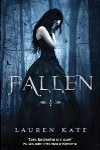
I can’t say I remember the releases of any of the books in the saga as I do those of Harry Potter. The first I knew of Twilight was when my cousin asked if I’d like to go and watch the movie. Suffice to say however that they are everywhere and continually at a knocked-down price. Not that I mind either for the covers are exquisite.
Isabella Swan, or rather just “Bella”, decides to move back to the town of her birth and her father after her mother marries a sportsman. Forks is a town she hates but she goes regardless. There she comes across the youths of the Cullen family, a group of five who keep to themselves and are often absent from school. Bella’s presence changes that, she stirs Edward’s senses in a way he really wishes she wouldn’t, for he is dangerous, a vampire, and until then had successfully remained able to live alongside humans with little worry. He and Bella fall in love. But it doesn’t matter if he can keep himself at bay – there’s a whole host of them out there just waiting for him to turn his back.
Being as I was a viewer before a reader I can advise with confidence that yes, it is worth reading the book afterwards. True to the format of book-to-film a lot was missed out and significant scenes altered. Of note is the scene where Bella tells Edward she knows he’s a vampire. In the book she casually mentions it in the car, whereas the movie goes all out on dramatics and has Bella afraid to speak while the backdrop of a dark forest becomes ever more suffocating. The movie also handles Edward’s temperament in a way more suitable for young people, the written version of which I will discuss in time.
For all that’s been said about Meyer’s poor ability as a writer, I found her style and structure surprisingly good. In fact I would go as far as to say that out of the 20 or so books I have read this year Twilight has been the most satisfying literature-wise. Some of her paragraphs read like poetry and unlike many other authors who have studied English, Meyer is certainly at one with the subject. She uses a vast array of words generally forgotten in today’s world, never hesitating over the idea that her readers might not understand.
The story itself I would split into three parts, using the nature of the parts as my reasoning for doing so. At first everything is easy to read and honestly a joy, even if the setting of a high school is unappealing to the older reader. Bella is a savvy, sassy young woman who favours independence and will not give in to other’s requests. Edward is the typical heartthrob, maybe a little arrogant, but likeable nonetheless. Then things change, Bella becomes needy, helpless and paranoid while Edward in turn hikes up the arrogance and anger and displays the kind of traits generally accepted as the beginnings of a domestic abuser. It was on reading this part that I wrote to my boyfriend “these two characters certainly aren’t good role models for either gender and the idea that there are millions of teenage girls now looking for an Edward Cullen is worrying”. My theory about the dramatics of the film came from there too. This part is difficult to read, especially if you’ve already heard the cries of others that Edward is far too aggressive.
The story reaches it’s third part when Meyer finally provides subtle reasons why Edward is the way he is. But by subtle I mean subtle, they should have been expanded upon and given more time. Edward’s life as a vampire has been hard and as he constantly tries to balance his human feelings for Bella with his need for blood he inevitably falters at times. When he saves Bella from possible rapists he explains how he could have killed them in a raging frenzy, his explanation hinting to mental instability. It makes for worrying reading, but as said, finally the characters regain more (unfortunately not all) composure and become equals, helpless damsel periods aside. A surprise comes in the form of Alice whom Meyer teaches you to be wary of before showing us that Alice is actually pretty darn cool.
Something that has oft been debated is the excessive use of sexual references in the book and it is indeed the case that for a story promoted as teenage fiction the explicitness of the references are too much. If they were simply innocent emotions it would be a different matter but Meyer does tend to go all out in explaining that Bella and Edward have feelings of a sexual nature towards each other and, whether deliberately or by accident, she is labelling the physical exploration of these feelings acceptable – which given the age of the target audience is perhaps not. While they aren’t the most mature things a teenager could engage in there’s enough to raise your brows at and enough to suggest that there will be more in the later books. It’s worth noting that the film leaves out a lot of these references.
Another thing that has been debated is the fantasy – vampires. Does the story feature them a lot, yes. But does it hold the stereotype up high, no. Edward and his family do not kill humans and it really is the case, as told by many, that he just happens to be a vampire. Essentially, Meyer has used the idea of forbidden love but to different effect.
For all it’s hype and fandom, Twilight proves itself a particularly decent and well written read for both teenagers and adults alike. Even if the subject matter is beyond the realm of what we as a society are used to, in those many ways talked about, Meyer’s skill more than makes up for it. In a time where good literacy skills are falling and children are becoming cocooned in text speak her books will ensure that they at least know better, and her vocabulary will create a need for a dictionary. For this alone we should make sure she is in our libraries.
Related Books


Victoria Hislop – The Return
Posted 8th April 2010
Category: Reviews Genres: 2000s, Historical, Political, Romance
Comments Off on Victoria Hislop – The Return
Just before the Second World War came the Spanish civil war. Its impact reached the deepest depths of the lives of the people.
Publisher: Headline Review
Pages: 574
Type: Fiction
Age: Adult
ISBN: 978-0-00-718036-3
First Published: 2008
Date Reviewed: 5th April 2010
Rating: 4/5
Sonia likes to dance, but she didn’t realise this until she started Salsa lessons on impulse after finding a shabby-looking studio. It stood beside the boring old cinema she visited with her boring old and ever-so-slightly alcoholic husband. When she invites her friend Maggie to join her lessons Maggie becomes even more passionate than she and books them plane tickets to Spain for an authentic experience. But what awaits Sonia in Spain is more than dance lessons. Woven into the fabric of cheery, tourist-attracting Granada is a whole history seeped in conflict, one that draws Sonia into the heart of a world she never thought to explore and which seems to relate to her rather personally.
The Return begins as though a modern woman’s novel, a Chick-Lit if you will. Both Sonia and Maggie are likeable and the temptation to put your feet up and prepare yourself for a journey with them is hard to resist. What stops you is the blurb and it’s just as well because Sonia’s story is but one part in a saga of love and loss.
For a long time dancing is the focus. It offers a firm grounding in the traditional culture of Spain, and more authentically than any tourist package holidays. Rather than learn the steps you’re taught about the reasons for them and the history behind it. Accompanying this is a brief introduction into the discipline required in the bullring and the stages from assistant to matador. These stereotypes of Spain are engaged to help you submerse yourself in the setting while being valid as common occupations of the era.
The narrative of the friends learning Salsa comes to a pause when Sonia meets Miguel. From this encounter comes page upon page of information about the war told through the lives of the Ramirez family. Their function is exquisite – rather than tell the story of the war through the usage of a famous person or one with a unique account, Hislop has opted to manage her own creations. She has constructed a family akin to millions of others in Spain at the time, people with little claim to fame and with no influence, to illustrate the plight of the ordinary person in the street. It is very easy to become indifferent to something when you hear it from a second-hand source, a summary of lots of things put together, so by means of putting a bog-standard group of people in the spotlight Hislop forces the reader to take note and experience the feelings and fears of the people who suffered most. While it’s likely she interviewed many survivors and compiled their accounts into one it never comes across as forced or weighed down with different elements.
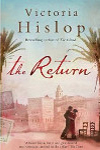
Laced into Mercedes Ramirez’s journey is a tale of love torn apart. While the cover of the book makes much of this romantic aspect the element is mostly confined to requited but unrealised love. It doesn’t lie at the heart of the book but rather to the side, as it’s not as important perhaps as the factual information but a defining part of the latter of the story. The character of Sonia is merely a vehicle until the end, where she holds the power to tie up the loose threads, more involved in this facet than your average character.
The book is very long and because of its nature one can at times sense a slowing down in the storytelling on the horizon. This does happen, but it’s not a burden on the reader because there are so many things you want to find out about that you’ll keep reading regardless – and sure enough, within the subsequent few pages you see the focus of the story change to another character. The different characters’ stories are provided for fairly and sections are split up allowing the book to move back and forth between them. The characters are as ordinary in themselves as the collective family, they each have varying interests and dreams but in war they are nothing special. Because of this you hear from the opposing side, the soldier, the traveller into exile, and the prisoner.
Hislop’s disclosure of the events that took place has been watered down enough for the disposition of readers easily affected by distressing descriptions, but only to an extent. Aeroplanes from both sides of the conflict rained down bombs, indiscriminate of the support of their victims for their parties. The aftermath of this was catastrophic but their further pursuit of the innocent when they fled their homes is incomprehensible. Hislop describes the gaping holes in massive crowds of exiled people as the planes followed their slow progress away from their native lands: the women burying their children and the suicides of those who could go no further. Being on the front line with the soldiers is only easier because of the greater publicity given to warfare. The novel also deals with the part religion played in the war. When the Nationalists took over they did so with the blessings of the Church, despite that fact that by taking over they had killed and continued to kill afterwards so many innocent people and ironically people of faith.
Without a doubt Hislop’s endeavour was to provide details of the Spanish civil war to a readership little informed, and a reminder for those who may have let it fade away. The Return will give you an insight into a long-spanning event left out of most basic curriculum. It will encourage you to see the atrocities committed, however for that you will also be welcomed into the world of Flamenco and be lead towards the beat of the music where the here and now are unwittingly left outside the confines of the bound and printed wad of paper in your hand.
Let yourself be entranced and educated, no matter how much you already know. The Return won’t let you down and yes, you will be rewarded with a happy ending. It may just be the one you’re guessing.
Related Books


