

Kelly Hunter – Exposed: Misbehaving With The Magnate
Posted 21st November 2010
Category: Reviews Genres: 2000s, Domestic, Romance, Social
1 Comment

I know, I know, I know. I’ve thrown away my – hopefully good – taste in books and settled for a trashy novel. I’m no longer a Mills & Boon virgin.
Publisher: Mills & Boon
Pages: 138
ISBN: 978-1-408-90710-8
First Published: 2009
Date Reviewed: 4th November 2010
Rating: 2.5/5
When I was a young teenager, and asked an adult about Mills & Boon, a publisher I’d heard of, the response was less than positive. I was told that they produced the worst books, riddled with sex, and were completely pointless. I took it to heart, but ever since I’ve been meaning to rebel, because the opinion had been so awful I just had to see what was so bad, and having a laugh at a cheesy book sounded a fun idea.
So when I found out that Mills & Boon were providing free ebook downloads of some of their titles I acted the wanton lass and downloaded them all so that I’d have a number of novels to choose from. I wanted the most sex-laden book possible without breaking the barrier into full-on erotica. Downloading was good, because no way in heck was I going to walk up to a counter in a bookshop with a seedy-looking book in tow.
Out of the 12 I chose to read Hunter’s book, lured by the bright cover image (different to the one shown in this review). It sounded the least dodgy and relatively cheese-free. The plot was thus:
Gabrielle left France unwillingly when she was caught kissing her mother’s boss’s son (the heir to his family’s castle and wine industry). Her mother, the housekeeper, believed Gabrielle’s association with a man of a far higher social class unbecoming. But now Gabrielle is back, and she never had managed to get over her feelings for Luc. It’s quite possible that he never got over her either.
I was very surprised that it took so long to get to the sex. There I was expecting it soon and expecting it rampant and instead by page 50 Hunter was still trundling along detailing vineyards and the wine business. I went to make a coffee. Whether this is usual for the genre I have no idea, but I did start to wonder if this would be any “worse” than an Elizabeth Chadwick novel, where the sex is passionate but the history equally important. When the sex did finally arrive it was steamy, and actually not all that different to a regular fiction book. There was little to cringe at and the basis of the relationship was an all-consuming and true love.
Which brings me to the writing; it was quite good. Again I was surprised, and very happy to find no spelling mistakes whatsoever, which is more than can be said for most mainstream fiction. The plot was well developed and there was plenty of information about what goes on backstage in the wine industry (and no, I’m not meaning sex).
There were a good few issues covered; one that was explored in detail was the relationship between Gabrielle and her mother. The social standing of the people didn’t make me feel separated from the story; it was simply that they just happened to have money. The characters were solid and although there wasn’t sufficient time to really get to know who they were, the details were ample enough.
So yes, I’ve been shocked at my foray into this genre, but I’m aware that my previous opinions gained from hearsay may have been too harsh anyway. Maybe I didn’t really know what Mills & Boon were about.
The cover of my copy was scandalous but in fact this is a story of people who could never love anyone else the way they love each other. I wouldn’t recommend it as something you should make a point of reading, but if you happen to come across it and have nothing else to do I’d say it’s not such a terrible use of time.
Related Books
None yet
Kimberly Derting – The Body Finder
Posted 12th November 2010
Category: Reviews Genres: 2010s, Paranormal, Romance, Thriller
1 Comment

If she can find the dead, can she find the killer too?
Publisher: Headline
Pages: 327
Type: Fiction
Age: Young Adult
ISBN: 978-0-7553-7895-1
First Published: 16th March 2010
Date Reviewed: 3rd November 2010
Rating: 4/5
Violet Ambrose has an uncanny ability – she can sense the “echoes” from the dead bodies of people who’ve been killed. So when the disappearance of young women becomes a regular occurrence in her small hometown, Violet is the first one to know. But at the same time she’s struggling with her feelings for her best friend, feelings that have changed since the last school term. She’s changed, he’s changed, but has he changed in the same way she has?
I’d had only fleeting contact with this book before I read it, seeing the cover a few times but feeling completely uninterested. Like many paranormal books for teenagers at present, the base colour is black, but rest assured, this isn’t Twilight, not in the least. Yes, it shares a few features: a prom, a gushy romance, and maybe Violet gets into some awkward situations, but in the main is it difficult to so much as guess where the author might have got her ideas from.
There is a real sense that Derting wants to impart advice to her readers, but she never goes overboard, instead speaking the same as any parent but going further by telling a detailed narrative about why one should listen to those warnings. What’s interesting is that while the book reads as a fictional account, and a lot of emphasis is placed on everything else unrelated, when it comes to the sections solely about the killer Derting doesn’t paint over it – while she doesn’t present the most harrowing story she works well within the parameters she’s set herself.
Surprisingly, although when generalised you would say this story focuses on death, there is a great amount of romance in the book. This is what makes it a story for younger readers, and certainly it’s an appropriate account of love for the target audience. Derting limits how far the couple go while straying a little past the usual borders, and although it can become soppy at times she always remembers to create mini conflicts in a way that pushes any bubble, that may have been forming over the couple, far away.
This leads to the characters in the book. Violet exudes confidence, and her lack of love for her appearance is but a realistic flaw. She only ever becomes helpless in understandable circumstances, and the times when she goes against common sense are explained – there is always a good reason for it. Romance-wise, when Violet starts to lean perilously close to drooling she tends to remember that feigned spite and disagreements are often fun. This girl walks into danger all the time, but she knows the risks, and when Jay comes to protect her she gets angry. I assure any would-be reader, in lure of the current batch of damsels, that like Jenny from The Forbidden Game, this is someone to really root for.
Jay is much the same as Violet, and he only appears as less daring because he’s not the major character. Jay can command, but he’ll also follow. His hero moments work because of Violet’s tendency to walk into jeopardy, and when he does get angry it’s logical.
The writing is very undemanding of the reader and the book quick to get through. The subplots always serve a purpose and the story is told without any particular drifting into unnecessary areas – which is more than can be said of Violet.
Although much of the ending is predictable, the climax itself isn’t, and if the loose threads are dealt with too quickly then it’s reasonable as a second book will be released shortly.
In The Body Finder, Derting puts a number of genres onto a plate and mixes and matches until she has ample quantities of each while sticking to the overall expectations that events of the past few years have created in young readers. She goes beyond what a lot of writers have been doing, unafraid to break the mould. It’s compelling without being too compelling, worrying without being too scary, and damn sexy whilst resisting sex.
The question now is will the echo from this book reach you?
Related Books


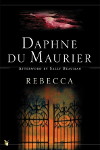
Charlotte Brontë – Jane Eyre
Posted 8th October 2010
Category: Reviews Genres: 1840s, Drama, Mystery, Romance
3 Comments

When I opened Jane Eyre I don’t know what I expected, Austen, perhaps – humour, entertainment, but an all too familiar tale of an emboldened young woman making her way in a society that was not her own. I didn’t expect what I actually found.
Publisher: (Numerous, but I’d wager Vintage would be a good one)
Pages: N/A
Type: Fiction
Age: Adult
ISBN: (Vintage’s is 978-0-099-51112-0)
First Published: 1847
Date Reviewed: 1st October 2010
Rating: 5/5
Not long ago I was in the bookshop buying a copy of Pride And Prejudice for my mother (who, I lament, has still not read it). The assistant said it was a great book but then proceeded to recount the glories of the Brontës. I listened in earnest as I intended to read Charlotte Brontë’s work next. The sisters were darker, he said, Austen was too light humoured. He asked his colleague, who was browsing the shelves on this mid-week slow day, for her opinion on who was better. Austen, she said. My assistant said I should read Brontë. How right he was in his pronunciations.
Now one could say that I have missed the boat by over a hundred years in writing this review, but, and this is something I believe I touched on in my review of Pride And Prejudice, there is the idea that it’s ok to review a classic. It is important, I feel, that each generation brings to the book’s reputation their own reflections on it as surely this routine will enable those of a particular generation to decipher how this book might appeal to them. Without modern day discussion, or indeed simply educational study, all a potential reader has to go on is ancient reviews written by people of a different time; it is by updating opinion that future readers will see for themselves how the book might be accepted by them in a way that is appropriate for their own time.
I suppose I should stop there with my views on classical literature and turn specifically to the subject at hand, so here is a basic plot summary:
When Jane Eyre was a child she had no one, at least no one who gave her the love and caring attention she needed. Growing up in her aunt’s house she was bullied and treated with disdain despite her obedient ways. Sent to a boarding school Jane later flourished, but assuming the role of a teacher at the same school could only hold her interest for a short time. In seeking further employment, Jane alighted at Thornfield Hall. Mr Rochester, her employer, is a peculiar one – cryptic, seemingly forgetful, impulsive, and secretive. But how can he demand her full attention when the house, beautiful though it is, appears to be haunted by secrets?
Jane Eyre is a story that, for the most part, is ever moving and shifting between genres. It is so clear in its sections that one can point out the different “acts” with little difficulty. And Charlotte (as there were three Brontës I will refer to the eldest as such) doesn’t stick to one or two themes either, the book contains a plethora, and their subjects are such that some are just as relevant in their original sense today.
The story is told as a memoir, directly to the audience. In the first person, for Jane hasn’t written a diary, she addresses the reader in an interactive way, asking them questions and for their opinion, as well as accurately guessing what they might be wanting to know. Be sure that whatever you are thinking, Charlotte has realised and will inform you of accordingly. Many a time I believed I wouldn’t get an answer to my query and then not only did Charlotte bring it to the fore, she had Jane speak to me in person.
A new chapter in a novel is something like a new scene in a play; and when I draw up the curtain this time, reader, you must fancy you see a room in the George Inn at Millcote, with such large figured papering on the walls as inn rooms have; such a carpet, such furniture, such ornaments on the mantelpiece, such prints, including a portrait of George the Third, and another of the Prince of Wales, and a representation of the death of Wolfe. All this is visible to you by the light of an oil lamp hanging from the ceiling, and by that of an excellent fire, near which I sit in my cloak and bonnet; my muff and umbrella lie on the table, and I am warming away the numbness and chill contracted by sixteen hours’ exposure to the rawness of an October day: I left Lowton at four o’clock a.m., and the Millcote town clock is now just striking eight.
A comparison I will make now with Jane Austen. Although I love Austen’s work it cannot be denied that she has a tendency to go into far too much detail than is required, forming incredibly long sentences wherein one can easily become lost. There is no such worry in Charlotte’s writing. Except perhaps during a specific section, which I will come to in a minute, Charlotte never pauses to provide superfluous description. The story, as said before, is ever moving. Charlotte knows her reader, she knows that (at least in her time) they are well versed in her world, for it is a real one, and that they don’t need to read about it apart from the descriptions of the made-up situation. I would say that it is quite possible that this style of writing is what enables Charlotte to bring in so many different elements of story to the book because she doesn’t have to worry about spending time – and pages, thus not becoming long-winded – on description. If you require definite evidence of Charlotte’s quest to remove unnecessary information, you only need look several pages in where Jane says that she is leaving out eight years of life from her account because they aren’t interesting enough to speak of.
Every setting in the book is beautifully lamented upon and a pleasure to create in memory and imagination. Though the book may begin shrouded in grey, Charlotte later moves it into hues of green, yellow, and white. She uses time of day wisely, contriving with the weather to create her own version of pathetic fallacy.
There was just one area that I found disappointing, the part where Jane comes into certain social arrangements in a village. I wished fervently that it wouldn’t be a cliché, that it would be different – but it wasn’t. I do not understand how someone so brilliant and able a storyteller could fall to such boring and coincidental devices. I failed to see, for that space of time, the genius reported by Virginia Woolf – a quotation displayed in glory on the back cover of my copy of the book.
The cook hung over her crucibles in a frame of mind and body threatening spontaneous combustion.
The characters are first-class. Although, where classic literature is concerned, Austen’s Darcy may be more famous, of more note is surely Charlotte’s Edward Rochester. Rochester is a fine creation; funny, sarcastic, and very much a speedy speaker; few were the times when I could imagine him speaking any slower than quickly. And it is in part because of his backtracking and contradictions of his words that he is so full of colour – you may not find out all that much about his interests but it is clear that here is a well-rounded person, no matter how gloomy he may aspire to be at times. Several of the quotations I made note of for their humour come from his dialogue; as an example, his supposing that you might not think of hating someone you already despise. With these in mind I would like to reference a scene that particularly stood out for me, that of the gypsy’s visit to Thornfield Hall. Make no mistake, it goes on for several pages but it is here that Charlotte first demonstrates true comedic genius.
Jane Eyre herself is just as fantastic a character, but one can overlook her qualities sometimes due to the fact that she is the eternal focus, being the narrator. She is as appealing and relevant today as a character newly penned in the 21st Century.
The writing is superb. So differently to Austen, Charlotte writes in a way that is very near to how we write today, save for perhaps her fondness for colons and semi colons, which she includes as if she earned a pound for each addition. Because of the style there is no need to study the text at all in order to make out her meaning, and so in style at least the book remains an easy read. However I would like to point out that there is a substantial amount of French used in the book. Charlotte has chosen her words well and included in most sentences hints as to the overall meaning, as long as you have a bare basic knowledge you should be able to get the gist. My own GCSE education from years ago sufficed.
The love story is perfect, and it is during the scenes between the anguish-ridden couple that dialogue takes over, as does of course interesting conversation (think of the character descriptions provided) and, because the dialogue is generally balanced between the two these are the scenes that flow quickly. The only time you really realise just how long the book is is once you get to the end of one of these dialogues and turn the page to see line upon line of description in preparation for the next sequence.
One of the ways in which the book amazes me is the ending, and looking back on it I can see how Charlotte was not making it into the kind of scene you might have expected and would’ve expected had it been written by someone else. Everything points to her being a person open to modern ideas. That doesn’t mean she is perfect, she was of course a product of her society and so some issues in the book you have to read remembering that, but she was a forward thinker and far away from being narrow-minded, by both the standards of her time and now.
Charlotte Brontë is a master storyteller and although I’m yet to read her other work I have a feeling this will remain my favourite. I have tried my best in this review but a summing up could never really explain just how and why this book is so incredible. I heartily recommend it to one and all with no exceptions.
Related Books


Gayle Forman – If I Stay
Posted 3rd September 2010
Category: Reviews Genres: 2000s, Paranormal, Romance, Spiritual
1 Comment

When there are people in different corners of existence, and both sets are people you love, who do you choose to go to?
Publisher: Doubleday (Random House)
Pages: 210
ISBN: 978-0-385-61621-8
First Published: 2009
Date Reviewed: 12th August 2010
Rating: 3.5/5
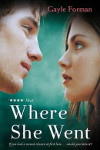
If I Stay has been given a very warm reception by bookstores and online media. It has been hailed as the forerunner to other tales and indeed Lauren Oliver’s (later) release, Before I Fall, was compared to it.
Mia’s family car crashes while they are all in it. She (Mia) locates her parents but where she thinks she’s found her brother she’s actually found herself. Her spirit has left her body – but she’s not dead yet. Throughout her time in the Intensive Care Unit, Mia continues her out of body experience, looking back on her life, at the extended family, friends, and boyfriend who visit her, and wonders what’s next. What can she do? What should she do? Both are questions she must answer for herself.
Maybe it was all the hype, or maybe the fact that I’d already read Before I Fall, but I didn’t find If I Stay to be as compelling as I’d hoped. Forman tells a good story, Mia’s unpredictable state over the course of the day, but although there were flashbacks I never felt enough for the characters. And this is important for a book dealing with such a subject. If it had been longer there would’ve been more to grasp hold of as Mia didn’t have enough time within the 210 pages to develop herself. I wasn’t convinced of Mia’s relationship with Adam. This wasn’t the fault of the relationship itself but rather in the way Mia saw it. We get a good glimpse of the strength of Adam’s feelings but they needed to be written stronger rather than eluded to. It was Mia’s love that was the problematic part.
Adam is a hero, but often Mia doesn’t understand his motives. The reader does, however, and this is frustrating because everything points to the obvious choice of life. Personally I was confused as to how she could choose anything else because the reasons were staring her in the face. In that way she sometimes seemed selfish, even if she actually wasn’t. Perhaps some space for Adam’s point of view here would have remedied that and I am very happy to have heard that a sequel is being written as If I Stay may not be perfect but it’s good enough for you to want to stick around.
Music is everything in this story. It’s the reason for Mia’s parent’s relationship, the reason they have their good family friends, and it’s the reason Mia became close to Adam. Most of the time Mia’s thinking reverts to her cellist training and she is constantly, though unknowingly, reminding herself that music is the reason to stay. Because of her family’s dependence on music one believes that Mia’s parents would, in the situation she is in now, tell her to put it before all else. I’m not sure if I am correct in this because I am a musician myself, but I would guess that people not familiar with the art would be able to understand most of the terms.
Mia and Adam’s shared devotion provides the meaning for a rather original intimate scene. In a way it’s quite strange and certainly a lot more graphic than most accounts of intercourse in fiction; and yet the sex is not introduced at that point. Forman favours this over any detailed tale of Mia’s loss of virginity, which she simply mentions instead of describing. The whole concept of the scene and Forman’s later reluctance are cause for a lot more thought than had she just had the characters ripping each others’ clothes off. Forman is subtly reminding us that sex doesn’t just have to be sex, doesn’t just have to be what everyone thinks. We can interpret it in our own way and make it specifically relevant to ourselves. And surely that makes for a more satisfactory and spiritual experience.
Forman’s writing is simple but it makes the book an easy read. Forman can be humorous and, considering the upsetting topic at hand, chooses her timing wisely. There is a fabulous scene involving birth that is worthy of many laughs out loud.
I often like to mention in a review what the reader can take away from the book, to cherish long after they’ve finished. Regarding If I Stay this is surely the central point of who you would choose. Forman isn’t suggesting you think of death per se, the idea can be applied to everyday situations; and to apply it to everyday situations doesn’t mean you have to take it literally and consider whether your parents are as important as your romantic interest, rather that you consider your feelings for everyone more than you usually would. Mia’s experience is the suggestion that you should.
If I Stay may be short but it does what it sets out to do within the limits of it’s page count. There are many books that will teach you the same things but if you’re looking for something that will still reach out to you in a small amount of time then this may be it.
Related Books

Lauren Kate – Fallen
Posted 3rd August 2010
Category: Reviews Genres: 2000s, Paranormal, Romance
3 Comments
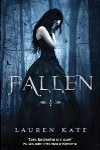
The cover looked amazing. I turned the title pages to the beginning and was floored by the Victorian dark paranormal romance – this was going to be an incredible story. But then I reached chapter one and the modern day America set-up. My heart sunk. Twilight, only this time Edward Cullen was to be an angel.
Publisher: Corgi (Random House)
Pages: 452
Type: Fiction
Age: Young Adult
ISBN: 978-0-552-56173-0
First Published: 2009
Date Reviewed: 2010
Rating: 0.5/5
For the first time ever I’ve started writing a review long before I’ve finished the book – because I can, because I know exactly what’s going to happen throughout. Rest assured however that by the time this review is finished the book will have been also as I don’t like the idea of heckling something I’m not completely knowledgeable about.
Yes, there are a lot of problems with Fallen which is quite ironic considering it’s title, so I’d like to get all the similarities with Twilight listed so that we can move on to more positive aspects (indeed there actually are some).
Luce asks her friend what the arrogant boy’s problem is – the hero is an arrogant boy, prone to bouts of anger; Luce is clumsy and boring, her home town is called Thunderbolt and she has an old banger of a car; there’s a girl with a pixie haircut and Daniel seems to have unlikely friends; Daniel saves Luce from a falling statue; Luce does research to find out about Daniel; there’s a big lovely looking place they go to, open and scenic; Daniel’s skin looks golden and radiates the light when he’s in the sun; Daniel is always telling Luce to stay away from him; when a fight breaks out outside school, suddenly Daniel’s there and he whisks her home in a car. He’s very angry throughout the journey. The bad guys are after Luce and only Luce all the time; the long drawn out ending doesn’t solve anything; it looks like Daniel won’t be in the next book with Luce much…
I am astonished that Kate hasn’t been had up in court and fined profusely for this blatant plagiarism. Kate would have to be a very slow writer to have started this book before Meyer came on the scene.
None of the things I mentioned in the list are spoilers because this is a very predictable book. The one thing I was hoping for however was that Luce would be something else, and she’s not, she is Bella all over; in fact she is a contradiction. Kate tells us that Luce is very clever and at one point Luce is telling Daniel about all the academic achievements she’s gained in life – but never once does Luce come across as a good student. She seems incredibly ignorant and although she gets bored in classes it’s only because they are so long, not because the are at such a low level. She never once acts at all like someone who is studious.
There are some good points to the book, the most important being that yes, it does intrigue you to read the next one, even if you decide that there are a hundred books worth your time first and even if it’s just to find out how much like New Moon it will be. It takes a while but Kate finally lets up on the paraphrasing and starts crafting her own story and although it may not be what it could’ve been it’s decent enough (as long as what you’re expecting is teenage angst and damsels in distress). The history element is unique. Daniel may have lived as long as those sparkly vampires but we’ve got Luce’s lives to catch up on too. It will be interesting to see what Kate does about the religious aspect of the story: will she just exploit the angel idea or will she put a theological bent on it?
The writing is bad and at times it appears Kate forgets even the biggest issues. Luce gives her watch to a teacher because the pupils aren’t allowed them – but a little while later she looks at the time on her watch. Luce takes a sip from a bone-dry latte – how that works I’ve no clue.
The sky was that no-color color.
So was the sky coloured or not?
She’d always loved the fairly sweet musty way that only a roomful of books smelled.
Terrible.
Fallen would have been a far better book had Kate set it back in time during one of Luce’s previous lives, and made the story darker and more mature. If she had done that she would have escaped a lot of the criticism given to her.
If you want to read Twilight without reading Twilight, read Fallen. You’ll be able to converse fluently in discussions about Stephenie Meyer’s work by the time you’ve reached the end.
Related Books