


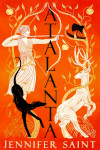


Debbie Dee – The Last Witch
Posted 2nd November 2012
Category: Reviews Genres: 2010s, Fantasy, Romance
2 Comments

A witch has power, but in some cases only as much as her commander allows.
Publisher: (self-published)
Pages: 293
Type: Fiction
Age: Young Adult
ISBN: 978-0-6156-8357-7
First Published: 12th September 2012
Date Reviewed: 29th October 2012
Rating: 3.5/5
Emmeline has always lived in a secluded area with her father, a father who tells her very little about anything. Longing for friends, she runs to the window when the sound of horses approaches their house, but her father tells her to run. Soldiers have come to take her away, and by the time Emmeline decides that obeying her father would be a good thing she is too late to avoid capture. The soldiers have come to escort her to the neighbouring country’s palace to wed the Crown Prince, an arrangement agreed at her birth, in order to protect her country. But no one will talk to Emmeline at the palace, the prince isn’t there, and Mahlon, the captain, isn’t quite as kind as his words suggested. Emmeline is apparently a witch, but she never knew it before and has certainly never experienced any power – so what is there to protect her from, and how long will she be able to continue to visit the King’s gamekeeper, Erick?
The Last Witch is a fantasy, set in a faux-medieval period, that deals with a somewhat unique idea: witches who have limited power and can be controlled. It is obvious from the book’s title where Emmeline comes in, but a lot of the plot is about how she starts to experiment and discover what she can do.
The premise and storyline are strong, but unfortunately haven’t been developed enough to make up for the speedy narrative. The book is disjointed, events happen very quickly before moving ahead a few paces, and there is not nearly enough detail. For example the reader does not witness Emmeline being reprimanded for escaping when the threat was heavy, and she escapes again the next day, as though she was allowed to come and go at will.
The writing is sometimes very good, but at others out of place. There are unnecessary question marks and suffixes that appear to be the result of an erroneous search and replace, and many grammatical issues. At times otherwise good dialogue is spoiled by a reversion to present-day colloquial terms, such as “I figured”, “gotten”, and “I sure did”. Whilst it’s not a bad thing overall for characters in fantasy novels to speak in a different dialect to the one associated with their history-based location, when not used consistently it sounds jarring. There are also episodes where plot threads get forgotten, however these are minor threads. The main issue is the narrative speed and lack of detail, which is a pity because the book would benefit rather than be hindered by a couple of hundred more pages.
Given that the book would benefit, it is not a surprise that the overall fairy-tale atmosphere is compelling. The book at times seems like a rewrite, though it isn’t one, and the basics of it are the sorts of elements that many modern readers look for. Perhaps best of all is the way Dee deals with predictable plot points. The book is largely predictable, but Dee uses this to her advantage, providing contexts and explanations that mean you are far less likely to be put off than you would be otherwise. And whilst Emmeline seems weak a lot of the time, this is for the most part fully explained, the necessity of development causing a slow transformation of Emmeline’s inner strength.
It doesn’t mean, however, that Emmeline is always understandable, and the reader may find themselves wishing she would put her thoughts into action once she has grasped the essentials of her power. Hard to read, too, is the character’s acceptance when people will not tell her what she wants to know. But the way Emmeline struggles with her wishes for friendship and people, balanced with how she feels when she gets that wish, is well written and devoid of the discomfort that could have occurred due to her never having met anyone – Emmeline is new to the world, but Dee doesn’t spend too much time on Emmeline’s thoughts. This may sound strange, and to begin with it may seem peculiar that Emmeline gets on so well with Erick, but as you read on it feels natural and doesn’t detract from the story – if anything it makes it better.
There are not many secondary characters so the reader comes to know all of the characters well, and there is time for wit and romance. To go back to the predictability, there is one element that may divide readers in regards to whether or not they pick up on the suggestions. This element is worth a mention because of the way Dee continually causes the suggestion to be clear and then hazy. It may at heart be easy to guess, but Dee isn’t going to let you go without a fight.
The reader should know that there is a lot of violence in the book, most of it alluded to, that is quite horrific on paper yet is appropriate to the situation.
The overall concept of The Last Witch is very good; the angst is strong but not overbearing, and the romance well written. The story races by too quickly, however the last couple of scenes, which are lengthy, demonstrate that with a little more time for description – other than world-building because a lot is spent on that to good effect – the book would be up there with the popular Young Adult recent releases. It’s good that there are more books to come, The Last Witch doesn’t end on a massive cliffhanger, and the set-up for the future is promising. And it’s good because for all the negatives, it is incredibly difficult not to like what Dee has created.
I received this book for review from Sage’s Blog Tours.
Related Books

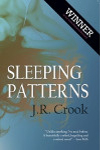
J R Crook – Sleeping Patterns
Posted 24th September 2012
Category: Reviews Genres: 2010s, Domestic, Experimental, Psychological, Romance
7 Comments
Wherever the story ends…
Publisher: Legend Press
Pages: 106
Type: Fiction
Age: Adult
ISBN: 978-1-908775-52-8
First Published: 2012
Date Reviewed: 19th September 2012
Rating: 5/5
Annelie Strandli (Grethe to her friends) presents to the reader a fictional story written by her friend, who is dead. Annelie is herself included in the story, a story of a girl who meets a boy, which in turn contains another story. It seems she took a while to work it all out, but might the reader understand it quicker? The basic plot is that Annelie meets Berry and Annelie wants to read Berry’s work, and he in turn is unhappy that she has a boyfriend.
Many novels have been called unique and powerful, and described as containing incredible depths. If such a number of novels is categorised as a group then Crook’s short work is destined to join it. And yet it can’t, because what Crook has written here is truly different; it is the structure of the plot, the layers of meaning that aren’t contained in the pages and that must be experienced afterwards, that are so individual. What is especially intriguing about the relationship between the text, the reader, and what is implied rather than spoken, is the way in which you can spend a long time, whilst reading, wondering whether or not you will be able to work it out, and a lot more time wondering if for all the reading you have done in the past you might be completely stupid. This being before you work it out. Was such a thing considered by Crook? This in itself is pause for thought because either way the conclusion yields more discussion, of both the text and what the overall purpose is.
Indeed if the summary of the plot, if plot is the word, sounds intriguing, then the structure is all the more so. The reader must start at the dedication page; whereas it is fine to bypass dedication pages in general, in this case to bypass would be to make a mistake. This is because the dedication tells you that Crook is dead, however he is not – it is he who sent this reviewer a copy of the book. And due to the many layers of story, if Crook is not dead and there are already a good few layers of repetition already, then the possibilities are endless and the book may even have a higher level than the reader themselves – in other words the reader may in fact be yet another layer of the story, who knows? Once you’re past the dedication page there is one other element of intrigue and then you start reading the story itself – starting at chapter 5. You don’t need to worry about getting chronological order wrong however, it’s easy enough to keep up. And whilst you could read the chapters in order, there is no bonus to doing so, you might even miss something.
There is a story within a story within a story, possibly with another story before all of that. The reader ought to find it out for themselves. The most inner story, however, is appealing in the way that it is written; Crook is a very good writer yet suddenly this inner story has sections where the plot is written very simply, almost dull in places, juxtaposed with other sections that are more highbrow. Luckily for the reader, apart from the subtext the book is very easy to follow.
The story – whichever story that is – has a romantic basis, subtle so that it will appeal to all, whilst having emotion pouring from it. And the story – this time the obvious one of Crook being the writer of the book – transcends fiction, making the author fictitious as a character himself and Annelie, presented by Crook as fictional, real.
There is a connection between all the stories. At the heart of everything, the author presents himself in the story (the one Annelie presents) as a fly-on-the-wall. But is he? And if Annelie is supposedly real is this non-fiction of sorts? Are we looking into real lives or fictional ones? And why is the author written as dead? We can take what Berry says as fact, but of the rest there is no knowing.
These are questions you will ask yourself, and whilst this reviewer has answers gathered from reading Sleeping Patterns, they could always be wrong and other readers will likely have other questions in addition.
It is impossible to explain this book further without giving the entirety away. Sleeping Patterns requires all of your attention but it will give as good as it gets. If you are looking to be awed and inspired, to be challenged intellectually, and to find love in a different way, this is the one.
I received this book for review from the author.
Related Books
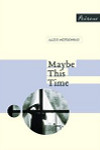
K Hollan Van Zandt – Written In The Ashes
Posted 17th September 2012
Category: Reviews Genres: 2010s, Fantasy, Historical, Romance, Social, Spiritual
6 Comments
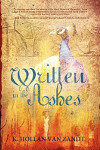
Burning libraries in the name of Christ.
Publisher: (self-published)
Pages: 393
Type: Fiction
Age: Adult
ISBN: 978-1-4525-3513-5
First Published: 2011
Date Reviewed: 13th September 2012
Rating: 3/5
Written In The Ashes is the story of one girl’s journey from slave to potential saviour of the right to religious freedom, and the way the events of society culminated in the burning of the Great Library of Alexandria. At once combining the regular workings of ancient Egyptian life and a somewhat epic adventure, the book is the first in a series.
Unfortunately the beginning section of the book does not express the above. The first part of Written In The Ashes is badly written; there is unnecessary melodrama and plot points are left hanging when they require resolution. The melodrama comes in the form of the main character, Hannah, being unreasonably gallant – she throws caution to the wind many times without thinking about the consequences. An example of a plot point left hanging is when Tarek gets bitten right to the bone and then proceeds to help Hannah, who has sprained an ankle during a show of gallantry, get home, carrying her weight by himself. When they get home Hannah is looked after and stays in bed recovering for weeks, whilst Tarek… well nothing happens, you never hear of his mortal wound again. By all accounts, in an unsanitary society Tarek should be dead.
There is a significant amount of info-dumping about locations and ideas that are not needed. The author describes things that don’t matter, such as telling us that while Hannah was speaking her hair escaped her hair-tie; one can presume from the context that Van Zandt wanted to insert a romantic atmosphere into the scene but without continuation it is superfluous. There is constant repetition of the word “so” that has no meaning, as well the device of “an angel” you’ve never been introduced to, who is doing something, be it smiling, being irritated, and so forth. In the second section Van Zandt finally introduces the reader to the concept, at which time you realise the idea itself is a good one, it’s just a pity it was poorly handled.
So we come to this second section of the book and we do this specifically because suddenly that change in section does everything for the story. The writing style is wonderfully different, plot holes are no longer employed, and the characters come into their own. The story takes on a brilliant mythical religious atmosphere and invites the fantasy genre to stake a claim in its contents. The adventure suggested in the summaries begins and everything here after is much better than the initial first section of the book. It is incredibly easy to get lost in the tale and forget all that came before.
For the most part, the third section continues the goodness of the second, but there are a couple of bad aspects to it, in particular the jump in time. The second section ends with the characters in a rather vulnerable position, and then the narrative suddenly jumps ahead by three years. If this was due to factual events happening that Van Zandt had to subscribe to, it is understandable, but due to the narrative of her fictional characters it does not work – and whilst Van Zandt shows that a threat is still there and must be dealt with hastily, it appears in the backs of the characters’ minds. It would have been better had Van Zandt taken artistic liberty with the historical facts and moved events forward, especially as to all intents and purposes it seems the characters forgot all about their friend for three years for no reason.
Yet whilst it needs editing and duplicate actions removed, on the whole Written In The Ashes isn’t a bad book. Indeed although the violence is strong it fits the period, and there is the element of early Christianity included that is so rarely spoken of elsewhere. Van Zandt really looks into the Parabolani, the so-called Christians (in other words people who believed themselves Christians but behaved as anything but) who took to persecuting anyone who would not convert. The situation was the complete reverse of the Biblical stories of Rome against Christianity and whilst Van Zandt may have created some of the episodes that happen, it is merely the extra details that are fictional. Thus the book is important because in a western world where every other sort of persecution has been publicised, little is taught of this situation. And it gives the library’s female academic, Hypathia, an expanded, if fictional, story, bringing to light both the success and plight of women.
It is unfortunate that the book lacks an air of completion (away from the slight cliff-hanger ending as this is the first book in a series) but there is a deal of goodness here and it would appear that Van Zandt has the potential to be a great storyteller.
Written In The Ashes is a fair look at society and religion in era of the ancients. It will invite research and thoughts to be overturned, though it may be difficult at times to get there.
I received this book for review from the author.
Related Books
None yet.
Kate Morton – The House At Riverton
Posted 5th September 2012
Category: Reviews Genres: 2000s, Domestic, Historical, Mystery, Romance, Social
4 Comments

What the elders want the elders will get, but it will come at a cost.
Publisher: Pan Macmillan
Pages: 591
Type: Fiction
Age: Adult
ISBN: 978-0-330-44844-4
First Published: 2006
Date Reviewed: 27th August 2012
Rating: 3.5/5
At 98, Grace is approached by a film-maker who is creating a movie about the murder mystery surrounding the house she, Grace, used to work at. What the world doesn’t know, however, is the truth; and this Grace has kept to herself her entire life. Only now, facing inevitable death, does she decide to create some cassette tapes for her grandson explaining everything, including what really happened on the night a famous poet killed himself at the lake.
The House At Riverton is a long look at the early decades of the 20th century and how society came to dictate lives in such a way that people made drastic choices they wouldn’t nowadays. The book could have easily been cut by about 300 pages – the back story, whilst fascinating, especially for those with a particular interest in the era, is unnecessary, and it takes three quarters of the book for the story to actually begin. The build-up is for the most part predictable and thus all the extra details surrounding it are irrelevant. It’s nice to get an idea of what went on in the characters’ heads (so far as Grace can determine) but what would otherwise have been a big reveal is, of course, not there.
However this doesn’t mean that the book is a failure, indeed even if it required heavy editing, the superfluous content does illustrate well the life and society of the time. If you’re a reader looking for a thrilling mystery you won’t find it here – this is a book for people who enjoy period dramas and the sorts of incidences that were considered monumental back then but would be a non-issue today. Family structure is discussed, such as marriage in order to produce heirs to keep hold of property. And seeing as the book follows the lives of a couple of generations of the same family, Morton also details, through the characters themselves, how change occurred as the children of the 1910s became the adults of the 1920s and began to challenge the strict rules imposed upon them by their elders. Both these issues, woven together, cause the most conflict in the family, as well as the streak of feminism and want for equality that comes as second nature to one of the young women, Hannah.
It would be fair to say that although the characters are well written, their purpose is to enable Morton to put her point across and to explain history and society, and so whilst the reader knows them enough they are not the sort to commit to memory in a fond manner.
It should be noted that The House At Riverton isn’t all that much of a romance story and that the mystery aspect of the book is hampered by the fact that the reader knows the basics, even if the true mystery does remain a secret. Yet, in these two factors there does remain some interest – the romantic threads form more of the commentary on society, and as there are a few of them Morton is able to look at the issue as a whole in detail. The veils over the classes are pulled down and Morton shows the reader that the relationship between upstairs society and downstairs subservience was a lot more complicated than either section would have admitted, maybe than they would have known. The romances also highlight the need for loyalty that is often inherent in us. The true mystery is what the film-maker, Ursula, is after, but only Grace knows it, and the reader is only party to it from being inside Grace’s head; thus the ending is good, as it ties everything together and the reader being given all the ingredients to work out what would happen next. Indeed the reader may know more than the characters, even after those happenings happened.
The House At Riverton is too long for what it sets out to accomplish, and the real thrill takes a while to get going; it is recommended thus as a good resource for gaining knowledge of past society and exploring the class system inherent in the day.
Related Books


Dodie Smith – I Capture The Castle
Posted 24th August 2012
Category: Reviews Genres: 1940s, Books About Books, Comedy, Domestic, Romance, Social
3 Comments

The continuation of 1800s novels.
Publisher: N/A (but I’d wager Vintage’s a good one)
Pages: N/A
Type: Fiction
Age: Young Adult
ISBN: N/A (Vintage’s is 978-0-099-46087-9)
First Published: 1949
Date Reviewed: 16th August 2012
Rating: 5/5
Cassandra lives with her family in a house adjoining a ruinous castle. From having a fair amount of money they have become poor, and it doesn’t look like Mr Mortmain will start writing again anytime soon – despite his wife spending time outside in the nude in order to commune with nature. But then the Cottons arrive, American brothers who have just inherited the estate the castle stands on. And far from being angry about the unpaid rent they’re positively entranced by what they’ve found.
I Capture The Castle is a rather quirky novel about relationships and the power of money. It presents itself initially as relaxing and intriguing, but as soon as it gets a hold of you it branches off, showing deeper colours, just like the women’s dresses after they decide to dye them into new life. What’s particularly appealing about the book is that it is heavily influenced by Victorian literature, both obviously and subtly. There are worded references to Jane Austen and the Brontës, but further than that the book’s story itself feels like it could have been written by, say Austen. Indeed it can be so easy at times to snuggle down, knowing that you’re reading the work of an admirer, that when Smith diverts from the era of chasteness it’s rather a shock. It would not be wrong to say that I Capture The Castle is Austen without the limitation of Victorian etiquette.
I am not so sure I should like the facts of life, but I have got over the bitter disappointment I felt when I first heard about them, and one obviously has to try them sooner or later.
And the book truly strikes a chord. Told from Cassandra’s point of view, via her diary, often she will say something that is so compelling and always considered by ourselves, but rarely shared, such as her ruminations over the idea of her sister wanting a wedding rather than a marriage.
“As we’ll never be able to stop her turning on the Early Victorian charm, we ought to accentuate it.”
Referring back to the Victorian influence, it is apt to discuss the characters. Rose, for example, is paramount in Smith’s dedication of her work to Victorian literature; the character has gathered her knowledge of how to conduct a courtship via the processes in place a century before her own, and the reactions her “victim” experiences due to her theatrics are duly recorded by Cassandra. Rose feels it is time she had money after having lived in near poverty for so long, and if the opportunity arises she will take it. Cassandra is less passionate than Rose, and tends to keep her feelings to her journals, but her potential to love is huge. The Father, Mortmain is rather random in his actions and one never knows if he is working or not, and Topaz, his wife, is completely bohemian. The family is completed by a brother, Thomas, and Stephen, an unpaid servant who is devoted to Cassandra. The Cotton family are colourful too, if less so. The collection of such a set of characters means that whenever the narrative slows down – which it does a lot because the plot as a whole is slow and rather simple – it’s not long before you’re laughing, and as such it’s difficult to want to put it down.
Of course a big draw for the reader, considering that the novel has a simple, fairly predictable plot, is surely the factor of the house/castle in addition to the cast of characters. Though difficult to imagine at times, it is an interesting and individual setting that permits the exploration of history without the burden of superfluous or detailed information.
The romance may be a love square, or perhaps even a love hexagonal – Smith, although agreeing to honour the well-established trope, takes a while to release her hold on the information, so that whilst certain parts are predictable, she might attempt to lead you down the garden path, protesting against readers who have worked it out already.
I asked him if he liked Rose’s dress – mostly to change the conversation.
He said: “Not very much, if you want the honest truth – it’s too fussy for me. But she looks very pretty in it. Knows it too, doesn’t she?”
There was a twinkle in his eye which took off the rudeness. And I must admit that Rose was knowing it all over the place.
I Capture The Castle attempts and succeeds in being the very sort of book a lover of both classics and contemporary work wishes to read – it combines all the trappings of the 1800s novel with the boldness of the early 20th Century, and such boldness enables there to be a further blend of the 1930s and our current 21st Century present. Indeed so wrapped up in the past can Smith become, that mentions of technology, for example a gramophone, may cause you to pause for a moment so that you can adjust your visions of women in Victorian dresses to women of later fashions.
And in addition to all of the above, I Capture The Castle is surely a novel of the arts. Cassandra likes writing, the text is structured as her diary, and the family is forever trying to get Mr Mortmain to author another book. Topaz is an artist and model, and the Cottons are bathed in the world of literature.
“Look, Mortmain, look! Oh, don’t you long to be an old, old man in a lamp-lit inn?”
“Yes, particularly one with rheumatism,” said Father. “My dear, you’re an ass.”
Smith’s work is an absolute triumph.
Related Books
None yet.


