




A J Waines – Lost In The Lake
Posted 30th October 2017
Category: Reviews Genres: 2010s, Angst, Crime, Domestic, Psychological, Thriller
5 Comments

The words of Rockwell are apt here: “I always feel like somebody’s watching me”.
Publisher: (self-published)
Pages: 388
Type: Fiction
Age: Adult
ISBN: 978-1-543-16398-8
First Published: 7th September 2017
Date Reviewed: 30th October 2017
Rating: 4.5/5
Psychotherapist Sam Willerby is going to be careful about patients in future – she’s had trouble before and doesn’t want that again, but when Rosie is assigned to her care, she is lenient. Rosie was travelling home with her fellow quartet members when there was an accident – following trouble with the vehicle, it ended up in a lake, and Rosie was the sole survivor, her viola the only instrument recovered. She wants to remember what happened by she’s also taken a shine to Sam, believing they can be good friends. There’s a lot to remember, and also a lot to realise.
Lost In The Lake is a psychological thriller with a distinct difference – whilst it is a page turner, the general trend to get the pages turning faster is supplemented here by some fabulously relevant and literarily satisfying detail. An item of work by someone with a background in psychotherapy, it offers a lot to enjoy and rely on, along with some teaching moments.
The detail in this book is most apparent where it comes to character development – instead of the usual idea of a bad person – who you may or may not know from the start – and the resulting race to see what’s happened, Waines gives a definite nod to the structure but then goes into the villain’s mind. In a style akin to Georges Simenon but, it could well be argued, done better, the author shows you Rosie’s background long before she turns to look at the progression towards the finale, taking the reader back to the character’s childhood to show the effect extreme neglect and the loss of parents and constant changes in foster care have affected Rosie’s emotional well-being and stability. It’s a person-first story, a look at the humanity of a character before any literary thriller relish comes into play, a style of writing that you means you not only see exactly (very much) how it gets to the point it does, but also that you can relate – at least on some level – to the character.
Bolstering the effect further are the individual voices. This book is told by Samantha and Rosie, chapter by chapter, and both have distinct voices. You will never be confused as to whose chapter you’re reading and there is no feeling that the author is talking.
The story itself is involved. Full of music, trickery, and a fair dosing of red herrings (it’s apparent from the cover that Rosie is involved in something but whether the crime/accident or whether her villain status is separate takes a while to become known). There’s also Sam’s story; this is both the second story of a series and a standalone, and Waines has spent time on Sam’s background so that the times she does things that will move the plot along are relevant to her rather than mere devices.
As for the writing as an element it is very good and rather literary at times. The editing is solid, with the descriptions not moving towards filler except perhaps if you’ve read the first book (therefore the repetition is understandable) and as said previously, this is a text of showing. The telling that is included is the natural result of a story told in first person narration and particularly in Rosie’s case the words serve to highlight to the reader what Rosie cannot see or understand.
Lost In The Lake is a very good book. By the end you have a full working knowledge of the characters, the plot, and also a good example of a thriller as its own product. The climax is well done and the extent the characters go to make sense. Highly recommended.
I read this book in preparation for my event.
Related Books

Orlando Ortega-Medina – Jerusalem Ablaze
Posted 8th September 2017
Category: Reviews Genres: 2010s, Angst, Drama, LGBT, Psychological, Short Story Collections, Spiritual
1 Comment

The twisted fire-starter.
Publisher: Cloud Lodge Books
Pages: 174
Type: Fiction
Age: Adult
ISBN: 978-0-995-46570-1
First Published: 26th January 2017
Date Reviewed: 8th September 2017
Rating: 5/5
In Japan, a young man finds himself with blood on his hands and looks back at how he came to be beside the dead master. In Israel, a priest finds himself in a prostitute’s erotic fantasy. And in town, a child finds themselves in the presence of a crowd running towards a tiger.
Ortega-Medina’s Jersusalem Ablaze is a collection of short stories full of darkness, both the humour and macabre, as well as a few stories dotted about that are less so (and can be a blessed relief!) It’s a fantastic collection, devoid of messages, but nevertheless leaves you with a lot to think about.
This is an incredibly well-written book, with a general style of writing used throughout yet the voices of the individual characters are unique. Told through a thin lens, the writer is there throughout, both at a distance from the text – letting the people speak for themselves – and in the definite position of storyteller, the darkness of the narrative as a whole echoing the idea of sitting around a fire listening to spooky tales. It’s at once both a fair boundary – the reader being far enough away from the character to see the subtext – and wonderfully immersive.
Unsurprisingly, considering what I’ve said above, there are many stand outs, which amounts to most of the collection, given the size of it. A particularly good piece, covered briefly in the summary, Torture By Roses looks at the forming of identity and vulnerability in youth, going to the extremes of having the character taken in by a renowned figure who in the privacy of his own home spends his days sitting amongst a mass of dead roses, wounding himself on the thorns deliberately; his promise of an inheritance for his young companion (or, to the reader, servant) causing the boy to stick around even though his mental stability is crumbling under the weight of what the man is doing to himself. After The Storm tells the story of a woman isolated in a lighthouse who, after said storm, finds a body on the shore and takes it home. The title story, Jerusalem Ablaze, again, summarised, puts an impressionable Israeli priest in the house of a prostitute with a specific fetish (that’s putting the whole situation lightly), and The Shovelist studies the way an old housekeeping agreement can continue once the house changes hands, an elderly couple persuading the younger to let them shovel their access routes.
On the subject of a lack of messages, it’s worth noting that the book isn’t something you read through and put down. There are no morals or so forth in the book but Ortega-Medina does provide much for you to think about, sometimes in the fashion of ‘stay in your mind for days pondering it’ and, suitably more often, the content will keep you thinking simply due to its weirdness. On the whole the lasting impact of the book is as a collection – the general quality and interesting ideas.
Jerusalem Ablaze – excellence all round.
I received this book for review. It has been shortlisted for the Polari Prize. The winner will be announced on 13th October.
Related Books

Speaking to Orlando Ortega-Medina about Jersalem Ablaze and The Death Of Baseball (spoilers included)
Tune in as Charlie Place and Orlando Ortega-Medina discuss celebrity fictional reincarnation, writing short stories that don’t have messages, and working with ideas that could – if misinterpreted – look like something else.
If you’re unable to use the media player above, this page has various other options for listening.
Jennifer Donnelly – Revolution
Posted 4th August 2017
Category: Reviews Genres: 2010s, Angst, Historical, Political, Psychological
Comments Off on Jennifer Donnelly – Revolution

‘Let them eat cake’ did not happen here.
Publisher: Bloomsbury
Pages: 470
Type: Fiction
Age: Young Adult
ISBN: 978-1-408-80152-9
First Published: 12th October 2010
Date Reviewed: 30th April 2017
Rating: 2.5/5
Andi’s little brother, Truman, died unexpectedly a couple of years ago, and Andi is struggling to come to terms with it; it happened under her watch. Failing school and with a poor outlook on university, her father tells her she must join him on a work trip to Paris. She doesn’t want to go but Paris was the home of a historical musician she loves and her father’s friends are converting an old museum into a house; the building is full of artefacts from another time, including the diary of a girl living in 1700s Paris.
Revolution is a semi dual plot line book that looks at the horrors of the French Revolution starting from before the time of the fall of Bastille; it connects a young travelling servant’s life with a contemporary person in a not dissimilar position, one grieving her brother, the other trying to look out for a young prince. The book has a lot of promise – history in tandem with the present; the possibility of time travel that is somewhat realised – but is unfortunately plagued by very lazy writing.
Andi does not read as real. Her status in society – high – is not explored enough for you to believe it. The way she speaks does not correspond to her age. Donnelly has inserted a lot of strange non-words that heighten this – ‘parslied carrots’ – and employs the likes of the unnecessary ‘shake my head no’. Were it contained to Andi’s narrative, the laziness would not be so bad, but the 1700s Alexandrine speaks the same way, anachronisms running riot, the two girls sounding one and the same – in a literal way rather than symbolically. You could say Andi is translating it, but it still doesn’t ring true.
The information on the Revolution is the redeeming factor – this book has it in spades. The musician of Andi’s thesis may not be real (in our world) but everything surrounding him and his time is. The underground tunnels. The morbid death parties. The author’s research seeps through the pages.
In regards to the sort of time travel, it’s worth knowing that Andi is always under the influence of pills – she overdoses often – and whilst this doesn’t excuse her awful behaviour, it’s enough to wonder if she would have been such an uncaring person before. (Neither character is likeable.) The time travel concerns Andi, solely. Alexandrine’s part in the novel is limited to her diary. The diary is a bit far-fetched, with Andi reading it everywhere, including the artefacts section of a library, and not being asked about it. Her restringing of a guitar from two centuries ago using modern strings without research… thankfully this is fiction!
If you want information about the underground mausoleums in Paris, it’s worth dipping in and out of the pages, but otherwise it’s one to pass by.
Related Books
None yet
Zoë Duncan – The Shifting Pools
Posted 14th July 2017
Category: Reviews Genres: 2010s, Magical Realism, Psychological, Spiritual
Comments Off on Zoë Duncan – The Shifting Pools
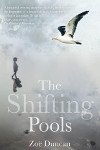
What you see will be.
Publisher: Lightning Books (Eye Books)
Pages: 346
Type: Fiction
Age: Adult
ISBN: 978-1-785-63036-1
First Published: 6th July 2017
Date Reviewed: 14th July 2017
Rating: 4.5/5
Eve’s family lived in a country that was torn by war; in childhood Eve lost them all and suffered further trauma. She moved to England where her well-meaning aunt never stopped trying to cover up any news of the war and never referred to the family. Now in her adult years, Eve is yet to confront her memories and her grief continues as strongly as ever. Her dreams are nightmares and she’s not living anywhere near her potential, but her imagination believes it’s time to heal.
The Shifting Pools is an incredibly moving novel about grief and learning to live despite it. Using many different styles of storytelling, referencing, and ideas, Duncan has created something very different and very special.
This is a slow-moving book. The pace echoes the way utter loss, grief, can take over a life, and Duncan never moves the narrative away from it. Every detail is examined, every thought spoken, in the way it naturally occurs in life, Duncan doing away with the very notion that being repetitive in fiction is bad – she shows well how it is important to delve into grief and give it the time it needs.
One of the first things of note is Duncan’s writing – it’s wonderful. It keeps the pacing constant, it stays steady during tense changes, and it brings something very beautiful to the work. It’s not difficult to fly through this book, despite the subject, and the writing and Duncan’s overall handling of the situation is why. And there is a lot of wisdom here that anyone who has lost someone or been in an awful situation will be able to relate to.
The style of the text as a whole is intriguing. Sections about Eve’s childhood are narrated in the third person. The first person is used for everything else: the ‘present’ as Eve lives through her days and details her thoughts; the vignettes of dreams dotted throughout the book, that explore Eve’s mental state in various imagined situations; the sections in war-torn Enanti, the fantasy world that may or may not be real. And then there are several well-known and not so well-known poems, generally a single verse of each, spread throughout, included in the text as vignettes in their own right. It’s almost of collage, a multi-media project, full of different ideas and voices, and works very well. The term ‘fractured narrative’ comes to mind.
The Shifting Pools uses nature, drawing comparisons between it and the themes of the story, and using its beauty as a way to help Eve. Of note is the character’s name, which, after you have spotted potential influences of other texts and concepts (including Narnia and The NeverEnding Story) does bring forth the question of Eve’s faith. Is there a comparison to be drawn between Eve and the Eden of the Bible? Of Heaven? Quite possibly.
Eve is always at war with herself; as much is said in one of the sections. Her dreams concern various war or battle or prison situations. Of the war that tore apart her family, little is said. Duncan never tells you which war – if any, in reality – she refers to, though there are glimpses of a couple of possibilities; it’s more the basic idea of war that is important.
Reading this book is something of a honour, and a surreal experience. It feels fantastical from the very first page and the amount of research, knowledge, and detail Duncan has included is excellent. She unapologetically runs straight past the border between what we are told is the ‘right’ amount of time and energy to spend grieving to show that the idea of a ‘right’ time never works. This said you can see the thought that’s gone in to getting it right in terms of the reading experience, empathy, and not repeating what has been said unless to view it differently – something that wouldn’t work in many cases but does here.
The only thing that may work against the book is the amount of time spent on the journey in Enanti. It depends on your enjoyment of the fantasy world being included alongside the real world, how much you’re invested in that genre, and how much you personally feels it all relates.
The Shifting Pools is a fantastic reading experience, full of care, love, and, ultimately, hope.
I received this book for review.
Related Books
Speaking to Zoë Duncan about The Shifting Pools (spoilers included)
Charlie and Zoë Duncan discuss coping with and healing from war trauma in reality and fiction, the use and power of dreams, employing various styles and formats, and how fascinating reader interpretations can be.
If you’re unable to use the media player above, this page has various other options for listening.
Rory Gleeson – Rockadoon Shore
Posted 12th July 2017
Category: Reviews Genres: 2010s, Angst, Commentary, Psychological
Comments Off on Rory Gleeson – Rockadoon Shore
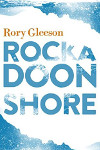
If we took a holiday… it would be so nice.
Publisher: John Murray (Hachette)
Pages: 291
Type: Fiction
Age: Adult
ISBN: 978-1-473-63407-7
First Published: 12th January 2017
Date Reviewed: 12th July 2017
Rating: 3/5
A group of friends go away to a house in a remote part of Ireland for a weekend break. There have been tensions for a while but despite Cath’s best wishes, confining them all to a small space and adding in drink and drugs just makes things worse. The friends start to split off, fights begin, and from where local resident, Malachy sits with his view of the house, it looks like things will get awry rather soon.
Rockadoon Shore is a fairly short, focussed book, that looks at the sudden breakdown of a friendship group composed of very differing people. Told in third person through the various characters’ viewpoints, it’s a look at an average situation with more thought than tends to happen in reality.
There are six friends and one outsider (or, in the context of location, insider), and Gleeson casts the spotlight on each of them in turn, always continuing the narrative of the whole rather than reiterating it from different perceptions, but he does pause sometimes to look back when decisions in the group have had a lasting effect on any particular person. Whilst this style makes the book move slowly – though with its three-day focus confined to a house it was always going to be like this – it’s one of the defining aspects and when the plot – what there is, as the story is character-driven – drifts, it can be the reason to keep reading.
Part of this style’s reason for being is the characterisation. Whilst obviously devices and slight stereotypes – in many ways this book is like an episode of a soap opera – Gleeson’s characters have been developed to a fair extent. For the author, meanings are most important, personalities a little less so. This creates an interesting situation, particularly in the case of the women, where you have characters being written in a way that echoes the stereotype of men writing about women and then other times that echoes women writing about women. Due to Gleeson’s general idea to study the breakdown of friendship, this style, the switching of gender gazes, if you will, seems intentional. It allows for more reality, for ultimately broken stereotypes, to show that people aren’t all one way or another. It’s more obvious with the female characters – at least from this reviewer’s standpoint – but it does happen with the men, too.
The writing itself is okay; difficult is the decision to use dashes instead of quotation marks. It could well be, indeed, it seems to be sometimes, that the confusion as to who is talking at any one time is deliberate because it often doesn’t matter who’s saying what, but that does not necessarily put paid to reader frustration. There are grammatical and tense errors but they may well be intended.
The character of Malachy is a bit redundant. He goes through some realisations but as he does not really affect the group of friends beyond a plot device, you can skip his chapters without issue. His personal drama at the end is difficult to care about.
Of that plot device, the ending, which is more a metaphor for fissure than anything else, it must be repeated that there’s not much plot. As much as the book does an excellent job of reflecting current life, there’s little to take away with you. Rockadoon Shore isn’t a bad book or a good book, it just is.
This book was one of several available at a showcase I attended.
Related Books
None yet.


