




Mavis Cheek – Dog Days
Posted 20th May 2016
Category: Reviews Genres: 1990s, Chick-Lit, Comedy, Domestic
Comments Off on Mavis Cheek – Dog Days
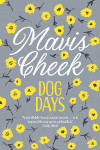
Separating for the kid.
Publisher: Ipso Books
Pages: 193
Type: Fiction
Age: Adult
ISBN: N/A
First Published: 1990
Date Reviewed: 4th May 2016
Rating: 4/5
Pat is leaving Gordon, buying a new home, getting a dog for her daughter who has said if they must lose Daddy she wants a dog, and starting life afresh. She should have done it years ago – she should have never married him. Love isn’t on the cards; Pat has no intentions of another relationship, she’s just looking forward to being herself again.
Dog Days is at once a light and easy-going story, and an honest look at the breakdown of a marriage, a person’s resurfacing after divorce into the person they used to be. At times very blunt, Cheek’s book is one that delves into things that are difficult to talk about whilst nevertheless remaining breezy. The Times has said ‘Mavis Cheek seems to have cracked the conundrum of how to write decent novels with popular appeal’, and that’s a good way to sum it up.
Rachel gave me my pass through life. She was, anyway, the only reason I was in this situation.
Cheek is open about the problems that can come with having children – whilst it’s obvious to the reader and to Pat herself that Rachel’s birth did not exactly change Gordon (more that it allowed her to see who he was), it was in having Rachel that Pat felt bound to her then boyfriend and so an accidental pregnancy led to her life going quite a different way than planned. Gordon was not the one for Pat – he’s stingy, having plenty of money but never treating his wife nor his daughter, and only cares about himself. He turns on the charm when he wants to manipulate his daughter to get what he wants.
But equally, as much as Cheek is honest about the affect of children and the way a person should think beforehand as to whether they truly do want to be a parent, she is open about how much happiness they can bring. Rachel doesn’t cause Pat to be exuberant, it’s more a case that Rachel’s intelligence continues to baffle her mother, in a good way, and the girl, older than her years it seems to her mother, is a good companion. Whilst Pat would not have stayed with Gordon if it weren’t for Rachel, nevertheless Rachel is obviously a good factor in Pat’s life.
More than children, Cheek just speaks of relationships. When asked by her solicitor, Pat struggles to find a tidy reason for getting a divorce; this is where Cheek’s exploration of resentment and sadness comes in. Pat can’t sum up her reason in a sentence. She can’t say she was abused, or that Gordon cheated, and so begins a long, excellent, section wherein she narrates various episodes in her life that show why she wants to leave her husband. Cheek shows how it isn’t always cut and dried, and that listing reasons doesn’t always work.
Amongst this exploration is some humour. It’s the sort of easy joviality that keeps the pace steady and the pages turning on the occasions when what you’re reading about is quite bleak. A lot of it revolves around Pat’s distaste for dogs and her slow journey towards becoming a dog person:
Eventually, with considerable effort on my part, we selected the weakest and wettest of mongrels in the pound. Rachel wanted the racy little cross between a Jack Russell and a something (a very something), but it had far too many of Gordon’s traits for my liking. Small and wiry with bright snapping eyes; a prominent, urgent profile and – I could sense – totally selfish motives behind its cocky, winning ways. I had lived with one like that for too long in its human form to burden myself with another, albeit four-legged and linked to me in animal slavery. Whereas the wet-looking mongrel had not an ounce of spunk left in it.
Brian, the dog of the title, doesn’t really do much, he’s no Scooby Do or Lassie – the title is more about the time itself, those days. Brian’s the subtle presence, there for Rachel, there for Pat once she thaws a bit towards him, and a menace once or twice when Pat’s too sure he’s the right dull dog for her.
The main thing to bare in mind is Pat’s illogical misunderstanding which spans a good few chapters. There comes a point when Pat mistakes someone for being in a relationship and it gets a bit grating because it’s blatantly obvious that they aren’t and therefore comes across as a lengthening device. Once cleared up, Pat notes it should have occurred to her, but that doesn’t atone for the frustration.
This aside, Dog Days is a funny, half-escapist, half-brutal-with-good-reason read. It’s honest, it’s realistic, and yet its status as an easy page-turning book never wavers.
I received this book for review on behalf of the publisher.
Related Books
None yet
Elizabeth Chadwick – Shields Of Pride
Posted 23rd March 2016
Category: Reviews Genres: 1990s, Angst, Domestic, Historical, Political, Romance, Social
2 Comments

And prejudice.
Publisher: Sphere (Little, Brown)
Pages: 361
Type: Fiction
Age: Adult
ISBN: 978-0-751-54027-7
First Published: 1994; re-printed and edited 2007
Date Reviewed: 7th March 2016
Rating: 3/5
Joscelin’s been a mercenary for years but when he gets in a fight with a man who accuses him of trying to carry off his wife, things start to change. The man, now dead, leaves a widow and child and they will need taking care of. And in the background is the conflict between Joscelin and his half-brothers – Joscelin is the child of his father’s other woman – and the fight between the king and his son.
Shields Of Pride is one of Chadwick’s earlier novels, recently reprinted, that deals with completely fictional characters. It’s a fair book but far outmatched by some of her others.
The history is as strong as always; Chadwick’s knack for throwing the reader back in time is just as good here as elsewhere. The details ensure an almost film-like, immersed quality, and the two main characters are stunning. Particularly Joscelin. Chadwick’s hero is fully medieval. Unlike some of her books wherein the hero is a historical dream, inevitably very similar to her other historical dream heroes, and sometimes a little too modern in sensibility, Joscelin is simply a medieval man. He’ll fight to the death, no holds barred and in anger, then kiss his wife who, similarly unaffected by any misplaced modernity, doesn’t comment on the fight and happily follows him to bed. If it feels like the book lacks any nicety, it’s for good reason.
Not so good is the plot. One could say there isn’t a plot, just a scene, a man who takes to wife the woman whose husband he killed, and their resulting average life together; indeed if that were it it would be fine – and it is for a good chunk of pages. What happens, then, is that the story begins to drag and continues to drag until the end. Unnecessary minor conflicts are conveniently added to, it can only be assumed, lengthen it. (The book would have made a lovely novella.) Fights happen then life happens then fight happens and rinse, repeat; you can see the conflicts coming a mile off. Each battle is meticulously detailed but as you know who is going to win you could skip them if you wanted to. It’s hard to say there’s a climax because the end of the book is a lot weaker than the middle.
Amongst this is the family set-up: Joscelin is the lauded, loved, out-of-wedlock oldest son whose father treats his wife and younger sons badly. The initial introduction works – you’re introduced to the hurt wife who had to live in the footsteps of the other woman (who lived with them) and the official heirs who are constantly criticised because their mother was married out of duty and isn’t loved. The thing here is that these people are rightly angry and it’s well established that they have reason, but as the book carries on they are written more and more as crazy bad guys who are too hateful and as much as one might agree that they shouldn’t blame the messenger for the faults of the sender it all becomes a bit too hubble bubble toil and trouble, and a bit too good versus evil. Add to this the young-skinny-woman and older-large-woman divide and the release date shows.
Where Shields Of Pride works, then, is in the afore-mentioned factual hero and the history. It works as a generally upbeat, escapist read, that doesn’t demand anything of you, but shouldn’t be picked instead of others.
Related Books



Chigozie Obioma – The Fishermen
Posted 9th March 2016
Category: Reviews Genres: 2010s, Commentary, Domestic, Political, Psychological, Social
2 Comments

Taking ‘do as I say’ to the extreme.
Publisher: One (Pushkin Press)
Pages: 293
Type: Fiction
Age: Adult
ISBN: 978-0-957-54885-5
First Published: 11th February 2015 (in translation); 26th February 2015
Date Reviewed: 3rd March 2016
Rating: 3.5/5
Together with his four elder brothers, Ben starts going to the river to fish, secretly, because the town views the previously-worshipped waters with suspicion. The boys are caught by a neighbour, whipped by their father, but the real trouble with creeping out alone is yet to come. One day the madman Abulu, considered religious by some, happens upon the brothers and tells them that one will kill another.
The Fishermen is a book that incorporates folklore, old customs, and 1990s Nigerian social and religious culture into its tale of tragedy. A literary venture, it takes its time on one particular element, bolstered by a background of politics, fundamental Christianity, and the kind of child discipline we now call too much.
Dealing with the writing style first because it’s the first thing to make its mark, Obioma favours a detailed, sometimes overly-wordy, almost studious style that nevertheless has the power to wow on occasion. He likes ‘big’ words, beautiful sentences, and his young narrator, Ben, is just the right side of well-spoken rather than appearing too old for his years. Obioma narrates in a way similar to the spoken narration you often find in Victorian adaptations, films – that slow, wistful narration most common to women. There’s an oral tradition feel to it, poetic, storyteller. It could certainly be called too much – it’s one of those styles you’ll likely either love or hate. Obioma is entirely unapologetic; he wants a well-written book, old fashioned – understandably more 90s than nowadays – and he will have one. (You do have to remember the setting when considering the style, the time and the place.)
It’s not completely well-written but whether that’s down to Obioma or the editing process is hard to say. Certainly the myriad uses of ‘in’ instead of ‘on’, of ‘on’ instead of ‘at’ and so on, are at odds with the rest of the text, suggesting an oversight or perhaps a slight discord between our literature professor and the publisher’s editors. Whatever the reason, the constant misuse is distracting and means keeping your mind on the story is difficult.
There is a disconnect of sorts between Ben and the reader; where Obioma is so focused on the way he writes his tale – the words, the genres, the background – Ben, his brothers and other family are not so detailed. They are detailed – they’re not one-dimensional at all – but there’s no pressing reason, no feeling of the need to care, which is a problem when the story involves a lot of tragedy. And it’s hard to get to grips with the family – the way the father metes out punishment, the mother quick to manipulate and throw her children under the proverbial bus, are perhaps more difficult to read than the author hoped.
Not much goes on in the book – this sounds too ironic to be true so I’ll explain: the book is a series of tragic events with some politics in the background, but not much beyond that. This isn’t a failing in itself, many books are similar, it just means that The Fishermen is more about the sum than the parts. The book is not as interesting to read as it is to contemplate after the fact, when you’re able to put everything together and see that Obioma’s goal has been to provide an overall meaning, a message, even.
Superstition or prophecy? Obioma presents the possibility of both and asks you to form your own conclusion. What was it that made things happen as they did and can and should religious ideas take precedent? Obioma looks at the psychological factors ruling his characters’ choices, the way one thing said by a person considered mad has a knock-on effect. And as much as the characters are Christian, the author shows that mythology and old ways can still creep into life, that we can move on to new ideas but those old ones will remain ingrained for a time.
A note on one of the tragedies – this book deals with under-age crime in a way that may make you uncomfortable. This is actually a reason to read it rather than not because it opens you to the situation and says more by its inclusion than Obioma could say without it – more than he could say just in words. It’s viewed through a similar lens as the rest of the book: it happens, whether it’s right or wrong is irrelevant here.
Overall, then, The Fishermen is a good book, but doesn’t quite keep the promise of the first pages. It does make for some interesting contemplation but the contemplation is fairly short-lived. Take it as a look at 90s Nigeria, its politics and its culture and society and you’ll be best off.
Related Books
None yet
Xiaolu Guo – I Am China
Posted 8th February 2016
Category: Reviews Genres: 2010s, Commentary, Domestic, Political, Spiritual
2 Comments
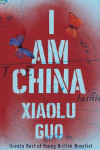
When politics force people apart.
Publisher: Chatto & Windus (Random House)
Pages: 369
Type: Fiction
Age: Adult
ISBN: 978-0-701-18819-1
First Published: 5th June 2014
Date Reviewed: 8th February 2016
Rating: 1/5
Iona is tasked with translating a set of letters and diary entries handed to a publisher by a Chinese woman. The publisher has a mind to release the work but first they have to know what it’s all about.
I Am China is a semi-literary novel about personal/political problems in China. It promises much but delivers little.
There are major issues with the book, namely the way the story is told. The set up is all very convenient, contrived; the story of Jian and Mu is told through the letters but it would’ve been much better had we heard directly from the characters themselves. The translator, Iona, is nothing but a plot device inserted to allow the story to come to fruition, as are the other few characters – the publisher, for instance. The problem becomes two-fold when Guo starts to try and make more of Iona. Guo is all about telling, never showing, and it’s far too obvious that she’s trying to insert some meaning into Iona’s own story – you can practically see the thought process as the author realises her readers are going to see through Iona as nothing but a device and she doesn’t want you to see her as a device.
Amongst all this telling, then, is repetition and a distinct lack of emotion and character development beyond Iona. Guo is relating a very important subject but that subject never becomes important because of the lack of anything to pull the reader in and make them care. The author tacks on various statements about Iona’s emotional state whilst reading these letters but it never rings true. And a publisher planning to publish work without any idea what it’s about or permission from the owner of the text… one of those, possibly, but both?
Unfortunately the writing itself is also problematic. English is Guo’s second language so it’s understandable there would be errors but it seems the author was left completely alone when it came to the copy-editing stages.
I Am China is a fair idea gone horribly wrong. Look elsewhere for books on the aftermath of Mao.
Related Books
Cheryl Strayed – Wild
Posted 13th January 2016
Category: Reviews Genres: 2010s, Domestic, Memoir, Spiritual, Travel
5 Comments

Climb every mountain.
Publisher: Knopf (Random House)
Pages: 309
Type: Non-Fiction
Age: Adult
ISBN: 978-0-307-59273-6
First Published: 20th March 2012
Date Reviewed: 12th January 2016
Rating: 3.5/5
By 26, Cheryl Strayed had lost her mother, had multiple affairs as a result of the pain and confusion, and divorced her husband who she still loved, knowing that separating was the right thing to do. Looking back on a random shopping trip she’d taken, when she’d seen a guidebook about hiking the Pacific Crest Trail, Strayed decided to up sticks and take up the challenge of travelling a large portion of it (without any preparation), hoping it would help her get back to herself and work out how to move on.
Wild is a memoir, a hybrid of travel report and spiritual (not religious) journey that includes both the day to day of Strayed’s literal journey and flashbacks to the past. Written up around 18 years after the events it rests on memory and diary notes.
I’ve written that last sentence now so we can deal with this part first – it’s best to know before going into Strayed’s memoir that a lot of time has passed since her journey and thus when something doesn’t sound quite true or realistic, it’s not necessarily made up, though of course it could be. There are a lot of anecdotes and repeated information, a lot of detail that is difficult to believe considering Strayed never mentions writing in her journal (instead falling asleep exhausted many times) and some things sound a little too… cute. It’s fair, in this book’s case, to say that Strayed probably isn’t lying – she has most likely forgotten a lot of details and had to rely on sketchy memories and other people’s memories to form conversations. Because she’s detailed a lot of conversations in great, well, detail.
It’s obviously a pity from this perspective that the journey happened so long ago, but the dubious quality of the book is not, at least, a drawback. Strayed doesn’t exactly impress upon you the fact she’s writing so late, but it’s not been hidden either. Who knows, perhaps some of it was written up and no one wanted to publish it at the time. Suffice to say it’s worth keeping all this mind, accepting that your doubts may be warranted, and then getting on with the book.
Because it’s a good book. Strayed is open about the fact she’s no seasoned hiker (and you’re not going to find Bill Bryson or the like here) but that’s part of the journey. Strayed learns to hike as she goes along, detailing plainly her silly, rash, decisions, her embarrassing moments, the times she was worried and wanted to quit, and this lack of knowledge means that the book is accessible to anyone who is interested in hiking, whatever their own experience. (It’s worth noting that Strayed doesn’t hike all of the trail, and a few times she hitch-hikes to bypass certain sections which can be a bit disappointing as a reader.)
Less humble is Strayed’s discussion of her family. There is an element of self-absorption in the book that’s pretty tolerable during the hiking sections but less so in flashbacks. Strayed casts herself as the golden child, putting herself on a pedestal and detailing the lack of time her siblings put into the event of their mother’s illness and the aftermath of her death. It could well be true, and certainly Strayed talks more objectively about her siblings later on, but it doesn’t do Strayed any favours. Most other people are given more thrift. Strayed’s ex-husband is blameless, indeed Strayed makes it clear it was her fault without going into apologies – it’s a fact, it happened, and now she’s got to move on. Fellow travellers fare differently depending on how they appeared and how they treated Strayed, quite naturally. For all this book is about solo hiking, there are meetings with many other people, too.
It’s true that whilst open and humble about her lack of hiking ability, Strayed has a lot of good luck on her journey and writes a lot of me-me-me paragraphs. This is where you have to know that this isn’t simply a travel memoir – the whole point of Strayed’s journey, whilst, yes, she certainly wants to be able to say she managed to hike the trail and celebrate such an accomplishment, is to move on from her mother’s death. But yes, it can at times become a bit much.
Now the prose itself is far from perfect but as an overall product, Wild is a good, easy, read. Strayed succeeds in taking you along with her to the point that you’ll likely feel as daunted, yes daunted, once the end is nigh – physical exertion aside, you’ll feel you’ve joined Strayed on the trail. As much as she looks back on her life she describes the landscape and offers an image clear enough that the lack of photography in the book is no drawback. What’s the landscape? Forest, desert, snow, sun, heavy rain – pretty much everything. There’s even a crater formally known as a volcano. And throughout Strayed carries her monstrous backpack, the shoes on her feet causing her no end of problems. (She’s pretty graphic about those problems; beware if you plan to read this book over lunch.)
Strayed discusses abortion, her affairs, her drug use, openly – almost to a fault. She swears casually. This is a book full of heart, full of personal truth, but it must be said there’s no big resolution, in fact the book ends quite suddenly with a purchased reward, a glimpse of what hindsight could have told her about the future, and nothing else. Clearly the takeaway is the journey, the journey on foot and the journey in mind.
A special mention must be made for the literary details. Strayed reports on the books she read during her trip, their subject matter, what she likes about them, and then their unfortunate end as she turns their extra pack weight into ashes. There’s a nice variety here and to show that books are important despite their sorry ends, there’s even a list of them at the back of the book in case you want to be well-read in a particular Cheryl Strayed manner.
Wild offers the chance to go on a long hike without moving a muscle. It offers a story of personal growth and redemption that’s earnest and unashamed, even inspiring. Should you read it? Yes; even after all the problems discussed, I still think you should.
Related Books
None yet


