




Freya North – Chances
Posted 25th June 2011
Category: Reviews Genres: 2010s, Chick-Lit, Domestic
2 Comments
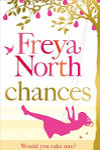
Two chances to love again. One opportunity.
Publisher: Harper Collins
Pages: 375
Type: Fiction
Age: Adult
ISBN: 978-0-00-732666-2
First Published: 31st March 2011
Date Reviewed: 23rd June 2011
Rating: 3/5
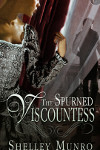
Vita left Tim after he cheated on her a third time; she’d finally had enough. Oliver was happily married until his wife was killed in a car accident. When Vita’s tree starts causing her problems, Oliver’s business is the place to call. The tree is going to have to stay, says Oliver, and he doesn’t realise that he will be staying too.
Chances is a nice book, but it lacks in the elements required to ensure for reader motivation. This lack is something that has existed in North’s other books, but never to this extent. It’s rather strange. The characters are very well developed, even if Vita is pretty silly, and the reader can really enter their lives but there’s just this absence of any sort of adrenalin on the part of the author.
Unfortunately, the set up doesn’t help because combined with the way in which North writes it all seems very mundane – and it shouldn’t; we’re dealing with awful circumstances here. And although North tells us how much Oliver misses his wife, the way the story pans out in the book makes it seem as though he’s made a decision rather quickly.
Things are interesting when Vita meets her first potential man after her break-up, but of course this interest is thwarted because the man isn’t the hero and thus he’s not going to stick around by default. Talking of which, look out for sex scenes.
Where Love Rules was hard-hitting, and Secrets was boring but had a point, Chances is simply a nonentity. It fits the Chick-Lit genre perfectly, but the subject has not been handled well. It would also be nice if Oliver didn’t always call Vita, who is 11 years younger than him, “missy”, because it really doesn’t sound good. And there is a great deal of cringe-worthy content such as melodrama – the sort you’d expect from an Austen novel due to difference in time periods – and events that are just not believable. Finally there are a lot of spelling and grammar errors, which is bad for a book where one character is obsessed with correct English, and even worse when the corrected English is sometimes not correct at all.
The characters are well developed, the location is beautiful, and the dialogue often humorous – but this novel is only okay. There is really nothing to be taken away from it and that’s a pity because there is a very real subject matter at hand. North has done better, and although I wouldn’t say, “don’t read it” there are, sadly, a vast number of other books out there that are more worth your time. To put it simply, when you close it you’ll be wondering where the book was.
Related Books

J B – Zor
Posted 13th June 2011
Category: Reviews Genres: 2010s, Philosophy, Science, Spiritual
Comments Off on J B – Zor
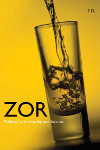
The story of how advice and philosophy can be skewed when people view them in the way that suits them; and that when the teaching and the person come together it can produce results.
Publisher: (self-published)
Pages: 268
Type: Fiction
Age: Adult
ISBN: 978-1-4528-9540-6
First Published: 2010
Date Reviewed: 13th June 2011
Rating: 5/5
A “contented” John first meets Zor when the latter fends off a couple of verbally abusive strangers, simply by not reacting. John is stunned, and even more so when Zor tells him what happened from a different point of view. Now John finds Zor at the bar he frequents, the man arriving on seemingly random occasions. John has problems, but beyond that believes things are as good as they will get – which isn’t very good but something he accepts. Zor has advice, but John must first work out whether it’s better not to trust him.
Although the book is fiction, it is steeped in non-fiction. Zor is similar to Plato in that there is a discussion, but the discussion is about true themes. Thus it blends both categories. Another element that moves it away from fiction is the referencing. You are able to enjoy this book as a story, but if you are intrigued by the topics covered and wish to read about them in more detail, Zor himself provides the titles of books you may want to seek.
Depending on what ideas you have thought about, or been exposed to, before, you may find the basics of the book rather straightforward, or mind-blowing. And because of the subject, even if you’ve encountered the subjects before you can still appreciate them for the power they hold. What’s interesting is that Zor is at once a good introduction to gaining happiness, and a deeply advanced look into things. The themes move from philosophy to spirituality to science (Quantum Physics) while at the same time switching back and forth. The science in particular is in depth, but even if, like this reviewer, you are a little stumped by all the science, J.B. brilliantly describes where the philosophy meets science and the two are related. And he claims something that most people believe can never happen – that spirituality and God can sit comfortably with science – giving ample evidence and food for thought.
And food for thought is here in abundance. The thing about philosophy is that it gives advice, which you could say is like a self-help book, but unlike your typical self-help book, it’s comparatively difficult to mock it’s worth. There is too much in Zor to discuss it all in a review, so here I will choose a few topics to include and/or talk about.
“Instead of being pro-peace, they become anti-war. Instead of trying to increase a positive they choose to decrease a negative. It is that very concentration that attracts more negative energy.”
“The times were not better, you were.”
“A child is beaten by a parent, who was criticized by a spouse, who was disrespected by a co-worker, who was yelled at by a manager, who was subjected to road rage by a stranger, who was given the wrong order at a coffee shop.
Who would ever believe the wrong amount of sugar in a cup of coffee fifty miles away, could cause a child to be beaten?”
That last quotation could be viewed as a bold stance to take, but one aspect you have to remember is that it takes this kind of thinking to truly sort issues out. The quote can easily be backed up by the fact that many people say they won’t treat their children as their parents treated them [the new parents]. This is often in an attempt to break a cycle where an issue has continued down through the generations because of one person’s negativity, if not simply to make someone’s life happier – for example a person receives no love from a parent because the parent doesn’t know how to love them because they never received parental love themselves. The cycle has continued and somewhere it should be stopped.
Negativity being passed on is just one of the themes discussed in Zor that are part of the overall topic of conquering negativity. The smallest things to one person can change the entire life of someone else.
Something that worries many people is their partner cheating on them, but in worrying about it aren’t we pushing it to happen? Because if it happens then we will feel content that we were right, correct? And in pushing it to happen we are focusing on the negative. If we focus on it happening then the way we act towards the person is only going to push them towards doing it – we will be too needy or too criticising. If we focused on how to keep ourselves happy, and thus them happy, perhaps it wouldn’t happen so much. We recognise the potential for someone to cheat, but if we recognise also, and just as much, the potential of them being faithful, we will be happier. How can we expect someone to be faithful if we do not treat them with happiness and create ourselves as points of happiness that they want to be with? Of course this isn’t a foolproof method, but if everyone did it we would see less problems. And by speaking collectively, using the word “we”, the idea becomes stronger, it becomes personal, and therefore we have more of a reason to want to conquer it.
Zor’s method for being happy is rather simple, really, although keeping it up is very difficult. Due to the subject and reasons for the book it would not be a spoiler to say that Zor advocates thinking positively at all times and in place of negative thoughts to think of something positive. John goes home to his wife and moans about work. That gives her something negative to think about, and this negativity unconsciously repels them from each other – who wants to be with someone who makes them feel negative, reminds them of bad things? They go to bed at different times and don’t talk. When John does what Zor advises he goes home, speaks of only the positive parts of his day and asks his wife about hers. This makes them have a good conversation, which ultimately means they spend time together. Their love life reaps the benefits.
And that is something very important to know about this book, when I say, “when John does what Zor advises”. J.B. discusses philosophy; a lot of people would not accept the kinds of things he talks about. And if he’d made John into a vacuum, a person who sucked up everything Zor said without thought, the goodness of the book would have been lost. Instead J.B. has created a very cautious character, one who borders on self-righteous, and lets him remain this way for most of the book. Even when John finds that the advice he does take on board works, he still remains a sceptic.
The last topic that I would like to mention is the one surrounding John’s reason to do what changes him so much. Zor says that one needs to have the right motivation for the action, not just the right idea, for it to work.
It is obvious that J.B. had much in mind to say, and his information and advice has been written very well – there is never too much (unlike this review), there is never too little, and he goes into more detail the further you get into the book so that you’re able to get used to ideas beforehand. Like most books that speak of similar themes you must be willing to open your mind to different viewpoints, but, and this is also like many similar subject books, you will not find your own opinions a victim unless you decide they are going to be.
Zor successfully gives the reader advice on how to take control of their lives on a happiness level, making ripples that extend to others as a result. You may already know what it takes, but often hearing it confirmed makes all the difference between wanting to carry it out and actually carrying it out. The book combines important teachings with a well-thought-out narrative and an easy-to-read style. It’s not too long, it’s not too short, and would provide both for people wanting an introduction to the themes and people with years of reading behind them.
Where self-help books spend ages telling you how to be happy, J.B. tells you straight away and all you need is willing.
I received this book for review from the author.
Related Books

The Hippie – Snowflake Obsidian
Posted 25th May 2011
Category: Reviews Genres: 2010s, Angst, Memoir
Comments Off on The Hippie – Snowflake Obsidian
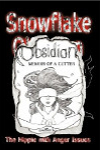
Learning to love yourself and others can sometimes be a difficult process.
Publisher: iUniverse (self-published)
Pages: 252
Type: Non-Fiction
Age: Young Adult
ISBN: 978-1-4502-6554-6
First Published: 2010
Date Reviewed: 20th May 2011
Rating: 3/5
Willow, aged 19, has always been a bit different but she has a good group of friends. Not so good is her relationship with her father and her life with her family in general. When she meets River she sees in him someone she can truly love but River has his own issues. As Willow starts to see the flaws in her world she becomes bogged down by it and must find a way out.
Written like a novel, Snowflake Obsidian, provides an important message. But it is not narrated in the way you might expect from a book that one would describe as important. It is not a literary masterpiece, but then it isn’t supposed to be. The writing style is such that sometimes there is extreme colloquialism, and there are times when you feel yourself questioning the grammar. However the grammar does illustrate the mindset of the person in question; although the memoir is a story of the past, and of self-harm, The Hippie tells her story with as much feeling as though she were going through it at the time of writing. The writing style would appeal to the target audience, and considering The Hippie is looking to help young people rather than win over a bunch of critics (I realise that my writing this review is thereby somewhat funny, but this book will go nowhere without being spoken about) it is okay.
Unfortunately, style aside, there are a lot of errors that detract from the writing because at times one must read over a sentence a few times to work out what it should really say. This can make reading it frustrating in a way it should not be.
Because so much of The Hippie’s focus is on her love life, quite understandably given her age and how awful heartache is in general, it can be easy at times to overlook the other problems and wonder why she let herself become depressed. Personal experience of her issues would definitely help – again the targeted reader of the book would likely share at least one of her issues – but reminding yourself of the nature of them would suffice. The way in which the author describes her relationship with her father might make a reader wonder what the problem is until you put yourself in her shoes. That the decent into depression seems rather sudden is actually incredibly understandable.
The Hippie makes good use of the advice given to her. While one of the elements, a monkey being obsessed with trying to get a peanut, can become repetitive, after a while you can see why it is appropriate and indeed you might be able to apply it to your own life.
One thing that I would say most people would struggle with is why The Hippie stays with her destructive boyfriend. It seems obvious that she should leave him, but in time she does address this. Indeed a lot of her thoughts could be applied to many people’s opinions of their partners, the most prominent being that you can’t change someone and that wanting to change them reflects the unhappiness you have in yourself.
Due to the subject one can’t really comment on whether it is a good book in the usual sense, but rather if it fulfills it’s purpose. On that this reviewer would say that it does but it could use some editing in order to fulfill it’s purpose to perfection.
I received this book for review from the author thanks to Pump Up Your Book.
Related Books

Danielle Trussoni – Angelology
Posted 19th May 2011
Category: Reviews Genres: 2010s, Fantasy, Theological
2 Comments
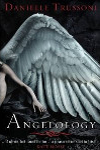
The Bible speaks briefly of the Nephilim, but what if they deserved a lot more words than they were given?
Publisher: Michael Joseph (Penguin)
Pages: 452
Type: Fiction
Age: Adult
ISBN: 978-0-718-15558-2
First Published: 2010
Date Reviewed: 19th April 2011
Rating: 3/5
Evangeline has always led a routine existence; as a nun she looks after the mail and devotes her time to prayer. But all that changes when a man arrives seeking information about a past Mother Superior. Verlaine is working for a tall blond who surpasses human averages by far, someone who isn’t about to let him do his job alone.
Angelology is the first book in a new trilogy written by Trussoni that examines the possibility of evil angels walking the earth. In it she links historic events to these human-angel hybrids and creates a whole educational system for the suppression of them.
Something that I feel is important to impart to the potential reader is the amount of background information included, indeed a large chunk of the book is dedicated to an event that happened over fifty years before. In this Trussoni blends fact with fiction and some sections are extremely interesting but one can feel bogged down especially as you can’t exactly take much of the information away with you for use in everyday life.
The way in which Trussoni goes about telling her tale is at once brilliant and ridiculous. The brilliance comes in the form of such things as drawing a subtle link between the physic of the Nephilim and the dictate of the Nazis on the perfect Aryan. The ridiculous comes in the form of such things as human agents in a secret society working against Nephilim, who want to kill them, having “angel1”, and “angel2” as their car number plates.
Unfortunately it is this second element that dominates the book, and it’s not until the end that things pick up. One character obviously sees a Nephilim, sees their wings, but it isn’t until someone else tells her much later on that she realises it was a Nephilim she saw. Add to this the fact that Trussoni constantly tells us that this character is the brightest student and, well, you can see where this is going.
The characters are not particularly developed, and the sort-of main character, Evangeline, supposedly the heroine, only gets things done because she has people telling her what to do. That she is a major factor in the Angelology circle is peculiar.
There is an issue with language and the book in relation to international audiences. Trussoni talks often of Verlaine’s “wing-tips”. On doing research, I discovered that this is the American phrase for a type of shoe, but even so, it’s really not the best way she could have described them when her book is about winged creatures.
The saving grace of the story is the ending, where Trussoni finally takes the plunge and delivers some top-notch plot ideas. The pacing and variation do make up a lot for the prior 300 or so pages, but unless you are happy to stick with a very average book until the end you are likely to deem it not worth it and that would be entirely understandable.
If you want to read Angelology proceed with caution, and I would recommend having a second book to hand for times when things get silly.
Related Books

Sarah Haynes – Things He Never Knew
Posted 13th May 2011
Category: Reviews Genres: 2010s, Chick-Lit, Domestic
1 Comment

If you live with a lie in your life, that day of truth will surely come.
Publisher: Olympia Publishers
Pages: 275
Type: Fiction
Age: Adult
ISBN: 978-1-848-97089-2
First Published: 2010
Date Reviewed: 11th May 2011
Rating: 4.5/5
Steph’s life is picture perfect; a beautiful house, a loving husband, gorgeous twin girls, and enough money for good food and fashionable clothing. But the image is deceiving, for behind it lurks a woman who isn’t quite satisfied with being a housewife – although she realises how nice a position she is in – and something else. What her husband doesn’t know is that their twins aren’t his, the product of a one-night stand with their mutual best friend, Ed. Steph never knew how to tell Theo, and couldn’t tell Ed, and now ten years have gone by. But it won’t end there.
Things He Never Knew is the debut novel of Haynes and categorising it is difficult. On the one hand you have a sort of chick-lit book, an easy read that I found provoked in me similar feelings of comfort I get when reading an Adele Parks or Lisa Jewell, but the subject matter and the handling of it move it away from the genre to provide more of a harder look into a tough situation.
At the beginning there is a great amount of dialogue in this story where a lot of times description might have been better than discussion but as the story progresses this slowly disappears and Haynes comes into her own.
The story is well thought out, whenever you think that you might have found a gap in a character’s reasoning it takes only a few more lines, at best a few paragraphs, for that gap to be filled. Indeed there are a few places where the reader may consider that Haynes has taken the easy route to create more drama, particularly near the end – but in actual fact these elements are used in order to develop the characters further and explore the domestic aspects and relationships. And it all works rather well.
The narrative flows finely and if you’re looking for a book that will keep you entertained while providing you with something to think about, as well as being impossible to put down, Things He Never Knew is the ideal candidate. Haynes’s references are often firmly based in British life but due to the relative wealth of the characters there are a lot of international references too. This makes the book simple to relate to.
Naturally the character that springs to mind as most developed is Steph, who has to re-evaluate everything she’s done and then try to piece together a life that is appropriate – but Theo’s development is of great importance. One only needs to be aware of the basic plot to know that everything will hang on him, and his progression as a person may surprise you. Haynes is neither harsh nor does she treat the characters with kid gloves; she feels for all of them and looks at the issues from an objective viewpoint. She writes in the way of a historian evaluating all the evidence before coming to a conclusion. And the conclusion may be hers but you never get the sense that she is preaching an opinion, her choices are for the characters she’s created. Julia’s participation in the story takes the narrative down a different road than you might have been expecting.
Of course one could not write about this book without looking directly at the subject at hand. In an era when people are openly bringing up children who aren’t their own, adoption aside, you have to question motives and look at the arguments with a clear contemporary mindset. But you also need to think back to the past because the book places both personal history (which has links to social history) right alongside present day culture and finds a resolution between them.
Whether or not you agree with the choices Steph makes or the way in which the issues are resolved is something for you to decide, because obviously it is not the only possible conclusion, and a good effort is made to look at the issues from a range of angles. The close and careful look into each person’s mindset allows you to understand why these choices are made.
Is this a book for chick-lit lovers or readers of fiction overall? This reader would say it fits both categories near enough equally and that there is something for everyone inside its cover. And if the third category concerns recommendation then yes, I most certainly recommend it.
Related Books


