




Diane Setterfield – Bellman & Black
Posted 24th November 2014
Category: Reviews Genres: 2010s, Commentary, Domestic, Historical, Paranormal, Spiritual
9 Comments

A ‘ghost’ story perhaps, but not in the usual sense.
Publisher: Orion
Pages: 307
Type: Fiction
Age: Adult
ISBN: 978-1-409-12801-4
First Published: 10th October 2013
Date Reviewed: 23rd November 2014
Rating: 4/5
At ten years of age, William Bellman strikes a rook with a stone and a catapult. He’s a little chilled by the experience; as the stone flies forward he wants to warn the rook but can’t. And life goes on. William isn’t to know that the experience will never truly leave him, but he may not see what is happening.
Bellman & Black is a literary novel of a certain, rather unique kind, in that the story isn’t obvious and the writing style differs to many others. Setterfield speaks in the third person from an almost personal point of view yet the writing itself is almost scarce – almost bullet-pointed in style. The book is an echo of Dickens – his voice, the uncanny, spooky, way he seems to be speaking just over your shoulder at times, and a similar darkness when things become creepy (yes, darkness and creepy even when they can be one and the same). The basic themes are of time and working rather than living – missing out. There is a worthy link to be made with Scarlet O’Hara’s rescheduling of everything for tomorrow morning.
Something that needs to be said straight away is that Setterfield is never quite clear about what is happening, or, rather, why such a thing is happening. There’s a meaning, a message, in this book, but you’ll possibly have to dig very deep to find it and it’s beyond the normal thought of interpretation. Part of this is, sadly yet understandably, due to the subtitle of ‘a ghost story’. Bellman & Black is not a ghost story or, if it is, then again it’s not at all clear.
There are sections throughout that deal with rooks, that speak of rooks in a particularly familiar way as the author speaks directly to the reader, but this is yet again vague. It’s as though Setterfield has provided pieces of the puzzle for the reader to put together and work out, which isn’t unusual in literature and can result in some amazing revelations, but unlike other authors, Setterfield has forgotten to give you the last few pieces. Maybe the individual interpretation is the whole point, but even if it is, there needed to be more to use.
The book is far more about character than plot, indeed unless you’ve an interest in retail history or business you may find the repetitions of workaholic Bellman a bit dull, however you will no doubt see the reasoning for it. Setterfield repeats herself to the extreme so you want to be prepared for that. If you are interested in retail history – the television show Mr Selfridge comes to mind – you’ll likely want to keep reading beyond the end. There is also a fair amount about the workings of a mill – whether it’s earlier than the industrial revolution is something that’s in itself fun to work out.
As for the character development, Setterfield has settled for something in between realism and fantasy, as is of course obvious from the first few pages. It’s both fast and slow – Bellman becomes who he will be very quickly yet the result of this only begins to be revealed later on. The secondary characters are not fleshed out as much as you might hope because, put simply, the book isn’t about them. They are there to show you what Bellman is missing. They are stereotypes and cardboard cut outs to give you a quick idea of what Bellman leaves behind when he’s at the office, so that you’ve a good understanding of what he could have and also a good understanding of how his friends and family are likely to feel.
As said, the placement is vague. The book is obviously historical but there are no dates given, no countries (at least for Bellman). It does become clear as the book carries on as elements of a certain period are brought into play. The vagueness allows for a certain quality – left to your own devices you are able to concentrate on Bellman rather than the history and Setterfield can get on with her narration without too much detailing. There is enough detailing to set the scene and that is it. The superfluous is down solely to the repetition and as that is up for contention that’s no bad thing. The lack of dates also allow Setterfield to illustrate how her themes are eternal. (Themes are one thing and clear enough, it is the message that is less clear.)
Bellman & Black makes for a fair read. It’s enjoyable, the writing is intriguing, beautiful, almost, and there is just suspense enough that you’ll want to continue. Just don’t hope for too much – enjoy the ride as it is without expectation but realise that due to the lack of information you may not actually feel like spending time mulling over the content afterwards. Your reading will be, much like it’s theme, very much in the present with no thought of the future.
Related Books
None yet
Suzannah Lipscomb – A Visitor’s Companion To Tudor England
Posted 14th November 2014
Category: Reviews Genres: 2010s, History, Political, Social, Theological
2 Comments

History and the roofs under which it occurred.
Publisher: Ebury Press (Random House)
Pages: 281
Type: Non-Fiction
Age: Adult
ISBN: 978-0-091-94484-1
First Published: 15th March 2012
Date Reviewed: 12th November 2014
Rating: 4/5
In a work that is a combination of reference book and good old straightforward non-fiction, Lipscomb focuses on 50 different locations with a background either exclusively Tudor or worthy of a visit by those interested in the popular history.
There are two ways to read A Visitor’s Companion To Tudor England. Lipscomb herself introduces it as a guide for the general reader, bereft of footnotes and too much information so that it’s accessible to all. This makes the first way of reading that of the previously uninformed. The second way is obviously one that is more natural to myself and quite likely many who read this review – as yet another book that will enable you to spend even more time on something you already enjoy learning about.
Lipscomb’s introduction sets out all you might have wanted to know about the selection of these houses, castles, tombs, and ruins, which is important to read because no matter your prior knowledge you’ll likely say ‘but what about such and such a place?’. Lipscomb tells us why some prominent places did not make the cut, why less well-known places did, and whether or not you agree with her choices you get to see all the planning involved.
However the book does not entirely live up to its promise and this is because of the criteria. The specific criteria listed in the introduction means that some places are of only minor interest overall (perhaps more interest if you’ve had time to visit all the major places before) and this is compounded by the fact that the approach to the chapters vary. Some focus on describing what you will see, others leave that out in favour of writing about the occupants, and there will be times you’ll likely wish another slice of the history had been focused on instead of the one chosen, the abode of a person of more interest written of instead. This means that the book as a ‘handbook’ is less useful unless you’re using it as a quick reference when deciding where to go on your next day trip.
There is a lot of well-known history included, but also a lot of lesser-known facts. In this way both those with prior knowledge and those without are catered for – for every fact you may know, there is a new one, and for the new learner it’s fair to say this gets you up to speed. Whilst there are no footnotes (another decision discussed in the introduction) Lipscomb includes various views from primary sources as well as her own and those from her peers; much as in her work for television, views are discussed before thoughts are given as to her own, so you also get a good taste for the study of history here, too.
What doesn’t work so well are the suppositions. There are many ‘probablys’ in this book, and this is of course more problematic given the lack of footnotes, as there are ‘probablys’ without reasoning behind them. This may work for new learners but means that you won’t learn as many facts as you might think. The cross-references to other chapters are a few too many and there is a lot of repetition – though this is to aid the reader who wants only to dip in to one or two chapters. There are also sections about Tudor life included in chapters that aren’t related to the subject at hand wherein you might wish more had been written about the location.
A Visitor’s Companion To Tudor England is good, but (necessarily) brief. It sports enough to please all readers but is most likely to satisfy the new reader. The inclusions of lesser-known places, however, make it a worthwhile quick read for all.
Related Books

Elise Alden – Pitch Imperfect
Posted 31st October 2014
Category: Reviews Genres: 2010s, Angst, Domestic, Romance, Social
2 Comments
Do Re Me You So La Te.
Publisher: Carina Press
Pages: 153
Type: Fiction
Age: Adult
ISBN: 978-1-322-07557-0
First Published: 20th October 2014
Date Reviewed: 30th October 2014
Rating: 2/5
Anjuli’s given up her singing career and returned home to Scotland. Sad events behind her, or so she hopes, she looks forward to the renovation of the Victorian manor she has bought and tries not to think too much about the millions she’s lost. Then there’s Rob, the man she left at the altar eight years ago, the love of her life. As much as she was happy with her career, she sorely regrets leaving him. Has he thought of her?
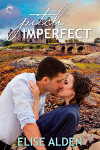
Pitch Imperfect is a book that starts well but all too soon falls victim to too many subplots and a whiny-for-no-reason heroine.
Anjuli moans about everyone – Rob’s receptionist who she labels a busybody for no good reason, Mac’s dress sense (the woman is a teacher, she’s not going to be wearing the carefree outfits of her younger years). She hates a woman who happens to be talking to Rob and leaves on obviously friendly rather than intimate terms; she hates reporter Sarah who has accepted that Rob will never be hers and never suggests otherwise. Anjuli is always moaning, always hating others, and it’s impossible to see what Rob sees in her.
In addition there is a lot of slut-shaming and thin-shaming, enough that to review without discussing it would actually be impractical. Women who go near Rob are sluts, Sarah is a slut, and then there is all the hatred for thin women. Anjuli has a bit of weight on her but no one points it out, quite rightly, and in fact the men in this book find her curves irresistible. Nevertheless Anjuli spews further hatred on Sarah and other women because they happen to be thin. The hate would be somewhat understandable if the women were in relationships with Rob but there is never any evidence of that – the reader knows it’s not happening, Anjuli only ever assumes.
Americanisms abound, which is understandable as far as the author is concerned because she is not British, but they really should have been caught during the editing process.
So what is good about Pitch Imperfect? Rob is good; he is a fine character. The sex scenes are very well written. Overall the language is clear and easy to read. The setting is somewhat romantic and even though it’s fictional and would realistically be unsafe, it’s nice to see people having access to castles that we cannot have in the real world. The reason for Anjuli’s angst, besides Rob and all that hatred, is fair and well considered.
But there is too much going on in this book with all the other characters (babies from one night stands, burning buildings) and whilst a character does not have to be likeable they do need to have some reasoning behind their thoughts and actions.
Pitch Imperfect may work for some but it’s best to keep your expectations low.
I received this book for review from the publisher.
Related Books
None yet.
Erica Vetsch – A Bride’s Portrait Of Dodge City, Kansas
Posted 27th October 2014
Category: Reviews Genres: 2010s, Historical, Inspirational fiction, Mystery, Romance, Social, Spiritual, Western
Comments Off on Erica Vetsch – A Bride’s Portrait Of Dodge City, Kansas

As people learned to say cheese.
Publisher: Barbour Publishing
Pages: 309
Type: Fiction
Age: Adult
ISBN: 978-1-616-26506-9
First Published: 1st September 2011
Date Reviewed: 17th October 2014
Rating: 4/5
Addie moved to Dodge City with her uncle after troubles caused them to move from Abilene. Now Carl is dead and Addie is trying to build up their photography business by herself. She has a romance-minded friend, Fran, and then there’s the new Deputy Sheriff. Miles has started his new job, and has a few personal conflicts about the job, owing to his new found faith, but he’s excited nonetheless to be working as a lawman, especially given his past.
A Bride’s Portrait Of Dodge City, Kansas, is a pretty fair historical novel straddling the mystery, suspense, and romance genres.
Christianity features in this book. It is a big part of a few of the character’s lives however in terms of the novel itself the faith is woven in enough that the general reader should be okay with it. There are a couple of times where Miles feels he should be declaring his faith to his boss, which isn’t really appropriate, but otherwise the times the characters think of God are totally natural – Addie prays for help whilst hiding from shooting, for example. And there isn’t all that many textual references to it, it is more a case that the reader knows the characters have faith.
The language is generally very good, the characters well written. Addie is self-employed, a woman working as a photographer in the 1800s against various prejudices. She is strong throughout. Fran is a dreamer and doesn’t realise the potential danger ahead, and Vetsch does put her in some situations, including a scene of harsh words from the man who says he loves her, but overall you can see where the author was wanting to show how the good guy can be a mysterious knight in shining armour if given the chance. This said there is a scene in which a bad guy gets perhaps more nasty than he had previously seemed (yes, even for his associations) that readers may find uncomfortable for the way it plays out. Miles will appeal more to a Christian reader than otherwise, though either way you’re likely to see him as a fair hero.
There are repetitions, for instance you hear about Addie’s move from Abilene a few times and there aren’t really enough updates to warrant it until later in the book when she gives you the whole story, and these feel as though a word count was needed because as soon as the narrative moves away from it the story carries on well.
The book is somewhat predictable by fact of it’s romantic genre, but another thread that seems predictable is not so much. This said, the mystery and suspense take a somewhat surprising turn near the end and one of the most obvious suspects isn’t spoken of until this end. The suspense itself, however, is written excellently and Vetsch hasn’t shied away from the details, in fact it could be said she lures you into thinking everything will be just about drunken cowboys, red lights, and saloons, until getting to the gritty stuff. And she shows the difficult and otherwise immoral choices that must be made in times of emergency.
There is a great deal to learn about photography and the times in general. There is a lot of detail given to photography but not so much as to make it boring. Indeed if you’ve even the smallest interest in the subject you’ll likely enjoy Vetsch’s descriptions. The book is firmly in cowboy territory and the balance between ‘protect the women’ and Addie’s freedom is good. Fran could have done with more freedom to choose, but given the way she is presented from the start, you know she’s going to go back on her words somewhat.
Lastly, this may be a clean romance, but its kisses and thoughts are pretty steamy all the same. Indeed Vetsch shows you don’t need sex for a fair tale of romance.
What works in A Bride’s Portrait Of Dodge City, Kansas (it’s a long title but interesting for its difference) makes up the vast majority. There may be flaws but looking at the big picture the book is very good. Cowboys and photography, gangs and romance, independence and dependence; if you’re looking for a western with a bit of faith, you could do worse than read this book.
Related Books
Merryn Allingham – The Crystal Cage
Posted 15th October 2014
Category: Reviews Genres: 2010s, Angst, Domestic, Historical, Mystery, Paranormal, Social, Spiritual
1 Comment

Time may change, but there will always be that person in a similar situation.
Publisher: Harlequin
Pages: 234
Type: Fiction
Age: Adult
ISBN: 978-1-460-33836-0
First Published: 1st August 2014
Date Reviewed: 14th October 2014
Rating: 3.5/5
Nick won’t give up, so Grace agrees – an otherwise usual day as a property historian/gallery assistant is changed when Grace accepts the energetic Nick’s proposal that they work together on his commission to discover whether a Victorian architect designed for the Great Exhibition. Grace’s life is ruled by her partner (bed and work) Oliver, and she’s done a good job of pretending she’s happy for nine years, but Nick’s offer, whilst overwhelming, piques her interest. Little is known of Lucas Royde’s career before he became famous, but that might just be about to change.
The Crystal Cage is a dual-plot novel that studies the art world and history but later takes a long look at the expectations people have of each other, especially those less well-off (in all ways), than themselves, to good effect.
None of the characters are likeable, however whether or not they are supposed to be is not obviously stated and so it would be fair to say that if you go into the book knowing that this is the case, you are likely to finish it more content than someone who goes in expecting happiness and romance. Be not ye fooled by the name of the publisher, there is little real romance here and, given the subjects, it is all the better for it.
Lucas, for example, is assuming and takes jealousy to an extreme level. A subtle, non-violent level, but one all the same. The man who is quite obviously in lust rather than love hates his rival from the word ‘go’ with scant reason and it can be hard to feel anything for him when he puts himself in such an awkward and socially unexceptionable position with little behind it that the reader can understand. His ‘romance’ is an interesting one, however, in part because of the way the author does not include any details from the point of view of the woman. Indeed the book would have been too long if she had been given a voice and so it may simply be that she was left out for no literary reason, so to speak, but nevertheless the effect is intriguing. You don’t hear a word from Alessia except through Lucas and therefore it is easy to believe that perhaps she is less in love with him than Lucas thinks, she is certainly more desperate and less powerful than Lucas can comprehend. Their story may be sad, and it may be true as much as the fiction can be, but what is left out ensures that there is a further link in the main social theme.
This theme is of control, the expectations I have stated above. Grace became Oliver’s partner in every sense of the word, but it was/is a case of what Oliver says, goes. He was the lifeline she needed – the security, the job, perhaps even the man in a sexual sense – as long as she was at his beck and call. It is somewhat a spoiler to say this, so you may want to move on to the next paragraph if you’d rather not know too much, but the theme continues somewhat with Nick. Bounding, get-up-and-go Nick, whom Grace likens to Tigger. Whereas Oliver’s persona may have been obvious from the start, at least it would have been if Grace had been less in need, Nick allows the author to show how control can come in different forms. Similarly Alessia is controlled by her reported love for Lucas, and by her husband. It’s interesting to compare the two situations because the contemporary version may hit harder, being closer to home than the Victorian period. But of course both are equally damning.
This all sounds very good, and it is, but this theme consumes the end rather than the main section of the book. The book is overwritten. It’s wordy, flowery, and rather repetitive, with ideas being repeated mere pages after they have already been stated. There is also an element of prolonged angst to it that can be difficult to read. The insistence by Lucas that he’s in love when the reader can see that it is pure lust makes the story difficult to continue.
Nick and Grace are rude. They literally run away from people who had made time for them as soon as they, Nick and Grace, realise the person doesn’t have much information for them. They are well-matched in their lack of tact and in their attitudes to others. Lucas is jealous, as said, hateful of too many, and assumes too much.
The mystery has many, many dead ends, and these are convenient, a way to keep the story going. After a couple of these occasions wherein a search looks promising but is then fruitless, it becomes too predictable and the meetings and searches boring. Then, later, this turns 180 degrees when ideas about Royde appear out of the blue with no ‘evidence’ (for Royde is fictional) behind them. Grace makes guesses that are correct, but they are too much of an assumption without the information the reader has been privy to.
Lastly there are a few names and places that invite confusion, and areas that, other than the filler content, could have used more editing.
Yet the history itself is appealing and there is enough factual information for the interested reader to jump from it into their own research. And the ending itself is highly appropriate and rather excellent. Allingham shows all the worries and backtracking of someone in a difficult situation but writes the ending that you could say is expected. She doesn’t make sweeping changes or include roses on doorsteps – she gives you the realistic truth and has her character remain strong. And she shows that backwards can often be a step forward.
Granted the history works best for the themes of control and independence and less so for the romance. It could be argued that the book would have been better without the Victorian romance, and certainly Grace’s story of discovery is more compelling, but the theme itself makes it all worth it in the end.
The Crystal Cage as a title is exactly what it seems to be, just as relationships often are not. It takes time and yes, effort, to get there, but the book is recommended.
I received this book for review from Historical Fiction Virtual Book Tours.
Related Books
None yet


