




Amanda Craig – The Other Side Of You
Posted 10th February 2017
Category: Reviews Genres: 2010s, Magical Realism, Social, Spiritual
1 Comment
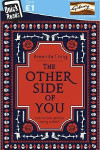
Tale as old as time.
Publisher: Abacus (Little, Brown)
Pages: 100
Type: Fiction
Age: Adult
ISBN: 978-0-349-14172-5
First Published: 2nd February 2017
Date Reviewed: 1st February 2017
Rating: 4.5/5
When Will discovers his aunt has been killed in their flat, he runs away from those who did it. Leaving his estate behind he finds sanctuary in the middle of a residential square, climbing over a fence into a a garden that’s running wild. Dirty, scarred, worried and self-conscious, he begins to learn about gardening and stays hidden, pruning back the plants to bring the place to its former glory. But although he has food enough he lacks the money for other things and so he starts to venture outside the fence.
The Other Side Of You is a novella written for the charity Quick Reads. In keeping with the context and mission, the book sports simple language; it also has bigger print and a hundred pages. The idea is to produce a book that is accessible as well as good for those who want to read but may not have much time.
As you will expect, Craig’s book satisfies these well. The book fits the current recurrence in literature of fairytale retellings; the story is set in present day London with all the realities, hardships, rich spots. It leans on the basic traditional tale for its names – making it easy to see where Craig has chosen to stick as well as deviate in her retelling – as well as the message, but beyond that crafts a different story.
You have to suspend belief to read this book. Craig unapologetically nods to dreams and the almost impossible, blending difficult and achievement in interesting ways, with Will gaining something incredible at the end that in hindsight you see Craig’s workings towards it. It’s the awesome lucky happenstance she seems to say, ‘work at it and things will come’ even if your own is more realistic. Secondly, in terms of realism there is a lovely magical realism/paranormal aspect to the book where Will hears a voice that carries him on, helps him get over impossible fences and so forth that looks to a phenomenon called Third Man Syndrome.
Due to the book’s shortness character development is understandably swift but it’s good, Will beginning with a major lack of knowledge of many things and quickly picking up meanings and concepts. The other characters are devices and this works well. All focus on Will.
The Other Side Of You is a great little book. This slow reader loved it.
I received this book for review.
Related Books
None yet.
Nicola Cornick – The Phantom Tree
Posted 8th February 2017
Category: Reviews Genres: 2010s, Domestic, Fantasy, Historical, Mystery, Paranormal, Romance
2 Comments

Those of both history and the present.
Publisher: Harlequin
Pages: 420
Type: Fiction
Age: Adult
ISBN: 978-1-848-45504-7
First Published: 29th December 2016
Date Reviewed: 22nd January 2017
Rating: 4/5
When Alison ran away from her abusive cousin she had no idea that opening the inn door would whisk her away from the 1500s and straight onto a 21st century street. But that it did; when her cousin, now father of her child, sends her away, she returns to the present but though she adapts well to modern life she yearns to return to her son. Meanwhile, Mary Seymour deals with continuous accusations of witchcraft and a house that doesn’t want her. And forefront in her mind is the promise she made to Alison to somehow leave word of baby Arthur.
The Phantom Tree is a time travel book in a similar vein but different voice to Cornick’s previous novel, House Of Shadows. This different voice is one of the stand-out elements – Mary Seymour’s narrative, in particular, is very different from Cornick’s previous narrator, yet the author keeps her writing itself the same. It’s an interesting element that speaks highly of Cornick’s ability to develop characters whilst not changing her style too much.
Interesting, too, is the basic plot and the way the time travel has been included. There is one particular plot point that’s very predictable – the character really should have put two and two together earlier – but other than that it’s well done. Cornick hasn’t created anything new in the way that the time travelling happens but it’s the detail that’s good, the way she’s used a well-used device and just got on with the story – with time travel used so much, there’s little need for basics.
The characters are well drawn. We aren’t given much of Alison’s first days in the present, more of a quick nod, as the focus is on her search to get back. It is easy to wonder every now and then how she could have learned so much in a fairly short time but not unbelievable considering her personality. Throughout Alison is the stronger of the two heroines, and although it is true she’s mostly a modern-day character anyway, reading about her in the past shows a person who could fit in anywhere.
In Mary Seymour’s case it’s very intriguing; Cornick has exploited the lack of knowledge we have about Mary, Catherine Parr and Thomas Seymour’s daughter, and really gone to town with it, making Mary not just accused of witchcraft but actually able to see the future. Mary’s magic does contribute to an ending that some may find a bit far-fetched given our collective lack of knowledge (not far-fetched in the concept of fantasy!) and there’s something she shares with another that’s very fantastical. Thus this book goes beyond the sub-genre of time travel – it’s a full on historical fantasy with some hearty romance included.
Speaking of far-fetched, the clues left for Alison by Mary are very vague to the point that unless you trust in their relationship, and the continued significance of it despite the years apart, you may find it hard to believe. This element does stretch the imagination somewhat, though it’s more due to the way less time is spent on the sleuthing and because of the requirement for word and symbol association.
The two heroines are obviously distanced so there’s not as much room for development there as you might have hoped – this is a dual narrative that may never cross paths – but the other relationships in the book are very good. Adam, Alison’s ex-boyfriend of the modern day, is a TV historian, a role which turns out to be as excellent as you would hope in the context, and Mary gets a romance too. Cornick spends time on Alison’s search for Arthur and this thread has a very poignant ending.
There is one issue with this book as a product that unfortunately affects the reading – somewhere towards the middle the proofreading disappears. Cornick’s good writing remains throughout but the editing errors are numerous.
The Phantom Tree has a fair story, strong characterisation and great writing, and a fast pace and attention keeper even during the too-fantastical parts, but more time needed to be spent checking it over before printing.
I received this book for review.
Related Books


Speaking to Nicola Cornick about House Of Shadows, The Phantom Tree, and The Woman In The Lake (spoilers included)
Tune in as book blogger Charlie Place and author Nicola Cornick discuss burning down your place of work in fiction, every day objects of ill repute, and solving Tudor mysteries yet to be solved.
If you’re unable to use the media player above, this page has various other options for listening.
Are Older Books More Important Than Newer Ones?
Posted 6th February 2017
Category: Chit-Chat Genres: N/A
6 Comments
Following on from my post on eternally playing catch up, reading Elizabeth Fremantle’s books, with their Tudor characters who are readers, got me thinking of the way it can be easy to apply importance to older books over newer ones. I’d say we do this partly because of the plethora of newer ones and the fact we can’t know for sure which will last the time. (I also wonder if it’s in some way also due to history – there weren’t so many new books. Or were there? The biggest thing Project Gutenberg has taught me so far is that there were a lot more books published in days gone by than you’d realise.)
It kind of puts it into perspective – the Tudors didn’t have any books by, say, Austen, to read so whilst we might ascribe importance to older books there’s a relative newness to many of these older books. And then, of course, where do we stop – if we’re looking at ever-loved works we need to be looking at Plato, Socrates, and no further… is Plato too new?
On some level, there is something to be said for only or mainly reading older books. I know that whilst I myself don’t think reading only older books is a good idea because you’d be missing a lot of present discussion, I nevertheless admire and understand someone who passes by contemporary novels.
Do I feel similarly if someone says they only read newer books? No – whilst I might not think them silly, I do think they’re missing out, and missing out a lot more than the person who is reading only older books misses out. I would say this feeling is ingrained – by school, by society, by the importance and general fame placed on older books – and whereas my feeling that it’s good to read newer books rather than just older books isn’t completely personal either, the idea of newer-books-only being a ‘problem’ is a lot stronger.
I suppose the whole lot of this is cultural. Could I ever write a post on this subject and it be based purely on my own uninfluenced thoughts?
I think I do deem older books more important in that there is a lot more conversation around them, and particularly because the conversation is ongoing. It’s not going to suddenly come to a halt unless perhaps our values change a lot, and even then nowadays we tend to simply start viewing the books in new ways, from different angles.
That said, is there a difference between famous older books and forgotten/merely average older books? The connection between both is that they inform us about the period in which they were written in, but how much relative value is there in a book that has been largely forgotten because it was just average fare? (If a book was forgotten because it served its purpose at the time – Twelve Years A Slave, for example, which was written during the abolition – that’s a different ball game.)
Yet to dismiss new books would be to dismiss future classics, and to miss the conversations happening about issues we are having now. You can read a classic that talks about the industrial revolution and there will be much to discuss, but what of current political, social, cultural issues?
How do you balance old and new books?
Josephine Johnson – Now In November
Posted 3rd February 2017
Category: Reviews Genres: 1930s, Domestic, Drama, Psychological, Social, Spiritual
Comments Off on Josephine Johnson – Now In November
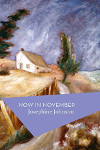
Farming during the Depression.
Publisher: Apollo (Head Of Zeus)
Pages: 198
Type: Fiction
Age: Adult
ISBN: 978-1-784-97075-8
First Published: 1934
Date Reviewed: 31st January 2017
Rating: 4/5
Marget and her family travel to their mortgaged land, becoming farmers. It’s a difficult time and beyond the stress of growing and selling the crops for less than hoped, Marget’s sister Kerrin is becoming more and more difficult to live with. Things start looking up when Grant arrives to help out but the worst is yet to come.
Now In November is a short novel focused on the land and a family’s relationship to it. It’s a gracefully written novel, tragedy detailed in beautiful language, that whilst often painful has a stunning atmosphere not unlike the Brontës and their moors, or Laura Ingalls Wilder.
This is a simple tale, and relatively small in scope – the years both go by and stay still (there’s a sort of time-focused dual narrative going on you’d have to see yourself) but not so many as to cover too long a time, at least it seems so from what happens. It’s also not a happy book but as said above this is where the language has a lovely effect, not glossing over the events by any means but making it so that you can continue reading, so that you want to continue reading. The shortness of the novel aids in this as well.
A great deal of the book is focused on nature. In the context of its entirety, Johnson spends paragraphs upon paragraphs detailing the weather, the colours, the flora and fauna. This boosts the book a little, sometimes, above its general sad atmosphere, and helps to ground you in the scene, though some may find it too much depending on mood – this is a book for which it pays to choose your reading time wisely. A story for a hectic day this is not; a lazy afternoon, as much as it may seem at odds with the text, is your best bet. There is action in the events but the language flows along softly, an interesting effect and choice which means the book transcends its subjects.
The family is a good one to read about because they are so mixed in temperament. Marget, her mother, and younger sister Merle, do a lot of the household work. The father does all the manual labour, most often with a single helper. Oldest sister, Kerrin, brings to the book a different subject – seeming first to be very obnoxious then, in turn, dangerous and finally mentally ill (Johnson writes the progression of Kerrin’s mental capability very well), the use of such a character shines a particularly almost-modern light on mental illness which when mixed with the lesser medical knowledge of the time becomes quite something. Whilst Now In November may well have won the Pulitzer Prize for fiction due to the the story of the Depression, and perhaps its author’s young age, it’s the characterisation and development of Kerrin that is perhaps its strongest element for us today, something that speaks very much to our present values and discussion.
Minor points are unrequited romance, the effects of industry on farming (in the event this is a major point, it’s just that it’s confined), the integration of black people. These round the story off, adding to the atmosphere and general demonstration of the time.
Now In November can be difficult to get into and the story itself is rough going, but the whole is an excellent creation with a lot to recommend it. Its themes are relevant today and it’s an interesting source for historical study and information.
I received this book for review.
Related Books
None yet.
January 2017 Reading Round-Up
Posted 1st February 2017
Category: Round-Ups Genres: N/A
7 Comments
Unlike Terry Pratchett’s Death, ours on earth has no fondness for cats. We lost relatives of both the human and feline kind this month. One thing I am glad for: I trusted my intuition when it told me to use the free day I had to draft and schedule posts for the rest of the month. Knowing my blog has been continuing in my absence, that something is working to routine, has helped a lot.
All books are works of fiction.
The Books
Amanda Craig: The Other Side Of You – Finding his aunt dead in the flat, Will runs away, discovering an abandoned garden in the middle of a nice square where he can live and take care of the plants. I’ve read a lot about Quick Reads books – short and easy stories to aid literacy – but never read one; this particular story is somewhat based on Beauty And The Beast so it’s an interesting mix of reality and fantasy.

Evie Wyld: All The Birds, Singing – Running away from problems at home, Jake ends up on a remote British island looking after a sheep farm where someone is reducing her flock. Didn’t like this much at all – few answers, the dual narrative was written far too vaguely, and there’s neither plot nor development.
Josephine Johnson: Now In November – As the Great Depression looms over America, Marget and her family take up residence at a farm that will leave them constantly in debt. Originally published in 1934, this is a semi-forgotten Pulitzer Prize winner and whilst very good – not unlike, in atmosphere, to the Brontës and their moors – it’s definitely one to keep for a slow afternoon.

Margaret Laurence: The Stone Angel – A ninety-year-old looks back on her life as she fights off attempts to put her in a home. This is a Canadian classic from the 1960s so whilst it fits the trend we have going at the moment, the younger years of the woman are Victorian; a good book if difficult to read (due to the character).
Nicola Cornick: The Phantom Tree – When Alison runs away from those she is staying with as an unwelcome guest, she finds herself in the future and sees a way out of the restricted life she’s living. A good Tudor time travel book.
It would be difficult to pick a favourite this month. The two older books, the Laurence and the Johnson, were ironic, for me, in their subjects. I enjoyed the Cornick but it wasn’t as good as her previous. Considering what I said earlier this month I should point out that I’ve Marlon James’ prize winner and Tom Connelly’s Men Like Air on the go. I decided it was finally time for me to read James on the evening of the inauguration – on a day when I was constantly expecting the media to say ‘fooled you!’ suddenly the idea of starting such a daunting and long book didn’t seem so unrealistic after all. I’m finding the accenting difficult in that way that when an accent is written out some words will be hard to decipher and require some thought – I think I’ll enjoy it best by making it a long-term read. The Connelly I picked up in a moment of reading enthusiasm and it gripped me from the first page.
Quotation Report
None this time.
There are still things to come but I’m hopeful that February will be a little better. One thing that has been very good is that the post-Christmas reading slump I thought might persist has gone.
What was the last book you finished and did you enjoy it?


