





June 2017 Reading Round-Up
Posted 3rd July 2017
Category: Round-Ups Genres: N/A
4 Comments
This month has been about finishing books. I started only a couple of new books, keeping with my expectations – I read new books when I’d finished a couple of longer-term reads and during times in the month I knew I’d likely be able to finish the new books in. The middle of the month, for example. I haven’t finished all my long-term reads; there were 6 and I’ve finished 3.
All books are works of fiction.
The Books
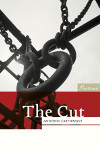
Anthony Cartwright: The Cut – The story of Cairo’s life in Dudley and Grace’s hope to create a film about leavers and remainers. A story about the divide in Britain in regards to Brexit, this was specially commissioned by Peirene Press after the vote and it’s a subtle, mindful look at the issues involved.

F Scott Fitzgerald: Tender Is The Night – A young filmstar meets an older American couple and becomes infatuated with the husband, which further exposes the problems in the marriage. A mess.
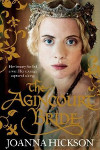
Joanna Hickson: The Agincourt Bride – A story of Catherine de Valois, looking at her early years to the start of her marriage to Henry V. A well-researched and constructed book about a lesser-known queen.

Marie-Sabine Roger: Get Well Soon – In hospital after an accident that’s a bit of a mystery, Jean-Pierre must deal with staff who won’t close his door, bad food, a rescuer in trouble, and a girl who wants to steal his laptop. An enjoyable enough story, just lacking in conflict and progression.

Sally O’Reilly: Dark Aemilia – Having married her kin after falling pregnant with Shakespeare’s child, Aemilia Lanyer attempts to become a published poet in an age where women stayed in the home and most certainly didn’t enlist the help of reputed witches. An interesting book with a particular concept, the backdrop of theatre behind every chapter.
This month was a lot of fun where reading was concerned. The books were pretty good but in addition there was that happy productive satisfaction of striking books off my reading list and being able to look at my main list of the year’s books knowing it’s becoming more of a true reflection of how much I’ve read rather than a list of numbers that up until now haven’t stood for much. I definitely had a book I didn’t like – Tender Is The Night. It’s been a long time since I’ve given a book such a low rating and when I went to log the finish date I saw I’ve been reading it for much longer than the 7 or so months I’d thought – it’s been 18 months. I’m glad I’ve read it because I think I would have always wondered about it, but I’m glad to have done with it. No book stands out as a favourite. The genres were so varied, the subjects too, but on an appreciation level, all but the Fitzgerald would win joint first prize. Cartwright did a good job of explaining a delicate subject in an interesting way; Hickson’s use and care of research is excellent; Roger’s technique is great; O’Reilly’s concept full of literary merit. It was a month full of literary appreciation and good craft.
Quotation Report
In Get Well Soon an older man wishes people would just get on with the idea of accepting people as they are. And in The Cut, Cairo reminds us that whilst the media talks a lot about a divide and makes it seem all-pervading, most often people just get on with their lives.
I’m finishing up a book I started in June and then moving back to a tome… or two. In terms of finishing books I started long ago there are a few 500+ pages still on the list. As is becoming the norm here, my plan is just to read as much as possible.
How is your summer going, or your winter if you live in the Southern hemisphere?
Marie-Sabine Roger – Get Well Soon
Posted 30th June 2017
Category: Reviews Genres: 2010s, Comedy, Spiritual, Translation
Comments Off on Marie-Sabine Roger – Get Well Soon
Doc, Grumpy, and perhaps one day, Happy.
Publisher: Pushkin Press
Pages: 213
Type: Fiction
Age: Adult
ISBN: 978-1-782-27216-8
First Published: March 2012; 29th June 2017 in English
Date Reviewed: 27th June 2017
Rating: 4/5
Original language: French
Original title: Bon Rétablissemnent (Good Recovery)
Translated by: Frank Wynne
Jean-Pierre is in hospital; dragged out of the Seine, no one as yet knows what happened, least of all Jean-Pierre himself, but whatever it was, his health has been set back and he needs to recuperate. Being in hospital isn’t great – the food’s very bland, it’s noisy, and no one ever closes the door to his room, but more to the point there’s an irritating 14-year-old girl, seemingly over-fed, who thinks she’s entitled to his laptop. There’s the young man who saved him with whom Jean-Pierre is having trouble communicating; thank god – even if you don’t believe in him – for the policeman who has taken a liking to him and visits all the time, even if that’s strange. At some point they’re going to have to find out what happened and hopefully Jean-Pierre will be allowed to get out of bed and get away from it all.
Get Well Soon is a fairly fun, short, novel. Completely character-driven, it’s a book that combines thought with the idea of a quick an easy read, a fairly literary book that will interest those who might not have time at present to invest into literary fiction.
This is a book about a slight mental and emotional journey. Jean-Pierre is a grumpy old sod – a description that suits his own word choices – grumpy enough you’d think he was older than he is, and Roger’s aim is to fully acknowledge this and allow it to continue whilst slowly introducing the character’s better qualities and a gentle change of heart. Her characterisation means you start out disliking him intensely before liking him a bit more and then becoming content with feeling somewhere in between.
There is a lot to like about the author’s way with words in regards to characterisation. Building a character slowly, with full attention paid to how the reader experiences it all seems to be, if this book and last year’s translation of the excellent Soft In The Head is anything to go by, Roger’s focus. However in the case of Jean-Pierre Fabre here, it’s perhaps too slow, to the effect that you feel something has been missed; there was potentially more of a change going on in Roger’s imagination of the character than has been marked down on the page. This is where ‘no plot’ and ‘slight journey’ comes in – this is a book full of gentle humour and heart but whilst reading Jean-Pierre’s musings on his life is fun, there isn’t much to them.
But let’s look at the humour – it graces most every page. Roger can be brusque, and never shies from presenting a person steeped in their own social and age-related context. Jean-Pierre meets enough of a stereotype for Roger to explain the basics quickly and then move on to the details. The cheeky jokes. The descriptions. The thinking behind Jean-Pierre’s actions, and the thinking done for thoughts’ sake. The process of a sort of everyday prejudice that starts to untangle itself as Jean-Pierre sees how things aren’t as they appear, or that for all that something may sound unpleasant, perhaps uncouth, there are reasons to be considered. It is the dissection of social constructs together with the humour, that make this book. It’s very much one small person’s considerations that won’t change him on a general level, but it’s a good read.
The translation is good – albeit that Wynne is aided by the French names and the references to French locations, Wynne’s choices ensure you never forget this is a French book. As such you won’t forget it’s a translation but that’s no matter as Wynne has let Rogers’ words shine through.
There is a bit to think about and much to enjoy; Get Well Soon is a quiet book, a nice example of Rogers’ writing ability. You likely won’t remember the character but you will remember the author’s technique.
I received this book for review.
Related Books

Interview With Anthony Cartwright, Author Of Peirene Press’ The Cut
Posted 28th June 2017
Category: Interviews Genres: N/A
Comments Off on Interview With Anthony Cartwright, Author Of Peirene Press’ The Cut
Last year, Peirene Press launched the first title in their ‘Peirene Now’ imprint series. breach, lower case intentional, delivered a collection of short stories about the refugee camp in Calais and various people’s opinions on it. This month second book, The Cut is being released, a response to Brexit, a fictional conversation about the reasons people voted ‘leave’ or ‘remain’.
I said ‘yes’ to the invitation to interview the author; here is the result.
How did you come to write The Cut?
I was approached in the summer of last year by Meike Ziervogel of Peirene. I took it on for a few reasons. The first was that I thought I could do a good job – I’d written about some of the divisions and inequalities that seem to have underpinned much of the vote in my previous work. I also knew I would write about Dudley again. And it was a chance to work with Peirene, whose books I really admire, as part of a fascinating project.
The book opens with a bit of ambiguity. Was this a concious decision, to reveal what was going on, who was involved and how, slowly?
That sequence in Dudley market-place was the first thing I wrote. It wasn’t entirely clear to me who was on fire when I first wrote it. And although it’s probably too simple to say that I wrote the rest of the story to find out who it was, we certainly made a conscious decision while editing to focus on the slow revelation of how a woman comes to run through Dudley on fire. In fact, it was Meike as editor who picked up on this and asked me to pursue it.
There are various ways a book about the Brexit divide could be written because of the effects on both large and individual scales. You chose to focus on two individuals. Why did you decide to do this, and could you tell us about their relationship?
Cairo and Grace’s relationship might be best summed up as mutual attraction but also mutual incomprehension. For the story to work I think it had to be about individuals and a very specific place and set of circumstances. I mean this as a kind of antidote to the massive generalisations all sorts of people were making after the referendum – that we had 17 and a half million racists on one side and 16 million people who were happy with a kind of social apartheid based on class on the other – that kind of thing! I think fiction is able to explore specifics and the emotions of the characters, and this seems more difficult in mainstream political discourse. Of course I also have the luxury of asking questions without having to give answers.
Throughout, the book is subtle in its look at Brexit – the reader often has to look into what else is happening to make the connections – and you include a sort of acknowledgement of this late in the book when Cairo talks about people just living life alongside the debates. Could you tell us more about that?
Some of the great tiredness Cairo talks about at a similar stage in the story is connected with this. He talks about the kind of deep fatigue of having to live lives out on what seems to be the wrong side of a historical divide. To Cairo the hysteria around the referendum is just one more episode in the slow (although sometimes very quick) structural violence that has been done to his community and the place he lives. Something that struck me was the remainers talk of a ‘catastrophe’ after the result, but for many people and places the catastrophe has been going on for generations now. There were plenty of people on both sides of the Brexit divide quite happy to ignore that fact.
What are your hopes for the publication of The Cut, and for Britain going forward in the negotiations?
My own immediate hope is that we get a Labour government in power, fulfilling the promises of the recent manifesto. Economic and social justice should be what matters, the negotiations will have to be driven by that, not the other way round. As for The Cut, well, it’s published now, so if people read it and it makes them think, that would be great.
My thanks to Anthony and to James at Peirene for setting it all up. The Cut is out now. For more information, go to Peirene’s site or The Guardian’s review.
Joanna Hickson – The Agincourt Bride
Posted 23rd June 2017
Category: Reviews Genres: 2010s, Angst, Domestic, Historical, Political
2 Comments
Metaphorical swings and roundabouts.
Publisher: Harper (HarperCollins)
Pages: 406
Type: Fiction
Age: Adult
ISBN: 978-0-007-44697-1
First Published: 3rd January 2013
Date Reviewed: 20th June 2017
Rating: 3.5/5
Mette entered Princess Catherine of Valois’s household when she miscarried her own baby and took the job of wet nurse. Now, many years later, she looks back at her time with Catherine as she became the princess’s friend and confident through years of childhood neglect, the back and forth of negotiations with the English King Henry V for Catherine’s hand, and the surrounding issues of civil war.
The Agincourt Bride is the first in a duo of books about Catherine de Valois. Focused on the princess who, during this retelling, becomes Queen of England, the book sports a lot more politics than the cover might have you believe.
Hickson combines the overall atmosphere of historical romance, but not romance itself, with the social and political discussions and wars of the day. Catherine’s marriage to England’s Henry V was something that started to come into being since her early double digit years, a part of the agreements that were decided between the ‘guardians’ of the French crown – the Queen and the Duke of Burgundy, who effectively took over proceedings due to the King’s failing mental health – and the English monarchy. What this amounts to is a lot of good political detail of events that relate in some way to Catherine. Due to the female point of view there is no opportunity for Hickson to detail the war in the first person – in particular, of course, Agincourt – but she brings in messengers to relay what happened. The author balances it well, towing the line neatly between cluing you in and including too much research, effectively providing you with a fair run down of the battle and how it went down.
To look at the narrative, it could be said that a book told from Catherine’s point of view would have been better. As a narrator, Mette has her moments of goodness but she is a bit of a bumbler and overly enthusiastic. Catherine is rendered somewhat distant to the reader so you have to be okay with this idea (you get to read several letters written by the princess, dotted about the narrative, that aid your comprehension of her thoughts, but it’s not a narrative in itself). However Catherine has been well-written and presented. She stands out boldly and Hickson is always careful, rightly having her overshadow Mette.
But if Catherine had been the narrator you would have missed a lot of the content that Hickson wanted to explore. The most obvious element is that of a report, a chronicle, that by Mette’s presenting the story you get to hear a lot more about Catherine, albeit from afar, than you would otherwise. (Mette does end up in a lot of convenient places, Catherine promoting her and taking her everywhere with her, which helps the author tell the story, however there are sections that are missed when Mette cannot accompany the princess.) The presentation from someone older is good, particularly in the case of Hickson’s exploration of the potential child abuse Catherine and her siblings suffered from their mother and the Duke of Burgundy. The current thought is that there was no abuse but in years gone by it has been a prominent suggestion that the children were neglected. Hickson uses this idea in her book, effectively covering two bases at once – the fact that abuse was treated very differently in older times and thus there is a need to explore it, and the way our mindset has changed over time; the author looks at attitudes both then and now, subtly including – for of course it is never stated by our medieval narrator – what appeals to us today in terms of discussion, study, and general discourse of morality. Mette’s narration, beginning just before her introduction to newborn Catherine, allows for a mature assessment of the possibility of abuse, and if history so far is anything to go by, we know that thoughts do chop and change so Hickson’s research may well be of use in this way later on.
There is sexual abuse in this book that many readers may find difficult on both a literary and historical level. Its inclusion asks that you stray from the usual narrative of royalty in the period and it would be difficult to point to specific value in terms of the story.
This is a book well set in its time. It takes a while to get somewhere in terms of plot because it is hampered by historical indecision, the person at the heart of the story bound by limitations and others’ decisions. It is a book that shows how little power women had in the 1400s, how much they would take when they could to good effect, but how it could be for little or nought. Hickson has made Catherine strong in spirit and her personality is winsome, so whilst you know there’s only so far she will be able to carry the story herself before someone with power comes in and decides to change her fate because they didn’t win a battle and she’s the prize they’re dangling, you’ll find some happy moments wherein she’s able to carefully manipulate a situation through all she’s learned.
Very much about Agincourt in terms of the plot’s time scale, The Agincourt Bride is a book that sets the stage for the next but is a story in its own right, shining light on the woman who in time would be at the heart of the beginnings of the Tudor dynasty. And whilst Mette is not the strongest character she does provides a good, solid story of politics and historical possibilities, Hickson’s use of research blending beautifully with the overall story.
Related Books

How Soon Can You Trust The Author?
Posted 21st June 2017
Category: Chit-Chat Genres: N/A
2 Comments

I’ve recently discovered something interesting of the sort I expect you can relate to. It’s something I reckon is always there, particularly the more we read, but it’s taken until now for me to have that light bulb moment where it all comes together as a full concept.
I’m finding that I can generally tell within a couple of pages, sometimes sentences, whether I can trust the author I’m currently reading to tell a good, well-written, story.
I expect it comes down to two things, both subjective: 1) I’m increasingly knowledgeable of what, to me, constitutes a good book, and 2) some authors are just too good at pulling you in from the start. The kind of writing and voice is often very similar in a basic way and the feeling oof trust is that lovely feeling of knowing what you’re getting into, where you start a book and it just feels right and you settle down into your seat because you’ve – definitely now – every intention of staying there a few hours.
Sometimes I’m wrong about trust but it’s generally on a sliding scale. The more the initial trust, the more likely the trust wil turn out to be warranted. There’s probably a mathematical formula out there…
A lack of feeling of trust doesn’t mean a book will be bad, often far from it, but it does more often than not to books I think are great but profound. (This is related to my year round up five stars and ‘best of the best’.)
I do believe we all feel this, just in different ways, our preferences creating differences.
What elements of a book cause your ‘I’m going to love this’ feeling and how often do you find books meeting your initial expectations?


