





Returning To The Question Of Ratings
Posted 13th June 2018
Category: Chit-Chat Genres: N/A
1 Comment

A few years ago I wrote about how ratings show one’s opinion. At the time I was considering dropping ratings from my blog; I was conflicted.
That conflict remains. I’m still considering dropping them but the reason I continue to keep them is because I know that to go without them would present its own set of problems. (Not least because I’d have to restructure several on-going posts!)
On one hand, ratings make reviewing easier. Using numbers to back up your thoughts – both in the publicly accessible review itself and whilst mentally planning what you’re going to say – is a boon. A number can help when you’ve not yet found the words, or, if you’ve found the words already they round it all off.
On the other hand they can be restrictive. Words provide description, a rating can only ever help sum it up (I still believe a rating without words to be of limited value). On the occasion that you have the words but can’t decide on a rating, it can be incredibly difficult to reach the balance of words and numbers that feels right. And as it’s both inevitable and understandable that sometimes people will look for the rating rather than the rating and the words, the pressure to get it right increases.
Sometimes there is no one correct rating; I’m writing this post with the Valeria Luiselli book in mind – the book is of high literary value but at times I feel it goes a bit too far in the way it expects you to keep up with its concept. I’m nearing the end of the book and really should have made up my mind already as to the rating; after having written about books for the time I have I generally have a good sense of what my final rating will be by about halfway through (this is of course subject to change as I continue the book and I have and do change my rating). This time, I don’t know, and although this conflict doesn’t happen all that much it’s enough to make me consider throwing in the ratings towel. Excellent literary content – I’m thinking 5. But that feeling of ‘too far’ – I’m thinking 4. Perhaps I should split the difference and say 4.5.
A 4.3 might be more appropriate, but I’ve never wanted to go down the decimal route. I admire those who do but it looks like too much to keep track of. I chose to rate out of 5 with .5s included because it’s near enough to 10 but different enough to get around the problems I had with the idea of 10 itself.
No, that doesn’t make sense to me either but somehow it works. I may be over-thinking this. I still haven’t made up my mind.
Have you changed your thoughts about ratings as you’ve continued to read (whether you review or not), have you ever felt conflicted as to their value?
In Which I’m Researching Authors Again
Posted 11th June 2018
Category: Chit-Chat Genres: N/A
1 Comment

A couple of years ago, I created a bookmark folder in my internet browser for books I’d like to read, placing in it reviews, other articles, and some author websites. I found it a useful way to keep all those pieces of information that I hope to one day use but likely rarely will (I have bought a couple of books due to going through it which I consider makes it a success).
Then, sometime earlier this year, I started a ‘literary criticism’ folder in case I wanted to write articles based on the books those articles were talking about. Purposefully being more picky before I commit anything I read to the folder, it’s working out quite well. What I hadn’t reckoned on, though, was the way in which I’d be wanting to note each new classic author I came across. (‘Classic’ here used for both those who are famous and people less known/unknown who have long since passed.)
I have a penchant for keeping information I may need in the future, mostly because it has indeed come to pass many times that information has been used, and whilst in terms of handwritten notes – university and so on – I keep a lot less, when it comes to the internet and computers all bets are off, particularly in the case of literature. If I come across a person from the past who happened to be a writer, I will be bookmarking that page, no matter whether I’m interested in the subject they wrote about or not.
Still, as much as the information will be useful to somebody and indeed I am using it elsewhere, I wonder about it all. I remember reading a blog several years ago in which it was noted that it’s estimated we can get through about 5,000 books in our lifetime; constantly seeking out old authors only reminds me of this sobering fact. (There were certainly more than 5,000 books in the Beast’s library, which is something I think it’s fair to say we all aspire to emulate.) Even if you seek to read only the best of the best of the best, you will never cover it. (To include another sobering bookish screen reference, a statement by Ted Danson’s Gulliver comes to mind, from his main statement in court about his travels: “I could read every book ever written” – 1996 adaptation.)
I think, beyond the reasonable hope and plan to write about these authors, I just like having the information. I find I retain much more knowledge after a second read of information, and keeping it allows this. It also allows me to look back at people when other connections are made, such as my recent finding of the possible (likely?) inspiration for Jane Austen’s title for the book initially called First Impressions, as well as what got the ball rolling on Northanger Abbey.
It makes sense that I write about a few of them here. Aside from works on authors I’ve written about recently and thus don’t need repeating yet again, I have work on Christine de Pizan, Mary Hays, and Charlotte Perkins Gilman. I’ve saved pages on Adela Florence Nicolson (1800s poet from England, died in India, who wrote who the pseudonym Laurence Hope); Amelia Opie (1700s-1800s novelist and leading abolitionist – Amelia’s was the first name on a petition to parliament from women to end slavery); Ann Hatton (1700s-1800s popular English novelist); and Anna Bray (1800s British novelist).
Most interesting so far has been Anne Richie née Thackarey, the daughter of William. Wikipedia says this: Her 1885 novel, Mrs Dymond contains the earliest English-language use of the well-known proverb “give a man a fish and you feed him for a day; teach a man to fish and you feed him for life”. It would also seem she visited Southampton, my city, where her father once attended a school he found wretched but the city itself he liked. There is also Sarah Burney, half-sister of Frances, who wrote several novels but isn’t much remembered, possibly because she didn’t have too many friends. The Burney sisters’ father was more supportive of Frances, disliking Sarah’s Clarentine, and Jane Austen’s thoughts (as we know she liked Frances’ work) are thus:
“We [the Austen family] are reading ‘Clarentine,’ & are surprised to find how foolish it is. I remember liking it much less on a 2d reading than at the 1st & it does not bear a 3d at all. It is full of unnatural conduct & forced difficulties, without striking merit of any kind.” (Austen 1807, cited in Woolsey, 1892)
But Sarah’s third novel, Traits Of Nature, did very well.
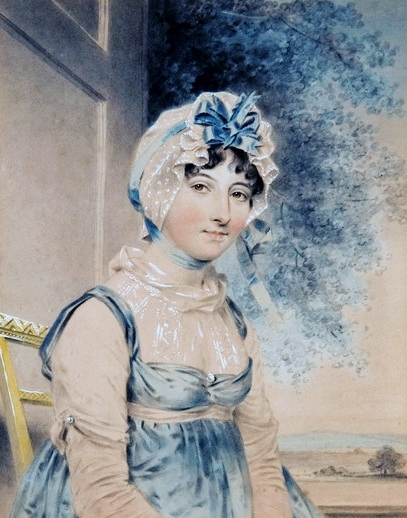
Finally there is Maria Edgeworth who may well be well-known today (and I would have just missed the discussion). She was an early realist writer of children’s literature, and a ‘significant figure in the evolution of the novel in Europe’ (Britannica 2014, cited by Wikipedia, n.d.). Her novel Belinda depicted an interracial marriage and was thus controversial.
Austen, again:
“Oh, it is only a novel… It is only Cecilia or Camilla, or Belinda; or, in short, only some work in which the greatest powers of the mind are displayed.” (Austen, 1817)
Unfortunately, when looking through my browser bookmarks for this post I happened upon yet another author. I’d better call it a day.
So today I would very much like to know, do you collect information for later use and are there occasions when you’ve come to use some of it? And which relatively unknown authors of the past do you recommend reading?
Book References
Austen, Jane (1817) Northanger Abbey, John Murray, London, Chapter 5
Austen, Jane (1892) The Letters Of Jane Austen, ed. Woolsey, Sarah Chauncey, Little, Brown, And Company, Boston, p. 97
Doody, Margaret Anne (ed.) Introduction, in Lennox, Charlotte, The Female Quixote (1989) Oxford University Press, Oxford, page unknown.
Online References
Maria Edgeworth, Wikipedia, accessed 8th August 2018
Reading Life: 8th June 2018
Posted 8th June 2018
Category: Reading Life Genres: N/A
2 Comments

As you’ll have seen, I finished Lennox’s The Female Quixote, and wrote the review. Throughout my blogging years I’ve often found myself floundering when it comes to writing reviews of books I have taken a lot of notes for; it’s most often led to me not completing the review; but this time, I did it. I wrote a basic plan and then made it more detailed until it was practically written. I will be trying out that method again in future.
Having started reading around the subjects of the book, I ended up going down an internet rabbit hole and searching through digital copies of 1700s literary magazines for information required to write this post. Many issues of Samuel Johnson’s The Gentleman’s Magazine still exist, which as it turned out not only included Johnson’s blurb for the book and Henry Fielding’s brief views, but the month in which Lennox’s book was published. After two hours searching through the editions for the correct information, finding the month of publication was an added bonus. I may have celebrated with coffee.
Having finished all the research, I’ve moved on to Frances Burney, which also sent me on a search for information, this time in view of Austen’s usage of ‘pride and prejudice’, which is believed to be taken from Burney’s Cecilia:
Remember: if to pride and prejudice you owe your miseries, so wonderfully is good and evil balanced, that to pride and prejudice you will also owe their termination.
I’m reading Evelina and getting back into Valeria Luiselli’s Faces In The Crowd which has turned from ‘simply’ meta to ‘a book in a book in a book maybe in a book maybe reality’… yes, it requires a lot of attention. I’m also reading The Peace Machine, a steampunk-esque Turkish novel set in the 1800s, and so far so good. It’s about a Turkish erotic novelist, who publishes under a pseudonym in France. The first couple of chapters covered his childhood during which he was living in poverty, before he saved a rich man’s life and being adopted. The blurb speaks of WWI and the fictional creation of a machine, which reviews online mention can create peace but at an ethical loss. The translation is excellent – the translator has chosen to keep the rhymes of the fragments of poetry that are scattered about so that whilst the words may by necessity be changed, the concept carries over completely.

Lastly, I spent a lovely Wednesday lunchtime with a group of writers, most local but a few from as far as Devon, and a diverse selection of genres. It was interesting hearing about marketing and publication from an author’s perspective, as well as the writing process. They are, from left to right (excuse the awful photo – mine): Rosie Travers, Sue Fortin, Carol Thomas, Charlie Cochrane, Lyn Lile (May Raymond), Liv Thomas (writes as Isabella Connor together with Val Olteanu), and Rosemary Smith.
On a completely different note, given the Twitter-trending Love Island and Big Brother-esque set up of many discussions and challenges but nothing otherwise to do I would like to ask you: how long do you think you could leave reading behind before you’d need to return? (I reckon I could go without reading for a month fairly easily but I’d want to leave from then on.)
Charlotte Lennox – The Female Quixote
Posted 6th June 2018
Category: Reviews Genres: 1750s, Books About Books, Comedy, Commentary, Drama, Social
Comments Off on Charlotte Lennox – The Female Quixote

No tilting at windmills, but plenty of running away from ordinary folk who might be out to get you.
Publisher: N/A (The one shown is Oxford University Press)
Pages: N/A
Type: Fiction
Age: Adult
ISBN: N/A
First Published: June 1752
Date Reviewed: 6th June 2018
Rating: 4/5
Arabella had a solitary childhood; taking up her deceased mother’s book collection, she read widely – or so she thinks. When her uncle and cousins come to stay, they find a a very well composed woman who, as the days go on, is discovered to have gained all her knowledge of life from romance novels which she believes are factual. And whilst admittedly no one will simply tell her the truth, she will not listen to anyone’s misgivings. Her slow entry into society will be full of mishaps and confusion, and the gulf between her knowledge of history and that of everyone else will continue to baffle her.
The Female Quixote is a comedy of errors that looks to the romances of centuries prior in a parody of Cervantes’ epic, Don Quixote (1605-1615). Changing the situation to the life of a high-born bookish lady, the book is a satire of the work of medieval writers, displaying just how much fiction about the ancient world is different to the then-present day and how reading without context can be a problem. Mostly, though, it’s just a lot of fun – for however much it may or may not have been written to denigrate romantic novels, its focus is on hilarity.
…She gave herself over for lost, and fell back in her chair in a swoon, or something she took for a swoon, for she was persuaded it could happen no otherwise…
The humour is constant – laugh-out-loud, and often very silly. It’s split into a few areas – the humour that comes from Arabella’s solitary musings on what ‘should’, in her mind, be happening at any given time; the humour created by the confusion of her relatives and friends who don’t understand what’s going on because they’ve no knowledge of these supposedly famous historic figures Arabella talks about; the humour that arises from Arabella running away, or thinking she might faint because that’s what ought to happen. The interactions between Arabella and her servant are particularly good, and there’s much mirth to be had in the way that Arabella expects a medieval, no, ancient, sort of courting, which include things no suitor in reality would do.
After a while, the jokes do become a bit too much. Around the late double digit pages, it starts to feel not forced, exactly – because it isn’t – but just drawn out. As with many older texts this is where the difference in literary culture becomes particularly apparent – in a slower-paced, 1700s society, the continuation of jokes were likely well-received. (The book was very popular in its day, though its fall from the public sphere was fairly quick.)
Unfortunately, some of the length of the book is down to the opinion of Samuel Richardson:
‘Richardson… sent suggested revisions to Lennox in response to her being “apprehensive of Matter falling short for two Vols”. Having expanded the novel along the lines suggested by Richardson, by early 1752 Lennox felt that she would need a third volume to complete the novel.’ (Brack and Carlile, 2003)
Richardson wrote on 13th January 1752, telling her,
‘You should finish your Heroine’s cure in the present Vols… the method you propose tho’ it might flatter my Vanity, yet will be thought a contrivance between the Author of Arabella, and the Writer of Clarissa.” He further suggests that by making ‘your present Work as complete as you can, in two Volumes… it will give Consequence to your future writings, and of course to your Name as a Writer.’ Pursuant to completing the novel, Richardson advised Lennox ‘to consult Mr. Johnson before you resolve.’ (Ibid.)
Whilst the first draft was undoubtedly longer than an editor today might suggest, those incorporated suggestions surely made it more so. Indeed there are a couple of occasions where Arabella is on track to be told that everything she has learned is from exaggerated fictional accounts until the author brings in a literary device and quashes the possibility.
So this is where your reason for reading comes into play: the book was written in the 1700s for a 1700s audience (we can assume Richardson was on the ball there). If you’re reading the book to get a sense of literature, and parody, in that period, it’s a lot better than if you’ve picked it up purely for pleasure.
Lennox breaks the fourth wall on a constant basis; the break is as much an element of the book as the parody itself, with Lennox informing the reader of the contents of the chapter ahead, cluing them in as to details her characters are yet to discover, and subtly hinting as to the issues that arise with taking fiction – or rather certain fiction – seriously.
An example of a chapter subtitle: “In which a lover is severely punished for faults which the reader never would have discovered, if he had not been told.” Foreshadowing of the reader’s reality happens constantly and there is irony in the way that Lennox makes sure you know exactly where she is coming from – she wouldn’t want you to become even a little like Arabella! The use of ‘he’ in terms of the reader is perhaps telling – does she think her readers would likely be male? Is she writing directly to Richardson and Samuel Johnson (another person she looked up to)? It’s a cautionary tale – be careful when reading books… but do read this one!
Going back to the denigration of epic romances, one must consider this context as much as they should the parody aspect. By Lennox’s time, romance novels were seen as frivolous and silly:
‘Charlotte Lennox’s Female Quixote… seems to join a persuasive eighteenth-century effort to dispel as “unreal” and dangerous the romance tradition that English readers had valued for two hundred years.’ (Gordon, 1998)
A turning point in the literary culture in Britain, this idea is heavily supported by Lennox’s text:
…in which, unfortunately for her, were great store of romances, and, what was still more unfortunate, not in the original French, but very bad translations.
One of the reasons the novel can become boring as it continues is Arabella’s need to describe scenes and stories from her books; she comes to realise that few know about the ‘history’ of the ancients as well as she does (rather than question whether she’s got it wrong). This is an occasion where you could ask a person from centuries in the past what a common term meant and they would be able to tell you correctly – what Arabella does is best summed up as ‘splaining.
Of course whether or not Lennox herself ascribed to the notion that romance was frivolous is something we may never know. It could be that for all she wrote in Arabella, it could have been a way to write romance without writing romance.
Literary devices abound in the way the other characters suffer an inability to tell Arabella that what she has read is fiction. Glanville, the cousin/suitor, is often ‘confused’, and this raises two questions: why does Glanville allow the woman he supposedly loves to embarrass herself? And why does he remain interested in her? His sister, Miss (Charlotte) Glanville, despite being presented as spiteful, ends up becoming the most sensible and relatable character in the book, interrupting Arabella’s grand info-dumps; if it weren’t for Lennox’s devices, Miss Glanville would have told Arabella the truth towards the start of their acquaintance… but then, alas!, we would have a novella instead of a novel.
Does your Ladyship consider how late it is? Interrupted Miss Glanville, who had hitherto very impatiently listened to her. Don’t let us keep the gentlemen waiting any longer for us. I must inform you how the prince of Persia declared his love for the incomparable Berenice, said Arabella. Another time, dear cousin, said Miss Glanville; methinks we have talked long enough upon this subject.
If you are expecting a grand ending, whether full of fainting and forsooths or just some reasonable changing of character, you may be disappointed. Whilst over a chapter is spent on a conversation between Arabella and a doctor, the relative suddenness of Arabella’s ‘cure’ is hard to believe and any thoughts you had of seeing Arabella progress in society are not realised in the book. Indeed, the ending was written with Lennox’s mentors firmly in mind:
‘The weakest part of the novel, critics have agreed, is the conclusion and her decision to depart from her usual style to show her esteem for Johnson by an exaggerated imitation of his style was not a good one.’ (Brack and Carlile, 2003)
Brack and Carlile, among others, believe that the penultimate chapter, and part of the last chapter, may actually be the work of Johnson himself. I myself don’t know enough to comment: the chapter is more verbose, dare I say more academically written, perhaps, but then the doctor is obviously a learned character. That the Lady who befriended Arabella – prior to the doctor’s entrance in the novel – with a view to getting her out of her thoughts, didn’t get authorial leave to complete her mission, does suggest in our present day the leaning towards a man having to do it, whether simply Lennox’s choice of a doctor or Johnson taking over.
So, with all this said, is the book worth reading? As said previously, it’s better as a study than an escape. If you want to know about the 1700s without so many of the stereotypes – or at least with the stereotypes used as stereotypes – it’s a good choice. You only need a basic knowledge of Cervantes to enjoy it (though you’ll doubtless find more to appreciate if your knowledge is extensive). You’ll also gain knowledge of another popular 1700s novel, one that is slowly becoming more well-known in our present day. And, of course, you’ll gain a whole heap of knowledge about medieval romances without having to read them, which is a tremendous boon when you consider that the one most referred to is the longest novel published by a mainstream publisher and stands at a whopping 13,095 pages.
But there is one more reason for reading that only becomes apparent once you begin (or, of course, if you’ve heard about it, as you are now hearing about it): The Female Quixote was a major inspiration (I’d put money on it being the inspiration) for Jane Austen’s Northanger Abbey; the premise of a reader believing fiction inspires reality, the breaking of the fourth wall in such a similar way, the writing style… even the prefaces of the two books are similar in tone. Lennox’s book isn’t as fun as Austen’s, but if you want to understand the background of Austen’s book, Lennox’s text is one to read. And yes, it’s fascinating that Lennox’s is the one book not mentioned by Austen – perhaps that was taking the intertextuality a little too far. If you want to know the meaning of ‘meta’, ask Austen. [Correction, 25th May 2019: Maria Edgeworth also inspired Austen.]
Read this book, just remember one important thing – none of it exists outside the confines of its pages.
References
Brack Jr, O M, and Carlile, Susan, (April 2003) Samuel Johnson’s Contributions to Charlotte Lennox’s “The Female Quixote”, The Yale University Library Gazette, Vol. 77, No. 3-4, pp. 166-173
Gordon, Scott Paul, (1998), The Space of Romance in Lennox’s Female Quixote, Studies in English Literature, 1500-1900, Vol. 38, No. 3, pp.499-516.
Related Books

May 2018 Reading Round Up
Posted 4th June 2018
Category: Round-Ups Genres: N/A
2 Comments
May was quite the busy month. With packing, then a wedding/holiday to go to, an event, and various other things (including the birth of some baby rabbits I had to go and visit, because you can’t not), I haven’t finished as many books as hoped. But I do have a few books on the go and completed Marian Keyes’ tome on the 1st June, so that technically counts. I got my library books back on the return date and took them out for another month, adding an older Nicola Cornick book into the mix (she’s our next author; older books are hard to come by). So here is what I finished in May. Most likely June will have quite a few books to speak of.
All books are works of fiction.
The Books
Charlotte Lennox: The Female Quixote – As an isolated child, Arabella educated herself via the fiction books that belonged to her mother and, upon the arrival of her cousins and her entrance into society she finds conducting herself in the same manner as the histories she believes to be real very difficult. A parody of Cervantes’ classic, Lennox’s book was written and is set in the 1700s so there is much drama and fainting (or wish for fainting) but it’s pretty fun.
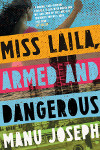
Manu Joseph: Miss Laila, Armed And Dangerous – On the day of election results, social media prankster, Akhila, comes across a crumbled apartment building in Mumbai, a victim of an earthquake, and offers to help the rescue team get to a man buried in the rubble; he’s mumbling about a potential terror attack in progress. Quite good, but more of a report than a fully-fledged piece of fiction.

Weike Wang: Chemistry – The unnamed narrator has been proposed to by her boyfriend twice and can’t find it within herself to say yes; there’s a lot of confusion – she’s struggling with her PhD and is unconsciously still suffering from the neglect of her parents. A search for identity where the reader is more privy than the character, this is an excellent book full of vignettes, humour, and boasts an interesting writing style.
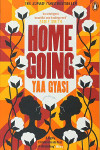
Yaa Gyasi: Homegoing – As the slave trade continues in Ghana, one sister is ushered into marriage with a white man at the ‘castle’, whilst her unknown half-sister is taken into slavery to be shipped to America; we follow both women’s decedents as they tackle their pasts. A wonderfully written book that succeeds in writing short pieces about various characters without you ever feeling lost.
Tough call as to a favourite this month – both Wang’s and Gyasi’s books were fantastic; as Wang’s in particular will be on my ‘best of’ list I should probably choose that, though in all likelihood, Gyasi’s may be on the list too.
Quotation Report
Hilarity and heartbreak in Chemistry:
At the gate, he goes through his repertoire of tricks – sit, lie down, crawl, play dead, roll over, high-five, sit, lie down, crawl, play dead, roll over, high-five. I ask him to please be dignified about this, but I have not yet taught him that command.
Whilst in The Female Quixote, Arabella’s cousin and suitor agrees to read her favourite books at his peril – it just so happens her favourites include the (still) longest fiction book published, all 13,000 pages of it.
Earlier this year I began reading books from the 1700s almost on a whim – I read one and then just thought I might read another. Now I’m on my fourth book, Frances Burney’s Evelina with no thoughts as to when I might ‘stop’ or which to read next. It has meant that I’ve read both the 1700s Charlottes I spoke of last year (my plan to read five classical Charlottes) which leaves me with one remaining – the Victorian Charlotte Mary Yonge. It’s also given me a crash course in a number of literary subjects I hadn’t expected, as evidenced by a few recent posts. All this to say, this month I’ll be reading 1700s fiction. I’ve also a couple of review copies to get to and I’m hoping to finish Claire Fuller’s upcoming Bitter Orange and those library books.
What are your favourite books of the year so far (of those you’ve read, regardless of when they were published)?


