




Film Review: This Beautiful Fantastic
Posted 19th September 2018
Category: Film Genres: N/A
2 Comments

Screen shots copyright © 2016 Ipso Facto Productions/Smudge Films.
This Beautiful Fantastic is only a couple of years old, a British production shot and released in 2016. I had never heard of it until I stumbled upon it on a catch-up service (it’s on iplayer for the next month). I enjoyed it so much I thought I’d write about it.

The story centres on Bella (Jessica Brown Findley), a young woman with Obsessive Compulsive Disorder – timing and organisation rituals, mostly – who lives in a basement flat in a nice area. As a baby she was left in a box in a park, found by an elderly gentleman who had gone for a swim in the lake. She went to a convent school. (The details here are vague, presumably to add to the fairy tale nature of it.) Now grown up, she lives an old-fashioned life, dressing in clothes from decades past and wearing an old digital watch, and works in a library that fits her lifestyle. The only thing about her world that isn’t tidy is her garden, a wild patch of ground that scares her. One day she injures herself; her curmudgeonly neighbour, Alfie (Tom Wilkinson) takes her in, where he proceeds to rant about dinner to his cook, Vernon (Andrew Scott), which leads to Bella offering Vernon a job with her. Annoyed, and with Vernon refusing to return, Alfie tells Bella’s letting agent about her garden, and the agent gives her one month to clear it up or leave her flat.
The above is about 1/3 of the story – the story is about more than the garden, but gardening and its benefits are what the film revolves around.

Bella’s life story, told at the beginning of the film, includes more than a hint of magical realism, and there’s a strong literary atmosphere throughout that suggests you might be watching an adaptation of a wonderful novel, perhaps by Amy Bender or Frances Hodgson Burnett, the latter not simply because of the garden but because of the magic. There’s also some soft humour that suggests the writer was inspired by Alan Bennett. But the film isn’t an adaptation, it just feels like one, and it is this that makes it a good possibility for a book lover.
There is so much to this film: the look at mental illness and the way support can make a difference; the romance (Bella and Billy, played by Jeremy Irvine) that is very well done both in the script and by the actors. And there is the production itself: a slight bloom effect covers the picture for the entirety of the film; the colours are muted, often dark. The use of history in the eccentricities is weird and wonderful and confusing; you’ll likely continue to ponder on is exactly when the film is set, the story offering a mix of a present day background with people who run the gambit from tracksuits to steampunk.

The literary quality of the film extends to Bella’s occupation – a librarian seeking to become a children’s author and illustrator. And Alfie’s book-like narration rounds it off.
Certainly you have to suspend reality in order to enjoy this film. As this is a book blog I’ll say that I think anyone who likes Austen, the Brontës, Dodie Smith, and magical realism, will at the very least appreciate it. It’s slow, full of feeling and fantasy.
It’s a film that should be a book.
How Can We Make Literature Less Intimidating?
Posted 17th September 2018
Category: Chit-Chat Genres: N/A
5 Comments

When I sat down to brainstorm this idea, I found answering the question hard, until I decided to reverse it. Thinking about how could we make literature more intimidating immediately brought to mind that to do so would mean having to keep doing what we’re (general) doing, stick to the status quo rather than continue down the paths a few people and publishes have started to take. Which then answers the first question.
To look on the idea of making it less intimidating, one of those paths that have been created is Quick Reads, the handful of short, easy reads, that are published each year, written by well-known writers. I’ve only read one, but it was enough to see the idea fully in action; I would presume the thought is that after some of these books a person might try something longer and more complex. Might – they don’t have to of course. (A note: Quick Reads is just as much about time constraints as it is making literature less intimidating, I believe.)
The ‘problem’ with the idea of less intimidating literature is that you have to look at specifics rather than the broad picture or it becomes controversial, for example, if ‘literature’ means classics and literary fiction, the argument would be that they ought not be ‘dumbed down’ in any way (and indeed to do so would mean current readers may not like them). But if applied broadly, then we can consider all the genres, which includes fantasy, science fiction, and crime, which often seem the most intriguing and most likely to be read by non-readers. With fantasy there’s less you need to know, in terms of facts, going in because it’s all to do with making things up.
A different point is the importance of letting people read what they want to read and come to their own conclusions. School English lessons, when part of the mandatory curriculum don’t often help with this and if it puts people off that’s a problem. It’s important that someone is allowed to interpret a book through their own experience, no matter how much, or little, or relevant or not, it might seem to others.
I think we do a good job with covers – lots of variety, though obviously trends stay in place for each genre – and in having books that relate to the audience that the shop serves; there are a few specific genres in supermarkets here. You rarely find literary fiction in them but the ‘easier’ books that are stocked must have an audience they wouldn’t be on the shelves. (I know there’s dislike for supermarkets and knocked-down prices, but it’s surely a very good place for fiction if you want to reach those who wouldn’t normally go to a bookshop, whether due to intimidation or price, and it’s easy to find yourself in the aisle whilst looking for something else.)
I do think a lot of it comes down to support and accessibility – accessibility of conversation and a good welcome to it – more than the books themselves. If you feel included in the conversation and able to ask questions and make mistakes, then you’re surely going to be more interested in the idea of picking up something that might be challenging.
How do you think literature could be made less intimidating, and do you have any stories of converting daunted non-readers?
‘[Book title] + summary’ And The Likelihood The Book Will Not Be Read
Posted 14th September 2018
Category: Chit-Chat Genres: N/A
2 Comments
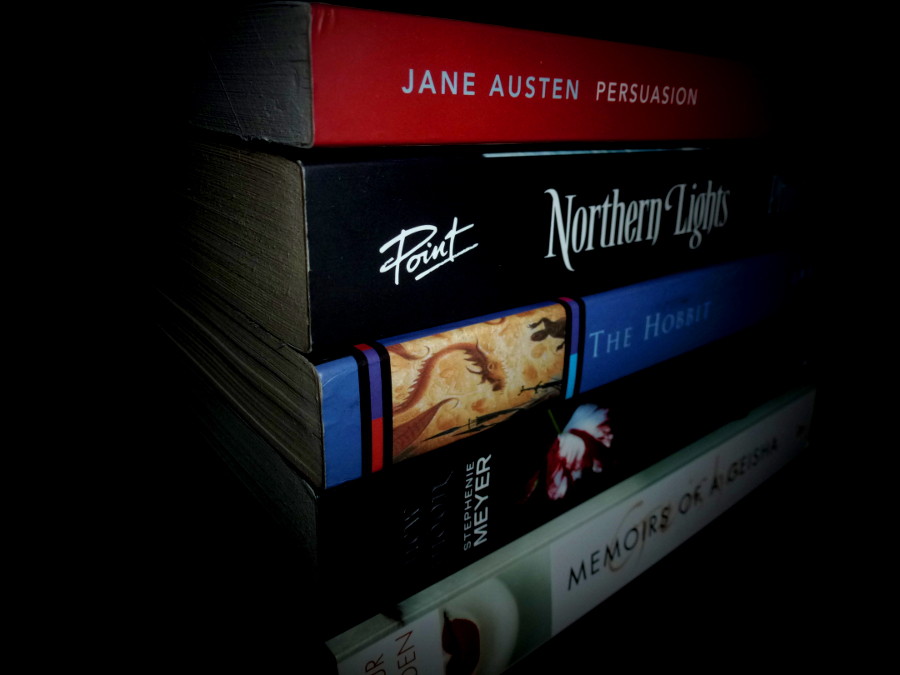
Looking through my stats, I’ve noticed a lot of people searching for ‘[book title] summary’ in Google. (They rarely reach my site, presumably because I don’t provide full summaries, but I see them all the same.)
My first thought was that these people would mainly be students, secondary school age, looking to do what my classmates and me did and get away without reading the book, but increasingly the searches involve modern books. Some of these books I can see being placed on a syllabus but many wouldn’t be. And we’re not talking books that have necessarily been turned into films, either (which might have suggested people wanted to know the differences between the mediums).
I worry because it strikes me as likely that it’s just that people don’t want to read the book. If you get the summary, and thus know the main features of the plot, you can potentially hold your own in a conversation, but you likely wouldn’t get characterisation aspects without a different search and it can often take reading the book to know whether it’s character-driven and so forth. And is pretending really worth it? What happens when the person or people to whom you’re pretending ask about something that isn’t related to the plot? (I know this situation is similar to those times you’ve read the book but forgotten it and therefore can’t talk about it much, but it’s easier there, and likely comes across as honest, if you say as much.) I may be biased – I’d prefer to say I’ve not read a book or not yet read it; then again, I’m used to talking to bloggers and similarly-minded readers who know that the number of books out there is limitless.
Of course another possibility is that of a reader who reaches the end but doesn’t quite understand what they read. Usually those are apparent through more specific questions, but not always. Sometimes it can be hard to find what you’re after with specific questions because you have to get the words correct in terms of how the internet has referred to the subject. I looked up The Bell Jar‘s summary after reading the book to see if there were more clues about Joan’s role than I’ve noted. But when that didn’t work I added ‘Joan’ to my search, which made my intent obvious.
Lastly, if you’re studying another book and that book references another you feel it’d be good to have context for, I can see that being another reason to opt for a summary rather than a full read.
What do you think of summaries online and the use of them? There are quite a few study-sort of sites, but not all of them include commentary – I’d say commentary alongside the summary adds a real reason for it.
Planning For Christmas 2018
Posted 12th September 2018
Category: Chit-Chat Genres: N/A
6 Comments

Over the last month I’ve been musing over the end month of the year. Every year I say I’m going to add some seasonal books to my reading list but it doesn’t happen as well as I hope. This is partly because I leave it too late – I’m making up for it here – but it’s also because it can be difficult to find Christmas books that aren’t romance.
Finding Christmas romances are easy, they are everywhere and it makes sense that Christmas would be a priority because of the cosiness, mistletoe, and just general seasonal mood. Most of what I’ve read so far at Christmas have been romances. I like settling down beside my tree with such books but I also want to read in other genres too.

And that is difficult. I suppose with literary fiction it’s the case that most books set at Christmas may sport some good cheer but at some point in order for the literary-ness to be included, the character’s lives will be upended… and that’s not really what you want at Christmas. It’s also just hard to find such books; most often those with ‘winter’ or ‘Christmas’ in the title move swiftly on.
Historical fiction is a possibly good bet but you have to accept that any Christmas time will likely be fleeting, and quite possibly unlike the season we know. Then there are classics. A Christmas Carol, which I’ve read; The Lion, The Witch And The Wardrobe which I’ve also read and is somewhat fleeting unless you include the endless winter into the Christmas time… which wouldn’t be right because as Mr Tumnus says, it is “always winter, but never Christmas”; and finally Little Women which I’ve added.
Then there are these: L Frank Baum’s The Life And Adventures Of Santa Claus; E T A Hoffman’s The Nutcracker And The Mouse King (which, something I didn’t know, was first re-written by Dumas before being turned into a ballet – Dumas’ re-write informed Tchaikovsky); Nikolai Gogol’s The Night Before Christmas; O Henry’s The Gift Of The Magi; Hans Christian Andersen’s The Snow Queen. I believe the Henry is an adult short story; I’d not heard of it before but it sounds famous.
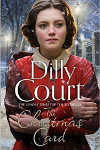
Dilly Court’s The Christmas Card looks like a possibility, but I’ve read a couple of books in that Victorian-to-early-1900s-historical-sort-of-romance-always-with-similar-set-ups-in-terms-of-family and not liked them. (Is there a specific term for books like hers? They’re a particular sort of historical but are generally placed away from ‘regular’ historical fiction, and are instantly recognisable. I’ve noticed supermarkets here have tons of them but they are rarely on display in bookshops. Historical chick-lit perhaps?) I’ll probably give the Court a go for variety’s sake.
So that’s where I am in my planning at present: Dilly Court, Alcott, a contemporary romance or two (likely by Shannon Stacey because whilst I find her work hit and miss it’s always got the escapism factor) and a few children’s fiction options. When I looked for Dilly Court’s book cover I found this list of Christmas books on GoodReads that’ll be worth looking into, especially as it’s a list of other lists.
Do you have any Christmas book favourites? And have you anything I could add to my list of classics?
Sylvia Plath – The Bell Jar
Posted 10th September 2018
Category: Reviews Genres: 1960s, Angst, Autobiography, Books About Books, Commentary, Psychological, Social
3 Comments
When things on the outside seem to be going well but they are actually not.
Publisher: Faber & Faber
Pages: 234
Type: Fiction
Age: Adult
ISBN: 978-0-571-22616-0
First Published: 14th January 1963
Date Reviewed: 10th September 2018
Rating: N/A (4.5/5 in usual terms of literary enjoyment and study)
Esther has always been an A grade student. Now, working for a ladies’ magazine in New York during a break, she struggles to get things right, and when she leaves the magazine to go back home she finds she hasn’t been accepted onto the summer course she had planned her holiday around. Along with this, she has a perpetual problem with a set of parents who want her to marry their son; she dislikes the boy and his pompous attitude. Somewhat related to this, she is afraid of what sex can mean for a woman, as well as annoyed at the double standards for women and men. Lastly, she misses her father. This all comes to a head and she beings to feel that life isn’t worth living.
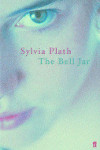
The Bell Jar, set in the 1950s when the author was at university, is Plath’s famous novel, a book that is highly autobiographical and succeeds in being both enjoyable on a literary level, and in giving you a lot of information about Plath and her struggles with clinical depression. (The title references the feeling the character has of living in a bell jar.) Published a month before her death, the book has inevitably been viewed not only in the context of itself and Plath’s younger years, but in the context of her death. And it is hard to write about it without referring to her. (It’s also difficult not to talk about the ‘plot’ extensively, though I have tried to leave as much as possible out of this review.)
This is a dark book. There are times when Plath is graphic in her descriptions of what Esther does in terms of self-harm, and the various ways she considers killing herself. There is a lot about the hospitals and treatments she undergoes, things we would now consider barbaric. Yet there is also a distinct lightness to the text, most prominent in the first handful of chapters but also eked out even until the end of the book, where Plath, whether consciously or not, lifts the text from the darkness. It is in these sections that her talent most often shines through, however the times in which you can see another reason for her depression rearing its head are also full of thoughts and the phrasing of those thoughts, that show further literary talent.
Two chief areas in this regard are female agency and sex. Plath writes her thoughts about the double standard that applied to men and women, using the story of her forced sort-of relationship with Buddy Willard (either largely or somewhat true to life) when he tells her he’s slept with women, and she later muses on the fact that society would expect her to be a virgin if/when she married but that that isn’t fair. Following this she looks at the way a woman would have a baby and her life would change forever but a man could be a father and be the same person as before.
I also remembered Buddy Willard saying in a sinister, knowing way that after I had children I would feel differently, I wouldn’t want to write poems any more. So I began to think maybe it was true that when you were married and had children it was like being brainwashed, and afterwards you went about numb as a slave in some private, totalitarian state.
With these and other subjects, namely her potential change in career prospects and her memories of her father, The Bell Jar gives you a fair grounding in why Plath/Esther was depressed, and although it begins and ends at university, it shows the sorts of thoughts and feelings that would have taken Plath further in her writing career and added to the problems she found in her marriage.
It’s worth reading up about Plath’s life in context with what is in the book – for example the shock treatments included are actually taken from the work of Mary Jane Ward, whose semi-autobiographical book The Snake Pit featured them1, as well as the relationships she had with Dick Norton and Richard Sassoon that influenced Buddy and Irwin.
Plath had the book published under a pseudonym as she didn’t want her mother to know she had written in, worrying about her reaction, but whilst there is dislike, there’s empathy there, too:
Hadn’t my own mother told me that as soon as she and my father left Reno on their honeymoon – my father had been married before, so he needed a divorce – my father said to her, ‘Whew, that’s a relief, now we can stop pretending and be ourselves’? – and from that day on my mother never had a minutes’ peace.
In terms of study, whilst most of the book relates directly to Plath, there is enough about society in general to take away from it, and due to Plath’s work and career, a fair amount about literature and poetry, albeit that names have been changed (they’re easy enough to find out). There’s also Plath’s use of terms we would now consider racist that set the book firmly in its time and show how terminology would be used even when there was no aim to be actively discriminatory.
As much as it’s an autobiography The Bell Jar is also a real work of literature, with so much attention to detail having been put into it. It is absolutely worth reading, just be cautious of timing – whilst there is a lot of true enjoyment to be had, and whilst it’s quite short, it can and will take a toll on you whilst you are reading it.
Footnotes
1 From Wikipedia, date unknown (a): ‘Plath later stated that she had seen reviews of The Snake Pit and believed the public wanted to see “mental health stuff,” so she deliberately based details of Esther’s hospitalization on the procedures and methods outlined in Ward’s book.’ (But it seems Plath experienced similar treatments herself – see Wikipedia n.d. b.)
Online References
Wikipedia (n.d. -a) The Bell Jar, Wikipedia.org, accessed 10th September 2018.
Wikipedia (n.d. -b) Sylvia Plath, Wikipedia.org, accessed 10th September 2018.
Related Books
None yet


