




Intisar Khanani – Thorn + Podcast
Posted 14th September 2020
Category: Reviews Genres: 2010s, Fantasy, Social, Spiritual
1 Comment

Far from a silly goose.
Publisher: Hot Key Books
Pages: 331
Type: Fiction
Age: Young Adult
ISBN: 978-1-471-40872-4
First Published: 20th May 2012
Date Reviewed: 14th September 2020
Rating: 5/5
Princess Alyrra of Adania is betrothed to Prince Kestrin of Menaiya via proxy, the king of Menaiya arriving in her kingdom to arrange it with her mother. When he first greets Alyrra he mentions her honesty, which is nice yet perhaps an odd thing for her to hear. As per her status in the family, she’s not invited to any of the meetings. Then comes an attack; Alyrra is visited in the night by a mage she has never met who talks to her about being careful going forward, but as she starts to make sense of what he means they are joined by a woman in white, dark, empty eyes, who attacks the mage. The King makes plans for Alyrra to leave home sooner so she can be protected in Menaiya early – everyone knows that members of the Menaiyan royal family go missing and no one wants to take any chances with Alyrra or the prince. But on the road, accompanied by Valka, a young woman who hates her, Alyrra is found by the woman in white who speaks of her wish to destroy the family; having been aided by Valka, the woman switches their bodies and casts a spell on Alyrra, stopping her from speaking the truth. Knowing the Menaiya family is at stake, Alyrra must warn them, but how can she? And does she want to when a simpler life, far from her brother’s abuse, is incredibly appealing?
Thorn is a retelling of the fairytale The Goose Girl, best known as told by the Brothers Grimm. It is an utterly fantastic story that greatly expands on the tale, adding details where there were few, interpreting concepts in new ways or taking them to conclusions that a study of them could reach, and modernising it just that little bit without losing any of the original ideas. It’s both very careful and completely daring.
On this ‘careful’ and ‘daring’, we might as well start with the switching of bodies. An almost Prince and the Pauper concept, had that story featured hatred in the two boys, Khanani’s choice to further the original concept of the princess and companion, taking the original switching of identities via clothes and general lies and manipulation, and making it a literal change, renders the story more believable, and more frustrating in that intriguing literary way that causes the message and point of the story to be more apparent and more satisfying when it comes to revealing it, the reader having waited a long time. You could say that Khanani’s change makes the story more fantastical than it needs to be, inching ever more towards the idea of a deus ex machina than the original, but then the original includes, just as Khanani’s story does, a talking Horse and a personified breeze, so ultimately it fits right in.
But further than this, Khanani’s choice to switch Alyrra and Valka’s bodies, and to change the original concept of oath taking to an enforced lack of ability to speak the truth, focuses our attention on Alyrra’s character progression. Alyrra must show who she is, a showing rather than a telling that is far stronger than the popular literary advice. She must also find a way to explain her truth without explaining her truth, and in so doing spend more time on herself and in thinking of those around her than she was able to do previously. On this point it’s interesting how relatively passive Alyrra is for a lot of the book, but again, that’s part of the point.
For a fair amount of the book, then, you have this passive heroine – she is unable to take advice, both due to fear and due to her wish to have a different life, which effectively shows itself as a lack of strength. Khanani spends a great deal of time showing you why Alyrra is as she is – though it’s true the author does show it from the first, Khanani, subtextually acknowledges that what Alyrra has gone through needs explaining so that every reader understands. Alyrra has been treated as a nobody by her family – stupid, weak, easy to give up to a family who may just want a body to shield the rest of them – and has had a life of emotional and physical abuse. It’s one of the things she tips Valka off to after the switch – Valka, as princess, will have to live with the physical reminders of Alyrra’s past. And Alyrra must work through this to come to the realisations she must make in order to save the family she is betrothed into.
This means that the narrative is slow. Out of context, it could be called frustrating – there is a lot of back and forth, with Alyrra as Valka – let’s just call Alyrra Thorn, as that’s the name she chooses after the switch – summoned to the palace time and time again by various royals and court members, most often the prince. The reader is privvy very early on to the notion that the prince has guessed what has happened, but rest assured, if this sounds like a spoiler, the ‘why’ takes a long time to become fully apparent. (‘Fully apparent’ because in fact part of it is easy to predict which, given the rest of the book, was most likely by design.) And the ending is worth the wait. Khanani knows you’ve been waiting patiently and she doesn’t disappoint.
Through these back and forths, and the conversations with Falada, the talking Horse (different to a non-talking lowercase bog-standard horse), as well as Thorn’s continued peace in her new job as a goose girl, understanding and purpose develops.
To go back to the idea I noted, of Khanani’s daring, beyond the literal switch of bodies, there are other elements. Given that this is an adaptation and given that by not saying what happens we can discuss this without any actual spoilers, one of the most daring things is perhaps the conclusion to Falada’s story thread. Through her narrative, Khanani seems to waiver on what she is going to do – you get a sense that she’s exploring what would happen if she took the route of the original story and what would happen if she didn’t – and her decision may surprise you. It could well surprise you no matter which one you were expecting. Further to this is the conclusion of Valka’s thread, which is handled in a similar manner. Again you may be surprised but it provides a lot to think about. What is Khanani saying by her choice? It’s a point to ponder.
As well as trauma suffered, Thorn is informed by her increasing knowledge of the social issues that abound her new home. Showing why she is a good choice for Menaiya, even if they didn’t know this bit about their kingdom, Khanani allows ample time for Thorn to immerse herself in the Land and gain knowledge that would set her up to be a wonderful ruler. These are big issues and as with everything else, Khanani considers everything with care, does not shy away from spoiling happy moments to further the plot and message, and if things have changed drastically in terms of people by the end of the book it simply reflects reality.
The prince, Kestrin, has his role greatly expanded. Rather than your stereotypical handsome love interest, he plays an active part from early on, and in fact informs Thorn’s character greatly. His role is one of protection without the swords and shields – his offers are literal but nevertheless he leaves it to Thorn to decide. Leaving that there and moving on to the relationship, there is a subtle romantic atmosphere that runs throughout the book but the narrative stays true to the characters – the ending of the book fits the content.
Lastly, briefly, looking at the role of men in the book, furthering Kestrin’s role as non-invasive support, as it were, the men in Menaiya – well, those in the good guy and human camp – are there when needed but otherwise remain secondary to the plot. The women take centre stage, the men generally out of the important aspects unless the plot requires it.
I’ve aimed to write about this book without spoilers but in order to do it justice, being quiet about everything is extremely difficult; the book is far greater than any premise could say and there is so much that needs to be considered. Thorn is one of the very best fairytale retellings to be published in recent years, during this time when there have been tons of them, and one can only hope that Khanani feels this strongly about another one and does this all again. It’s also simply one of the best fantasies, period.
Today’s podcast episode is with Midge Raymond (Forgetting English; My Last Continent). We discuss the current situation in Antarctica and the balance of keeping it clean whilst allowing research and tourism, environmental and climate changes in the same location, and being followed to the toilet by a penguin. Email and RSS subscribers: you may need to open this post in your browser to see the media player above.
To see all the details including links to apps, I’ve made a blog page here.
Peter Ho Davies – The Fortunes
Posted 7th September 2020
Category: Reviews Genres: 2010s, Commentary, Historical, Social
Comments Off on Peter Ho Davies – The Fortunes

Some things don’t change, some things do; they all should.
Publisher: Sceptre (Hachette)
Pages: 222
Type: Fiction
Age: Adult
ISBN: 978-0-340-98025-5
First Published: 6th September 2016
Date Reviewed: 7th September 2020
Rating: 5/5
1800s – Ling is an early immigrant to American; America seems a better life with its promise of gold, but as it turns out, Chinese people are not welcome, and struggle in lowly positions. Ling manages to break the mould a little, and leave for a better job, but there are always questions and discomfort in the background. 1936 – Hollywood star, Anna May Wong, has struggled throughout her career to gain non-stereotypical roles; as an Asian American there are rules regarding race that she can’t get around, and now she has come to China to her ‘home’ land, finding that as much as she’s ‘other’ in America, she’s not Chinese here. 1980s – a friend of Vincent Chin, a Chinese American man killed in 1982 by white men because they thought he was Japanese – looks at what has happened and the fallout. Present day – John, a Eurasian, has travelled to China with his wife, the final stage in their adaptation process, and the trip and his prior writing has him questioning issues of race, situation, and the history of racism against Asian Americans.
The Fortunes, a book with an overarching theme – story, really – told in four stories, is a fantastic work that looks at the experiences of Chinese Americans and in turn Asian Americans over time, from the first immigrants during the gold rush era.
Ho Davies’ choice of four stories and the way he uses subtlety to connect them – because whilst you can see the themes, there’s still some subtlety to it – is compelling. Initially, whilst you’re reading the first story, it can be frustrating – here you are, completely ‘in’ Ling’s world, interested in seeing where it goes, meeting the various people, learning the history – and then it ends, and moves on to the next story, but once beyond that, or once you’ve accepted it, so to speak, the author’s choices come to the fore and you find yourself on a certain kind of journey. For those who don’t know much or anything about the historical, real, people, there is history to learn. Beyond that you’ve the methods – the language, the way of description – Ho Davies’ employs to tell his stories, to explain, and to teach.
For people who aren’t Asian, there’s a lot here about the experience of difference, of racism, historical and present-day, of stereotyping. Likely – or possibly (I’m not in a position to say for definite) for readers who are Asian, the value will be in the writing down and popularising, and the validation. The stories in The Fortunes are spaced out from the 1800s, they apply to separate eras in order to bring a full overview, and the constant moving forward of time shows how slow change has been in coming, and, although society has moved forward, that there is more that needs doing.
In story four, present-day fictional John looks back at other periods in time, pulling the stories together, suggesting that they are more novel than separate stories. If you’d already been wondering if there would be some joining up, this is where it happens. John’s thoughts, and his situation as a writer with the subjects he writes about, question the role of narrator and the place of the author in the book; with the stories sharing a theme and, whilst all different in character, sharing nevertheless a certain something that’s difficult to pinpoint exactly, there seems almost a novel-in-a-novel aspect to the book, Ho Davies’ pen being near enough to see. This of course links to the stories themselves, but also has a place in the text as a text, so to speak, the literary nature of it and the use of language being most apparent here.
You could perhaps say it’s a fractured narrative.
The Fortunes is, as said, fantastic. It looks at things in a certain way – perhaps not new, exactly, yet it kind of is – and offers a different way to read and learn about subjects (the use of the factual documentary footage Anna May Wong had made instead of the backdrop of one of her films, for example, is intriguing). Read it as both a novel and four novellas; to define it definitively either way would be wrong.
Speaking to Peter Ho Davies about The Welsh Girl, and The Fortunes (spoilers included)
Charlie and Peter Ho Davies discuss moving as a writer from Britain to the US, Welsh with English as a second language, the first Chinese Americans, Hollywood star Anna May Wong, and the impact – then and now – of the murder of Vincent Chin.
If you’re unable to use the media player above, this page has various other options for listening.
August 2020 Reading Round Up
Posted 4th September 2020
Category: Round-Ups Genres: N/A
2 Comments
August got the better of me; I didn’t read as much. I spent a lot more time gaming than reading but I did get back to books I started a few months ago, namely James Rebanks’ A Shepherd’s Life, which I borrowed from my dad a year or two ago…
All books are works of fiction.
The Books
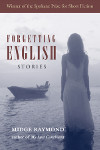

Midge Raymond: Forgetting English – A collection of stories based around the themes of travel, and women trying to live with the career versus family issue. Rather awesome; there’s lots going on here away from the obvious things that an inevitable number of characters and storylines brings, and the attention to the details Raymond has chosen is wonderful.
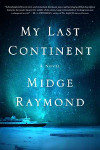
Midge Raymond: My Last Continent – A cruise ship is heading a little too much towards Antarctica and Deb knows that lover Keller may be on board. A good book about a titanic-like shipwreck with lots of information about Antarctica and what we need to do to save it.
Peter Ho Davies: The Fortunes – Four stories connected by Chinese American history, racism, passing, and that rubbish idea that all Asians look the same: we follow 1800s Ling as he works for a Chinese American laundryman and white American railway construction company owner; Hollywood star Anna May Wong discusses her career progression which is marred by racism; a fictionised friend of Vincent Chin discusses the night of his death and what followed; and John travels to China with his wife to adopt a baby, already having lots to think about on the subject of being Asian American now and throughout history, and finding even more now as he goes through the last stages of the handover. An utterly fantastic book – the handling of the subjects, and the writing and language in general is superb.
Peter Ho Davies: The Welsh Girl – A German man, Jewish by Nazi standards, becomes an investigator for the Allies and works on getting information from Rudolph Hess; meanwhile, Esther deals with a short relationship that goes very wrong and the introduction of a German POW into her life; said POW, Karsten, tries to make sense of everything including his surrender on the behalf of those with him. A difficult one to summarise without spoilers, this is an interesting book that looks at aspects of WWII we don’t often hear about, and deals with them in a unique way.
I’ll pick a favourite from both the authors, because that’s a lot easier than picking a favourite over all – Raymond’s My Last Continent, Ho Davies’ The Fortunes.
For September I’m continuing Christina Courtney’s Echoes Of The Runes, Roselle Lim’s Vanessa Yu’s Magical Paris Tea Shop and I need to get to Orlando Ortega-Medina’s The Savior Of 6th Street; I’m late on that.
What do you plan to read in these next few weeks?
Favourite Book Covers
Posted 31st August 2020
Category: Chit-Chat Genres: N/A
1 Comment
It struck me last week as I was writing out the first lines post that I’ve never really looked at favourite book covers.
I have always been enticed by nice covers, though perhaps more so since I started reading ebooks and particularly now during isolation where I’m reading them almost entirely.
Most often I will be struck by the combination of a nice cover and a hardback book. Hardbacks tend to have more than their fair share of nice covers; when publishers switch covers for the paperback I find the new one is often not as appealing. Hardback jackets also seem to lend themselves better to embossing, gold paint, and better colour pigmentation. The bigger size of the book also gives it more grandeur.
This is to say that I’m not entirely sure I could make a decision on favourites without that context. Even looking at the covers online, without the physical nature of the hardback, it’s difficult to get away from the way they look in person. So I won’t try – the covers below are sometimes going to be influenced by the fact of the hardback.
I’m leaving out all books that are in the public domain where the ideas of the author and original designers are long gone, and I’m keeping it to one book per author. I’m also keeping it to books I’ve read. I’ve put title tags on all these as the covers are small – hover over them if you’d like the details.


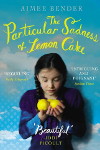




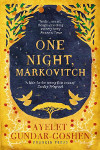



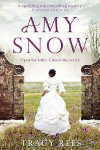

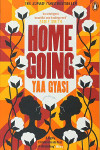
Due to there being so many – and this is inevitably the shortened list – I’ll leave out any navel-gazing. I think it’s safe to say I love bright colours, multicolours, and images where one person stands in front of something, a future or situation being the subtext. (I’ve always though the latter is probably the reason for those covers – they make you want to find out more.) I like YA fantasy/magical realism/paranormal covers. And I rather love both covers that were created for One Night, Markovitch enough that whilst the reason I wanted to buy the book was the cover I’d seen, I still bought it when I found a copy with the new cover. Likewise The Particular Sadness Of Lemon Cake – I loved the title and the hardback cover but I guess the title drew me more as I read the paperback version seen above.
Which covers of books you’ve read are your favourites?
Analyses Of First Lines #9
Posted 28th August 2020
Category: Close Reading Genres: N/A
1 Comment
I’ll start off by saying that this post being very literally blue is something I did not plan; I discovered it once all the images had been added and decided to keep it as is. Whenever I choose books (or, it could rightly be said, lines) for this post, I’m thinking in terms of text, but I quite like the matching palettes and might have to consider the affect again if and when (more likely ‘when’) I get into a muddle choosing future books.
This post is effectively brought to you thanks to Roselle Lim – Vanessa Yu’s Magical Paris Tea Shop was published a few weeks ago and the first line from it was what gave me the idea to create another of these posts. I read the first line, deemed it perfect, and must admit I put the book down after that so that I could ponder the line for a few minutes.
I have been reading more closely more recently, if that makes sense and isn’t too clumsy in terms of phrasing. I noticed when reading Midge Raymond’s My Last Continent that I was seeing so much more in it than I had previously, I wondered if my review should still stand. It ought to, of course, but maybe there is a place for updates when you’re dealing with something like reading, something where a person’s experience will keep growing and improving. I might have to write a post about this…
Roselle Lim’s Vanessa Yu’s Magical Paris Tea Shop (2020)
I predicted the future on my third birthday.

So, then, the line that spawned this post. It doesn’t tell you anything about who you’re hearing about or what the story is about, except that it does. Title and any context aside – because ‘magical’ lends itself to the idea that predicting the future is par for the cause, and the cover suggests a happy book with happy likeable people – you might wonder about this character. They predicted the future… they could simply be musing, they could be suggesting that they’re intelligent, or, perhaps, they could even be a bit arrogant.
But given the second part of the sentence, that ‘third birthday’, it’s safe to say it’s likely they’re musing and that there is some intelligence there. A three-year-old predicting the future is, to my knowledge (but am I in a position to muse or be intelligent?), pretty rare. But we can’t say that for definite.
Apart from this, what do we learn? We learn that there could be a supernatural element to it, a three-year-old predicting the future. (I mean that in the literal sense – perhaps a child standing up at a family gathering and holding court.) The supernatural could instead be family members aiding the child – passing them a crystal for dousing and watching what happens, for example. Given ‘the future’ is there right near the start, here in this first line, we can ascertain that the story following this, or at least part of the story, will detail that future, which is interesting when you consider we haven’t heard about the past or present yet. (We’ll inevitably get to the past and present but I wonder if we ought to consider this a bold move, talking about the future when you’re just being introduced, though that does of course depend on what sort of future we’re talking about. I’ll leave that there – I think it’s pretty awesome regardless.) Lastly, we inevitably learn that, at least to some extent, this person has been waiting for this future in a way people generally don’t.
Who is this person? We’ve no idea really, but would it be fair to say we now definitely want to find out?
Christina Courtney’s Echoes Of The Runes (2020)
On the outermost tip of the peninsula, she waited and watched through the lonely hours of dawn, scanning the water as far as the eye could see for a glimpse of the familiar snake’s-head carving at the prow of his ship.
With this line we could be anywhere… and then. Right up until those eight last words you could say it’s impossible to guess where and when this book is set. Where the book is set is still difficult, but with the snake’s head at the prow, this has got to be historical, in a time before modern boats, unless we look at the possibility that someone has recreated an old-fashioned boat, and I’m not going to go there with that because we could be here forever.
I don’t know about you, but I’m seeing 1500s, possibly 1600s, as the latest date for this ship. This character is ‘scanning the water as far as the eye could see’ – that could really be any time, as could the rest of it.
I like that you’ve no sense of time period until the end – at first I wondered what I might be able to say about it, but that ending is great – and I like that people who know more about ships might have a good insight as to the time period (and possibly location) by way of the snake’s head carving. The one thing I would venture to assume is that, as it’s a snake’s head, the man the character is waiting for might be a villain or in a position of power.
Peter Ho Davies’ The Fortunes (2016)
It was like riding in a treasure chest, Ling thought.
First off, I must note that the above is the first line of the first of four semi-connected long-form stories – The Fortunes is effectively four novellas all on a similar (edging towards the same) theme as each other, not quite a fractured narrative, but running parallel to the idea.
Before this line comes two lines from American Titan by K Clifford Stanton about a man considering his Chinese ‘houseboy’. I checked both Wikipedia and Project Gutenberg as well as Google for this and cannot find any reference (I’m writing this after having recorded the podcast episode with Peter) so I can’t say for certain whether or not it’s factual versus from a novel, but let’s assume it’s non-fiction or a very fact-based fiction – as much as the Ling from The Fortunes is Ho Davies’, he’s Clifford Stanton’s.
It’s technically strange to look at it out of context but let’s do it: do we know where Ling is – no, we don’t, and if we remove the context of the included extract from Clifford Stanton, we don’t know when he is, either. But something significant has or is happening, whether a permanent life change or a simple moment, we don’t know. As a metaphor, a treasure chest strongly suggests extreme wealth, money. ‘Riding’ – a gold carriage, perhaps. The significance is the key here – Ling has not had this sort of experience before, and he has likely come from a very different background.
Midge Raymond’s My Last Continent (2016)
As I lead tourists from the Zodiacs up rocky trails to the penguin colonies, I notice how these visitors – stuffed into oversize, puffy red parkas – walk like the penguins themselves: eyes to the snowy ground, arms out for balance.
This line doesn’t tell you exactly where, but you’ve a very good sense – penguins; parkas needed; even the penguins’ requirement for arms to be out for balance. Tourists, visitors – but this isn’t the zoo. Then add in the Zodiacs, which are inflatable boats – we’re by or in water.
There’s a lot to this sentence and in fact it sets you up with the themes and literary content rather than the character’s particular story, which is quite nice, though some of this is more vague in the sentence than the rest, for example, what are these people, these tourists doing here? And there’s a lot of different punctuation – is it too much, is it just right? It does keep you going and on track; it’s safe to say the amount of content in the sentence gives you a good idea for the location and general atmosphere, the social side of it, too. There’s also the alliteration, which suggests the weather is colder here, for the parkas to be ‘puffed’ rather than, simply, ‘parkas’, and the use of comparisons between humans and penguins.
Tracy Rees’ Darling Blue (2018)
All through that shimmering riverside summer of 1925 there seemed to be only one question on everyone’s lips: who was Blue Camberwell going to marry?
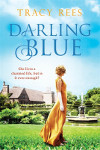
Dare I say ‘boom – done’? This sentence tells you what is going to happen, and what you can expect, at least to some extent – how much depends on whether this Blue is the main character or one of many. Or perhaps those others, ‘everyone’, else is where our character(s) can be found, if you’ll pardon the poor grammar. Where – riverside; when – summer 1925 (hello Gatsby and co?); who – Blue. The ‘how’ is less definite, but we can speculate that it’s got something to do with dating.
Like Raymond above, Rees’ first line features alliteration that has a different first lettered word in between; in this case the ‘shimmering summer’ – as it’s 1925 it’s hard not to imagine glittering parties, glamour; certainly ‘shimmering’, whilst paired with ‘summer’ and ‘riverside’ speaks more to the era in general, even if it truly is about the water.
It’s interesting that the line ends on who Blue is going to marry; before we’ve even met Blue we’re told she’s important, very much so – ‘everybody’s lips’ surely points to the wider community than the family.
Conclusion
As I started working my way through these I found myself wanting to look at them more casually, in a bit more depth even if it meant more musing. But I also found myself comparing the lines to each other – they aren’t comparable, really, except in a literary sense. It is interesting to look at the metaphors and alliteration, especially, here, the alliteration, and how different authors use these aspects of language to get the sentence where they want it to be, where they want it to end up.
And I found myself wanting to read them out loud. I didn’t – I might have got some funny looks from two furry ones – but saying it in my head made for an interesting result. The words sounded great – I’ve always loved alliteration – but there’s an effect of reading them that I suppose can be likened to spoken poetry; you can appreciate the sounds and the meanings and it’s the meanings that become most apparent when spoken. Of course breaking the sentences into pieces always helps, but the sounding of it was new to me in the context of fiction, away from the idea of reading aloud in itself. I think I’ll have to explore it more.
What is the first line of the book you are reading at the moment?


