Elizabeth Chadwick – The Running Vixen
Posted 17th May 2012
Category: Reviews Genres: 1990s, Domestic, Historical, Romance
4 Comments

Be watchful of the jealous.
Publisher: Sphere (Little Brown)
Pages: 373
Type: Fiction
Age: Adult
ISBN: 9780751541359
First Published: 1991
Date Reviewed: 2nd January 2012
Rating: 3.5/5
Please note that this is a review of the updated version of the book, which, it seems, was published in 2009.
Guyon’s (of The Wild Hunt) daughter Heulwen married Ralf, with whom she was infatuated – missing the affections Adam de Lacey was showing her. Now Ralf is dead, and despite the fact that Heulwen had always seen Adam as her brother since he was her father’s ward, she’s starting to feel differently about him. But Heulwen has all but said “I do” to Warrin de Mortimer, who, regardless of his arrogant nature, she is determined to marry. It will be a tough fight if Adam decides to give gaining Heulwen another shot, and both luckily and unluckily for him, there is more to Warrin than anyone knows.
The Running Vixen is a stand alone story that is relative to The Wild Hunt by way of the elders in the book – Heulwen’s parents are Guyon and Judith of The Wild Hunt, and they feature strongly enough in Heulwen’s story to warrant the reader going through the books in order. That said it is quite possible to read The Running Vixen by itself, as there is no back story prominent enough to be a concern.
The plot is simple and it is Chadwick’s talent for immersing the reader in history that keeps the book interesting. However there does come a point where you wonder what exactly kept Chadwick continuing the story, and while she later gives the reason, it was surely unnecessary draw it out. Sadly part of the interest in the book comes with the expectations given on its cover, which promise a forbidden love – the prospective reader may like to note that the family are quite happy with the match between Adam and Heulwen, as is the king, and this is obvious from the start considering Adam’s prestige.
The book contains many small battles, which make a good read albeit that there are many of them, and Chadwick includes information about why there were issues between the Normans and Welsh (the book’s main characters are entirely fictional, but the general setting is not).
If the story was stronger and had more “episodes” to it, The Running Vixen would be a fine specimen in Chadwick’s stack of books, but it is a little too everyday. The characters are good but similar to others of her creation, and while the main characters love each other they don’t tend to learn much about themselves as a couple when they surely should have.
If you have read some of Chadwick’s other books you will likely enjoy it but a new reader should leave it for a later time, as it is not the best example of what you can expect from the author. In this way, that it is the second in a series is of benefit.
Related Books



L M Montgomery – The Blue Castle
Posted 13th May 2012
Category: Reviews Genres: 1920s, Comedy, Domestic, Romance
2 Comments

We all have our idea of perfection, but how many of us achieve it?
Publisher: Seal Books
Pages: 218
Type: Fiction
Age: Adult
ISBN: 978-0-553-28051-7
First Published: 1926
Date Reviewed: 9th May 2012
Rating: 5/5
Please note that this book is very hard to get hold of in print and your best bet, unless you have a relative who owns a copy, is to find the ebook versions, in plain text and HTML at Project Gutenberg Australia.
Valancy Stirling has led a miserable and depressingly dull life, treated like a bad person when she isn’t, mocked by her family for being a reader, for not being pretty, and for being twenty-nine and not married. On her first day of the last year of her twenties, she starts to really accept just how much control she has let her family exercise over her, and how much that control has in fact stopped her from reading as much as she would like, from being pretty and married, and instead always being ill. Learning from a doctor, of her choosing, that she only has a year left to live, she decides to throw caution to the wind and be who she wants to be and say what she wants to say. It will shock her family, but it is likely to shock Valancy the most.
The Blue Castle is a somewhat short, hilarious, and sometimes frustrating book that while not exactly an example of fantastic writing, never fails to delight. It is, it must be said, incredibly predictable, to the point that everything you think will happen, will indeed happen, but for the story it doesn’t matter, and knowing what will happen in advance, coupled with the overall narrative, makes continuing all the more appealing. And while it should be noted that the book is very much set in its era, with all the trappings, the idea is that Valancy gives this up, and whether Montgomery planned for the future or not, Valancy becomes as relevant today as ever.
The plot is good, but it’s the characters that make the book a success. Each is given enough time for you to get to know them and their eccentricities, or lack thereof, and to learn how they would react to the situations Montgomery puts them in. This is perhaps best shown in the differences between the Stirlings – the family as a whole are obsessive about the smallest issues but each have their own quirks. And Montgomery “goes to town” with Roaring Abel, who incidentally doesn’t live in the town, giving him four different stages of drunkenness that really shows off her talent for humour.
“Fear is the original sin,” wrote John Foster. “Almost all the evil in the world has its origin in the fact that someone is afraid of something. It is a cold, slimy serpent coiling about you. It is horrible to live with fear; and it is of all things degrading.
As for Valancy she starts the book being an irritation, not helping herself, being passive, and thinking back over and over to the past instead of making new memories – before changing to become her own person, and a person unconcerned with all the issues she had previously. There are definitely limitations placed on her, but the feeling Montgomery gives her readers is one of a person who would do anything.
“Doss, dear,” said Cousin Georgiana mournfully, “some day you will discover that blood is thicker than water.”
“Of course it is. But who wants water to be thick?” parried Valancy. “We want water to be thin – sparkling – crystal-clear.”
The definition of “normal” is one of the ideas explored in the book. The Stirlings are boring and dull and melodramatic, but in their closeted world they are normal and everyone else is not. And in the way that they are completely imperfect, they truly are normal, for as the saying goes, nobody is perfect. Then there is everyone else in the town, or at least those focused on the most. They are the characters that modern society, and indeed Montgomery, would call normal, yet there are of course also imperfections and secrets surrounding them too. It is from the Stirlings to the rest of the town, Deerwood, that Valancy moves to, changing from the perfect imperfect to the imperfect perfect.
And if Valancy’s fantasy of a blue castle is her version of that special place that we each turn to in our heads for peace, then it is as much a mental and emotional concept as it is realistic. Montgomery ensures that both mental and physical worlds meet to blend together but never lets the mental image get too far in the physical world – the concept remains realistic. Of course the castle also represents freedom, whatever that freedom may be.
The romance balances chasteness with forwardness. Montgomery has fun laughing at society’s unnecessary hang-ups whilst guaranteeing that the story will be accessible and appealing to all. Indeed the concepts of difference and balance are the overriding themes of the story throughout.
The tale brings each character to reflect upon who they are, and later who they might want to become. It shows that even when we decide to do something big, we may later realise that it was the wrong decision.
She was so tired she wished she could borrow a pair of legs from the cat.
The Blue Castle is worth a read for anyone who wishes for a comedic classic without all the expectations, old language, academic criticism, and difficulties that come with reading your average older book. It is hardly the best piece of fiction ever written, but it’s worth its weight in the heap of roses that have bloomed because of it.
Bloomed because of it, you say? You’ll have to find that out for yourself.
Related Books

Daphne du Maurier – Rebecca
Posted 7th May 2012
Category: Reviews Genres: 1930s, Crime, Domestic, Drama, Mystery, Romance
Comments Off on Daphne du Maurier – Rebecca
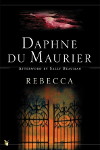
You have never known a writer as uniquely talented as this.
Publisher: Virago Modern Classics (Virago)
Pages: 428
Type: Fiction
Age: Adult
ISBN: 978-1-84408-038-0
First Published: 1938
Date Reviewed: 27th April 2012
Rating: 4.5/5
The heroine meets Maxim de Winter while she is training to be a lady’s companion under the tutorage of an American woman. Bored of her life, and fed up with the snobbery possessed by Mrs Van Hopper, when Maxim makes a surprise proposal of marriage, the heroine accepts. Maxim’s first wife has died, but that does not worry her; however on arriving at Manderley, the de Winter’s home, she finds that Rebecca is very much alive in the constant references and laments of staff and those who knew her. And from being happy, the heroine sinks into a place where she feels as though this haunting atmosphere will always be about her. What does it matter how Maxim tells her it’s fine, when everyone else is living in the past?
Rebecca, the novel with the unnamed heroine, is rather individual. The basic plot itself is far from incredible as it has been done before, indeed comparisons could be made with Jane Eyre in many respects, so what makes the novel spellbinding is Du Maurier herself. The writing in Rebecca – the structure of the book, the characterisation, and the detailing – is exceptional. The words themselves may be usual enough, and it might be a difficult task to identify any short passage of the book as Du Maurier’s without knowing beforehand, but the overall presentation is completely unique. No other author has ever brought such individuality to the table as Du Maurier does.
I thought how little we know about the feelings of old people… Did she know that Beatrice was yawning and glancing at her watch? Did she guess that we had come to visit her because we felt it right, it was a duty, so that when she got home afterwards Beatrice would be able to say, “Well that clears my conscience for three months”?
The characters in Rebecca are rather abrupt, almost in your face. There is no added lingering emotion, and Du Maurier never starts from the shallows – she throws you in the deep end. There is no time for the reader to become acquainted slowly with Max, for example – you either become acquainted instantly or you shy away.
And no matter how far into the book you are, these characters, despite being personalities confined to fictional history and therefore of a different nature to readers further on in the world’s years, continue to shock. They are the sorts that waste no time, don’t bother with pleasantries, and have no time for dreamers.
Maxim is, by himself, a fantastic creation. He never shows emotion whilst at the same time practically oozing it. He is completely obvious whilst being totally obscure. Yet he is utterly likeable for the way he has been written. Rather like Jane Eyre’s Mr Rochester, he defies the usual limitations of books, and comes out as one of the best heroes in literature in terms of being memorable.
I wanted to go back again, to recapture the moment that had gone, and then it came to me that if we did it would not be the same, even the sun would be changed in the sky, casting another shadow, and the peasant girl would trudge past us along the road in a different way, not waving this time, perhaps not even seeing us.
The heroine, who can never be named, is the opposite. She is emotional, she is an analyst, and she is a compulsive dreamer. A great deal of the book is taken up by her daydreams and worrying, her “what if”, her dissection of her relationship, her craving to relieve the past, and her function in a home wherein the dead wife is still the queen. Her role at Manderley she doesn’t actually realise because she spends so much time daydreaming. That Du Maurier was a daydreamer herself is obvious. She writes so knowingly, expressing how easy it can be to look to a future that may or may not be, how easy it is to think over and over of the past. Her writing here is most universal and eternal, and Du Maurier aptly portrays the plight of a woman who feels she cannot bring up in conversation the woman who came before her.
Not surprisingly, the majority of the book’s themes arise from, and orbit around, the heroine’s story and her development. The reader can see in her thoughts where she is thinking the wrong things, how she has come to believe that she is secondary to Rebecca despite never asking if she is so, and how she has come to be confused as to who she should be. From being a little interested, the heroine becomes obsessed by the idea of Rebecca, so much so that the amount of her (artificial) memories of Rebecca eclipse those of any other character, perhaps of all the other characters combined. She is the reason the reader can sit back and think that yes, this book does indeed deserve to be called after a dead and never fully introduced person, because the heroine always puts Rebecca before herself.
Because that’s the nub of the book, one of the elements of it that leaves you amazed. There is this sense throughout that somehow, some when, you as the reader are going to meet Rebecca. You are going to be able to see her away from biased thoughts, and hear her speak for herself. But Rebecca has gone, and Du Maurier never suggests otherwise. Yet so crafty is the author, so clever are her dialogues and scenes, that just like the heroine, you can never fully believe that Rebecca is dead. The phrase “Rebecca has won” crosses over into reality. The fictional never-actually-there woman does win, because despite never being fully realised she is likely to be the “character” that remains in your mind. And the fact that we can only call the heroine “the heroine” is surely further testament to this.
Perhaps the most apparent quality to the book is the way that the reader is obliged to read it. The pages don’t often beg to be turned, in fact for the most part, if not all, of the book, there is no pressing reason to finish it quickly. Each section is long, and the climax itself is drawn out, but the pace is never fast. In any other situation, that would be a bad thing. The genius of the narrative lies in the way that once you do pick it up it’s incredibly easy to get carried away and lose track of time. Chapters go by without notice. Du Maurier’s writing is so effortless to read – whilst being far from dull – that although she favours descriptions often, it’s difficult to really comprehend that that’s the case until you have moved on to dialogue. She employs an intriguing balance, while her descriptions are detailed and run on for pages at a time, the dialogue is edited to perfection, there are no superfluous words and every response to a question has a ton of subtext and meaning to it. A simple seeming “yes” is never that, but instead holds in three letters an entire story all of its own. The book is a glorious example of showing rather than telling.
Regarding the detailed descriptions, the way Du Maurier includes so much of the goings on in the day is refreshing. The mundane she makes interesting and of those days during which she chooses to spend hours with the characters, you feel as though you have indeed spent the entire day with them. The mixture of these detailed days and the ones she leaves in the dark make for a shock when you discover, for example, that far from being a few months down the line, the characters are still leaving in the same week.
Just as Rebecca herself is stunningly beautiful, so is the book that Du Maurier has written. The plot may be straightforward given the heroine’s analysing nature that takes time, and Du Maurier’s almost carefree attitude to events that other authors would turn into thrillers, but there is a splendour to the complete creation that defies any notion of the glory bestowed upon other stories. The heroine may be alive and Rebecca dead, the heroine may have gained our admiration whilst Rebecca is in no position to speak, but it is Rebecca we will remember evermore. And so we should, as it is a book that surely heralds an addition to our lists of eternal classics.
Related Books


Irving Bacheller – The Light In The Clearing
Posted 4th May 2012
Category: Reviews Genres: 1910s, Historical, Political, Social
1 Comment
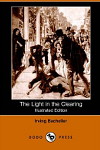
Social issues and politics inevitably blend together.
Publisher: Dodo Press (The Book Depository)
Pages: 260
Type: Fiction
Age: Adult
ISBN: 978-1-4065-0366-1
First Published: 1917
Date Reviewed: 4th May 2012
Rating: 3.5/5
Bart lives with his aunt and uncle in a modest house in a modest village. He befriends a girl from a higher social class, but her reciprocation of his flourishing love is marked by periods of disdain for his humble status. One day he meets a senator and his life begins to change. Wanting to improve himself, Bart looks up to Mr Wright and learns from him. And Wright is more than willing to aid him in both his learning and his transition from child to adult, seeing how much potential he has.
The Light In The Clearing is rather like an American version of Great Expectations, only where Dickens exaggerates his themes, Bacheller dampens each down so that the story is far less dramatic. This has the effect of bringing more attention to those elements he does not share with Dickens, the overall result being to show how people can live with falseness and goodness and still manage to come out well.
Though it does take a long while for the book to become more than average. A lot of time is given to the every day, and there are many dialogues that are littered with accents that can be hard to decipher. The time spent at home, with Bart living with his poor relatives and later going to school, does not have enough interesting episodes to make it worthwhile, and it’s peculiar that Bacheller puts all his eggs in one basket – putting the majority of the romance, politics, and opinion in the last few chapters. Because those last few chapters are excellent, but it’s difficult to get that far.
The differences between poverty and wealth are contrasted throughout. Bart’s family are poor but they do their best to give Bart everything he needs, and it is really only when he goes to school that he learns that he is at a social disadvantage. His family and friends protect him, and Bacheller uses the whole concept to show where richness lies in love and accepting what you have. He also demonstrates that wealth does not always make a good person, and indeed the richer characters are often false and deceitful.
This theme is intertwined with the romance as Sally, for a time Bacheller’s own Estella Havisham in the making, flits between liking and disliking Bart, depending on how he is being treated by others and what he is wearing. Bacheller shows the innocence of a boy brought up to feel equal to others and contrasts it with Sally’s feelings about his poverty. The relationship between the affluent Dunkelberg and Baynes families, with its changes of friends and foe, expresses the idea of fair-weather friends.
It is the senator, Wright, and his entrance into the story, that signals the first of the changes in Bart. Wright is well-off in society, but as a resident in the town he has no problem befriending Bart, and it is Wright’s influence that gives Bart his goal in life and reminds him that he is indeed equal in nature’s eyes. Wright teaches Bart to be an adult, and to follow his heart rather than follow what society suggests. Wright’s own decision at the end of the book is a surprising but very heartening action that ministers of present parliaments would do well to observe.
Some of the politics, especially near the end, focuses on the abolition of slavery, the story being historical in Bacheller’s own time. The focus is not huge, and it is used more to set the scene, but there is enough material to gather an overview of how people at the time felt about it all. Where social relations are concerned, the person of Old Kate, a woman who blends fortune-telling with regular premonition, shows what happens to bad people who con their neighbours, with a morbid element thrown in for effect.
Whilst the first two thirds of the book are rather like Great Expectations, and there is even the inclusion of a room left the way it was after a last meal – and described rather like Miss Havisham’s abode – the latter third moves away completely from the classic, heading in the opposite direction on all accounts. The romance thread is confusing and the quickened pace of Bart’s progression from poor boy to lawyer is too fast to keep up with. But the overall atmosphere, the positives in the way that Bart overrules higher society’s choices, and the ethical Wright, makes the end an outstanding piece of work. It is just a pity it takes so long to get there.
The Light In The Clearing was the number two best-seller in America, but while it is easy to see why, for it’s political and social messages, it has not stood the test of time as well as it could have, and that is a shame. The length of time it takes to get somewhere, and that the time is spent on not so interesting tales of home life, does indeed encourage comparisons to the older work of Dickens, and not favourable ones.
The Light In The Clearing is a book that is worth a read, but not so much for pleasure as for studies of history. For history it is a fantastic fictional source but for pleasure the dampening of themes and 180 degree changes are too irregular to invite particular acclaim. It’s a good book, but its purpose has been served better elsewhere.
Related Books

Erin Morgenstern – The Night Circus
Posted 19th April 2012
Category: Reviews Genres: 2010s, Fantasy, Magical Realism, Paranormal, Romance
2 Comments

The circus is all fun and games, right?
Publisher: Harvill Seeker (Random House)
Pages: 385
Type: Fiction
Age: Adult
ISBN: 978-1-846-55523-7
First Published: 13th September 2011
Date Reviewed: 17th April 2012
Rating: 5/5
Almost every night a circus appears in an undisclosed location, staying there for a short while before moving on. To the patrons it’s spectacular but still a circus with tricks. Yet for those who work for it, especially a select few, it’s more than your average magic box, being a stage for some truly amazing spells and illusions, and one particular thread of illusions in particular.
The Night Circus is a fantastic fantasy-orientated novel that lures you in unknowingly. What is most important to discern, in many ways, is that while the promise of supernatural events seems evident from the first page, from, indeed, the cover of the book, it does take a while to really show its colours. For a good length of time, although there is magic there, true magic, it does not infiltrate the circus as much as you might have thought. In many ways the circus appears to be too realistic to warrant the supposed magic and sometimes the story does not appear to be heading anywhere. But when you reach the end of the book, you can’t help but wonder if that was part of the magic in itself. The supernatural element of the book becomes very important and becomes the book’s sole reason for being towards the end.
The story is told from the third-person points of view of a number of characters. The tense usage is present which adds to the mystery. On some occasions Morgenstern brings the reader into the story, addressing them directly, and describing the circus in the second person. It’s rather like listening to a meditation instructor, the words and the overall picture being one that you don’t want to walk away from, even if at times it seems incredibly regular. While the passages about the reader obviously symbolise the present day, the chapters from the characters’ points of view are written about various difference times, jumping back and forth between the late 19th century and early 20th.
And at first all that jumping seems silly and needlessly confusing, but like the circus managers who want the audience to be able to see the performances from every angle, so Morgenstern wants to tell her story through everyone, wanting to provide the back story and future story as well as numerous “present” stories. Of course this means that for a long time it gives the impression that Morgenstern is just describing her concept, that there isn’t actually a real plot and that the book is character led – but that is where the long ending comes into play, suddenly bringing all the different threads together, explaining everything you hadn’t thought to query, and sweeping you up into a magical realism written to perfection.
Whilst one can point to two main characters in this book, there are very few characters that would be considered secondary. Each person plays a specific role, roles that often only become apparent much later. And whilst you may feel you do not know the characters well, for Morgenstern spends little time detailing their general personalities, you find that actually, you know more than you thought. And you find that the characters probably know more about you than you know about them.
The magic and paranormal elements are of two kinds; the first of the kind that people often dream is real (illusions, controlling things with the mind), and the second, which is more to do with telling the future and with premonitions. Being that the second kind is quite widely accepted, that Morgenstern employs the less realistic, so woven into the first, actually succeeds in making the illusions and manipulations a real possibility in the world.
With a book so tied up in magic and fantasy, a romantic thread comes as no surprise. The way Morgenstern writes, her use of phrases, and the way the romance blends with the fantasy, makes for a new fairytale. Both epic and regular, the romance thread heightens the overall atmosphere and adds much to the plot.
Yet the book is dark. A dark fairytale more suited to huntsmen told to kill and having to turn into sea spray upon losing the prince, than fairy godmothers and kingdom-waking kisses. It is both very modern and very traditional, and it is clear from the detail that Morgenstern knows her subject very well. When the reader is sitting there in wonder, basking in the magic going on, Morgenstern takes a knife and tears it apart, showing that where there is skill, there is also abuse. That where there seems to be freedom, there is slavery.
It is difficult to talk of a book like The Night Circus in a way that does it justice without revealing everything; such is the way the story opens up to the reader. This review could never hope to truly present it convincingly unless the writer of it were able to conjure doves from paper, Ice Gardens that never melt, and never-ending mazes.
So let those three pictures be the conclusion. The Night Circus may stay around for a while, but no one knows when it will disappear, or when it will return. In order to visit you must go when it arrives and not hesitate. Thus it is the same with this book. A book is in the spotlight for a time, and then fades. Do not let this one be forgotten.
Related Books