Charlotte Lennox – The Female Quixote
Posted 6th June 2018
Category: Reviews Genres: 1750s, Books About Books, Comedy, Commentary, Drama, Social
Comments Off on Charlotte Lennox – The Female Quixote

No tilting at windmills, but plenty of running away from ordinary folk who might be out to get you.
Publisher: N/A (The one shown is Oxford University Press)
Pages: N/A
Type: Fiction
Age: Adult
ISBN: N/A
First Published: June 1752
Date Reviewed: 6th June 2018
Rating: 4/5
Arabella had a solitary childhood; taking up her deceased mother’s book collection, she read widely – or so she thinks. When her uncle and cousins come to stay, they find a a very well composed woman who, as the days go on, is discovered to have gained all her knowledge of life from romance novels which she believes are factual. And whilst admittedly no one will simply tell her the truth, she will not listen to anyone’s misgivings. Her slow entry into society will be full of mishaps and confusion, and the gulf between her knowledge of history and that of everyone else will continue to baffle her.
The Female Quixote is a comedy of errors that looks to the romances of centuries prior in a parody of Cervantes’ epic, Don Quixote (1605-1615). Changing the situation to the life of a high-born bookish lady, the book is a satire of the work of medieval writers, displaying just how much fiction about the ancient world is different to the then-present day and how reading without context can be a problem. Mostly, though, it’s just a lot of fun – for however much it may or may not have been written to denigrate romantic novels, its focus is on hilarity.
…She gave herself over for lost, and fell back in her chair in a swoon, or something she took for a swoon, for she was persuaded it could happen no otherwise…
The humour is constant – laugh-out-loud, and often very silly. It’s split into a few areas – the humour that comes from Arabella’s solitary musings on what ‘should’, in her mind, be happening at any given time; the humour created by the confusion of her relatives and friends who don’t understand what’s going on because they’ve no knowledge of these supposedly famous historic figures Arabella talks about; the humour that arises from Arabella running away, or thinking she might faint because that’s what ought to happen. The interactions between Arabella and her servant are particularly good, and there’s much mirth to be had in the way that Arabella expects a medieval, no, ancient, sort of courting, which include things no suitor in reality would do.
After a while, the jokes do become a bit too much. Around the late double digit pages, it starts to feel not forced, exactly – because it isn’t – but just drawn out. As with many older texts this is where the difference in literary culture becomes particularly apparent – in a slower-paced, 1700s society, the continuation of jokes were likely well-received. (The book was very popular in its day, though its fall from the public sphere was fairly quick.)
Unfortunately, some of the length of the book is down to the opinion of Samuel Richardson:
‘Richardson… sent suggested revisions to Lennox in response to her being “apprehensive of Matter falling short for two Vols”. Having expanded the novel along the lines suggested by Richardson, by early 1752 Lennox felt that she would need a third volume to complete the novel.’ (Brack and Carlile, 2003)
Richardson wrote on 13th January 1752, telling her,
‘You should finish your Heroine’s cure in the present Vols… the method you propose tho’ it might flatter my Vanity, yet will be thought a contrivance between the Author of Arabella, and the Writer of Clarissa.” He further suggests that by making ‘your present Work as complete as you can, in two Volumes… it will give Consequence to your future writings, and of course to your Name as a Writer.’ Pursuant to completing the novel, Richardson advised Lennox ‘to consult Mr. Johnson before you resolve.’ (Ibid.)
Whilst the first draft was undoubtedly longer than an editor today might suggest, those incorporated suggestions surely made it more so. Indeed there are a couple of occasions where Arabella is on track to be told that everything she has learned is from exaggerated fictional accounts until the author brings in a literary device and quashes the possibility.
So this is where your reason for reading comes into play: the book was written in the 1700s for a 1700s audience (we can assume Richardson was on the ball there). If you’re reading the book to get a sense of literature, and parody, in that period, it’s a lot better than if you’ve picked it up purely for pleasure.
Lennox breaks the fourth wall on a constant basis; the break is as much an element of the book as the parody itself, with Lennox informing the reader of the contents of the chapter ahead, cluing them in as to details her characters are yet to discover, and subtly hinting as to the issues that arise with taking fiction – or rather certain fiction – seriously.
An example of a chapter subtitle: “In which a lover is severely punished for faults which the reader never would have discovered, if he had not been told.” Foreshadowing of the reader’s reality happens constantly and there is irony in the way that Lennox makes sure you know exactly where she is coming from – she wouldn’t want you to become even a little like Arabella! The use of ‘he’ in terms of the reader is perhaps telling – does she think her readers would likely be male? Is she writing directly to Richardson and Samuel Johnson (another person she looked up to)? It’s a cautionary tale – be careful when reading books… but do read this one!
Going back to the denigration of epic romances, one must consider this context as much as they should the parody aspect. By Lennox’s time, romance novels were seen as frivolous and silly:
‘Charlotte Lennox’s Female Quixote… seems to join a persuasive eighteenth-century effort to dispel as “unreal” and dangerous the romance tradition that English readers had valued for two hundred years.’ (Gordon, 1998)
A turning point in the literary culture in Britain, this idea is heavily supported by Lennox’s text:
…in which, unfortunately for her, were great store of romances, and, what was still more unfortunate, not in the original French, but very bad translations.
One of the reasons the novel can become boring as it continues is Arabella’s need to describe scenes and stories from her books; she comes to realise that few know about the ‘history’ of the ancients as well as she does (rather than question whether she’s got it wrong). This is an occasion where you could ask a person from centuries in the past what a common term meant and they would be able to tell you correctly – what Arabella does is best summed up as ‘splaining.
Of course whether or not Lennox herself ascribed to the notion that romance was frivolous is something we may never know. It could be that for all she wrote in Arabella, it could have been a way to write romance without writing romance.
Literary devices abound in the way the other characters suffer an inability to tell Arabella that what she has read is fiction. Glanville, the cousin/suitor, is often ‘confused’, and this raises two questions: why does Glanville allow the woman he supposedly loves to embarrass herself? And why does he remain interested in her? His sister, Miss (Charlotte) Glanville, despite being presented as spiteful, ends up becoming the most sensible and relatable character in the book, interrupting Arabella’s grand info-dumps; if it weren’t for Lennox’s devices, Miss Glanville would have told Arabella the truth towards the start of their acquaintance… but then, alas!, we would have a novella instead of a novel.
Does your Ladyship consider how late it is? Interrupted Miss Glanville, who had hitherto very impatiently listened to her. Don’t let us keep the gentlemen waiting any longer for us. I must inform you how the prince of Persia declared his love for the incomparable Berenice, said Arabella. Another time, dear cousin, said Miss Glanville; methinks we have talked long enough upon this subject.
If you are expecting a grand ending, whether full of fainting and forsooths or just some reasonable changing of character, you may be disappointed. Whilst over a chapter is spent on a conversation between Arabella and a doctor, the relative suddenness of Arabella’s ‘cure’ is hard to believe and any thoughts you had of seeing Arabella progress in society are not realised in the book. Indeed, the ending was written with Lennox’s mentors firmly in mind:
‘The weakest part of the novel, critics have agreed, is the conclusion and her decision to depart from her usual style to show her esteem for Johnson by an exaggerated imitation of his style was not a good one.’ (Brack and Carlile, 2003)
Brack and Carlile, among others, believe that the penultimate chapter, and part of the last chapter, may actually be the work of Johnson himself. I myself don’t know enough to comment: the chapter is more verbose, dare I say more academically written, perhaps, but then the doctor is obviously a learned character. That the Lady who befriended Arabella – prior to the doctor’s entrance in the novel – with a view to getting her out of her thoughts, didn’t get authorial leave to complete her mission, does suggest in our present day the leaning towards a man having to do it, whether simply Lennox’s choice of a doctor or Johnson taking over.
So, with all this said, is the book worth reading? As said previously, it’s better as a study than an escape. If you want to know about the 1700s without so many of the stereotypes – or at least with the stereotypes used as stereotypes – it’s a good choice. You only need a basic knowledge of Cervantes to enjoy it (though you’ll doubtless find more to appreciate if your knowledge is extensive). You’ll also gain knowledge of another popular 1700s novel, one that is slowly becoming more well-known in our present day. And, of course, you’ll gain a whole heap of knowledge about medieval romances without having to read them, which is a tremendous boon when you consider that the one most referred to is the longest novel published by a mainstream publisher and stands at a whopping 13,095 pages.
But there is one more reason for reading that only becomes apparent once you begin (or, of course, if you’ve heard about it, as you are now hearing about it): The Female Quixote was a major inspiration (I’d put money on it being the inspiration) for Jane Austen’s Northanger Abbey; the premise of a reader believing fiction inspires reality, the breaking of the fourth wall in such a similar way, the writing style… even the prefaces of the two books are similar in tone. Lennox’s book isn’t as fun as Austen’s, but if you want to understand the background of Austen’s book, Lennox’s text is one to read. And yes, it’s fascinating that Lennox’s is the one book not mentioned by Austen – perhaps that was taking the intertextuality a little too far. If you want to know the meaning of ‘meta’, ask Austen. [Correction, 25th May 2019: Maria Edgeworth also inspired Austen.]
Read this book, just remember one important thing – none of it exists outside the confines of its pages.
References
Brack Jr, O M, and Carlile, Susan, (April 2003) Samuel Johnson’s Contributions to Charlotte Lennox’s “The Female Quixote”, The Yale University Library Gazette, Vol. 77, No. 3-4, pp. 166-173
Gordon, Scott Paul, (1998), The Space of Romance in Lennox’s Female Quixote, Studies in English Literature, 1500-1900, Vol. 38, No. 3, pp.499-516.
Related Books

Marian Keyes – The Break
Posted 1st June 2018
Category: Reviews Genres: 2010s, Angst, Chick-Lit, Commentary, Domestic, Political, Spiritual
Comments Off on Marian Keyes – The Break
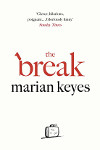
The paperback version of this book was released yesterday.
I can’t get used to living without you by my side… God knows got to make it on my own.
Publisher: Michael Joseph (Penguin)
Pages: 658
Type: Fiction
Age: Adult
ISBN: 978-1-405-91875-6
First Published: 7th September 2017
Date Reviewed: 1st June 2018
Rating: 4/5
Amy has been married to Hugh for years. They have one daughter together, and they have Amy’s daughter from a previous marriage and a niece whose parents have never wanted her. Life isn’t perfect but they do okay and are fairly happy. But since Hugh’s father died, and then his best friend too, Hugh hasn’t been coping and one day he tells Amy that he needs to take a break from their marriage for six months, to go to South East Asia, live it up for a bit, and then return. It’s devastating news, but as her family remind her, it means Amy’s on a break too.
The Break is Keyes’ fifteenth full length novel and a whopper of a book. Standing at just over 650 pages (paperback, in shops as of yesterday) it is a fairly big reading commitment to make, but a heck of a good one.
Strictly speaking, the length of the book is too much – there is a lot of description that could easily have been edited out and parts of the story are drawn out too much – but the quality of the reading experience never waivers. It almost goes without saying after all this time, but Keyes’ is very good at taking a very ordinary situation and getting to the heart of the matter without it feeling so; whilst perhaps not as obviously funny as previous novels, the book sports that same light-hearted, easy reading, atmosphere as always, whilst digging deep into issues.
The first is of course the set up of the book. Devoting a great many pages to the consequences of not only Amy’s life during the break, but also spending a lot of time on the aftermath when Hugh returns, means that Keyes’ can spend a lot of time looking at the problems that outside of fiction we often want to sweep under the carpet for the sake of not looking to sentimental or depressive, bad company. This isn’t new, per se – Keyes’ This Charming Man, for example, dealt with even heavier issues very well several years ago – but the length of the book allows it to progress at a good pace; there will likely come a point where you wonder if the author ought not get to the ending already and whenever that occurs for you you’ll soon realise from the text the good reason. It’s a fair device that doesn’t often work – Keyes’ is a rare expert.
Whilst the main topic of the book is important but not, as said above, as heavy as others, there is an element of the plot that takes the story to a completely different level. Particularly in the context of the very recent Irish vote to repeal the eighth amendment, this book is incredibly timely; and in the context of its release in paperback yesterday, it’s worth picking up for the topic alone. Keyes’ explores the impact of an unwanted pregnancy on a teenager living in Ireland. The author looks at the legalities surrounding the wish for an abortion, the way the medical aspects must be attended to, the threat of prison if pills are discovered when packages enter customs from abroad, and the need and subsequent hassle and trauma of travelling to England for an abortion. Keyes does not hold back – whilst she never refers to herself the views are there prominently – and she puts forth the reality of the situation for women very well. The author also looks at the problems surrounding the public voicing of a pro-choice opinion in Ireland.
The characters are pretty great; there’s quite a lot of diversity and the plot points that arise due to the diversity round the book off well. Characters are well written and presented and a lot of time is given to the family element, where a whole other range of diversities rears its head in the family dynamics.
With such a set-up as a break, the ending of the book was always going to divide opinion, no matter which way it went. This is surely a big part of why Keyes spends so long working towards the conclusion; no matter whether you agree with the way she concludes Amy’s tale, you can at least rest assured that Keyes has provided a fully-fledged reasoning for it that works for the character’s happiness. Following this ending is a short epilogue that moves the action forward several years so that the children’s lives – whilst not the main aspect, they are a constant part of the story – can also be concluded.
The Break is a fun way to spend a chunk of your reading time – it offers an easy read but with ample things to take away, and most importantly it keeps you thinking and considering whilst you’re reading; a very good thing.
I received this book for review.
Related Books
Weike Wang – Chemistry
Posted 25th May 2018
Category: Reviews Genres: 2010s, Angst, Comedy, Science, Social, Spiritual
Comments Off on Weike Wang – Chemistry

In all its forms.
Publisher: Text Publishing
Pages: 209
Type: Fiction
Age: Adult
ISBN: 978-1-925-60367-5
First Published: 23rd May 2017; 31st May 2018 by Text Publishing
Date Reviewed: 25th May 2018
Rating: 5/5
Our unnamed narrator has been proposed to by her fairly long-term boyfriend Eric. She enjoys her time with him but isn’t sure about saying yes, and she’s not sure why. As the days after an answer was requested continue to roll by, she muses over their relationship, her childhood and present relationship with her parents, and her situation as a PhD chemistry student, trying to work out what she should do in life in general.
Chemistry is a deceptively complex novel awash with superb characterisation.
It seems so simple – formatted in a medium-sized type face, with large margins and many scene breaks that are effectively vignettes, Chemistry presents itself as an easy and quick read; and in many ways it is, the text itself fun and straight forward, winsome. But once you look beyond the surface, which you’ll find happens naturally as you continue reading, the depth and complexity of the novel starts to pour from the spine.
And there really is a lot to this short novel. The first-person narrative, which flips about in time to slowly uncover for both the reader and also the narrator herself why she feels as she does, is told in a slightly broken English that reflects her situation as a Chinese American who, whilst having been in the country since early childhood, has struggled with her parent’s expectations, school bullying, and what is presented as gentle teasing by Eric (which of course you slowly see has had quite an adverse effect).
The writing also allows Wang to develop a strong comedic streak to the book, which, whilst not often commented on, it’s revealed the character is ‘in’ on herself.
At the gate, he goes through his repertoire of tricks – sit, lie down, crawl, play dead, roll over, high-five, sit, lie down, crawl, play dead, roll over, high-five. I ask him to please be dignified about this, but I have not yet taught him that command.
You might expect that, given the sense of distance – somewhat literal – that can occur between reader and text due to the nature of vignettes, the characters would feel distant, but that is far from the case here. Despite the lack of a name for the narrator, and despite the fact that everything you hear about others is told solely through her in a report-like manner, there is an incredible strength to the characterisation of everyone, even the dog. (The dog is marvelous.) Wang has created a fully-realised cast of characters that are fantastic to read about and the lack of a name for the narrator becomes a very good argument for time spent developing characters – in this case, the lack of a name is of no importance; she didn’t need one. It could be argued you get a better sense of who the person is without it, because without a name to fall back on in order to reference her (though of course you can say ‘unnamed narrator’ as the blurb says and I’ve repeated) you are even more aware of her personality. And Wang takes this concept further – the only people who are named are Eric, and the narrator’s parents. Even the dog is called ‘dog’.
There just might be a point to that separation between the named and unnamed. Something the narrator has struggled with, that you come to feel she’s starting to realise but can’t quite grasp due to her upbringing and family culture, is the emotional and somewhat intellectual neglect she’s suffered from her parents, who at once want her to be great like her father but don’t offer the more subtle things she needs in order to reach her considered potential, a potential that she receives a lot of pressure to fulfill. One of the repeated situations in the book is that of the narrator’s visits to a counselor – shrink, she calls them, pointedly – who questions how she feels in the context of her background, trying to help her see that where she feels like a complete failure at life in general, these things have largely happened as a result of what she didn’t and still hasn’t received from her various relationships.
Let’s not forget the science and the industry – Chemistry is teaming with scientific facts made easy to understand. The narrator’s knowledge and Wang’s background in the subject make for a wonderful element that is both a backdrop for the rest of the story and a huge factor in itself. The facts are woven into the narrator’s feelings and experiences, a point here, an atom of knowledge there, so that you’re always learning (or revising!), never taking a break from the rest of the story.
Refraction is why I am not invisible. It is also why things in water, like fish, appear farther and bigger than you think, and once that fish gets pulled out of the water, you are vastly disappointed.
And yes, of course, ‘chemistry’ here is also romantic.
At its heart, then, Chemistry is a story about identity, which won’t surprise you if you consider other unnamed narrators, such as the second Mrs de Winter. It’s a story of indecision, the discovery of identity and personhood in general needing to happen before the decisions can follow. And it’s a story that will grip you until the final page, where Wang both ties things up in a beautiful, contextually reflective bow, and leaves you with the ribbon hanging loosely so that you can come to a bit of a conclusion and pulls the ends tightly by yourself.
Catalysts make reactions go faster. They lower activation energy, which is the indecision each reaction faces before committing to its path.
This book is better than a whole lab of experiments.
I received this book for review.
Related Books
Speaking to Weike Wang about Chemistry (spoilers included)
Charlie and Weike Wang discuss having both a scientific – in epidemiology no less! – and a writer background, making use of extracts and white space and preferring them beyond more long-form prose, the difficulties of studies and incorporating friends’ experiences in your stories, and fictional dogs who are inherently important to the text.
If you’re unable to use the media player above, this page has various other options for listening.
Manu Joseph – Miss Laila, Armed And Dangerous
Posted 16th May 2018
Category: Reviews Genres: 2010s, Commentary, Political, Social, Thriller
Comments Off on Manu Joseph – Miss Laila, Armed And Dangerous
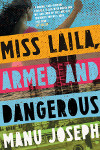
Or is she?
Publisher: Myriad Editions
Pages: 211
Type: Fiction
Age: Adult
ISBN: 978-1-912-40810-8
First Published: 19th September 2017
Date Reviewed: 16th May 2018
Rating: 3.5/5
The day Hindu nationalists win the elections, a building collapses; Akhila arrives as teams are trying to find survivors and she offers to crawl through a tunnel to help a man who is still alive. The man is muttering about a person on his way to commit a terror attack. A member of the two groups chasing the man and the girl sat in the passenger seat next to him, Mukundan isn’t sure what they’re doing is right, and is sure there’s a better way of extracting the girl, but his boss bids him to wait.
Miss Laila, Armed And Dangerous is a work of fiction which switches back and forth between a number of narratives as the author seeks to explore social injustice in its various forms.
This is a book that is at once an easy read, an uncomfortable read, and a hard-hitting read that requires your attention. Joseph’s use of satire and general slight humour often lures you into thinking it’s a fun novel. That may be part of the point – Joseph gets his thoughts across through via an easy writing style that’s nevertheless full of report-like phrasing.
Sometimes, the style and structure makes the book hard to follow – Joseph, a journalist away from his novel writing, has chosen to write his book in a similar style, and adds to it many different points of view. As an example, you might think that Akhila Iyer, the medical student and social media prankster who targets people in or close to the political sphere, will be moonlighting as this Miss Laila, and it takes a while for Joseph to get to Miss Laila herself wherein you have to get your head around the fact they are two different people.
Joseph’s major commentary apart from the controversies surrounding Mukundan’s story is the difference between rich and poor, high caste and low caste, Hindu and Muslim, and in the context of politics, and due to the basis of fact underlining the book. There is lots to consider here, with Joseph’s bold dialogue looking at both past and near present, holding nothing back. One person named outright is the author Arundhati Roy, who Joseph speaks of in the context of the female author’s visit to the house of a very wealthy person and her views about how much money this person had compared to those nearby; Joseph takes his Akhila Iyer to Roy’s own apartment building where she conducts an interview with a woman who says similarly of Roy’s house. (Whether this is truth or fiction this reviewer cannot say.)
So, to the narratives, you have the man trapped inside a fallen building. You have the narrative of Akhila Iyer, often told in the chapters focused on Professor Vaid as her own narrative is taken up by the collapsed building; occasionally you hear from Akhila about her family, the mother that was often away helping other people as an activist, leaving her daughter to grow up without her. (A lot of Joseph’s commentary is about activism and the way it can simply just switch people’s situations until another wave of activism is required, the once powerful becoming the powerless and then powerful again.) You have the narrative of Mukundan, who tails Laila and Jamal, and the narrative Laila’s sister tells of the days before Laila left with Jamal. And you have the narrative of election winner, Damodarhabi.
A revelation comes towards the end that may lessen the impact of what you’ve read. It’s a good idea going into this book, to consider that the non-linear timeline might expand.
Miss Laila, Armed And Dangerous is a difficult book to make a call on. Some of it is excellent – compelling points, good writing – but it does come across more as an essay or piece of reporting rather than a story or study.
I received this book for review.
Related Books
None yet
Yaa Gyasi – Homegoing
Posted 14th May 2018
Category: Reviews Genres: 2010s, Commentary, Historical, Political, Social, Spiritual
3 Comments
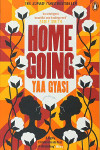
Homegoing was on the British Book Award shortlist for the Debut Book of the Year 2018.
History is not always confined.
Publisher: Penguin
Pages: 298
Type: Fiction
Age: Adult
ISBN: 978-0-241-97523-7
First Published: 7th June 2016
Date Reviewed: 14th May 2018
Rating: 5/5
Effia’s mother tells her to keep the beginning of her menstruation a secret. It’s long been known that Effia would marry the man next in line to be Chief but Baaba has something else in mind and Effia is traded in marriage to the white governor of the Castle. As she moves away with James, Baaba tells her daughter that she is not related to her and that her mother abandoned them. As Effia’s new life begins, her unknown half-sister is taken prisoner, held with hundreds of other women, about to be sold into slavery overseas. The sisters’ situations will reverberate down the ages.
Homegoing is a superb mainly-historical novel that starts in 1700s Ghana and continues into our present century. Spanning many generations, it spends a number of pages on each character in turn, nevertheless retaining the sense that it is a novel of one story.
Gyasi has created something rather remarkable. Within moments she sucks you into the story, her use of history in all contexts – the writing of it, the knowledge included, the bringing to life – starts it off, and then her masterful characterisation ensures you don’t let go. In terms of the history, there’s a fair amount of information that often gets looked over, as well as the horrors that continue.
The writing is wonderfully descriptive and Gyasi creates the perfect balance of narrative and dialogue. It flows very well; indeed the only negative aspect of the book is the use of ‘off of’, the only thing that stunts the flow.
But at its heart, beyond the subject matter that we’ll go on to in a minute, is that characterisation. There are few books in which multiple narratives are considered to be equally fine. Gyasi’s is one of those few. No matter how invested you are in any one story (which read almost as vignettes despite the time they span; there are no complete endings within a character’s chapter, the only closure is in the descendant’s chapter) you never once feel that sense of loss so often caused by other multi-narrative novels. Would it be nice if there was more of each character’s story? Of course. But the novel does not suffer for the lack of it. The progression is natural and easy to follow; Gyasi includes hints early on and you soon get used to the flicking back and forth between bloodlines. If you do fall behind – and you will when it comes to working out which generation you’re on to – there’s a family tree in the opening pages.
As it’s pretty obvious from the start – or at least from the moment you realise how Gyasi has plotted the book – that somewhere it’s highly likely the two bloodlines will meet in some way, it’s pertinent here to say that the book isn’t predictable on that count. This isn’t your usual ‘and magic happened and they found out who each other was’. There is indeed ‘magic’ in the book – to use the phrase that people down the ages start to refer to traditional spirituality as – and yes there is a meeting of the bloodlines, but there are no unbelieveable discoveries.
On the subject of symbolism is Gyasi’s use of fire and water, with fire particularly pronounced because water is more obviously associated with the beginning. It’s a gentle, weaving sort of symbolism, that takes you through the various generations, creating an impact – the history of a people on their descendants – as well as a sort of coming-of-age, cycling, taking back ownership.
Apart from symbolism, Gyasi explores the slave trade, particularly, as said, in terms of the beginnings and early impact in Ghana. She explores the affects of the difference between the Northern and Southern states and the impact of Southern laws on free men of the North. She explores segregation, the concept of passing, and tensions and social and political problems still occurring today. These explorations are interlaced with the chapters so that black history in America as a whole is explored in depth. Again, Gyasi’s writing makes everything flow together, showing how they are both separate subjects and part of a whole, and as with everything else the author does it with aplomb.
Homegoing is the sort of novel that stays with you, that you want to return to. In the second to last chapter, Marjorie is asked by her teacher if she feels the book she is reading inside of her. I think we all know that feeling, the one that makes reading so worth it.
You may well find it in this book.
I received this book for review.
Related Books