




Stephenie Meyer – Twilight
Posted 27th April 2010
Category: Reviews Genres: 2000s, Fantasy, Romance
1 Comment

Disclaimer: this review was posted with caution, even though my overall view is favourable I hope I’ve outlined enough faults for it not to be too biased a recollection. I realise that this topic may make or break my reputation.
Who, by now, has not heard of the author Stephenie Meyer? Her debut was woven around a dream she had and now she’s earning millions in both currency and fandom. Meyer hit the big time quickly and the long hours spent away from family have paid off.
Publisher: Atom
Pages: 434
Type: Fiction
Age: Young Adult
ISBN: 978-1-904-23365-7
First Published: 2005
Date Reviewed: 27th November 2009
Rating: 4/5
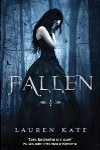
I can’t say I remember the releases of any of the books in the saga as I do those of Harry Potter. The first I knew of Twilight was when my cousin asked if I’d like to go and watch the movie. Suffice to say however that they are everywhere and continually at a knocked-down price. Not that I mind either for the covers are exquisite.
Isabella Swan, or rather just “Bella”, decides to move back to the town of her birth and her father after her mother marries a sportsman. Forks is a town she hates but she goes regardless. There she comes across the youths of the Cullen family, a group of five who keep to themselves and are often absent from school. Bella’s presence changes that, she stirs Edward’s senses in a way he really wishes she wouldn’t, for he is dangerous, a vampire, and until then had successfully remained able to live alongside humans with little worry. He and Bella fall in love. But it doesn’t matter if he can keep himself at bay – there’s a whole host of them out there just waiting for him to turn his back.
Being as I was a viewer before a reader I can advise with confidence that yes, it is worth reading the book afterwards. True to the format of book-to-film a lot was missed out and significant scenes altered. Of note is the scene where Bella tells Edward she knows he’s a vampire. In the book she casually mentions it in the car, whereas the movie goes all out on dramatics and has Bella afraid to speak while the backdrop of a dark forest becomes ever more suffocating. The movie also handles Edward’s temperament in a way more suitable for young people, the written version of which I will discuss in time.
For all that’s been said about Meyer’s poor ability as a writer, I found her style and structure surprisingly good. In fact I would go as far as to say that out of the 20 or so books I have read this year Twilight has been the most satisfying literature-wise. Some of her paragraphs read like poetry and unlike many other authors who have studied English, Meyer is certainly at one with the subject. She uses a vast array of words generally forgotten in today’s world, never hesitating over the idea that her readers might not understand.
The story itself I would split into three parts, using the nature of the parts as my reasoning for doing so. At first everything is easy to read and honestly a joy, even if the setting of a high school is unappealing to the older reader. Bella is a savvy, sassy young woman who favours independence and will not give in to other’s requests. Edward is the typical heartthrob, maybe a little arrogant, but likeable nonetheless. Then things change, Bella becomes needy, helpless and paranoid while Edward in turn hikes up the arrogance and anger and displays the kind of traits generally accepted as the beginnings of a domestic abuser. It was on reading this part that I wrote to my boyfriend “these two characters certainly aren’t good role models for either gender and the idea that there are millions of teenage girls now looking for an Edward Cullen is worrying”. My theory about the dramatics of the film came from there too. This part is difficult to read, especially if you’ve already heard the cries of others that Edward is far too aggressive.
The story reaches it’s third part when Meyer finally provides subtle reasons why Edward is the way he is. But by subtle I mean subtle, they should have been expanded upon and given more time. Edward’s life as a vampire has been hard and as he constantly tries to balance his human feelings for Bella with his need for blood he inevitably falters at times. When he saves Bella from possible rapists he explains how he could have killed them in a raging frenzy, his explanation hinting to mental instability. It makes for worrying reading, but as said, finally the characters regain more (unfortunately not all) composure and become equals, helpless damsel periods aside. A surprise comes in the form of Alice whom Meyer teaches you to be wary of before showing us that Alice is actually pretty darn cool.
Something that has oft been debated is the excessive use of sexual references in the book and it is indeed the case that for a story promoted as teenage fiction the explicitness of the references are too much. If they were simply innocent emotions it would be a different matter but Meyer does tend to go all out in explaining that Bella and Edward have feelings of a sexual nature towards each other and, whether deliberately or by accident, she is labelling the physical exploration of these feelings acceptable – which given the age of the target audience is perhaps not. While they aren’t the most mature things a teenager could engage in there’s enough to raise your brows at and enough to suggest that there will be more in the later books. It’s worth noting that the film leaves out a lot of these references.
Another thing that has been debated is the fantasy – vampires. Does the story feature them a lot, yes. But does it hold the stereotype up high, no. Edward and his family do not kill humans and it really is the case, as told by many, that he just happens to be a vampire. Essentially, Meyer has used the idea of forbidden love but to different effect.
For all it’s hype and fandom, Twilight proves itself a particularly decent and well written read for both teenagers and adults alike. Even if the subject matter is beyond the realm of what we as a society are used to, in those many ways talked about, Meyer’s skill more than makes up for it. In a time where good literacy skills are falling and children are becoming cocooned in text speak her books will ensure that they at least know better, and her vocabulary will create a need for a dictionary. For this alone we should make sure she is in our libraries.
Related Books




Alison Weir – The Lady Elizabeth
Posted 23rd April 2010
Category: Reviews Genres: 2000s, Historical
1 Comment
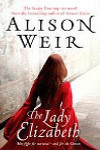
Alison Weir is an English historian who has been writing for a couple of decades. Most of her books are focused on the Tudor period of England and the eras just before it. She has done ample research into the life of Lady Jane Grey, Henry VIII’s niece and based her first novel on her. The Lady Elizabeth is her second work of fiction.
Publisher: Arrow Books
Pages: 481
Type: Fiction
Age: Adult
ISBN: 978-0-099-49382-2
First Published: 2008
Date Reviewed: 24th September 2009
Rating: 3/5
The Lady Elizabeth reached the chart list and received a lot of praise from the critics. It was released in hardback a year before the paperback edition hit the shelves.
For the story, Weir has kept to the basic facts of Queen Elizabeth’s youth but padded it out and exaggerated some parts where little is known. She’s also taken the rather bold step of having Elizabeth pregnant and miscarry, using the information about Elizabeth’s time at Chelsea with Catherine Parr and Thomas Seymour as her springboard. As she points out herself in the notes at the back of the book, she is being bold in her suggestion but there is a possibility that such a thing happened. Using the idea has also lent itself to making the book more fiction than fact.
Weir is a brilliant historian and her factual books beautifully written. Her biographies read like novels, omitting footnotes and discussing all sources used in the introduction. Thus her books are not bogged down in references like most authors and are a good choice for people who struggle with multitudes of dates and places. The problem here is that she has taken too much of her factual writing style to use in The Lady Elizabeth. It’s inappropriate and causes the book to be rather choppy. In addition Weir demonstrates a difficultly in handling this new genre as her afore excellence in articulation has been lost, much like Elizabeth’s proclaimed innocence. A reoccurring flaw in Weir’s books is her obvious love of the word “hitherto” which she uses as much as possible. It’s seen in this book too, and just as much as in her previous publications. Of similar note is Weir’s lack of descriptive language, the needed element for full immersion.
The story is fascinating but the telling is poor. On and on it goes back and forth which while an echo of what really happened does not make for good writing. Weir also repeats herself as if with no confidence of her reader’s memory. What should rightly be a thrilling tale full of frustration turns out to be a bore.
This is a good book for history-lovers looking to glean more information on Elizabeth but other than that I’d advise looking elsewhere for historical fiction on Anne Boleyn’s daughter.
Related Books

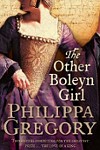


Paulo Coelho – Eleven Minutes
Posted 22nd April 2010
Category: Reviews Genres: 2000s, Spiritual, Translation
1 Comment
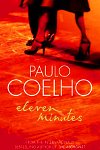
Paulo Coelho’s books, as the book covers declare, have changed lives. He writes about spirituality in a very fresh and modern way without being biased religiously or morally – though he has tales of morality to tell. It’s perhaps ironic then that his stories are so short.
Publisher: Thorsons
Pages: 288
Type: Fiction
Age: Adult
ISBN: 978-0-007-16604-6
First Published: 2003 in Portuguese; 2004 in English
Date Reviewed: 3rd September 2009
Rating: 3.5/5
Original language: Portuguese
Original title: Onze Minutos (Eleven Minutes)
Translated by: Margaret Jull Costa
I don’t know much about the success of Eleven Minutes but I’d hazard a guess that it hasn’t been as well-received.
Maria lives in a small Brazilian town but knows that there is more to the world and wants to experience life to the full. For her this means travelling and living abroad. She journeys to Rio de Janiro where she signs up as a dancer and is whisked to Switzerland, dreams of happiness, money, and a husband leading her by the hand. But the dancing is boring and after an agency unintentionally set her up with a man willing to part with a thousand francs for a night with her she makes a decision that will set her on a path entirely different to the one she was on. Down the Rue De Berne, where the nights are scented with sex and the days are reserved for slumber she begins to discover the truth of intercourse and how the world has come to rely so heavily on it.
Let’s get down to business. Is there a lot of sex in this book – yes. But although quite graphic in places Coelho has managed to keep the story tasteful and one feels that whenever he does write graphically it’s with a specific purpose, he has a message to get across each time. Nor does Coelho stick with one type of sex, covering a good number and subtly weighing them up. Interesting here is how he will come to one conclusion and then later on change it in the way one does when they make a further discovery about something for which they’d previously had a strong opinion. He does this without apologising for as discussed above he remains for the most part neutral and non-judgemental.
Apart from Maria, or maybe even including Maria, the characters aren’t very important in themselves. They are there as props to get the message across. None of them are hateful though neither are they particularly fabulous. Maria is a personification of Coelho’s thought process and moves back and forth through opinions with him. You can’t sink your teeth into these characters and you won’t miss them after finishing the book but in this man’s publications that is neither here nor there.
It’s hard to talk about the language used in the book because unless you are reading the Brazilian version the words will have been translated from the original Portuguese. I can’t remember finding any errors in the print.
Eleven Minutes promotes the view that sex can be sacred; the world has just forgotten this. It explains convincingly how we’ve come to use sex as a method of healing when really what we need lies within us, and that using sex as an excuse only serves to keep the cycle going. This is done by weighing up elements such as asexuality and pain for pleasure and detailing the cause and effects. It won’t have the impact on you that The Alchemist had but there’s enough here to make you reconsider what you’ve learned and been taught and perhaps even apply parts of it to your own life.
Eleven Minutes was originally written in Portuguese, and was translated into English by Margaret Jull Costa.
Related Books

Markus Zusak – The Book Thief
Posted 20th April 2010
Category: Reviews Genres: 2000s, Historical, Political
1 Comment

We are taught that Nazi Germany was a hateful place and full of hateful people, but in reality the citizens were just as badly off.
Publisher: Black Swan (Random House)
Pages: 542
Type: Fiction
Age: Adult
ISBN: 978-0-552-77389
First Published: 2005
Date Reviewed: 19th April 2010
Rating: 5/5
I was introduced to The Book Thief by an old friend. It stayed on my to-be-read pile for some time while I got over the demise of the friendship, in actual fact I almost packed it away, unread. That would have been a mistake.
The story is narrated by Death who explains the basic end before launching into the beginnings. Liesel, a nine-year-old girl, is sent to live with foster parents, presumably because her family is on the wrong side of a hijacked law (the blurb says concentration camp but the topic is never explained in detail). With them she lives for a time in relative happiness, finding friendship and learning to read, the latter being the cause for her initial interest in stealing. But this is Nazi Germany and her family become involved in things they shouldn’t; and there is always the threat of the enemy.
It’s difficult to explain the plot of the book without giving everything away. Part of this difficulty stems from Zusak’s writing – it’s absolutely exceptional. It’s not that he’s just good with words, he uses them like a talented artist sweeps paint across canvas – you never once sense that he might have had trouble completing a sentence. This artist and paint metaphor is apt really because one of the characters is a decorator. Zusak doesn’t use “big” words, he never thrills you with academia, rather he moulds words and creates metaphors the like of which I, and I would guess you also, have never come across. A poet is someone who is clever with words but Zusak transcends that. It’s almost as though he is made of words and his physical body is but a mask to pacify humans. Consider the following quotations:
Pimples were gathered in peer groups on his face.
His thoughts criss-crossed the table.
His uniform was shiny brown. The iron was practically still on it.
Zusak’s style is one of colloquial phrases and bullet points. He surprises you in the way that he narrates often because it can be as if he doesn’t understand literary English, but what you realise is that he is saying there’s more to writing than being grammatically correct.
There are many characters in the book, and while they may not be detailed quite in the way you expect in a good novel, the descriptions are enough. Zusak ensures you feel a bond with them – it’s easy to imagine yourself there, to imagine the locations, and it’s the kind of intimacy that would make you want to stroll straight up to one of the characters and say “hi” as if you’ve known them forever.
The backdrop of the book is the Second World War but while it is the cause of a lot of plot elements the story is never weighed down by it like you might expect. As mentioned at the beginning of the review the people of Germany were in much the same situation as the rest of the world, innocent people, but this fact is not given as much airplay. Zusak puts these people in the spotlight, he provides the forgotten information and he ensures that if you read this before writing an exam your account will be broader than it would be otherwise. A book like this will scare history teachers, not because they don’t want their pupils to know the other side of the story in detail, but because this book could potentially cause people to want to go off on a tangent and explore ideas the examiners haven’t asked for. Make no mistake, this book will cause you to want to discuss.
Perhaps Zusak has thought about this issue and written accordingly, because he makes his characters affable to the outsider. Most people in The Book Thief have no animosity towards Jews and do not support the war at all. Again, there’s that bond. Zusak hasn’t thrown you in at the deep end or affirmed stereotypes and even someone who has never allowed themselves to so much as consider the other side of the story may be moved by it. Zusak is very clear in this – Hitler was the enemy, not Germany. In relation to this he makes the poignant supposition of the Jews. A Jew goes into hiding, but when he comes out he’s still German. He is and was German, that he is Jewish could never change his nationality.
You may look at the size of this book, notice the little space between lines in the text and put it back on the shelf. Don’t. One of the book’s biggest appeals is the spin off from the writing style: there are rarely long chunks of text. Most chapters are short – a few pages long – and there are many gaps where small pieces of information are supplied in the afore-mentioned bullet points. Zusak has made his story a work of art. Instead of writing everything in the usual way he’s enlisted an illustrator to draw pages of his imaginary books and bolded the important information. The Book Thief is more of an experience than a novel and although it may be off-putting at first (yes, I admit this in regards to myself) you soon get used to it.
When you think about it, a book like this is a hefty task for any author and a daunting task for any reader. In presenting it, Zusak strove to deliver a story that needed to be delivered in a way he knew would reach the hearts of the reader.
You may have bought it, borrowed it, or even stolen it. Read it, it’s what it’s there for and you don’t want to miss out.
Related Books
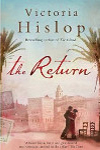


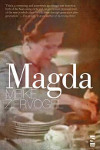

Lorna Byrne – Angels In My Hair
Posted 18th April 2010
Category: Reviews Genres: 2000s, Autobiography, Spiritual
Comments Off on Lorna Byrne – Angels In My Hair
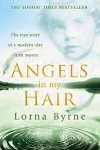
Lorna Byrne is what many people would call a modern day mystic. She claims that she can see and talk to angels, spirits, and on a few occasions, God. She waited years before writing her book, not wishing for any publicity or fame and only decided to write when instructed to by her angels. The price of promoting angelic presence has come at a cost, she’s no longer able to meet those who want her help.
Publisher: Arrow Books (Random House)
Pages: 325
Type: Non-Fiction
Age: Adult
ISBN: 978-0-099-50574-7
First Published: 2008
Date Reviewed: 31st August 2009
Rating: 3.5/5
Angels In My Hair has received most of it’s coverage in print and through television interviews (the usual ones where the presenters subtly interrogate their guest), little has been done to promote the book in the shops themselves. Its little publicity matches Byrne’s wishes for her not to be fawned over as she has said herself that she’s simply a person, a normal human who just happens to see angels.
The book is autobiographical with the focus being on Byrne’s first-hand experiences of angels. Everything she mentions is related back to them or what they have taught her and is evaluated against what religion teaches us. Beginning with a few experiences as a baby and ending just after the death of her husband, Byrne concludes with the statement that we are all angels. Byrne has been seeing angels since she was a baby and says that everyone can see angels at that age, it’s just that as we get older we are told that what we see isn’t real, much like the idea that babies don’t drown so easily as after they’ve been taught to be afraid of deep water.
Something evident within the first few pages is that Byrne isn’t a gifted storyteller, her sentence structure isn’t the best and she isn’t at all eloquent – but whether or not you’ll find this distracting depends on your outlook. If you’re reading the book with the aim of criticising and dismissing the possibility of angels then you’ll most likely be taking the book back to the shop. If you’re open-minded or share Byrne’s belief in angels then you’re more likely to see Byrne’s inability as something that gives further evidence of their existence. If you think about other books of the same genre and the multitude of self-help publications one thing that binds them all is the idea that they’ve all been edited to perfection. The fact that Byrne’s book isn’t promotes the thought that, as she says, she doesn’t want money, she simply wants the message out there. Her book is written in her own words and her lack of education is prominent throughout.
Difficult to comprehend is Byrne’s seeming lack of religious information. It’s not until the end of the book that she learns that the angel Michael is Archangel Michael and nor does she seem to understand many of the aspects she talks about that the average reader, assuming they know at least a little about religion, will acknowledge instantly. That Byrne also states she has no interest in politics is very off-putting as one would hope that someone such as herself would keep up to date with the news. Therein must lie proof of her statement that she is just an ordinary person and that it’s only because of other’s lack of faith that she needs to bring the message of God to the world.
What does become a real problem is the overall structure of the book. It reads how no book should, in a way that is easiest described as “and then… and then… and then…” Practically every paragraph holds the story of another angelic event so that no matter how miraculous the stories the reader can feel bogged down and the events become not only muddled but sadly boring. Byrne makes use of the same introductions and although her repetition of certain moral concepts is admirable (you can see that she means to introduce and then back up her claims) it generally means that her conclusions are underwhelming. The ending of the book is lovely but the last sentence sites the start of a conclusion that needed to be further explained whether through reiteration or a new concept.
Naturally Angels In My Hair will appeal to the believers who’ll find in it more reason to keep hold of their faith. It is unlikely to appeal to others however will be suitable for someone after the information for general interest purposes. The most negative point is sadly the real-life spin off: Byrne will now be at the hands of her agents and unable to carry on her task away from the spotlight.
Related Books
None yet


