Lisa See – On Gold Mountain
Posted 3rd June 2010
Category: Reviews Genres: 1990s, Memoir, Political, Social
1 Comment
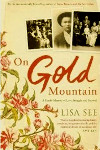
In the new world, known in 1800’s China as the Gold Mountain, fortunes were made by those whose lives were otherwise destined to be laborious. One of those lives was Fong See’s and he changed the make-up and the fortunes of his family forever.
Publisher: Bloomsbury
Pages: 376
Type: Non-Fiction
Age: Adult
ISBN: 978-0-7475-9907-4
First Published: 1995
Date Reviewed: 10th May 2010
Rating: 5/5
Lisa See, author of the later best-selling Snow Flower And The Secret Fan, details the business ventures and lives of her paternal family from the very first venture to America of her great-great-grandfather to the present day.
In 1867, Fong Dun Shung left his family in China to seek his fortunes in America. He soon brought his fourth son, Fong See, over to help him but ended up living out his later years in his home village. Fong See, on the other hand, lived to prosper in the United States, setting up an underwear company and marrying an American woman. The business changed to become an antique supplier. Fong See’s children learned perhaps more than he the injustice in the world, yet managed to be successful in their own right. As a memoir the book focuses on one subject in particular – business success in America – with information (a great amount, actually) about other aspects of family life. Amidst this is the story of the persecution of Chinese Americans and the many laws to dissuade them from doing practically anything other than stay at home.
On Gold Mountain reads like a work of fiction. The story is fascinating by itself but Lisa See (the author, whom I will refer to by first name from now on to avoid any confusion) has made it even better. A few of the dialogues are completely made up, as the amount of detail she goes into just isn’t possible to gather through sources, but instead of detracting from its success as you may think, this adds to the engrossing quality of the book. Lisa hasn’t just doled out dates and factual information about a story that, let’s face it, isn’t going to affect anyone but her own relatives, she’s made it compelling for the casual reader too. She’s used her skills as a writer and plenty of artistic license to create a work that her great-aunt Sissee, the person who proposed the idea of a memoir, would surely approve of.
Talking of Sissee, let’s get straight down to another note I made while reading this book – I, a reader in Britain with only outsider knowledge of Chinese culture, feel as though I’m part of the family. The book isn’t written in a way that entices the reader like this, and of course because the characters are real people they never address the audience, you’re just a fly-on-the-wall – but after all the information I’ve been given and after all the emotions I’ve been made to feel for these people I know I could sit down to lunch with them as boldly as if I’d been invited as kin. I was excited by Fong See and Ticie’s family and very upset as each passed away; even if I knew it was going to happen, I hoped that it wouldn’t. The family is accessible. The rogues of the story are likeable, even as they cause family disputes. No one is condemned, though there are good reasons why they could and perhaps should be. Everyone is described in detail enough that their unique personalities are shown – in the case of the siblings you have Ming and Ray – playboys and business-orientated, Bennie who is loyal, Eddy who wants to do his own thing, and Sissee who just wants freedom. It makes you think, should I be writing my own family’s history before it’s forgotten? No family history is plain and boring, and Lisa, with her incredible yet mostly family-centric story (no one changed the world, for example) proves that you don’t have to be of royal blood to have a good tale to tell.
Lisa makes her great-grandfather, Fong See, incredibly readable. Whether or not some of the events are fabricated to some extent the reader can really move into step with him and become absorbed in the story. For my part I must say that I’ve never felt such a pull from a book before, I was living as an invisible follower of Fong See and, his roguish elements included, I can see why Ticie, Lisa’s great-grandmother, was so drawn to him.
The characters focused on most are Fong See, Ticie, and their children. This creates two points of thought in my mind. The first is that depending on the individual preference of the reader for country or city living, either the first or second half of the book will be more intriguing. As America, at the time, was just forming, there are plenty of descriptions of farmland to whet the appetite of a person who prefers peace, but then as the cities expand there is little greenery and many factories so the detail is in the creation of material goods. Fong See and his first family’s story (he got around a bit) straddle both, but while Fong See and Ticie are together the emphasis is more towards the country. The second thought is that after Fong See and Ticie part ways the story is less engrossing, this can’t be helped of course, as it’s fact, but the interest garnered from the reader because of the story of a mixed-race family in troubled times, the adaptation to another’s culture, and the building up of a business, is lessened immediately following it. There is more to be had in the stories of the children for their number but as American laws are relaxed and life becomes more like our own today the narrative appears to slow down – however it’s not so much the story as the reader’s desire to continue reading. The problem is that the “action” comes in those first years and then of course there is no climax because the story can never end completely because this is the tale of a family still going today.
Lisa writes her account of Fong See crossing to America and then and only then gives all the other reported accounts that she has discovered. She ends the section brilliantly with a little wit, saying that we should probably trust the age and journey times Fong See gave to newspapers and customers. She wants the version she provided first – detailed and probably, by her own admissions of the information, dreamt up by relatives – to be true, but will give us the other accounts anyway. That she uses wit may seem self-absorbing, but the way she words it makes it akin to the usual basic mysteries every family has – as more generations are born and previous ones disappear, information gets blurry.
In relation to this, the wit in the book, I would like to put forward a quote:
Fortunately, the Pruetts were Pennsylvania Dutch and not given to concerns over worldly possessions.
While the initial opinion may be that Lisa is on a moral high ground flaunting her superior ancestry, isn’t it that she’s injecting humour into a relatively arduous subject? Both possibilities are equally possible, but there’s no doubt it’s the latter, the humour.
Irony – the information Lisa provides on reclaimed land. The Chinese reclaimed land from marshes and bogs when no one else would because it was dirty and infested but they were not granted any of that new land because of the Alien Land Act. Aliens? Surely everyone who wasn’t Native American was alien – but the Caucasians didn’t think of that because they thought they were superior. The people who put the act in motion, the invaders, likely British-born or if not at least European, were not natives of the land themselves. It’s disgusting when you think about it. Looking back on one’s country’s ancestors is always a cause for distress at some point, no matter where you’re from, but to read a true account of how your people were so self-righteous is most difficult. In this reader’s humble opinion, yes the Chinese may have been cruel themselves at the time with their foot-binding and treating women as slaves, but it was the Caucasians who were the true aliens, for their actions towards other races rendered them inhuman.
Although the Chinese saw America as a gold mine there was nothing gold about the few dollars the first workers brought home. In retelling the See family story Lisa describes the creation of the original railroads – the meagre pay, the poor living conditions, the perils of the parties using dynamite to blow holes in the hills – and the many shop keepers who struggled to earn their keep. The lucky ones, who had the ideas and ambition to start their own businesses, like Fong See, were those who caused the phrase “gold mountain” to stay in use, but they were few and far between; and, to determine another aspect of this school of thought: as Fong See remarks, one could be a rich man in China from the money they made in America, but in the west they were still poor. What the Chinese didn’t realise was the extent of the difference between quality of life and cost of living. To be truly rich, one had to return to China, making their time in America simply a long sabbatical.
In her fiction work, Lisa uses words brilliantly. Because of the nature of this book there are few incidences for poetic language but they do exist, and they exist in the form of those thoughts Lisa’s family members have. Perhaps this was part of the reason Lisa created those thoughts, to give her a chance to write with more flare and more of the style she employs in her novels.
In early April of 1877, Luscinda Pruett lay dying. Her mind wandered over her life in Oregon, her children, her husband, and God, whom she knew she’d be meeting soon. She’d had a fever for weeks, and now the pneumonia had grabbed hold of her body and wouldn’t let go. Not that it wasn’t peaceful lying here, as Mrs. Peterson sponged her forehead with cool cloths and the Reverend Peterson gave a discourse on the second commission of Christ to his Apostles. Or was he reading from the tenth chapter of First Corinthians? Maybe that wasn’t it at all. She knew she’d heard him give those sermons before, at their Sunday meetings. No matter.
The above is quite possibly exactly what Luscinda Pruett was thinking, safe as her thoughts were from the limitations of a strict outside world. But more to the point Lisa has provided her great-great-grandmother, who has a minor role to play in her story, with a grand final performance.
Lisa’s descriptions are magnificent, again in this you can see the novelist in her trying to climb out of the closet into which she’s stowed it away and blending its fiction skills with fact:
For Choey Lon, China City was a magical place where the fragrant smell of incense wafted from a temple and gentle breezes passed through wind chimes hanging before shops.
In writing On Gold Mountain Lisa fulfilled her objective, to honour her aunt Sissee’s request that their family story be told, and brought into being a commercially available account of a minority living amongst a majority, to a world where it’s likely not many of these events have been written about in such a way and with such filial passion. The stress may be on her family but there is enough material to take away and add to any knowledge you might have had of the period previously.
On Gold Mountain is a lovingly rendered story of adventure, love, and above all triumph. And I’m afraid you just have to love an author who uses the word “shenanigans”.
Related Books


Alison Weir – The Princes In The Tower
Posted 28th May 2010
Category: Reviews Genres: 1990s, Historical, Political
1 Comment
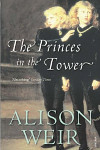
I will say now that I believe Richard III to have instigated the murders of Edward V and his brother. But regardless I was after more debate and another’s decision on the subject, someone with more information than me.
Publisher: Vintage
Pages: 258
Type: Non-Fiction
Age: Adult
ISBN: 978-0-099-52696-4
First Published: 1992
Date Reviewed: 25th May 2010
Rating: 2.5/5
What happened to Edward V and his brother the Duke of York has been the subject of speculation for centuries and their purported death in the late 1400’s material for many debates. Richard III, their uncle, wanted the throne – but did he kill them? He had usurped the crown from Edward already – all he had to do was keep the children locked up. Then was it Henry VII who took the crown from Richard, wanting to make sure the old line wouldn’t try to overturn the ruling? Or were the Princes left in the Tower indefinitely and died of natural causes?
I looked to Weir’s book on the subject because I’d read two of her non-fiction works before, The Six Wives Of Henry VIII and Children Of England and even though she has gained from me the nickname “The Hitherto Woman” for her excessive use of the word, I regard her publications as a staple part of my Tudor studies.
In the foreword Weir announces that she will look at the evidence for and against objectively – I relished these words because a debate was just what I was after, but alas it was not to be. At first glance the book shows promise, Weir has grand designs and will do her best to give all the accounts and evidence. She provides a thorough grounding in the background of the family and plenty of information on how Richard could have come to be so cruel. She is definitely right to have assumptions here, Richard’s childhood was full of violence and hatred and as has often been the case throughout history, a background such as this promotes the perversion of an otherwise innocent mind.
The characters are given a lot of space. We hear plenty on Richard, as discussed, Elizabeth Wydville, the heirs of Elizabeth’s union with Edward IV, most of the related gentry, and those first involved with Henry VII. There is detail enough to know quite well the personalities of each. Weir documents the period from Edward IV’s reign (including his own battles for the crown) to the time the rumours died down during the Tudor dynasty, adding information about the discovery of the bodies and the latest forensic work done in modern times – which was in 1930; since then the permission to study the bones has been denied.
But the historian’s winning streak doesn’t continue. Weir, from the first few pages, indicates that she believes Richard guilty, and the reader would be forgiven for listening to her at the time when she says that she will be objective. But from the moment she launches into the heart of the story, until the end, it’s obvious that she has let bias take over. Her voice is centred on her belief that Richard was guilty and although she looks at the opposing evidence she rarely gives it much thought. To her it’s plain and simple – the opposing evidence is worthless – and all this happens while she’s picking and choosing which rumours suit her story, opting at times to suggest that rumours believed by few are reliable and dismissing ones that many more people listened to.
Weir uses Thomas More’s account more often than any other. This she gives reason for – Thomas More was known to have good connections, eye-witnesses, and was able to be truthful (I haven’t said “was truthful” as in some instances his is the only account of an event so we can only take his word for it) because by the time he was writing people didn’t have to fear revenge for what they said. Note my words, “in the time he was writing”. Yes, More may have had his contacts, but he himself was not around at the time.
Another worrying problem is Weir’s total reliance on More. It’s a case of what More says goes. Weir assumes without a doubt that More would have acquired some of his information from his friend, who lived in a nunnery that was opposite the Tower of London. She says that because the nunnery was so close the occupants would have known what was going on. This assumption is, I’m afraid, cause for mirth, because we cannot say for definite that the nuns would have known anything. Do we today know everything about our neighbours’ lives, every one of us? Not often. The final point I will make regarding More is that Weir says he is true because he was writing for himself with no plans to publish his work. He could well have written in this way, but with Henry VIII, a man of irregular mood, on the throne, and More in such a high position at court, would he have been so careless? A sovereign could dispose of a person at the drop of a hat, at the drop of a sword; More’s privacy wouldn’t have been guaranteed. Of course if the account is true there would be no reason for him to lie because as it is there was no content that the Tudors could harass him over but, and amazingly this is a point Weir makes that contradicts her afore mentioned love – his sources may have been lying.
So while More’s account could be deemed reliable it’s the way in which Weir approaches him with starry eyes that’s cause for contention.
Weir often contradicts herself via quotations. As an example she says on one page that Henry VII and his wife were sharing a bed before marriage because their baby arrived eight months after and seemingly at full term, but then on the very next page, the opposite page no less, she quotes Francis Bacon as saying that the baby was born in the eighth month but was strong and able. This quotation suggests that the baby was premature.
Lastly I will examine the writing style. There are too many instances of jumping back and forth along the chronological scale. Weir will start with one date then go back a few years for a number of paragraphs by the end of which you’ve completely forgotten that this was just a short detour from the main path. As well as this she sometimes neglects to point out exactly which person she’s referring to, for example when one paragraph discusses the actions of two Elizabeths. Would it be Elizabeth Wydville who we begun the paragraph with or Elizabeth of York who we moved on to afterwards – the ending sentence would suggest the latter but it really could be the first.
It is quite apt that this book has gathered reviews erring equally on both sides of the coin. It’s fuelled more debate as well as possibly (if Weir read them) making Weir re-assess her ideas once more. But that is all. The blatant rejection of any opposition is very unprofessional, and I say that as someone who agrees with Weir’s conclusion. As a tertiary source the book is useful for essays and the like, and even otherwise it’s interesting as another person’s research, but it should on no account be taken as the definitive conclusion and should form merely a small part of a study into the Princes. This book is biased and badly written and I would advise readers to seek out another historian’s work, if not instead of this then at least as well as.
Related Books


C S Lewis – The Horse And His Boy (The Chronicles Of Narnia)
Posted 25th May 2010
Category: Reviews Genres: 1950s, Fantasy, Spiritual
Comments Off on C S Lewis – The Horse And His Boy (The Chronicles Of Narnia)

The story takes on a middle-Eastern flavour and we travel to the lands beyond Narnia.
Publisher: (Numerous, the one pictured is the Harper Collins 1998 edition)
Pages: N/A
Type: Fiction
Age: Children’s
ISBN: N/A
First Published: 1954
Date Reviewed: 14th May 2010
Rating: 3/5
The second of the lesser-known books, The Horse And His Boy has been as equally forgotten as The Magician’s Nephew, though it’s easy to see why as the story bares hardly any relation to the others.
Shashta doesn’t want to become the slave of the man who turns up at his father’s house in Calormen so he steals away with the man’s talking horse (a Narnian who was captured as a foal) with the aim of reaching Narnia. In trying to escape a lion their paths cross with Aravis, a Calormen princess on the run, and her own talking horse, Hwin. All four decide to carry on their journey together. But when they reach the capital things don’t go according to plan, the Narnian royal family are visiting and mistake Shashta for someone else. And Queen Susan’s suitor has created a problem for everyone.
The Horse And His Boy is the simplest of the chronicles, being very much a spin-off. It’s not necessary to read it and this is a pity, one gets a sense that Lewis felt he had to write some more rather than he wanted to. The land of Calormen destroys the setting of Narnia – Narnia is so different to our world with it’s talking animals, but Calormen is more the regular exotic dream, in keeping with reality from our history books. It’s also hard to accept, perhaps, that Narnia isn’t in it’s own world, that there are other lands surrounding it, because the way Lewis wrote it in The Lion, The Witch And The Wardrobe, although it was hinted at, the feeling was that it was by itself.
The story is ok, but as the majority of it takes place outside of Narnia there is little for the reader to relate to. It does a good job in showing us the everyday life of the kings and queens of Narnia during the period of their reign at Cair Paravel – perhaps this book ought to have focused on them more.
There isn’t so much a Biblical theme to The Horse And His Boy as there are the others, Aslan is still Jesus, but the only Biblical story I can relate to it is the road to Damascus after Jesus resurrects. There is, however, an overall theme of Jesus helping his followers, one could compare part of the book to the Christian poem Footprints.
The Horse And His Boy is a nice short read but not as compelling as the rest of the series. Fans will devour it but otherwise it’s possible to skip it in favour of Prince Caspian.
Related Books


Philip Pullman – The Butterfly Tattoo
Posted 19th May 2010
Category: Reviews Genres: 1990s, Romance, Thriller
1 Comment

A short story can often pack a bigger punch than a full-length novel.
Publisher: Picador
Pages: 192
Type: Fiction
Age: Young Adult
ISBN: 978-0-330-39796-4
First Published: 1992 (as The White Mercedes)
Date Reviewed: 28th March 2010
Rating: 3/5
The Butterfly Tattoo (first titled The White Mercedes) is hard to get nowadays, I have provided you with the details of one and there are two others by Macmillan. You’ll likely have to go to the library or second-hand store to find a copy.
Chris meets Jenny at an undergraduate’s ball while working as a technician. Jenny isn’t supposed to be there and as it turns out she does this kind of thing quite a bit as she struggles to get by in an expensive city. It’s love at first sight for Chris and they begin to see each other. But in a world before mobile phones they lose contact and although they find each other again they now share an acquaintance whose friendship proves fatal.
The Butterfly Tattoo is not for children, despite the youthful covers always chosen for it’s binding. It is unsuitable for anyone under the age of sixteen; its topics being of an adult nature. For anyone older it should prove a decent read and certainly one of suspense. It would definitely make a good transitional book between usual young people’s fiction and books for adults.
The book is split into three sections, the first concentrating on the budding relationship between Chris and Jenny and the latter two on the crimes that will see them torn apart. Jenny is going to die, Pullman tells you this in the first sentence, but you don’t know how until the end. There’s a problem here in that he says Chris will be the one to kill her, in a way he does, but not directly, it’s more a case of both of them making wrong decisions.
Pullman also confuses the reader as to Chris’s character. It’s not a huge problem but the fact is that he makes Chris strong, clever, and has him hear that Carson is on his way after Chris has met him unknowingly – and then lets Chris go on as if nothing has happened without even hesitating to think of the things you would expect him to think of.
These things said the book is a success because it effectively tells a story in a third of the time a regular-sized novel would. The Butterfly Tattoo could have been drawn out to 400 pages or so – instead it forgets about using subplots and frees itself from unnecessary information. You are given short backgrounds of the characters and both Chris and Jenny do very little other than things that relate to each other. The book takes place over the course of a couple of months. It deals with first love perfectly whilst not giving it the rose tint – a Pullman speciality.
Pullman writes a story where all loose ends are brought together, except one. He combats this last one in a way, by having characters suppose, but it still leaves you, as a reader, feeling unhappy because you know the sad truth.
This is not a happy story and never is. You know where it’s going to end up, but knowing this makes it interesting and provides no illusions – and you’ll be left with a bigger impression than those granted by longer reads.
Related Books


Freya North – Love Rules
Posted 16th May 2010
Category: Reviews Genres: 2000s, Chick-Lit, Domestic
Comments Off on Freya North – Love Rules
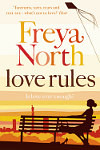
…And then you sit down to some Chick-Lit for some light relief – and find it to be anything but.
Publisher: Harper Collins
Pages: 422
Type: Fiction
Age: Adult
ISBN: 978-0-00-718036-3
First Published: 2005
Date Reviewed: 26th March 2010
Rating: 3/5
Just to make it clear: the title refers to rules, policies. It isn’t a statement akin to “love’s awesome!”
Thea believes in true love conquering all, knights storming castles to rescue the princess, and also – perhaps wrongly as she later considers alternatives – sparks from the start defining which men are the ones worth going for. Alice doesn’t mind love, in fact she likes it very much but tends to get diverted by the physical and has never chosen the right man. As Thea meets a man who sweeps her off her feet Alice plans to marry her best friend, the antithesis of the men she’s dated. But as both continue their lives they find that simple choices may not be so simple in reality and that they’ll have to re-assess their ideas once more.
Love Rules appears to promise a dose of easy summer reading, just what you’d expect from a book of its genre, and for a while this is the case – in fact the book is so easy to read at times it’s dull. Admittedly it can’t be said that Chick-Lit is as riveting a genre as some, but there is generally a plot that evokes interest and the want to know what happens. The vast majority of Love Rules sadly requires you to question whether you can be bothered because it just saunters along like main characters Thea and Saul around the streets of London. However this may well be a clever device used by North to further explain the latter quarter of the book. Be sure that the book does not stay boring, it turns it’s back on the Chick-Lit genre to provide hard-hitting and oft difficult to read material. North convincingly lures us into thinking that the lives of her characters are ordinary – and then crashes down on us with the idea that it’s ordinary life that can often have the problems. We always assume that it’s busy lives, unstable families, and the like that have problems – that’s natural, right? But North shows that “ordinary” can be a cover up for darker elements. In a way she’s saying, “watch out for ordinary” and you can understand her cautions – you never expect things out of the ordinary when things are ordinary to begin with.
North confuses us adeptly – is Alice wrong in her thoughts, shouldn’t her husband be around more? This has the effect of subtly skimming over Thea – her story is nice, it doesn’t require thought. There are a few things that don’t add up, but unlike Marian Keyes’s This Charming Man you can’t even say that they’re hinted at – they are, but it’s less than a hint, it’s more a fifth of a hint. Later, once the crux of the story is in full throws North turns her attention directly to the reader, to you. She asks you, as though you’re discussing the book together, what should happen, what we should feel, who is wrong, who is right, are we really sure about that, but isn’t it…? She does this just before launching into the book’s conclusion, in a way that explains, without actually saying, that there are many conclusions to come to. Hers is just one of them. As the reader you start to question yourself, no matter what opinion you’ve come to. I would take a guess as to what the majority of readers would feel should happen and say that in that respect it is an easy read. North wants to approach the boundary but she knows not to alienate her audience and so moves carefully, giving you something to think about but not letting you get too disheartened – while yet not appeasing completely. This all sounds very confusing but in fact it’s a stroke of genius on her part.
As said, the book becomes very difficult to read near the end and although the ending is good it’s not the happy ending you’re likely expecting. Beyond the issues raised there is a lot of upset to contend with and a lot of thoughts to digest. There’s also the addition of the other side of the story, although the other side itself isn’t so represented the associations of it are brought to the fore and evaluated. The characters may not change their minds but they debate on the issues and while people may challenge this and say it’s a good step but not enough it’s enough for the book.
Writing-wise the book is average. North has employed an interchangeable style; for the most part the book is in the third person but it sometimes moves to first and every so often to present tense as a fly-on-the-wall. When a change in tense happens during a chapter, which becomes more often as the plot takes off it’s mask, a re-read of the first few sentences is necessary to adapt to that change. North obviously likes the individuality it provides but for the reader it’s an irritation. Also of an irritation is the constant use of the word “effervescent”. Indeed it’s a fine word, but it’s obvious and memorable when big words are repeated and there are plenty of synonyms available. In the case of the chapters they could have been better defined, whole chunks of the book go by without a proper break.
As someone who is supposed to supply details that will help you decide if this is a book for you I apologise for being so vague. I can’t tell you any more because it would render the book spoiled and I feel that this is alright.
Love Rules takes love and what it means and causes and dissects it. It is not a valuable read, per se, but it is a good look on morality not usually so observed in the genre (and that’s forgetting the issue itself and concentrating on time and effort given). Pick it up if you will, we decide our own boundaries.
Related Books