





Books Picked Up On A Whim
Posted 13th July 2016
Category: Chit-Chat Genres: N/A
5 Comments
Here is a citation: this post was inspired by Lori’s post in which she diverts from the subject to compile a list of books about New England (it’s worth a read). Lori’s post was in turn her offering for a meme created by Brandy. In addition, Jessica’s own post following Brandy’s meme includes some excellent recommendations.
I hope I’ve got that right!
I’ve picked up quite a few books on a whim in my time, more so before I started blogging when it was harder to find recommendations. Split roughly between the time before the Internet was a thing and the few years before I started writing here, I tended to go by subject, popping into Waterstones or one of the bargain indies we used to have and heading first for the young adult section and then various others. (What I love about bargain bookshops is the way they just pile up the books with no organisation – it can be frustrating but there’s no better way to find books you wouldn’t have heard of otherwise. Jessica’s post reminded me of The Works – a book/art supply chain we have in the UK which tends to have tons of books stacked under tables, disorganised on shelves, and piled high on tables. It doesn’t feel like a bookshop because the decoration is art-focused, but it’s an awesome place to find random books.)
I’ve decided to talk about books I got on a whim that I’ve since read because other than a brief tale of how I got them, there’s not much else to say about the unread ones. I’ve also stuck to books I’d never seen before that I picked up on the same visit I encountered them.


Anchee Min: Empress Orchid – I remember being drawn to this book because it was about Chinese history and my school education had never looked at China… or Africa, or America, or anywhere other than Europe or the Arab-Israeli conflict, actually – thank god for university and books. I’d actually had enough of modern history by this point but that the book was about China, and an empress at that, was enough of a difference to sway me. I loved it. This is the book that started me on the Chinese history studies I’ll likely never finish. I went on to read Keith Laidler’s biography, I have Jung Chung’s biography ready, and I’ve read around the subject, too. A random choice had a big impact.
Jennifer Donnelly: A Gathering Light – I understand this has become semi-lauded, if I can use that mash-up of words. I liked the sound of it and read it in the year I started blogging. It was okay but not quite as compelling as I’d expected.
Julith Jedamus: The Book Of Loss – I got this from a cut-price store that was closing down; I may have been young enough that I didn’t realise how cringey it would be to remark to the cashier that I couldn’t believe I’d just found this place and how awful it was that it was closing down. It’s difficult to find reviews and references to the author online and I believe it’s out of print – it promises much but doesn’t deliver.


Lesley Downer: The Last Concubine – One of my first adult books, you can see the pattern. It’s a fair read and I’ve been circling Downer’s second book for years.
Lisa Jewell: A Friend Of The Family – And this was my very first adult book. I had been old enough, not that my parents censored my reading, to read adult books for a while but I’d stuck to YA because adult books just didn’t appeal – the covers were all dull. The day I got this book was the day I decided I should step up and give one of those dull-looking adult books a go. The cover was standard for the time and I felt mature picking it up. It turned out to be a fair enough read and started me off on my Lisa Jewell phase – for a few years afterwards I bought her new releases and gobbled them up. It came to an end when I decided I’d had enough samey main characters and was bored of Jewell’s usage of ‘retard’ in every one.
Madeleine Thien: Certainty – The cover was pretty, the book was small in size (mass market paperback) and the summary sounded nice. A completely random book; one I didn’t like.


Maile Meloy: Liars And Saints – Another dull adult cover choice. I do know that I never told my parents what it was about because there was a lot of sex in it. I’ve spoken of this book many times over the years I’ve been blogging; the theme work is excellent. I’ve read it three times now and had to get a second copy when I lent it to a family friend who I believed was going to read it overnight but instead took it back home with her; I gave it a year before I realised if I didn’t get another copy soon it might go out of print – the sequel/spin-off, though admittedly not well received, was in that state.
Sheila O’Flanagan: Someone Special – This book took a long time to read; it was 500 pages, which I felt similarly about then as I do 900 pages now. It’s all right; nothing special, ironically, but perfect for summer.
Victoria Hislop: The Return – I expect many of you know this book and more know of Hislop in general. As you can imagine, this turned out to be an excellent whimsical decision.
Whenever I pick up a book on a whim, I worry, but thinking about these books I realise that whilst it may be a snap decision, whimsical book choices are at least 50/50 – there is always a very real chance you will like the book and the possibilities for broadening your horizons aren’t to be sniffed at. As we see many times, for instance in the recent revival in the blogging world of the work of Barbara Comyns, and all those excellent Persephones, the most unknown, random books can be transformed by our picking them up. I very much believe a book diet rich in random choices is important. Even when the book isn’t so good, the act of discovering it can be a boon in itself. And in our days of so many recommendations and publishers going on about book discovery, we need to make time for random choices.
What books have you picked up at random and what’s the story behind your acquiring or borrowing them?
The Character Progression Of Far From The Madding Crowd’s Gabriel Oak
Posted 11th July 2016
Category: Further Thoughts Genres: N/A
3 Comments
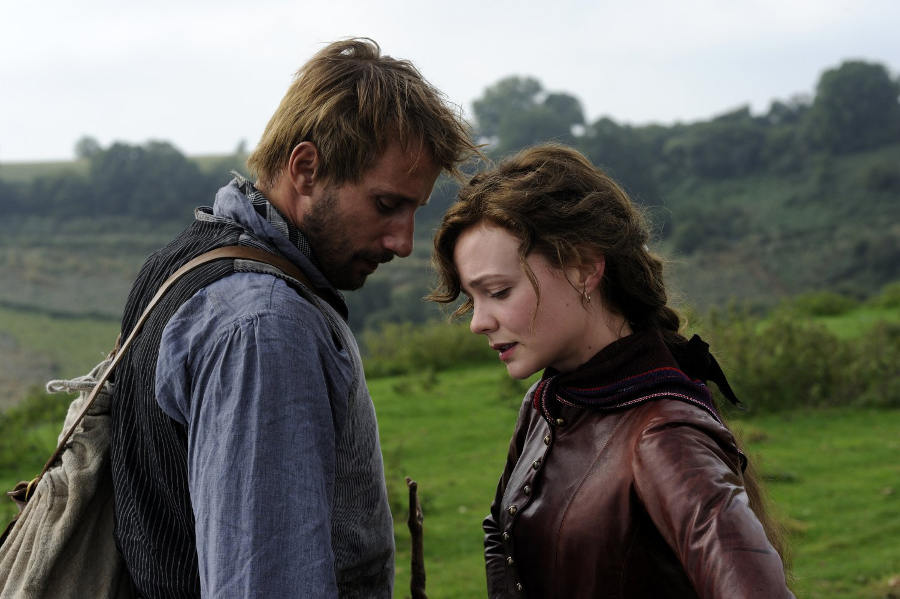
Screen shot from Far From The Madding Crowd, copyright © 2015 Fox Searchlight.
This will be in part a character analysis.
Whilst Bathsheba Everdene is strong-willed and against marrying… unless it involves a particular soldier, I always felt that had Gabriel Oak understood who Bathesheba was, he would have gained her hand sooner. Hardy’s plot, with its three suitors, of course stands on its own but to me part of the idea of it is that there’s time for Gabriel to learn.
Whilst Bathsheba’s own learning – her progression from someone quite selfish and thoughtless to someone who knows actions have consequences – is forefront, throughout the book Gabriel’s progression trickles along steadily in the background. Gabriel begins as a person who sees a pretty woman (and wants to give her a lamb because “I thought she might like one to rear; girls do”) and becomes someone who understands that, actually, Bathsheba is competent enough even if she requires his help. He understands that she’s equal to him, an individual. Hardy is all about women having more liberty and he places this into his plans of the progression for his male characters. Bathsheba may be selfish and frivolous, he’s saying, but she’s a person deserving respect and you men after her heart and farm should think so, too.
Gabriel is Bathsheba’s constant. He sticks around when she spurns him, pushing aside his love for her and mollifying himself with friendship. Unlike Boldwood, who becomes obsessive in his desire, Gabriel defers to Bathsheba’s decision about him and offers help and safety. Boldwood, and Troy as it so happens, offer instability.
We know from the start that Gabriel is likely to win Bathsheba over by the end due to his presence at the start of the novel and Hardy’s way of describing him. As I said a while back, we are supposed to like Gabriel Oak – Hardy writes about him in a way that ensures we do.
Gabriel meets Bathsheba, if we can call it a meeting, when she passes through his field. He sees her admiring herself in a mirror and offers to pay her passage through the gate, receiving not so much as an acknowledgement of his presence in return. He has a good head on his shoulders – whilst another employee notes her beauty, Gabriel notes her vanity.
It doesn’t stop him loving her, however. Perhaps it’s her nature that he likes the most – not the vanity but her independence. Gabriel is there when Bathsheba is riding astride the horse, there when she lays back on the animal to continue her journey in a very casual fashion. What would Boldwood have made of her then? Troy would perhaps quite like it… or he’d be indifferent. Gabriel, it seems as we continue reading, seems to see someone to admire, if not always (she does make some bad choices!) then often. Though Bathsheba may be vain and selfish and frivolous, we can see that, not unlike the case of Rhett Butler and Scarlett O’Hara, she meets her match in the unlikely Gabriel.
Does Gabriel test the waters a bit? To go back to that lamb incident, after having seen her on the horse, he still takes her a lamb on that ‘girls do’ premise. At this point, with his knowledge, it seems almost ingenious of him to offer her a lamb but perhaps in this he’s appealing to the vain woman, the frivolous Bathsheba who likes pretty things. Maybe she’ll like the lamb as much as she likes herself.
Gabriel also, we can assume, looses out to other men because of his weakness and silly idea – it’s okay if Bathsheba doesn’t love him, he says, as long as he loves her. He is in many ways like Bathsheba herself when she falls for Troy.
Whilst Boldwood sees Bathsheba’s frivolity, and Troy her strength but all too quickly her weakness also, Gabriel knows what lies beneath all that. Perhaps he can see the future, perhaps it’s just that Hardy’s intimating the future to us and therefore we can ascribe that notion to Gabriel, but it certainly can seem as though Gabriel is just biding his time.
Gabriel ‘lets’ Boldwood continue his own passion; he doesn’t get jealous. He also ‘lets’ Bathsheba fall in love with Troy without too much opposition; his active opposition only occurs when Bathsheba goes to find Troy in her scared-she’ll-loose-him state. Gabriel has seen through Troy and tries to stop her going but she is too far gone in her anxiety to listen to him and, like Boldwood, somewhat obsessed. What if Troy finds someone else? she’s thinking. In becoming a worrier, Bathsheba becomes someone Troy dislikes.
“I want someone to tame me; I am too independent and you would never be able to, I know,” Bathsheba had said to Gabriel. This section, near the beginning and again bringing to mind the later Scarlett O’Hara, can be seen as illustrative of what Gabriel later aspires to be. It’s never said, Hardy only ever shows it, but in becoming more protective and proactive on the farm, Gabriel becomes this tamer of Bathsheba. He likely won’t tame Bathsheba as much as she suggested – we see in her submission to Troy her weakness, a sort of wish fulfilment; Bathsheba becomes tameable to Troy and thus boring to him. By the time she accepts Gabriel, she has, we can assume, come to see the relative power in equality and Gabriel’s new proactive and strict-whilst-protective nature is now more relevant. He’ll ‘tame’ her, as she wants, but without her having to submit herself as she did to Troy – we can assume that after the book ends, Gabriel’s presence, guidance, will limit her frivolity without changing her nature too much. Hardy suggests it’s Bathsheba’s frivolity that’s the problem, not her independence, and indeed her statement was more a reflection of her knowledge of social norms, and perhaps a bit sexually suggestive, too.
After not listening to Gabriel, going after Troy, and marrying the man, Bathsheba’s farm is at stake – a storm’s on its way and Troy has persuaded all the farmhands to get drunk. This, the beginning of the action in the book, that latter section which I personally think fantastic, starts with Gabriel’s literal battening down of the hatches all by himself. He can see the storm coming and, not taken in by Troy and being stronger in character than the rest of the men, is sober and working to out-wit the winds. He manages it; somewhat surprisingly there is no commotion later, Hardy doesn’t choose to create a quarrel and Bathsheba, still a little in love with her husband, helps Gabriel but says nothing to Troy. This is the start of the game changer – Bathsheba and Gabriel working together to save the produce, Gabriel being there when Troy isn’t, confirming her need for him. She had always needed him, always asked him to stay on as an employee whenever he said he was leaving, but here she starts to see the problems with her husband in context – there’s an immediate contrast between him and Gabriel.
Gabriel is there when Troy fakes his death and there to see the man return. Boldwood destroys himself, not that there was any chance he’d gain Bathsheba’s hand, and again there’s Gabriel, now in a position to propose a second time with real knowledge of the woman he loves. Could we say Gabriel changed for Bathsheba? I think we could to some extent. He changed in his attitude towards her, but not in his overall baring. Bathsheba hadn’t noticed many of Gabriel’s good traits and time needed to continue for her, too, to start to see him. They both changed. Love at first sight doesn’t always work, says Hardy; look at Troy and then Gabriel. But he continues: love will conquer if it’s true. Love has to be based in reality. No ‘taming’ when you want independence, no running after someone who isn’t interested (no matter what other books say), no catching someone before they go off with an old flame. Reality, respect, time.
Gabriel does what Boldwood won’t – he waits, properly. And his waiting, full of proactive work instead of looking at the phone, so to speak, pays off. But it only does so because Bathsheba wants it too.
First Half Of 2016 Film Round-Up
Posted 4th July 2016
Category: Film Genres: N/A
3 Comments
Not much going on here. I started well; I saw a new film on New Year’s Day and visited the cinema a couple more times that month but my watching petered out as spring started. Family events ensured I watch a few more films than I might have otherwise and I tried another of those ‘watch one every evening’ goals I first attempted a few years ago; at the end of the day I don’t think I’ll ever get over the ironic feeling I have that a couple of hours spent on a film isn’t worth much even though I can spend several hours on an average book and deem it very worth it. I guess film bloggers feel this in reverse!




Bridge of Spies (USA, 2015) – I didn’t catch as much of the humour as did those I saw it with but it wasn’t bad.
Cheerful Weather For The Wedding (UK, 2012) – Strictly okay. Sorely lacking in the humour that made the book so good and the poignant ending wasn’t well done.
Cinderella (UK, 2015) – Apart from the way the actors all seem cut out of another piece of film (I suspect too much green screen) this is an excellent production. Very, very funny, in an adult humour way, and in this case the sections that are overly romanticised and cute are clearly to placate the kids who want the princess fairytale. The step-family weren’t as awful as I’d been led to believe – they’re more bog-standard Cinderella – but the focus on that aspect of the story is given more time.
The Danish Girl (Multiple countries, 2015) – The actors were good and worked well together, the music was great, cinematography… I’m just a bit confused as to why they chose to adapt a fictionalisation rather than the true story.
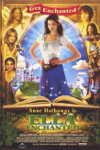
Ella Enchanted (USA, 2004) – Very silly, perhaps too silly, but entertaining enough.





Joy (USA, 2015) – A good story but film was the wrong medium for it. Wait for the book (not that it’s on its way).
Man Of The Year (USA, 2006) – Eternally relevant.
Philomena (UK, 2013)– Hard hitting and whilst not quite true to life, very good.
Spectre (UK, 2015) – Not bad at all. Liked the characterisation of the Bond Girl.
Star Wars: The Force Awakens (USA, 2015) – As a Star Wars film? Not so much. As a film in itself? Awesome. I am loving Rey so far though I could do without Darth Vader’s Anger-Management-Course-Required grandson. Bit too samey.
Goal for the next six months? Honestly, I think saying I’d like to have watched two films is a good idea. I have read a fair number of books – they’re making up for the slack.
Which films have you seen recently and would you recommend them?
June 2016 Reading Round-Up
Posted 1st July 2016
Category: Round-Ups Genres: N/A
4 Comments
Why is it that it can feel the year is going by very fast until you reflect on what you’ve done in that time? Weird, isn’t it? Here are the books I read in June:
All books are works of fiction.
The Books

Abubakar Adam Ibrahim: Season Of Crimson Blossoms – When Reza breaks in to Binta’s house the woman finds a desire for him under her terror and when he returns in peace they begin an affair. A very good book about a relationship between a young gang leader and an elder of the community that looks at society as well as the self.
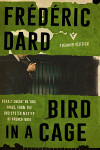
Frédéric Dard: Bird In A Cage – Upon returning home, Albert goes to the restaurant he was too poor to visit as a child and becomes acquainted with a woman who has an aura of mystery. Difficult to sum up without giving it all away, this is a short, filler-less thriller and rather good.
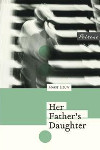
Marie Sizun: Her Father’s Daughter – France has never known her father, a prisoner of war, and believes that his homecoming will destroy the bond she has with her mother. Excellent novella from Peirene Press.

Pamela Hartshorne: House Of Shadows – Kate wakes up in hospital with amnesia and the memories she undercovers have nothing to do with her present situation except in the way those around her seem to hate her. Good premise poorly executed.

Shan Sa: Empress – A fictionalisation of the life of Empress Wu Ze Tian of the 600s, detailing her journey from commoner and low-ranking concubine to leader of China. This was a re-read for me and I enjoyed it just enough but wouldn’t particularly recommend it. (It was interesting to note the difference in my enjoyment from teen years to now, however.)

Tahmima Anam: The Bones Of Grace – Zubaida meets Elijah at the cinema and his arrival in her life brings upheaval to already-laid plans to return home and marry her childhood friend once her palaeontological studies are over. I’d say this is a book you’ll either love or strongly dislike – I’m in the love it camp (my review will be objective).
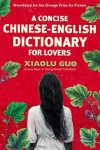
Xiaolu Guo: A Concise Chinese-English Dictionary For Lovers – Zhuang Xiao Qiu, who goes by ‘Z’ because westerners cannot pronounce her name, has travelled to England to learn English to better her prospects back home; she meets a man she comes to love but their relationship is ruled by both a cultural divide and a personality mis-match. I found this a lot better than Guo’s later I Am China; there’s a lot more literary thinking behind it and less editing problems, though as far as a recommendation goes I must point out you have to be happy with the idea of reading a book written entirely in broken English (it’s one of the concepts).
This wasn’t the most literarily pleasurable months I’ve had – that made-up term again – but the diversity went a long way towards smoothing that out. There were three books I loved: the Ibrahim, the Sizun, and the Anam, all for very different reasons and thus it’d be difficult for me to choose between them as far as favourites go (Ibrahim’s method; Sizun’s concept and point of view; Anam’s sheer uniqueness) but I can’t say the others weren’t fun either. Guo’s book was a very easy read and I appreciated the way she brought development and reality to a character you never hear from directly through the use of another’s broken English. Hartshorne may have given the game away within moments but I still enjoyed the ride. Dard is a master of succinctness. And Sa, whilst I can now see the flaws, has had a big impact on my history lover self since I first read her.
Quotation Report
None this time.
When I’ve read a good number of books in the first six months of a year, I often hope to match it in the latter six. Here’s hoping we all meet our reading goals!
How many books do you hope to read by the end of the year?
Discovering Alice Dunbar-Nelson
Posted 29th June 2016
Category: Chit-Chat Genres: N/A
1 Comment

Last month, Anne Boyd Rioux wrote a post about a forgotten writer. Alice Dunbar-Nelson is also known as Alice Moore and sometimes in a fashion that covers all bases, Alice Ruth Moore Dunbar-Nelson. As you know, I’m not one to pass up a literary learning opportunity, so I read the post and went straight to Project Gutenberg to download the cited text. I read it that evening.
Dunbar-Nelson was an African American writer. Like her peer, Kate Chopin, she wrote books on subjects that people found difficult to deal with. Her colour and background made her even more controversial. (Need I say that if you’ve ever wished Chopin wrote more, let me introduce you to Dunbar-Nelson.)
The author favoured female agency, independence, and the right to work, the right to remain childfree. She spoke out about racial problems. Out of her work, the pieces published were those which submitted more to the views of the day – but they succeeded in progressing nonetheless. She wrote articles for papers and helped organise suffrage events. She campaigned against lynching and was a successful speaker. Her diary is available as well as a few novels.
An interesting fact, or not interesting if you consider the time, is that she married. Three times. She was first courted by a fellow writer, poet Paul Laurence Dunbar. He died of Tuberculosis, but Dunbar-Nelson had separated from him four years previously; he’d abused her. She went on to marry twice more, first a physician and then poet and civil rights activist, Robert J Nelson. Some sources say she took female lovers, too.
As I said, I read the work cited by Rioux. It wasn’t the best choice (at least I believe that will prove to be the case) – there’s a vagueness to Violets And Other Tales that I suspect is down to a dampening down of subjects but also due to the writer’s age at the time. There’s a certain pretentiousness to the non-fictional pieces that speaks of immaturity.
The work sports both an introduction by Dunbar-Nelson, in which she intimates a fair lack of ability – likely to appease society? – and a preface by a Sylvanie F Williams who Laurie helped me discover was a fellow member of the Phyllis Wheatley Club, a group of women, most, if not all, coloured. A list here infers various interests such as medicine, literature, and philanthropy. (The linked piece also states that the group included three men – “it is redeemed from the flatness and general unprofitableness of a gathering in petticoats by three real, live, flesh and blood, healthy men…”) Back on topic, Williams’ preface is rather ingratiating which is both understandable (young, new, writer, forgive her!) and sadly a product of the time, having to conform (a woman has written, forgive her!)
Violets And Other Tales is a collection of short fiction, poetry, and review-esque non-fiction. It’s very short and as I said, a bit vague and lacklustre, but you can see the potential in it, enough that it makes you wonder about Dunbar-Nelson’s later work and also what might have been had she been born later in time. Given that I came to the work with expectations, it may come as no surprise that I favoured pieces in which the author’s themes were more obvious.
There are a few pages titled ‘Why Should Well-Salaried Women Marry?’ Dunbar-Nelson states that a woman who works and is not married is able to spend her free time as she wants – she has neither husband nor children to look after. The author makes the case, through what she says as narrative, that a woman is quite capable of doing things by herself, that a woman knows about money:
Her mind is constantly being broadened by contact with the world in its working clothes; in her leisure moments by the better thoughts of dead and living men which she meets in her applications, by her studies of nature, or it may be other communities than her own.
To paraphrase, why should a woman give up her liberty in exchange for serfdom, all too often galling and unendurable?
It’s interesting to think of Dunbar-Nelson marrying when she had these thoughts but aside from it being the usual thing in those days, to marry, and aside from the fact books and real life are often two different things, we do have this:
The attraction of mind to mind, the ability of one to compliment the lights and shadows in the other, the capacity of either to fulfil the duties of wife or husband – these do not enter into contract. This is why we have divorce courts.
Another piece I liked was The Beeman, a short story about a beekeeper who is approached by a fairy, offering to transform him into his true self. Having discovered he was once a baby – I love that! – the fairy keeps her end of the bargain. Some years later she comes across a man who is a beekeeper and it’s that same man she turned into a baby, all grown up. It’s a nice message – whilst something may not be high status, that doesn’t mean it isn’t important. We can force change but if our heart is not in it, it won’t work for long.
It’s a good work, but her others are likely better – my guess is that her diaries would be most compelling. And I’ll be continuing my foray; I’m glad to have found someone to staunch my sadness over our relative lack of Chopin.
Had you heard of Dunbar-Nelson?


