




Back Monday
Posted 19th April 2017
Category: Miscellaneous Genres: N/A
Comments Off on Back Monday
As above. The reviews I had scheduled for this week will be online next week.
Reading Life: 12th April 2017
Posted 12th April 2017
Category: Reading Life Genres: N/A
3 Comments

I’ve been reading so much lately it felt time to write another post of this type. After what has been a long semi-slump – which often turned into a short complete slump – I’ve a lot of motivation.
My current older read, though I use ‘current’ loosely as the book is not a priority at the moment, is Charlotte Turner Smith’s Emmeline – the full title includes ‘The Orphan Of The Castle’ but I’m going to employ the single word/name most of the time. (I’m not sure how correct that is, but many pages online shorten it.) I discovered Turner Smith some years ago but Emmeline, which is a Cinderella-type story, was only available in scanned fragments of old editions and difficult to find in print. In the years since, Project Gutenberg have produced a full text. Finding that made my day.
Born in the mid 1700s, Turner Smith led a mixed life. She was rather well-known in literary circles for her poetry – she wrote both poetry and prose, a good few novels at that – finding praise from Wordsworth and Coleridge, but otherwise her life was not so good. Her husband got into enough debt that he was sent to prison and Turner Smith joined him; the couple separated at one point and whilst the author later made good money she ultimately ended up in poverty.
I intend to make the book a priority when I can; at the moment I’m just a few pages in, having wanted to get a sense of the atmosphere. So far, so great. There’s a very, very, gentle humour and a lot of what seems to be goodwill. It’s a fairly long book but yes, if these few pages are something to go by, it’ll be worth it. I wasn’t aware of Turner Smith’s other work, didn’t even know she was a poet, and I can’t remember how and why I first found out about her, but I’m considering reading her other work if I enjoy this one. I love the idea of reading older fiction and as this is 1700s (which is quite early in terms of female writers – I’m also looking at 1600s’ Aphra Behn) it suits.
Emma Henderson’s The Valentine House has been welcomed this month. I had been wondering if she was writing a second book, after her Orange Prize shortlister, Grace Williams Says It Loud; it’s been an exciting few days. There seems to be a bit of a disability theme going on, with one character making vague references to a ‘weird gait’ and what appears to be Bell’s Palsy. I’m almost half-way through and it’s not been made clear yet but again, as with Henderson’s previous book, it’s a look at things from a more distant view, for want of a better term, and the focus is on the story. I’m not quite sure where the narrative is going but I think it may turn out to be one of those books you read to relax. It’s set in various decades of the 20th century, always in the French Alps, and features a lot about climbing and family requirements. This said, there’s a sexual theme lingering beneath that is quite dark – it may well be that it’s a nice easy read up to a certain point.
Phillip Lewis’s The Barrowfields made my (previous) week. I was working on a deadline, semi-self imposed as review deadlines can be, and it was the best kind of book for such a situation – I could have stopped reading, in that ‘could put it down’ way, but I was really very happy to continue. I came close to waxing lyrical in my review so I won’t carry on now except to say I’m really looking forward to Lewis’ next, even if I’ve not heard hide nor hair of it.
Jennifer Donnelly’s Revolution is fairly good. I’m finding the writing a bit lazy, as though Donnelly has tried too hard to get contemporary young adult speech right, and the letters written by a 1700s teenager don’t read any differently, but the story is promising. It’s a lovely little book; I found a hardback copy which was very welcome as I’d wanted the book for a while and it was one of those situations where you regret not having got a book before a cover change.
I’ve Sarah Perry’s The Essex Serpent waiting in the wings. I might be very excited about that.
What are you reading?
Books I Read Before I Started Blogging
Posted 10th April 2017
Category: Chit-Chat Genres: N/A
1 Comment
When I became a book blogger, half-way through the first year I tracked my reading, I made a point of reviewing the previous few months’ books and summing them all up at the end. But besides the odd mention here and there, I never noted the books I’d read before tracking/blogging. This number is obviously a bit too high to make into a blog post and trying to remember everything I’ve read would take a while. In planning this post I’ve realised the truth of my memories of using the library a great deal when younger – I don’t have copies of most of the books I know I read then.
Due to how many books this idea would involve, I’ve limited it to those I own (so regarding the above, not many) and I’m excluding children’s books, including only young adult books and ‘teenager’ books – I think that’s more accurate to what we called them back then. Including only the books I own has the added bonus of me knowing for certain that I read them.
I’ve left out books I’ve re-read since starting my blog. I may end up re-reading some of the books listed – I certainly hope to in some cases – but writing this post ensures I’ve at least commented on them somewhat. Lisa Jewell’s pre-literary/historical work dominates.
I’m not sure the above makes total literal sense – I’m suffering a bit from heatstroke – but hopefully it’s enough for you to get the idea. I thought I’d list them in the order I remembered them in rather than alphabetically – it has the added bonus of creating two equal ‘halves’. Here we go:



Alma Alexander: The Secrets Of The Jin-Shei – A historical fantasy. This is about a China where women are the dominant gender. It has some magic in it, some battles, and is fairly diverse, but a word of warning must be given regarding the sexual violence which isn’t softened by the magical concepts behind it, no matter how much that may have been the intention. I intend to re-read this one and get an idea of how it reads now I’m old enough not to be so in subjective awe of the genre.
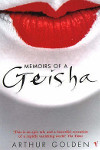
Arthur Golden: Memoirs Of A Geisha – Historical. This is about a young girl who grows up to be a geisha in the years towards the end of the profession. Since made into a film so I doubt I need to note too much. I’m not sure if I’ll re-read it.
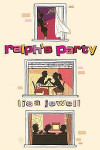
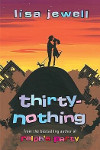
Lisa Jewell: Ralph’s Party, Thirty-nothing, One-Hit Wonder, A Friend Of The Family, Vince & Joy, 31 Dream Street – Chick-lit. I’m going to sum these up as it was a phase and say that they were pretty good, escapism. Didn’t like Jewell’s use of ‘spastic’ however and am glad she seems to have now dropped it from her more recent books.




Maile Meloy: Liars And Saints – Contemporary, mostly and may be classed now as literary fiction. This is about different generations of a family, fairly dysfunctional people. Reading this made me feel very grown up. I want to re-read it in the near future as I’d like to read it in the way I read now and work out just what all the sex was for.
Anchee Min: Empress Orchid – Historical about the last empress of China, Ci Xi. Min is quite forgiving of her character but not completely. Suffice to say this is a difficult read at times but good nonetheless. I intend to re-read it.
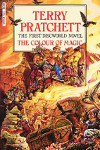
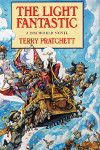
Terry Pratchett: The Colour Of Magic, The Light Fantastic, Equal Rites, Mort – The first four Discworld novels. I wasn’t too keen on the first two, but Granny Weatherwax of the third is great and Mort remains my favourite so far.
Celia Rees: Witch Child – Historical fantasy. A girl with witch-like powers travels to the New World. I don’t remember too much of the story but do remember it made me cry. I’ll re-read it at some point.
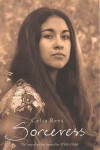
Celia Rees: Sorceress – Fantasy. Set in the present day this is about a descendent of the heroine of Witch Child and her discoveries. Pretty good but not as good. I’ll probably read it as par for the course.
I used to read a lot more fantasy than I do now, though I still love it. The later teen years were when I discovered historical fantasy; for a while I read nothing else. I still have the sequel to the Alexander on my shelves to read; I bought it because it made sense at the time but upon reading the blurb I discovered it’s quite a bit different. Still, I’m glad I have it because it’s difficult to find nowadays.
There are so many books I want to re-read to see how I find them in, as said above, to ‘read it in the way I read now’. I have that urge to re-read constantly, finding that the more I read the more I feel I should go back and re-read books read previously because I’ve changed, grown as a reader, and so on. I even find myself feeling that way about books I read in more recent years. I think we all feel this way at times.
What books did you read in your younger years that stood out to you? Do you think you’d still like them if you read them now?
The Worm Hole Turns 7
Posted 5th April 2017
Category: The Worm Hole Genres: N/A
13 Comments

Yesterday was my blog’s birthday. I feel I’m getting back on my feet after a few strange months so this birthday celebration is particularly special. It coincides with the start of my plans for the next In Conversation event and a few other bookish happenings. Much coffee has been consumed.
At this time of year I tend to post my blog statistics but I’ve an extra celebration coming up in a few weeks so to avoid repetition I’ll save numbers for then.
I’m grateful for all the friends I’ve made through blogging, for the support, and for everyone here who reads my posts. You guys are all awesome and I can’t thank you enough.
Thank you!
March 2017 Reading Round-Up
Posted 3rd April 2017
Category: Round-Ups Genres: N/A
3 Comments
This month I decided to concentrate on finishing a longer-term book or two and get through some classics; they crossed over a (minor) bit. At the end of the month I also found myself in a mini Southern states phase, reading Harper Lee and Kate Chopin at the same time. It was accidental but it allowed me to compare the historic periods and get a better idea of the situations from those who lived them, something I’ve so far almost completely read about third-hand in non-fiction.
All books are works of fiction.
The Books
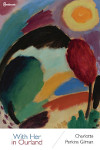
Charlotte Perkins Gilman: With Her In Ourland – Ellador travels around the world with Van, giving him her opinions on everything the world does wrong. A lecture about why we should do things differently, whilst it has some good points this sequel to Herland falls widely past the mark.
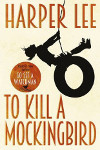
Harper Lee: To Kill A Mockingbird – A girl grows up amidst a changing society that’s not quite ready to let go of the idea of racial superiority. Loved it – it was different to what I thought it would be like (I thought it was all courtroom drama) but nevertheless great.
Kate Chopin: Bayou Folk – A collection of short stories that were originally published in magazines. Not a bad collection – some stunning stories some very mediocre.
Rory Gleeson: Rockadoon Shore – A group of friends go on a weekend away in the hope that they can improve their collective relationship. Not bad but doesn’t have enough going on.
Samanta Schweblin: Fever Dream – A woman on her death bed is made to explain recent happenings to an acquaintance with the idea that she must work out how she became so ill. This is a very confusing book but it’s meant to be so; it’s also rather enjoyable in a literary sense.
I enjoyed a lot of what I read this month. I suppose it would be fair to say that the Lee was a stand out, alongside some of the stories in the Chopin. The Perkins Gilman was very different to what I thought it would be like, the story moving from its beginnings in science fiction to sociological tract; I think I’d read Herland again but not this sequel. In all I’ve finished 6 pre-1970s books so far this year which I believe is more books than any other (whole) year. I’m in a bit of a classics phase at the moment.
Quotation Report
In Bayou Folk, a woman who seems 125 years old is respected, however, she is not 125 years old… she may be older.
Looking forward to spending more time out in the sunshine and the return of Easter in April (last year was very strange).
How was your March?


