




Hay 2017
Posted 5th June 2017
Category: Events Genres: N/A
2 Comments

Every spring the Hay Festival commandeers the town of Hay-On-Wye, the ‘town of books’. For 11 days from late May to early June, the festival site is abuzz with people.
It’s very inclusive. Many residents of the town get involved – I would assume all the residents like books; you’d be completely out of luck if you didn’t. Likely many join the festival itself but what is particularly great is the way the home-owners along the road running between the town and the festival site make use of their properties; front lawns and driveways become pop-up cafes and clothes shops, people sell breakfast and fish and chips cooked outside.
And the festival is incredibly diverse. People of all backgrounds, ages, colours, religions, fashion styles and, something I noticed particularly this year, abilities. In a world where disability is still ‘other’, Hay is a wonderful outlier and equaliser, and for the past two years now, at least, there have been absolutely spot-on talks about autism and acceptance.

Some of those who set up shop at the festival this year were the Quakers, the Woodland Trust, a cable tidy company, a furniture maker, a dessert group, and a university. The usual Oxfam bookshop is in a fairly large tent, at least when compared to the other shops, and then the main Hay festival bookshop is set up at the back of the site, devoting its place to the books of the current festival’s authors. And of course there are comedy sets and concerts, this year including Andy Parsons, Reginald D Hunter, Amy McDonald, and Amanda Palmer.
There are plenty of places to eat on site and then there are all the places in town. The town is decked out in bunting, effectively joining it to the festival. The main attractions here are the bookshops – there are many – and the overall beauty of the place. Sadly Hay Castle is currently closed but you can walk around it, and Barbara Erskine’s book on the place is a suitable substitute.
This year it felt as though more time had been given to political sessions, understandably. Due to recent events in the UK, there was a fair police presence and extra security in general. The camaraderie at Hay increased.
Something the festival has been promoting this year is the latest international festival in Aarhus, Denmark. I mentioned it last year as I’d got talking to people involved in it, but this will be its first time running. Aarhus will be a children’s literature festival and a couple of anthologies of short stories were released early in the 11 days. I’m working on a post about the books and the related events and information and will share it once it’s finished.

The last things I should mention here are the Hay, Brecon and Talgrath Sanctuary for Refugees which had a place at the festival, and the festival’s funding of the town’s library. Hay Festival has effectively taken on the responsibility for the library remaining open. Library hours have been cut but it’s still there.
Have you ever been to a festival, whether literary or otherwise?
May 2017 Reading Round-Up
Posted 31st May 2017
Category: Round-Ups Genres: N/A
2 Comments
It’s very unlike me to post a round up before the month is over, in fact I think this is the first time, but it’s unlikely I’ll finish any more books today. True to last year’s form I’ve read very little whilst at Hay. Other than this, however, I’ve read a fair amount. As soon as the sun comes out and the weather improves I find myself reading a lot more and this year is no exception. I’m having a reading ball.
The Books
Non-Fiction
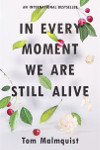
Tom Malmquist: In Every Moment We Are Still Alive – When Tom’s pregnant wife is diagnosed with late-stage Leukaemia he faces the likelihood that he’s about to become both a widower and a new single father. You’ll find this book in the fiction section because it’s being called a fictional autobiography but everything in it is true; as much as one can use the word it’s a good book.
Fiction
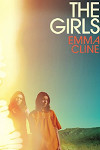
Emma Cline: The Girls – In the 1960s, a young teenager spent her time with a group of women lead by a charismatic man, and looking back at the horrors this later caused she reflects on her life. There’s not much here that is original.

Joanna Cannon: The Trouble With Goats And Sheep – Mrs Creasy disappears during the 1976 heatwave and the village thinks Walter must have something to do with it; meanwhile Grace believes that if God is everywhere he must be at a neighbour’s house and she plans to find him. A great book about discrimination and stereotypes against a backdrop of supposedly perfect domesticity.

Juan Carlos Márquez: Tangram – A tale of red herrings and seemingly-unrelated stories that culminate in a murder. A very clever use of characterisation of playing with the reader’s assumptions.
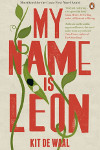
Kit de Waal: My Name Is Leon – Confused as to why he can’t stay with his mother as he is doing a good job looking after her, Leon is taken in by a foster carer whilst his white brother is adopted. A fantastic look at the British social services in the 1980s and the wider issues involved.

Nicholas Royle: An English Guide To Birdwatching – Silas and Ethel have handed their undertaking business to their son in exchange for a relaxing retirement by the sea, and meanwhile an unrelated Stephen Osmer is hammering out diatribes on his computer keyboard, but both stories are woven together in the form of their unfortunate connection to a literary critic called Nicholas Royle who has unwittingly upset them all. A brilliant piece of meta fiction by one of the two writers called Nicholas Royle.
My favourite this month was the de Waal. It will make my ‘best of’ list; it’s absolutely excellent in every way. The Cannon and the Royle were both pipped to the post; both were a lot of fun. Cannon’s book could have done with a slightly stronger ending, and Royle’s book is only held back by the amount of attention and consideration it requires – it is a great book but de Waal’s is arguably easier to enjoy.
Quotation Report
None this time.
Looking forward, I’ve some books from Hay to read; whilst the usual case of a reader not getting to every book they acquire will likely prevail there are a couple that have gone straight to the top of my list. I’ve the 600 page Christina Stead to get to and get through and I really want to make June the month I read Sarah Perry’s novel. We’ll see!
What book are you currently reading?
Hay Post Preview
Posted 29th May 2017
Category: Events Genres: N/A
Comments Off on Hay Post Preview
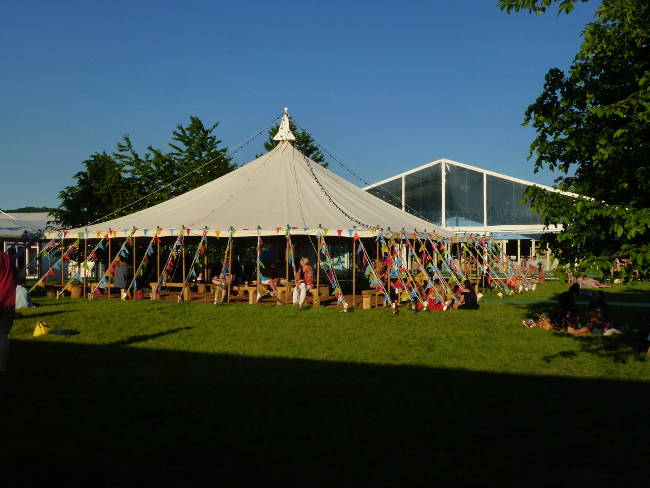
My intention for today’s post was to detail happenings here and to post lots of photographs, however something that can’t be banked on is internet connection – I’m typing this in a valley area where the wifi is poor. So here are a few photographs, made small; I’ll post in detail once I’m back.



A Book Launch, A Multi-Author Event, And A Visit To Southampton Old Cemetery
Posted 22nd May 2017
Category: Events Genres: N/A
4 Comments

It’s been a very literary weekend.
Friday evening saw the launch of Meike Ziervogel’s fourth book, The Photographer, at Waterstones Piccadilly. Longer than her others, Meike is calling it a novel rather than a novella. The book was inspired by her grandparents, one set in particular, and their lives during the Second World War. It’s about the people of Germany – Meike was aware that she was of a generation that could write about that time; those prior could not.
There were a couple of readings and a general discussion with chair Rosie Goldsmith, and Stephanie Bird of University College London: thoughts on German documentaries and films regarding the War; literary fiction and the way that plot is important to Meike because actions speak louder than words; how the four of the books are connected, having written one to get to the next and so forth. I picked up a copy of the book – it’s only a tentative plan, but I’m hoping to review it soon. And I got it signed, which in regards to Meike’s work was a first for me.

I spent Saturday afternoon attending the Southampton stop of publisher Choc Lit’s author tour. Choc Lit are visiting a few different cities and the authors at the events are those nearby; this time it was Evonne Wareham, Jan Brigden, Liv Thomas (one half of the writing duo published under the name Isabella Connor), and Laura E James, in the order they are sitting in the photograph. There were a number of us and the afternoon consisted of a good introduction and discussion by and between the authors, lots of time to talk to everyone there, and a quiz to finish. And a fair amount of chocolate, cake, and books. During the latter section there was an opportunity for the writers amongst us – those other than the four mentioned – to pitch their work.

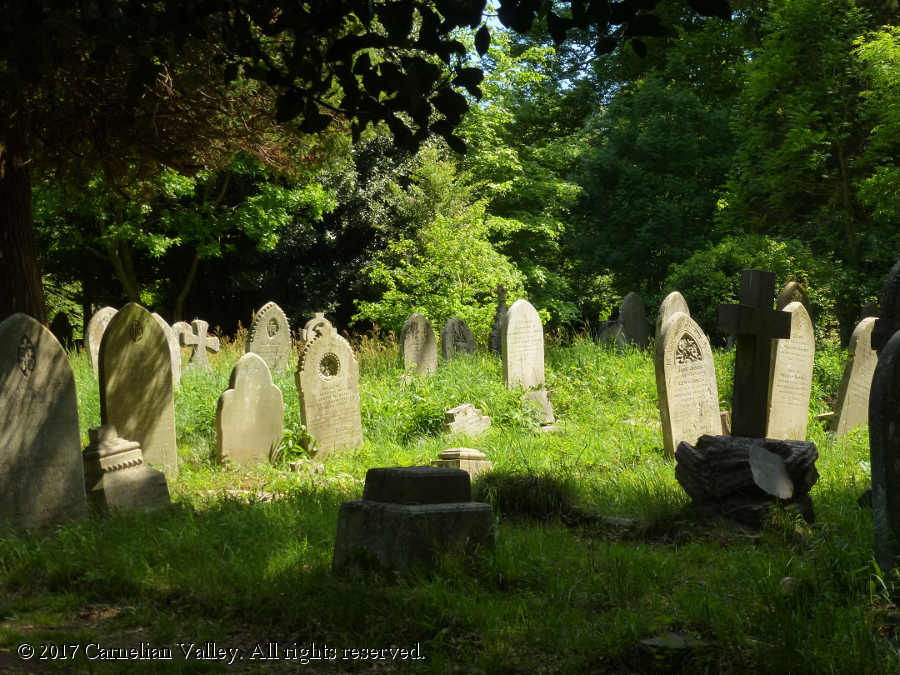
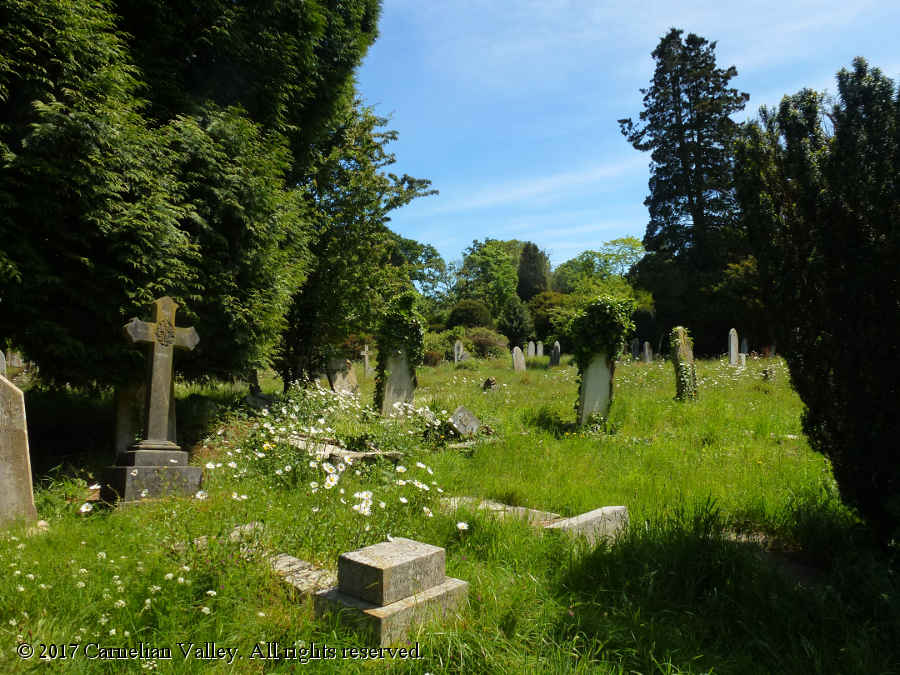
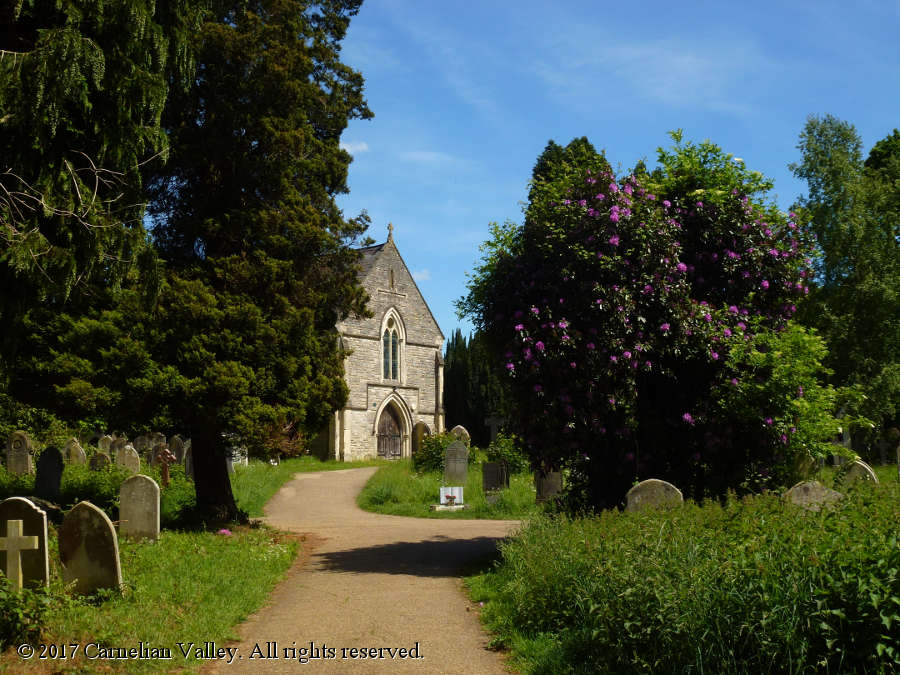
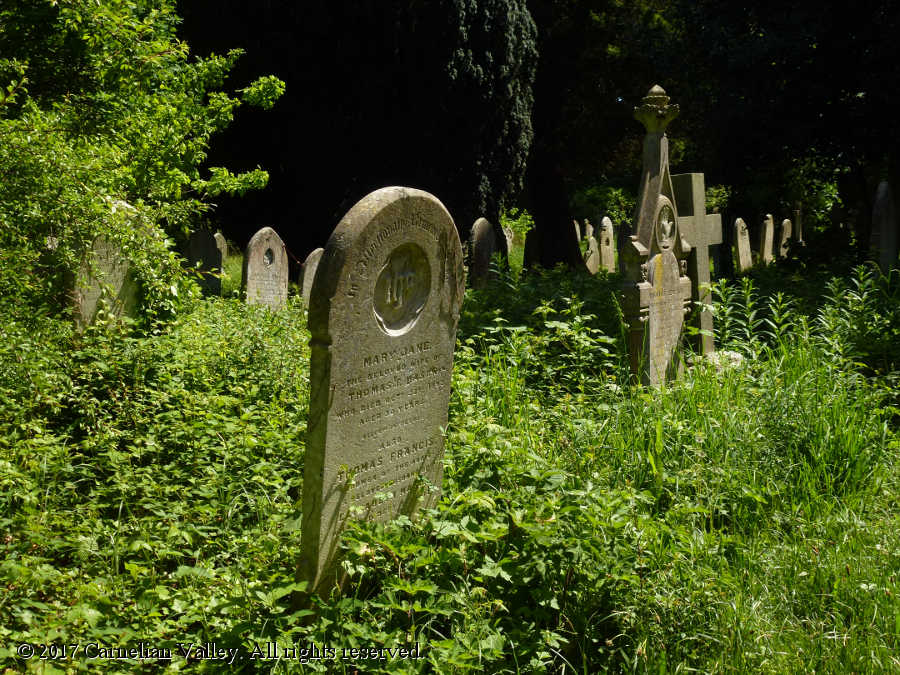
Sunday was a free day. I read – little surprise there, I think – and decided to get out and enjoy the sunshine visiting the old cemetery we have in Southampton, an activity a lot more peaceful and positive than it might sound. Situated in the middle of Southampton Common, the cemetery was opened in 1846; nowadays the only burials are those added to existing plots, a few a year. Very tall statues abound and there’s even a small mausoleum. Most of the stones have corroded to the point of illegibility and some areas are so old and overgrown they look empty, but in the context of a historical space, there is a lot of beauty to be found in it… and there’s also a monkey puzzle tree, as you can see above. Here are more photographs:

How was your weekend and what was the last event, literary or otherwise, you attended?
Which Series Would You Have Liked To See Continued?
Posted 19th May 2017
Category: Chit-Chat Genres: N/A
3 Comments

What it says on the tin; looking at series that ended rather than any that may not have been actively finished, if that makes sense. (The photograph is just books from different series.) Most series I read are Young Adult, particularly fantasies, so that’s what my choices are. The series are His Dark Materials, The Hunger Games, and The Chronicles Of Narnia, one paragraph each, and thoughts include spoilers.
It’s kind of (hopefully?) happening now, but like many people I wanted to know if Lyra and Will of His Dark Materials would meet again. I wanted to find out if they were successful in their quest. Should a continuation happen? Whilst this is a mute point now, with the upcoming publication of The Book Of Dust, I’m not sure whether a continuation would work or not. I’ve written about my feelings for The Amber Spyglass; I wonder if Pullman had continued the series at that time, if it would have just got worse. Perhaps The Book of Dust will benefit from the years that have passed since the completion of the trilogy. But I don’t think the story can work without Mrs Coulter and Lord Asriel. How a story would work without them I don’t know.
I’ve read many articles and reviews in which people say how much they loved The Hunger Games and Catching Fire, but disliked Mockingjay. I didn’t dislike the last book but I stand with general opinion that it was a poor finale to an otherwise strong series (albeit that I have my reservations due to the similarities with Battle Royale, a book I won’t lie in having read but know a bit about). I think the thing with the first two books is that although the Games are horrific, they are fun in that sort of can’t-stop-reading way, much like people think reality TV is awful but they’ll still watch it. The fast-paced action and also, I reckon, the element of knowing what you’re getting, combined, perhaps, with the shock of it all, made the first two books what they were. Without it, the third book couldn’t win. So I would have loved to have stayed in Collins’ world in terms of the no-holds-barred way she explored her subject but I wouldn’t want to read a continuation of the series as it stands. It wouldn’t make sense for another book to be included unless it had been a book slotted between the first two and the third, or if it was a spin-off. Personally, I’m not the biggest fan of spin-offs, Xena excepted, so I’m not sure I would read one anyway. The story has been completed.
I think The Chronicles Of Narnia could have continued for many more books and people would have enjoyed it just as much – so long as it continued adding characters and new travels rather than looking at Heaven post-The Last Battle. It would be different – perhaps we’d emphasise new characters over Lucy; perhaps Susan could have returned and Lewis made her a more prominent character without the hate – but I think it would have still been just as good. Looking at how wonderful both The Magican’s Nephew and The Lion, The Witch And The Wardrobe are, as very separate parts of one whole, he could feasibly carried on without issue.
You?


