




Author Biographies In Books
Posted 16th June 2017
Category: Chit-Chat Genres: N/A
2 Comments
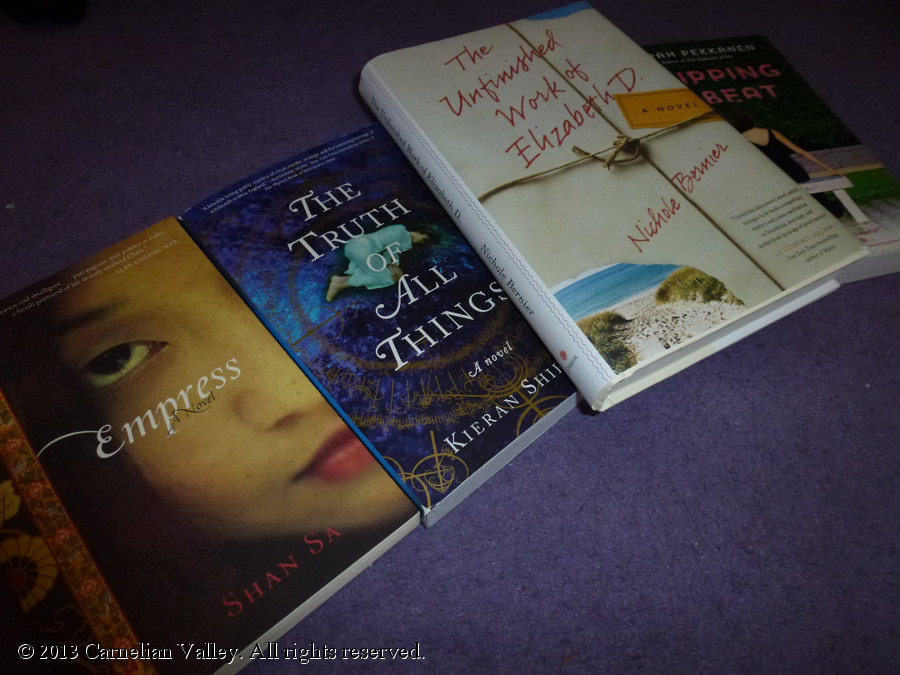
Many hardbacks nowadays have dedicated biographies on the jacket cover, providing brief information about the author and often a photograph. Education details, social media links, family. When paperbacks sport biographies they’re generally more limited, on the front pages, less information, and photographs don’t tend to be included. Biographies are something I consider often because I’ve a default primary action, particularly in the case of hardbacks, whereupon if I’m browsing shop shelves or about to pick up a book I already own to read, one of the first things I do is decide whether or not to read the biography.
If I’m wanting to stay in the dark about the plot of the story I’ll generally skip the biography just in case, especially if I don’t already know anything about the author; in reading the biography first you are unable to read the book without those slight threads of influence the biography may supply.
But because a biography often provides details that enable you to roughly gauge how informed the book might be, for example Kit de Waal’s work history shows that My Name Is Leon will most likely be trustworthy and full of knowledge (she’s worked in the social care system for years and has adopted children) it sometimes pays to read it if you’re undecided about the book.
Sometimes I do want to know more about a book and so I will read the biography to get a better sense of it when the blurb on the back is lacking (think hardbacks and the favouring of praises over summaries – I know in those cases summaries can be found on the jacket flap but they tend to give too much away). Sometimes I want to know as much as the book will tell me through all the various snippets provided.
Meaty biographies have spoiled brief ones for me. The short ‘X lives in location with her X family members and dog, this is her first novel’ disappoints me even though it means there’s little to influence you, not much to make you consider the author whilst reading. They often do not include photographs.
Photographs – good or bad idea? Seeing a smiley face can influence your decision to buy or borrow, just as a poker face might. I sometimes wonder about those poker faces – presumably they help keep away bias but they can bring a feeling of negativity. A biography without a photograph, whilst it keeps the mystery, often makes me want to look the author up to complete the picture – having seen so many biographies include them, those that lack them are surely… lacking.
Can biographies sway opinion? I think so. A person whose biography does not suggest any links to the content of the book might cause pause for thought, especially in non-fiction – why would something, anything, related, not have been included? For example (and made up), ‘Shelley has lived her life on the south coast where she works on a farm’, as a biography in a book about the city of Manchester – Shelley’s likely, hopefully, spent some time there or read a lot about it, so it should be included. It’s not absolutely necessary but, again, consider Kit de Waal, whose biography that shows very clearly why her book deals with all the subjects it does and why you can trust her.
I’m a fan of the biography when it isn’t too brief. A line or two just makes me wonder why it’s so short.
What do you think of biographies in books?
Tender Is The Night And ‘Do You Mind If I Pull Down The Curtain?’
Posted 14th June 2017
Category: Further Thoughts Genres: N/A
1 Comment

As I’ve stated a few times recently (so I will spare you repeated details) I’ve had trouble with Tender Is The Night but I’m currently giving it another go and it’s started to ‘work’, a bit; after a few dozen pages of good, linear, writing, that started around page 100 (a lot of people say that’s when it gets better and they’re right), it has unfortunately gone backwards towards relative incoherence.
I’ve noticed a repetition of a couple of lines that I want to explore, however I’m going to keep it brief; I think it has the potential to be fascinating but in acknowledging my lack of full attention to the text I feel it’s only right for me to stay away from my usual brainstorming of ideas and reasons. Anything too detailed and I know I will be running the risk of getting it horribly wrong.
The repetition is this: about a third of the way through there are a couple of times when the following is said:
-Do you mind if I pull down the curtain?
-Please do it’s too light in here.
Leaving the question of whether this is where the spurning of quotation marks in literature first began (it seems Fitzgerald uses them to denote flashbacks), where these two lines become important is in their next repetition just after the halfway mark.
The first time the lines are used is during ‘book one’ (the ‘books’ are Fitzgerald’s designations within the ~300 page novel), when Dick is spending time with the young actress Rosemary Hoyt. Collis Clay, a friend of Rosemary’s, tells Dick a story about Rosemary’s relationship with a young man. This makes Dick jealous. (My summary was paraphrased from another’s blog post, from which the following quotation is taken.)
Throughout the novel this quote has practically haunted Dick. When he first heard the story Dick became extremely jealous because he was just beginning to fall in love with Rosemary. In the book whenever Dick is with Rosemary or thinking about her this quote is often repeated. It reveals Dick’s concealed love that he has for Rosemary. (Vanvoorhis, 2011)
The idea of haunting is a strong one. ‘Book two’ details Nicole’s time in a sanatorium – this plotline is based on Fitzgerald’s relationship with Zelda – before reverting back to the present day. It’s when Fitzgerald reverts back that we see that despite Rosemary’s moving on (in location) and Dick’s outward show of relative contentment with it, he’s been set adrift.
But whether rightly or wrongly, in the context of what I’ve said above, I saw a possible other reason for the lines being used. As I made my way along the page and the quote cropped up as a repetition, I considered it a dialogue between Nicole and Dick, with Nicole asking the question, and that it was a show of Dick’s relationships in general.
I wonder if the reality is somewhere between the two, with more weight given to the idea of haunting. I wonder if Nicole did ask and that Fitzgerald’s usage of the extract same words is to ask you to consider Dick’s time with Rosemary, both for Dick as a flashback, and for the reader as a way of making them question and consider it something literary, perhaps a device.
Dick is definitely in a situation. He became involved with Nicole whilst he was her doctor (or one of her doctors – I couldn’t quite make that out) and whilst Fitzgerald takes a peek at the questions of morality – more so simple appropriateness and Dick’s general interest – Dick feels some pressure due to the fact that Nicole’s family is openly looking for a rich suitor for her, to match her own wealth. He’s not exactly out of love with Nicole by the time he meets Rosemary, in fact in many ways he’s very loyal, but Rosemary’s fun and really likes him and so by book two we’re seeing that this new affair echoes the beginnings of his marriage and that he’s fallen in love with Rosemary, far beyond the feelings it appeared he had for her in book one.
I wonder if there isn’t a comparison we’re supposed to make; the age gap between Dick and Rosemary and the care/caregiver ‘gap’ between Dick and Nicole is obvious, but the journey of Dick’s feelings aren’t so obvious, rendering it necessary for Fitzgerald to reuse a quotation.
Speaking of obviousness, it’s obvious why I like this thought:
It’s not clear what he wants us to think when he repeats “— Do you mind if I pull down the curtain?” but it is clearly a refrain that relates to Dick’s predicament while, in Paris, he negotiates his feelings. But this unsuccessful ploy underlines, as much as the historical references that are opaque now, the period of the book’s inception. A conscious effort on the part of the author to elicit modernity. (Silva, 2006)
But I think the ‘it’s not clear’ is very much… it. To move on to my thoughts whilst reading the book in general, part of the problem with analysing the book is that you have to take into account the fact that the chapters have been re-ordered over time. Wikipedia (n.d.) says the following, unfortunately without a source, though it seems well-known:
Two versions of the novel are in print. The first version, published in 1934, uses flashbacks; the second, revised version, prepared by Fitzgerald’s friend and noted critic Malcolm Cowley on the basis of notes for a revision left by Fitzgerald, is ordered chronologically and was first published posthumously in 1948. Critics have suggested that Cowley’s revision was undertaken due to negative reviews of the temporal structure of the first version of the book.
The version I’m reading is the first edition – it says so at the end, and it also says that that is the one now in use with the caveat that some revisions have been incorporated. I expect this is one of the noted-in-a-few-places 17 versions.
Whichever it is, the chapter order is a large part of why it’s hard to concentrate on this novel. You never know where you are and sometimes you don’t know who you’re reading about. Even when you know who, you can’t form an opinion because there’s not nearly enough to work with. Perhaps this adds a literary element to the fact the novel is steeped in Fitzgerald’s own life and experiences, but it makes it difficult. The next line following the above extract is incredibly interesting, though again sadly lacks a source:
Fitzgerald considered Tender Is the Night to be his greatest work. (ibid.)
Why – personally I can only suppose the melding of true life and fiction seems very good in some contexts. Perhaps those with in depth knowledge of Scott and Zelda can appreciate the nuances, but I do wonder if the chronological version of the book works better.
Have you read this book? If so, what did you think of the structure, or, if not, are you planning to read it?
Online References
Silva, Matthew da (2006) Review: Tender is the Night, F. Scott Fitzgerald (1934), Happy Antipodean, accessed 12th June 2017.
Vanvoorhis, Xenia (2011) Do you mind if I pull down the curtain?, Reading F. Scott Fitzgerald, accessed 12th June 2017.
Wikipedia (n.d.) Tender Is The Night, Wikipedia, accessed 12th June 2017.
Hay Festival 2017: Victoria Hislop And Paula Hawkins
Posted 12th June 2017
Category: Events Genres: N/A
1 Comment

Early on Saturday morning, a fair audience gathered in the Oxfam Moot tent to to hear from Victoria Hislop, at Hay to discuss her latest book, Cartes Postales From Greece. Rosie Goldsmith introduced the book and, putting it into context with Hislop’s backlist, she pointed out that all the books, bar one, were love letters to Greece. Hislop speaks fluent Greek and is famous in the country; not a visit goes by without recognition.
“When you’re writing about contemporary Greece,” said Hislop, “you can’t just write about the beauty”. She went on to talk about how it would be disingenuous to have written her latest without referring to the darker elements of what is going on in the country and remarked that Greek people are very good at making ugly things beautiful.
Hislop often wrote whilst travelling; her photographer did the driving, and this work set up was different for her. It felt logical to Hislop to include the photographs in her book, to really show the places she was writing about. The book began as an idea, she said, as she turned on the projector screen to show a photo of a young boy in a silver suit, the atmosphere of the picture making him a little ghostly; it immediately gave her an ‘in’ to the story. In this vein, a photo of a man on a mountain top was used for the end of a chapter, but like the ghostly boy, it was also a beginning moment insofar as the idea.
The author said that Greece will be her inspiration for the foreseeable future.

Photo © 2017, Joseph Albert Hainey.
That evening, Paula Hawkins joined Georgina Godwin in the small, sparkly Starlight tent to talk thrillers. Both author and chair are originally from Zimbabwe, and so the conversation started with Hawkins’ childhood. Born when the country was still Rhodesia, she spent her early years there before moving to London for university. Her home in Zimbabwe was, in literal terms, far from the war, and so she insulted from it, but she learned what was happening at school.
Hawkins said she had wanted to get away from Zimbabwe, her life of privilege as a white person in the country, but upon moving to England she found it difficult. There were so many white people in England, she found it weird. Weird, too, was the relative lack of space. Public transport was new to her, and it was a train journey from Putney to Earl’s Court that inspired The Girl On The Train; she wondered what would happen if she saw something interesting out of the train window. This journey melded together with her childhood and the feeling of being an outsider, that disconnection that has to some degree remained with her.
The success of the book surprised her in its extent. Relief followed the bidding war as she realised she’d be able to keep writing and pay her bills. Asked why we enjoy thrillers, she said, “we can explore fears in a safeish space”. Not a fan of the term ‘grip lit’ and those like it, she is happy to label herself a crime writer.
Is the book about gaslighting and manipulation? Maybe, but it’s also about the way we can tell made-up stories we think are true. “I’m of the degree that all first person narration is unreliable,” she said later, adding that we manipulate things and forget what really went on.
Hawkins wasn’t very involved in the film process, but she was confident the director would get it right. The location change wasn’t a problem for her; the film and the book are very separate things and are “different people’s visions”.
She has no plans at present to write about Zimbabwe in case she “gets it wrong”. The lasting point was that there are enough white people telling stories about Africa.
Reading Life: 9th June 2017
Posted 9th June 2017
Category: Reading Life Genres: N/A
2 Comments

Earlier this week I made the decision to get back to books I haven’t finished and the almost unheard of (for me) decision to allow myself to abandon, for now, books that I’ve started but have made little progress in. I’ve several books on my list now that are unfinished and it’s becoming a bit of a reading burden as well as just a bit silly, effectively creating an inflated number of books read. Subsequently I finished a book I’ve been reading since last month – I’m not setting any limits on how long the book has to have been on the list.
This has led to another effort to finish Tender Is The Night. I didn’t really feel like picking up a ‘current’ read yesterday, so I opted to try once again to read Fitzgerald’s higgledy-piggledy novel and, pun intended, I have turned a page. I’ve reached that point I’d heard about wherein the narrative becomes clearer and more active, the plot is a lot more linear and thought through, and I read a good number of chapters. On book two of the novel it’s turned into something akin to the term people have been using to refer to Tom Malmquist’s book, ‘autobiographical fiction’, wherein a diagnosis of schizophrenia had been given to a main character prior to the start of the book, whilst she was in hospital.
The book I finished before that was Joanna Hickson’s The Agincourt Bride. I’d been steadily continuing it alongside others, but decided it was time to complete it (I’d paused because I’d started reading it for a planned event that was then cancelled). It’s a different sort of book to others on similar subjects/tones in that the person of honour, so to speak, is being talked about by a third party and that third party is fictional, but it’s been a very interesting reading experience – the cover and general expectations pointing to more of a historical romance but the reality being more about the politics with lots of details about battles and the French-England conflicts. The book’s title is the part to base your expectations on.
Despite my prior dislike of Madeleine Thien’s work, albeit that it was a while ago, I have bought her latest, award shortlister. Her event at the Hay Festival was absolutely brilliant, I was completely won over to the point of getting the book there and then. I’m hoping to start it shortly. I also got a copy of a book I regretted not getting last year – I had found a hardback of Monica Ali’s Brick Lane but unwisely chose to mull it over a bit, losing it to someone else. I was particularly interested in a hardback which at this point is difficult to find but I found another this year and didn’t hesitate.
In terms of current reads, Christina Stead’s Letty Fox: Her Luck is a priority, however as I’ve said before it’s a long book and when I opened it I discovered small text and small margins so it’s going to take longer than I’d thought. It’s looking a bit like an updated Vanity Fair at the moment, in terms of heroine personality, and a bit prone to extensive detailing. Still the plan is to finish it sooner rather than later.
In the near future I’m looking at Meike Ziervogel’s The Photographer and the book she commissioned for Peirene Press, The Cut. The former is inspired by the lives of Meike’s grandparents in war-torn Germany and the latter was commissioned last year – a book about the divisions in the UK in regards to Brexit.
How is your reading life?
Interview With Laura Barnett
Posted 7th June 2017
Category: Interviews Genres: N/A
Comments Off on Interview With Laura Barnett

I’m delighted to welcome Laura Barnett to the blog today (she’s the one on the right – on the left is Kathryn Williams who Laura tells us about). Laura is the author of The Versions Of Us which I reviewed a few years ago – even if it really doesn’t feel that long ago! – and her latest novel is out this month. She’ll be at the Balham Literary Festival this Friday and more details are at the end of this post.
How did the move from journalist to novelist occur?
Slowly! Writing novels was always my primary ambition from about the age of five, and I wrote novellas and short stories throughout my teens. But after graduating from university, I didn’t feel ready to sit down and write that big first novel – I felt like I needed to get out and experience life a bit first. So I trained as a journalist, and spent the next few years working hard on staff at the Telegraph and the Guardian. I was still writing in my spare time, but that time was in short supply – until, in my late twenties, I took the opportunity to go freelance and dedicate myself more fully to writing fiction. It still took several years – and a lot of rejection – before I actually saw my first novel published, and could finally allow fiction to take precedence.
The ‘versions’ in The Versions of Us aren’t all that dissimilar to each other, there are no extreme differences, and each is a very regular life. Had you considered bigger differences? (I thought the lives as they were worked well.)

Yes, I spent a lot of time thinking about how to distinguish the three versions, but I knew I didn’t want them to be too different – to see Eva, say, become a zoo-keeper in Atlanta in one version, and a librarian in Burnley in another. I wanted the novel to consider the smaller permutations of our decisions: the ways in which life draws us down one path over another, changing certain aspects of our circumstances, relationships and personalities, while keeping others the same.
Do you have any ‘what if…’ moments of your own you could share with us?
Like everyone, I have many! Perhaps the most significant is the fact that I was very nearly not born at all… My mum had a fiancé when she was twenty-one who decided to move to America. She broke off the engagement as she couldn’t see a future for herself there; had she not done so, I’d never have existed. We can probably all look back and imagine versions of our parents’ lives in which we would not have figured. I find the thought both disconcerting and intriguing.
Where did the idea for Greatest Hits come from and can you tell us about the decision to bring real music into it?
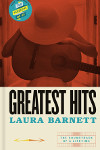
Of course. As so often with a novel, or any creative project, it was the coming together of several different ideas. After The Versions of Us, I knew I wanted my next book to be what we might call a ‘long-view novel’, centred on a character in later life, looking back over her experiences and trying to make sense of them. And I also knew that I wanted to somehow expand the reading experience beyond the page – to work with another artist, from another medium, to forge something really new and original.
From there, it was a short step to deciding that the character at the centre of this new book would be a musician – and that therefore the best way to expand the reading experience would be to work with a real-life singer-songwriter to bring the character’s songs to life.
Can you see yourself working with other medium in future?
Yes, absolutely – I’m really open to anything, and I’ve hugely enjoyed the process of collaborating with Kathryn Williams, not least because novel writing is usually a pretty lonely process! I’m very interested in the visual arts, and I have several ideas about combining fiction with photography and painting. I’m also really excited about the possibilities offered by the recent explosion of interest in podcasts and audiobooks. In fact, Kathryn and I are planning to launch our own podcast soon, so watch this space…
My thanks to Laura, and to Ashton of FMCM.
Laura Barnett is the author of Greatest Hits (Weidenfeld & Nicolson) and will be speaking at Balham Literary Festival on Friday 9th June. If you’re in London in two days time and would like a literary start to your weekend, I would say it’ll be a good evening, and tickets are still available. The festival as a whole runs from tomorrow until Sunday and it’s been created by Dulwich Books.


