





The Rathbones Folio Prize 2018
Posted 23rd April 2018
Category: Miscellaneous Genres: N/A
1 Comment

The Rathbones Folio Prize shortlist has been announced (27th March) and the winner will awarded on 8th May. Here you’ll find the relevant information followed by my thoughts.
Now in its fourth year, the Prize was sponsored by The Folio Society for its first two years in 2014 and 2015, then Rathbone Investment Management Ltd took over at the tail end of 2016 for a May 2017 beginning. It was when Rathbone came on board that the prize expanded to include all types of literature – poetry, and non-fiction, among others. The prize was founded to praise literary fiction, which the founders saw being pushed aside by the Man Booker. Margaret Atwood is recorded as saying the prize is, “much needed in a world in which money is increasingly becoming the measure of all things”.
This year’s judges are Jim Crace, Nikesh Shukla and Kate Summerscale. There is a jury consisting of 250 writers and critics, that take part; the judges are selected from this. Books are nominated by the jury. Last year’s winner was Hisham Matar’s The Return.
This year the eight books shortlisted are, with blurbs:


Elizabeth Strout: Anything Is Possible (Penguin) – This book explores the whole range of human emotion through the intimate dramas of people struggling to understand themselves and others. It tells the story of the inhabitants of rural, dusty Amgash, Illinois, the hometown of Lucy Barton, a successful New York writer who finally returns, after seventeen years of absence, to visit the siblings she left behind.
Sally Rooney: Conversations With Friends (Faber & Faber) – Frances, Bobbi, Nick and Melissa ask each other endless questions. In person and online, they discuss sex and friendship, art and literature, politics and gender, and, of course, one another. At the heart of it all is twenty-one year-old Frances, bringing us this tale of a complex ménage-à-quatre and her affair with Nick, an older married man.
Mohsin Hamid: Exit West (Hamish Hamilton) – In a city swollen by refugees but still mostly at peace – or at least not yet openly at war – two young people notice one another. They share a cup of coffee, a smile, an evening meal. They try not to hear the sound of bombs getting closer every night, the radio announcing new laws, the public executions.
Richard Lloyd Parry: Ghosts Of The Tsunami (Jonathan Cape) – On 11 March 2011, a massive earthquake sent a 120-foot-high tsunami smashing into the coast of north-east Japan, causing the deaths of over 18,500 people. Even after the immediate emergency had abated, the trauma of the disaster continued to express itself in bizarre and mysterious ways. Parry, an award-winning foreign correspondent, lived through the earthquake in Tokyo, and spent six years reporting from the disaster zone.


Xiaolu Guo: Once Upon A Time In The East (Chatto & Windus) – When Xiaolu Guo was born in 1973, her parents handed her over to a childless, peasant couple, in the mountains. Aged two, and suffering from malnutrition, they left her with her illiterate grandparents in a fishing village on the East China Sea. The book takes Xiaolu from a run-down shack, to film school in a rapidly changing Beijing, to a scholarship in Britain.
Jon McGregor: Reservoir 13 (Fourth Estate) – In the hills at the heart of England a teenage girl has gone missing. The villagers join the search, police set up roadblocks, and a crowd of news reporters descends. The search for the missing girl goes on, but so does everyday life. As it must.
Richard Beard: The Day That Went Missing (Vintage) – On a family summer holiday in Cornwall in 1978, Nicholas and his brother Richard are jumping in the waves. Suddenly, Nicky is out of his depth. He isn’t, and then he is. He drowns. Incredibly, the family soon stop speaking of the catastrophe, an epic act of collective denial which writes Nicky out of the family memory. Nearly forty years later, Richard Beard is haunted by the missing grief of his childhood.
Hari Kunzru: White Tears (Penguin) – New Yorkers Carter and Seth chop up old music to make it new again, ripping off black culture to line white pockets. But one day they stumble on an old blues song – an undiscovered gem – and land themselves in a heap of trouble.
I have been considering Guo’s memoir for a while, and have Rooney’s book on my shelves. When I went to look in Southampton’s library system to see about creating a library display for the one I go to, few of the books were available – this fact, whether intentionally coinciding with the award of not, highlighted how popular the books are. I keep finding my way back to the collection of Strout’s books; it’s one of those situations where it feels like everyone but you has read the author, and so many have recommended her. Having not read any of them yet I’ve no predictions but you can bet I’ll be reading at least some of them soon.
Have you read any of the shortlisted books, or other books by the authors? Do you have any predictions as to who will win?
Latest Acquisitions (February – April 2018)
Posted 20th April 2018
Category: Acquisitions Genres: N/A
2 Comments
It has again been a while since a post of this kind; my reading speed at the moment is slow, and I’m reading more of the books I already have. I have also got to the point in my blogging where I’ve really, truly, learned what is a good acceptance rate of books. The request-them-all phase bloggers often go through is long over and I appreciate not having to read books back to back. There’s also the fact that it gives me more time to think about what I want to say. I think back to the time a couple of years ago when I had eleven books to read in four weeks, a mix of awards, event preparation, and review copies – I finished them all in time and in fact it was quite exhilarating, but I’d rather not do it again!


Arundhati Roy: The Ministry Of Utmost Happiness – In the autumn of last year I was in a bookshop and came across two books I haven’t previously come across but found myself really wanting. This was one of them. I didn’t get either of them at that time but they kept coming to mind so I recently decided to go for it, particularly after seeing this book was on the longlist for the Women’s Prize for Fiction.
Edward Carey: Little – Out in October in the UK, this is a novel based on the life of Madame Tussaud. It’s done well so far. Expect a lot of interesting history but also, likely, a fair bit of gore.
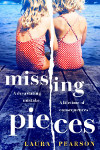
Laura Pearson: Missing Pieces – A story of family secrets, out in June. I’m purposefully staying away from reviews until after I’ve read it; the last book I read that had a similar blurb required you stay away from the secret in order to really enjoy it.
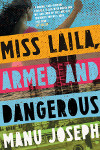

Manu Joseph: Miss Laila, Armed And Dangerous – A very contemporary thriller set after an election in India.
Özgür Mumcu: The Peace Machine – A Turkish novel set at the start of the last century, that questions whether violence could be put to an end.
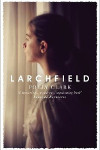
Polly Clark: Larchfield – This was the second book I found in the bookshop; it switches between a contemporary narrative, and a story of W H Auden.
What was the last book you originally said ‘no’ to but couldn’t get out of your mind?
The Use Of ‘Ardent’ In Three Classical Novels
Posted 18th April 2018
Category: Chit-Chat Genres: N/A
3 Comments
“In vain have I struggled. It will not do. My feelings will not be repressed. You must allow me to tell you how ardently I admire and love you.”

I’ve been reading fiction from the 1700s for a few months now – first Charlotte Smith’s Emmeline and then Charlotte Lennox’s The Female Quixote – and every time the adjective ‘ardent’ is used, my mind goes back to the famous scene from Pride And Prejudice. Or, more specifically, Colin Firth’s Darcy bursting into the room to say the adverb version of the word to Jennifer Ehle’s Lizzie Bennet.
The word is used incredibly often in these books, and having never to my knowledge encountered it outside of old works of fiction, I thought I’d look into it. And perhaps add it to my vocabulary for a short time; that sort of thing can be, to use a phrase going out of fashion, jolly good fun.
The origins are 1300s and Latin (ārdent, from ārdēns, ‘to burn’). It replaced the Middle English ‘ardant’. I don’t suppose the list below is particularly needed – ‘ardent’ is one of those words where the meaning is quite obvious – but in order to fully account for it, here is the list of meanings, from Dictionary.com:
- having, expressive of, or characterized by intense feeling; passionate; fervent: an ardent vow; ardent love.
- intensely devoted, eager, or enthusiastic; zealous: An ardent theatergoer. An ardent student of French history.
- vehement; fierce: They were frightened by his ardent, burning eyes.
- burning, fiery, or hot: The ardent core of a star.
I think it’s fair to say Austen, and Firth, were looking to use them all.
To my knowledge we don’t really use ‘ardent’ any more; as I said, I’ve never heard it outside of older fiction (or adaptations of those books), but that’s a very subjective statement, so I looked it up. Using the information I had – that the word seemed to be very much in favour in the 1700s – 1750s-80s, if we look at the publishing dates of Emmeline and The Female Quixote – as well as Pride And Prejudice‘s 1813; I found a Google application that produces charts for words. Here we have ‘ardent’ used far more than ‘ardently’ (to be expected) peaking twice, in 1801 and again in 1835 before decreasing first slowly to 1850 and dropping steadily over time. The pretty fast increase from the early 1700s until that first peak aligns with the mid-1700s.
Dates to be considered: 1752 (Charlotte Lennox), 1788 (Charlotte Smith), 1813 (Jane Austen).
(Usage in the two centuries before this was very hit and miss. The graph suggested the early Tudors weren’t too keen on what appears to have been a new word, and the late Tudors and Stuarts couldn’t make up their minds whether to use it or not.)
Looking at ‘ardent’ led to only a short bout of research, as I thought it would – I was looking at something particular, after all – but it’s nevertheless been fascinating. The word itself, and the other possibilities for study I’ve picked up from these two 1700s novels are interesting, which is quite at odds with the reading experience itself – poignant but poorly executed in Smith’s case, and highly frivolous and seemingly simple in Lennox’s case.
What are your favourite rarely-now-used words?
Not Knowing Everything, And Not Knowing What We Don’t Know
Posted 16th April 2018
Category: Chit-Chat Genres: N/A
1 Comment

Going back to the Hunger Games example, if you didn’t know that “Panem” came from the Latin phrase “Panem et Circenses” which means “Bread and Circuses,” would you look it up? (Marciniak, 2018)
This fact was included in a very thoughtful article about cultural literacy. We can’t know everything and we don’t know what we don’t know. This is possibly my biggest fear when reading, and particularly when reading knowing I’ll be reviewing the book, which is about 90% of the time.
The thought that we can’t know everything matches well with my previous post on reading the reference material first. (On that note I should say I chose to start The Female Quixote without looking at the Cervantes. So far, so good – knowing the basics of the earlier text, at 10% read, is all that’s needed.) Unless you have an inordinately large amount of time, and even if you do, knowing everything that is included or referred to by a book is an impossible undertaking. You’d have to find out what you needed to know. You’d need to figure this out for a potential few or several hundred pages worth of text. And you’d need to do this for the referenced books too. I’m starting to get a dizzy as I did as a child when someone told me that heaven is forever and ever (and ever and ever…)
So, we don’t know what we don’t know – my biggest literary fear has got me on occasion; it happens less the older I get and thus the more I realise it’s good to be cautious. When it comes to not getting something in contemporary literary fiction, for example (I think contemporary literary fiction is the least likely place for it) it’s not too bad – you can generally get away with saying ‘I didn’t get this book’, even if you don’t tell others. But for a lot of books it’s very difficult to get around and it can make you feel silly for not knowing. Looking silly isn’t so bad, but making a mistake in, say, a review, can be awful, or at least feel so. At least in the example mentioned in the article, it’s not such a problem. Knowing about Panem might give you a chuckle, a hint of the author’s thoughts very early on, but otherwise it won’t effect your reading too much.
Consider Shakespeare for a moment. When he wrote, he used Greek allusions as if they were pop culture references. And half of the actual pop culture references we still don’t get in Shakespeare’s plays unless we’re scholars of the time period. These are things that go over our heads. They are also things that don’t negate from our reading pleasure and understanding today. (ibid.)
Some books, and other media, if we consider Shakespeare, are written for certain audiences – you can’t expect to understand a book that is on a subject you don’t know about unless it’s a textbook and a beginner’s one at that. This, for me, is where this subject blends into the one about including pop culture in books – the way books will be outdated soon if an author uses things like social media, for example; a person in the future might know or be able to find out what it is but that distinct recognition, relation to it, won’t be there. The reader will, by no fault of their own, lack a particular sort of empathy that might impede their reading of the book. (This is why I’ve not read many books that rely on digital media to tell their story.)
It is in many ways a scary subject – far from the be all, end all, but in context it can make you think twice, and once you’ve discovered one missing link, you’ll spend the rest of the book wondering what else you’re missing.
Do you have this fear? How do you deal with it?
Online References
Marciniak, Catherine (2018), Cultural Literary: Knowing What We Don’t Know, Book Riot, accessed 16th April 2018.
Reading Life: 11th April 2018
Posted 11th April 2018
Category: Reading Life Genres: N/A
Comments Off on Reading Life: 11th April 2018

I’m preparing for my next Southampton event; having been to Cobbett Road Library – the one recently used for the Cheryl Butler talk I covered last month – and knowing now a fair bit about it, it seemed the right venue in which to go ahead. I’ve arranged for Claire Fuller to join us in May and whilst there won’t be a video recording to share, we will have photographs and I’m hoping I can get some notes down. I’m catching up on Fuller’s work and loving it; in Our Endless Numbered Days, which is about a young girl whose father takes her to a remote location to live for years in secret on the pretense that the world outside is gone, the writing is such that there’s a fantastical element to it; the shock isn’t contained by it, but the book is unique for it, almost at times evoking a children’s adventure story and very unlike other stories of the same type for it.
When you finish a book on a Kobo, you are taken back to the home screen where a selection of your newly-added books are shown, and if you turn off the device following this, the screen will often default to a picture of a book you’ve started sometime previously, whether one you’ve actively started to read or just taken a peak at. Prior to finishing Emmeline a few days ago, I’d had thoughts of beginning Aphra Behn’s work, but when the Kobo showed Charlotte Lennox’s The Female Quixote I decided that maybe my plan wasn’t the best thing at that moment and decided to take the Kobo’s mechanical suggestion to continue reading works from the 1700s, particularly because it also meant continuing Project Charlotte – Lennox is number 4 of 5.

There is just one problem and I’m not sure yet what to do – it is entirely a parody of the Spanish book, where I had thought perhaps there would be a few references, and as such I wonder whether I ought to read Cervantes first. In another situation I might simply put the later book aside and read the first for context, but I remember the bookmark that remained stuck around 2/3s of the way through my father’s copy of Don Quixote for years and I know how big a book it is and… that’s one heck of a commitment to make. (I expect the bookmark is still there, but recently Dad culled his shelves of a lot of super classics and books that brought back fond memories and I’ve found it hard to look.)
I hope that simply by knowing the basics of the original – loss of sanity, chivalry, shooting at windmills… the 1980s Nik Kershaw song… this is the sort of book that might stand alone.
Aside from this, I’ve been reading about Lennox’s life. Well connected but yet incredibly unknown otherwise, she was friends with Samuel Johnson and Samuel Richardson, and likely knew, through the former, Frances Burney and other – now less well-known – female writers such as Elizabeth Carter and Hannah More, but her books were published without credit and she made little money, relying on money from the Royal Literary Fund after separating from her husband. The Female Quixote was fairly popular, and she created the first comparative study of Shakespeare’s work, but despite the fact information on her seems to eclipse that of the other female writers I’ve mentioned above (barring Burney), she’s very obscure today.
Away from literature, the defining moment of the last few weeks came last Friday when the England Ladies’ Football arrived in Southampton to play their World Cup qualifier against Wales. It was quite surreal – I’ve seen them play once before but having them in Southampton was incredible and the stadium was pretty packed. It was a 0-0 match that was surprisingly good to watch because England had 22 shots at the goal; the ball rarely passed over the halfway line. They are currently 2nd in the world.
Today’s question must be bookish:
How do you deal with reading around the subject and reading source material – do you cover the originals first?


