





Rare Saturday Post: Podcast Episode 05 With Samantha Sotto
Posted 21st December 2019
Category: Miscellaneous Genres: N/A
1 Comment
Good morning/afternoon all. As mentioned on Monday, here is the latest episode of The Worm Hole Podcast together with the transcript. The episode will also be available on iTunes and Spotify – I’ve just moved hosts so it may take a few hours to get to them. The main episode page, which includes the rest of the show notes, is here: Episode 05: Samantha Sotto.
Charlie Place and Samantha Sotto (Before Ever After; Love and Gravity; A Dream of Trees) discuss characters that join you in your car in the midst of a traffic jam, time travelling with Issac Newton, switching from your fully researched work in progress to a story that needs to be told, and… chickens?
Transcript
For ease of reading, ‘umms’ and similar, as well as sentence false starts, have been left out.
[intro music]
00:13
Charlie: Hello and welcome to The Worm Hole podcast. I’m Charlie Place, and with me today is Samantha Sotto, author the fantasy and magical realism novels, Before Ever After, Love and Gravity, and A Dream of Trees. Welcome Sam.
Sam: Thank you for having me, thanks a lot Charlie, it’s a pleasure to be here.
Charlie: I’m very glad to have you here. So [both laugh] it’s been a long time – I’ve been reading your books for a while.
Sam: It’s good to hear what your voice sounds like finally! It’s kind of surreal in fact.
Charlie: Yeah. I may have done some research before I had on you on this podcast so I knew your voice and, yes. It’s nice to speak to you personally.
Sam: Okay, great. I’m wondering now what recordings of me are out there, I’m scared! [laughs]
Charlie: Well it’s all on YouTube, you’re fine [laughs].
Sam: Oh really, okay. Hopefully not the family Christmas parties and things like that!
Charlie: Well, I’ll edit this out but, yes, yes it is. [Sam laughs] There is one of you at Christmas, yes.
Sam: Oh my god!
Charlie: I will edit this statement out.
Sam: No problem, no problem [laughs]. You can keep it in, and all the views for that mysterious video will suddenly go up [laughs].
00:37
Charlie: Yes [laughs]. So, the story of how you came to start writing is a really interesting one. And it involves traffic jams, so would you like to explain, it’s good.
Sam: Sure. Well, I live in Manilas as you know and Manila traffic is, well, it’s like a car apocalypse every day, so you really have to learn ways of coping. And what happened to me was that I was stuck in traffic one day and the idea for Before Ever After literally just popped into my head. Max, the main character of the story, just popped into my car and literally said, ‘hello, I’m Max, I believe that you can get through anything if you have a chicken, and I have a very interesting story to tell’ [laughs]. And from that time on he really didn’t leave me alone so I had no choice but to lock myself up and finish writing the book.
Charlie: So he came to you as he very much is in the book, then, because he’s a kind of character that has lots of different personality bits to him which you realise as you read the book, you find out why.
02:57
So you say about the chicken, that’s something that is throughout the book. Is there anything that inspired the chicken and the egg situation?
Sam: [laughs] I wish I could claim that I thought about that, but literally it was Max’s idea. I mean he came-
Charlie: Right.
Sam: -Complete. He was literally fully formed, and he was the one who said that he believed he could get through anything if he had a chicken, and yeah I just, you know, had to go along with it [laughs]. I realise I sound like a crazy person and to people who haven’t read the book, I can already see what their faces look like at this point, but yeah, that’s the truth [laughs].
03:43
Charlie: It’s a good book, if anyone’s hearing and you haven’t read it, do. And I think you’ve picked a reading that summarises the book perfectly and it will open the door to more questions. So, let’s have a reading I think.
Sam: Okay. So this is from the prologue.
[Reading excluded to respect copyright]
04:29
Charlie: So then we move to his wife Shelley a few years later, when she’s still grieving him, she’s living in London, and one day there’s this knock on her door, and it’s a shock, more of a shock than she thinks, because this man there looks like Max and instead it’s someone who claims to be her grandson, Paulo, who says that Max is alive and well and living in the Philippines.
Sam: Yes, he’s the same age as her husband!
04:58
Charlie: Yes, which is, you know, I’m not going to say any more there – that’s your story and how it continues, it’s just great. So, this story, it’s not time travel but it plays with time, and then you’ve got the road trip, the touring holiday aspect, and there’s stories here that are drawn from history but you’ve gone for the lesser-known options, and can you tell us a bit more about that?
Sam: Okay, so, Before Ever After, as you said, is my first book, and I really didn’t know how to write a book [laughs], much less outline one, and so I didn’t outline it. What I instead did was that I knew that the book was going to take place across a road trip, across Europe, and so in lieu of an outline I basically Google Mapped my way through Europe, choosing the countries that I was familiar with, because I had visited before. So I knew that it was going to start in London, and I knew that it was going to end in Italy. And in between those countries I just chose the countries that I had visited before. And when I chose those countries I Googled two things: I Googled one thing, I chose, ‘strange chicken facts’ [laughs].
Charlie: It really got to you, that! [laughs]
Sam: Exactly, exactly, the chickens had to be a part of the story. So I Googled ‘strange chicken facts’, and I matched that up with the historical period that – because you’re going backwards through time, right, so we start at the earliest point and going backwards – so I matched that up with the historical period, and I inserted my strange chicken fact into the lesser-known part of history and from there weaved my story or my version of the events that happened during that time, so again, a very strange story [laughs]. But all the historical canvas of this book is absolutely true because I felt that I was asking readers to take such a huge leap of faith with the concept of the story that I felt that the historical background had to be really solid and even the strange chicken facts had to be really solid that people could suspend their disbelief and really go along with the fantasy.
07:41
Charlie: Yeah, it just, it’s brilliant, this book, yeah. So, I’m going to ask the question that I was going to ask last because you’re talking about the chickens, throughout the book we’ve been hearing all about this egg and cheese dish that Max makes…
Sam: Ah, yes, yes.
Charlie:… And I am going to cut to the end because we get the the end and you’re about to tell us the secret ingredient, and then you don’t, you put a dash there and [argh!]. Is there an ingredient for this recipe [Sam: There is], or is it still a secret?
Sam: Oh well it’s still a secret. I received a lot of messages begging me for it and I have, on occasion, spilled the beans, but yes, it’s an actual ingredient and yes, this is a dish that we actually make at home. Because it’s my husband’s recipe in fact, and it’s his secret so I guess it’s his secret to tell [laughs]. And I can’t share it now, unless we invite him on to the podcast.
Charlie: Well it sounds like he needs to make a restaurant on an island… [both laugh] and I’m not going to say any more than that, ‘cos it might spoil it.
08:57
Charlie: So I want to go back and discuss Doctor Who because I know when I was reading this, the first time I was reading this and reading Max and thinking, he’s just such a character and he’s got this very British feel to him but because of his back story there’s also lots of different cultural aspects to him that kind of meld together. And I know the second time that I read the book I had a lot more of a feeling for who he might be inspired by and I know you said about Doctor Who [Sam: Yes]. Where does this come into the story?
Sam: Well Max is my Doctor Who. So my goal in life is to be Doctor Who’s travelling companion and so while waiting for that I decided to create my own version of Doctor Who and for me, yeah, he is my Doctor and everybody in the van travelling throughout Europe with him, well, their his companions, and I when I wrote this book I thought of myself as one of the people in the van, and just as the companions accompany the Doctor on the Tardis, that’s really how I envisioned this book because I was so deep in – well I still am – but I was so deep into Doctor Who while I was writing this book, I was just so inspired by it and so, yeah, Max is my Doctor.
Charlie: Interesting to hear because I had Peter Capaldi in mind, I think, the second time; that was the person who I thought, this kind of melds most for me, but that’s very interesting to hear about your Max.
Sam: The Doctor at the time I was writing Max was David Tennant and while he’s my all-time favourite Doctor and, in fact, my Golden Retriever, my furbaby is named Tennant [laughs].
10:53
Charlie: You’ve mentioned you’re working from the present day backwards, you know, you start with Shelley in the present day. How was it working that way?
Sam: Surprisingly easy because I’m not a very linear person – once you’ve read my books, I think you’ve got that by now. One of the most interesting things, or why I like to write about stories like this is because of the time aspect. Time is almost always a character in my books because in real life, time is something that you have the least control of, you’re at the mercy of time. But when I write about time I feel like it’s the only time I can control time. So yeah, I get to channel my inner Time Lord when I write these books and I guess my brain is already mixed up [laughs], a bit topsy-turvy that way, so that when I do write things backwards, forwards, sideways, and all sorts of ways, it kind of makes sense in my head. So, for me it doesn’t feel like I’m writing a story backwards or forwards, it’s just how the story reveals itself to me in my mind, and that’s how I write it down.
12:15
Charlie: Was there any particular time period that you enjoyed working on, or were they all good?
Sam: Well, I guess my favourite one was the last part, because that required a lot of imagination because that’s where we kind of reveal how Max came to be, and that was very challenging for me because I felt that for that reveal to work, that whole time period had to feel very very real, and so I guess I researched that the most, and watched documentaries, and I read a lot, just so that I could flesh it out in my head and, I don’t want to give spoilers but the place that the setting is in, although I had been to Italy – but that specific place I hadn’t been to, so I was relying a lot on desk research. I only got to visit that specific place, in fact Max’s house, only after I had finished the book. Like, I made it a point to bring my kids there, to show them the settings of the book, and it was so surreal for me, stepping into that place because it was exactly as I had imagined it to be, so it was really really strange, from this movie in my head to actually be there in real life, that was pretty special.
Charlie: Yeah, I won’t reveal much either but it’s quite a haunting story.
Sam: It’s hard to talk without revealing spoilers!
Charlie Yes! But it’s good that we’re talking about it ‘cos there’s so much, especially at the start of the book, you read it and you think, you know, ah well, this is a fantasy novel, and it’s incredibly comedic, but there are some really poignant, almost tear-jerking moments, in the book, that really kind of show different historic periods. You know, you’ve got the happier historic periods, and then the not so. So it’s something that’s important to really clarify it, I think.
14:40
Charlie: But I am going to go back to the comedy briefly because you’ve got this group of people in your camper van, it’s great, this little touring holiday it’s a very personalised intimate experience for everyone. And the group of campers that join Max and Shelley, they are just brilliant and they have a great dynamic, where did they first come into the story for you?
Sam: Well, as I said earlier, I thought of myself as part of that tour so I tried to come up with characters that I would – in real life – enjoy being with. So characters that I found interesting or funny. So that’s basically how I created them, like who are my ideal travelling companions? So, yeah.
15:32
Charlie: So, one of them is Shelley, who we haven’t really mentioned so much yet, she is the second main character. And she’s coming from a place of grief and she thinks a lot and her thoughts are kind of metaphors that mask her real worries – sometimes, you know, sometimes they’re masks and sometimes her thoughts are clear. Where did she first come into the book for you?
Sam: When I met Max, he did tell me that he had a wife, and so he was the one who made the introduction to Shelley. As for her back story, it came to me as I wrote the book, if that made any sense. I got to know her as I wrote her. It was a really special experience writing this book because it was almost as if I was eavesdropping on conversations and simply writing their words down. So I really didn’t know who she was fully until I started going along the ride, just as readers, so I feel like I my experience of writing the book actually mirrors the experience readers had while they were reading it, because everything was a discovery for me as well. Again, as I said, I didn’t have an outline, I had a Google map, and strange chicken facts, so things were very organic and as they revealed themselves to me, that’s the only time I really got to know the characters. And then of course then in editing you come back and polish things and let things make sense but, yeah, the characters were revealed to me slowly, so if there was anything that was going to happen to them it came as much as a surprise to me, I guess, as to the reader. So, like oh my gosh, I didn’t want to do this to you but oh, you know, it just happened, so I didn’t really plan anything [laughs]. Strange, yes, I know.
Charlie: Well, no, it’s interesting hearing about when people do or don’t plan because certainly with Before Ever After, it does sound like there was a plan there, which is great, you know. And to hear you didn’t do that, it’s very interesting.
Sam: I guess, because I didn’t know any better, I mean it would’ve gone faster and more smoothly if I had planned in advance, maybe, I don’t know, because I was really winging it. I mean I wasn’t a writer at that point in time, my background was in marketing, I had worked for Unilever and Johnson & Johnson, and really my marketing experience is writing marketing briefs and things like that. And I guess that’s why Before Ever After is structured the way it is, because I figured, I don’t know how to write a really long story so I’m going to tell this story in bite-sized pieces, so I figured that if I could write one chapter with one story in that historical period, then I could write another one. So I just kind of approached it that way so that I wouldn’t scare myself off, so the format being in a tour and the stories being the stops in the tour, that was because of what I thought my ability to write. The format, I felt, was something that wasn’t intimidating for me as a new writer, like I could handle – it’s almost like short stories, right, strung together? So I felt that okay, I can handle a short story and so that’s why the format of the book is that way.
Charlie: Well yes, you saying that, they are ultimately, while the road trip itself obviously carries on, the historical bits are little stories within the whole. [Sam: right] But no, that is incredibly interesting to hear that, it just does not come across in the story at all, which is great, yeah! So we’d better move on to Love and Gravity, your second book. And I think we’ll start with a reading ’cause your reading will introduce the book well I believe.
Sam: So this is from chapter one.
[Reading excluded to respect copyright]
21:45
Charlie: So this is your second book and it’s more I suppose of a time travelling adventure, and this time you’ve got Issac Newton, a character who is very real. So the factual history of Newton is that, to our knowledge at least, he never married or have a lover. When did you first have the idea to fill in this gap?
Sam: When I was thinking of Love and Gravity I wanted to choose a character that I could change people’s perception of, so I thought that Isaac Newton fit the bill because he’s the type of person you study in school, you don’t think of him as a romantic lead, we really know of him through his discoveries and, yes, as you said, he’s someone who’s never been married. But as I was researching him, I discovered that he had what they call this miracle year, and that happened when he was twenty-four years old. And during that year is when he made all his major discoveries about gravity and calculus and optics, but the thing is he wasn’t in the public eye at that time because it was during that time that his school had closed because of plague and he was forced to return home, and we don’t really know anything about that period. So I thought, okay, perfect, this is the gap that I need to create my story. So that’s why I chose him, because one – he was this figure that we had a very clear picture of – but at the same time a real opportunity to, you know, surprise people with a new story about him.
Charlie: I hadn’t heard that before, about the year and not being in society, I suppose. That does sound very plausible, yeah. That sounds like something that could definitely have happened.
23:43
Charlie: You’ve got how you start it, a box, and you have this extract from John Maynard Keynes about a box that was opened and contained manuscripts. And that is a real thing and it did contain the manuscripts, that’s where you brought your story in – where did this part come in?
Sam: Yeah, well actually there’s a funny story – John Maynard Keynes actually played a bigger part in the first draft of this book, in fact he was in half of the book because he was such an Issac Newton fan, fan boy, if you will, and so in the original draft of Love and Gravity his love story with his wife, a Russian ballerina, played a big part in the book, but when I sent the draft to my agent she felt that that other love story detracted from the focus on Issac and Andrea, so yes, I was faced with a huge problem and my agent told me to take him out because I had forty thousand words missing. [Charlie: gosh, yeah, that’s quite a lot.] Because originally his wife played a big part in delivering Isaac’s letters to Andrea in the present day and without her in the book I had to figure out another way to deliver the letters, which I can’t say here without giving spoilers but yeah, so, I had to rework the whole mechanics of how Issac communicated with Andrea without that part of the story, without John Maynard Keynes in the story.
Charlie: We’ll leave the spoilers out but that bit does sound very much like it has been in the planning from the very beginning.
25:40
Charlie: So, talking of Newton further, as you cover in the book his mother left him to start another family, and in Love and Gravity, Andrea, your other main character, her mother leaves her likewise. Was this comparison something you were working towards?
Sam: Yes, because I wanted them to find that emotional connection so they had, you know, obviously they’re from different times so they couldn’t be more different – he’s a man of science and math, and she’s a musical prodigy so I needed some emotional connection between the two so I felt giving them some sort of background issues, it would be something they could draw from for their relationship.
Charlie: Yeah, it struck me when I read it, particularly the second time, looking for these extra details, but I really liked, with Andrea’s section particularly, where you’ve got her stepmother, Sylvia – for quite a while she’s only in the book in terms of Andrea’s thoughts, and you have this bit where Sylvia herself never gets dialogue until Andrea has accepted her, which I thought was absolutely wonderful. Yeah, just wanted to point that out to people, this wonderful working here of the child slowly working towards this acceptance and the way it’s handled is great.
Sam: Thank you for noticing that. I’m thrilled!
Charlie: Yeah, it’s wonderful, it’s lovely, it’s just so focused on Andrea as a child.
27:24
Charlie: So better move on to the science and music, because there is a lot of science and music in this book, obviously science with Issac Newton, and the music comes in the form of Andrea as a budding cello player, as a child budding, and then she becomes more and more proficient, and she does a bit of composition which is key to the story. And so there is a lot of science and music, both, equal amount, what was it like to write about both of them together?
Sam: Well, since I’m definitely not great at math or science and neither am I remotely good at music, those were quite challenging things [laughs], which is exactly why I wanted to write about them, because I felt that music was such a challenge to write because I wanted to write it in the way that people could hear the music, almost, as they were reading the story and I found it really interesting, you know, as a writer, I felt that that was really pushing myself because, yeah – I don’t play an instrument! I had to get a lot of tips from the real Andrea, my daughter, who plays the violin, she plays piano, she plays the ukulele, she plays the guitar, I mean she’s really musically inclined and I had to get a lot of tips from her. And her name is Andrea – that’s her second name – so I modeled a lot of the musicality of Andrea from her, and also watching a lot of YouTube video cello tutorials. Yeah, getting a crash course in cello. As far as the math and science was concerned, again a challenge because oh my gosh, this I had to get my husband’s help; he had to explain a lot of calculus to me. So luckily he’s very math inclined so, yeah, thanks to my husband and to my daughter for allowing me to pick their brains, and helping to make me sound smarter than I actually am!
29:50
Charlie: So did you talk to your daughter about including her name in the book and she’s okay with that, yeah? [Laughs]
Sam: Yes. She is okay with it, in fact if people look up the book trailer for Love and Gravity on YouTube, the room of Andrea’s was actually shot in her room, the room I’m sitting in now! Yes, so they did a little bit of set design but it was basically her room so, yeah, if people want to look at the real Andrea’s room just hop on over to YouTube!
Charlie: I’ll include the link below in the description for anyone who wants to do that. So that, again, very interesting to hear because, I suppose I’d kind of known from reading about your background to writing this book that maybe science wasn’t something that you knew personally, that that was more of a research thing for you, but the music, I expected you to say ‘well, I play the cello…’ [both laugh] so yeah.
Sam: Okay, gosh, that was so hard. I think that was harder to research than the science part because that’s where I really had to craft it so that the words would make people feel something. You know, people aren’t required to feel something about science or math, but I felt that if I was going to write about music, people had to feel something for it, had to sense it somehow. And so, yeah, that’s why the way Andrea experiences music is through her other senses as well, so I felt that that was the best way to translate music so that it could travel from the pages of the book into the different senses of the readers.
Charlie: It does. And I’m just going to point out to anyone who can hear your dogs in the background, they sound like they’d like to be included.
Sam: That’s Alfie and Tennant [both laugh] saying hello, wondering where I am, why I’m hiding up here.
Charlie: Ahh, no, it’s those books again, she’s going on about that!
Sam: I know, like oh my gosh, mum, will you quit it already!
32:13
Charlie: Are they going to star in a book?
Sam: Alfie is actually in A Dream of Trees [both laugh] but he’s not a dog in the book, but if people read the book they’ll discover who Alfie is, he is a character for sure! Cos Alfie is a rescue dog so that’ll make sense when people read the book and discover who the character is.
Charlie: Umm! Yeah I know on Twitter you retweet a lot of rescues, so that’s interesting to hear about that.
32:49
Charlie: So, there’s a lot of classical literature in this book, a lot of Ovid, particularly. Do you like classical poetry at all?
Sam: No! [Both laugh] I included Ovid because of his tale about Pyramus and Thisbe, which inspired William Shakespeare – William Shakespeare’s Romeo and Juliet. And Pyramus and Thisbe, basically they’re star-crossed lovers separated by a wall, because their families live next-door to each other, but hate each others’ guts [laughs] so they basically could only talk through a crack in the wall. So I felt that it mirrors Love and Gravity but my crack is a crack through time. And I felt that, yeah, Ovid had a lot of wisdom to share in the book!
33:42
Charlie: So was that one of the starting points as well, Ovid, or did you come to that later?
Sam: I came to that later. So that was happy, that was a really happy discovery and when I make discoveries like that I feel like it’s the universe nudging me on, telling me that I’m on the right track!
Charlie: Yeah, no I read that and I read about Pyramus and Thisbe in the book and I went ‘ahh, so this is where you can see the idea coming in’, so you saying no, that came later, that is – I want to say a coincidence, but it’s not at the same time – yes, well, it’s a kind of magical realism in reality, I suppose.
Sam: Yes! Exactly, exactly, just like my strange chicken facts and Before Ever After, like, who knew?
34:29
Charlie: Have you ever owned any chickens?
Sam: [Laughs] No! I’ve eaten them [both laugh] no, but chickens play a big role also, and just to share a little story about chickens, because Before Ever After is my baby novel so this is the book that landed me an agent, and one of the things that helped me choose an agent, well I believe in signs in the universe, and my agent’s name is Stephanie Kip Rostan, and when I was making my shortlist of agents I put her on the top of the list because of her middle name. I had lived in Holland during my college days, and one of the few Dutch words that I still remember is ‘kip’ and ‘kip’ is the Dutch word for surprise, surprise, ‘chicken’ [laughs]. So I said of course she had to be at the top of my list, and yeah, I felt the universe nudging me in her direction and it turned out to be true!
Charlie: There is a lot of chicken stories in Before Ever After as we’ve said, but there is a lot more. So if chicken isn’t your thing and your listening to this podcast thinking ‘my goodness, this is a lot of chickens’ there is a lot more as well. So if you love chickens, you will love this book, if you’re not so interested in chickens you will still love this book, you know, do read it. [Both laugh].
Sam: I know, people might be like what in the world is this book about? [laughs]
Charlie: If you are enjoying our discussion on chickens and everything else, Before Ever After is very funny, so you’re on the right track, and kind of in relative terms, Love and Gravity is less comedic, there are, I think, zero chickens in that one unless potentially they’ve eaten chicken for lunch.
Sam: Yes, yes [laugh].
36:36
Charlie: So we should probably move on to A Dream of Trees, and shall we start with your reading?
Sam: Okay. So this is from the first chapter as well.
[Reading excluded to respect copyright]
38:06
Charlie: So we are going to talk about about this book a little bit less because for anyone who hasn’t read it, the journey of this book is just stupendous and we’re going to be careful about spoilers, so I’m just going to say that beyond that, beyond what Sam has just read in the prologue, we open with character Aiden who is in a hotel room, he is waiting to die, and suddenly into this room walks our lady, who we’ve just been introduced to, who he’s never met, and she’s going to want to take him into ‘rooms’, as they’re called – something he has to do before death. So I will leave the premise there, that is your premise. And it is an incredibly moving book; you do want to have some tissues with you, and it’s incredibly different to the other two books but still just as good, you know – this is definitely a Samantha Sotto book, but very away from all the time travel. So, Sam, it is a break away and I know that you self-published this one. What was the reason if you can expand on that?
Sam: Well the book came to me as a gift. It popped into my head – from the beginning it didn’t feel like the idea was my own, I felt that it was given to me, just for me to tell, that I was just a messenger of this story. Because I literally would dream about these scenes and the next day I would just write down what I dreamt about. So I felt that the way I received the book from the universe, you know, was so generous, it took no time to write because it was really complete, and it just fell into place. When I spoke to my agent about it, about the idea to give it as a gift on my birthday, on my tenth year in publishing, she said, yeah, you know she really fully supported it, and felt that it was a good way to thank my readers and to connect with them, so I’m very grateful for her support and, yeah, I just felt that it was something that I wanted to give as a gift because it came to me as a gift, and I was able to process a lot of my own emotions as I wrote this book. I knew that self-publishing it was going to limit the readership but I also felt that it would find its way to the readers who needed to read it the most. And I don’t think it’s the kind of book, maybe people are ready for, like they can pick up Before Ever After and just read it, and Love and Gravity; I feel this book almost requires you to be in a certain state of mind, and I feel that it will find you when you need to read it, the way it found me when I needed to write it.
41:17
Charlie: Yeah, I know when I was thinking of how to recommend it to people and saying about there’s a lot of sadness in it – as you say, the time for every reader to read it is individual, and they will find it. So, is this a subject that – you say the book came as a gift – is the content in it, something that you have a passion for, that you’ve developed a passion for?
Sam: Yes. I wrote it at a different time in the world than when I wrote Before Ever After, even Love and Gravity. I felt that the world had gotten a little bit darker, because of things that were happening in my country and also outside of the country, and I had actually started writing another book after Love and Gravity, a love story with fairies, set in Scotland, and I in fact had visited Scotland to do research. I was in the middle of that book and I felt like, wait, you know, let’s put this book on pause first, because I was going through a lot of emotions that I couldn’t process just in my head, I needed it to be out on paper, and the idea for this book came along and I thought, okay, this is how I’m going to process all these issues, a lot of negatively that I was feeling also, the disappointment I had with the world. And in the end although on the surface it seems like such a dark book because it is about death and processing death – ultimately I think it is a book on how to live, and how to find hope, and that’s what I found for myself as well when I wrote this book because I was searching for hope, I was searching for the light at the end of the tunnel and I think that by going through the stories of the characters I was able to process my own thoughts as well.
43:39
Charlie: Yes, and you say about events happenings in your country and also of course there are events all round the world, it’s an incredibly international book, I think everybody – they’ll relate to things in Love and Gravity and Before Ever After, but if there’s a book of yours that you had to pinpoint and say that everybody is going to relate to it, this is a book for absolutely everybody. It is an important aspect of it.
44:11
Charlie: So you say about this book – you’ve gone to Scotland to research, which is obviously a lot of time spent. Do you think you might go back to this book?
Sam: Yeah, definitely; the manuscript is there, it’s twenty or thirty thousand words in so it’s definitely a story that I want to go back to when the time is right. Although I’m writing another story now, a different one, so maybe after that I can go back to the fairy story in Scotland.
44:51
Charlie: So we will be going to magical realism and fantasy – obviously A Dream of Trees is fantasy – but you will be returning to the past versions of your fantasy novels, yes.
Sam: Oh yeah, yeah, I just felt that once I was able to get A Dream of Trees out of my system I felt much lighter, I felt more optimistic, I felt that I could write love stories again, so that’s where my mind is at now, and yes, so that is the kind of story I’m working on right now.
45:26
Charlie: So, I know you finished NaNoWriMo a few days before the end of November – quick summary about that, is that a book we might see?
Sam: Fingers crossed, yeah. It’s incredibly rough at this point in time but I’m very excited about it because I feel like, in a way it’s returning to my roots but at the same time also moving forward, picking up the lessons I learned from writing A Dream of Trees and all the other books, and being able to incorporate that into a story that I feel will resonate with a lot of people.
46:11
Charlie: So, Sam, we are running out of time I see so, it has been awesome having you here today and learning about the stories behind your books – I know we’ve spoken via email a couple of times a few years ago but this has been absolutely wonderful, having you hear on the show.
Sam: Great, I’ve had a great time.
Charlie: Me too, it’s been wonderful. Before Ever After and Love and Gravity are published by Random House, and the imprints Broadway and Ballantine respectively. And A Dream of Trees is available on Amazon. Links to all three books are in the description for this podcast below. Sam, thank you very much for joining me.
Sam: Thank you so much, Charlie, it was great talking to you, I had a lot of fun.
46:56
Charlie: Join me on Monday the 13th January 2020, when I will be talking to Nancy Bilyeau, author of the Joanna Stafford trilogy, The Blue, and the forthcoming Dreamland.
[production credits]
Christmas Blogging Briefing
Posted 16th December 2019
Category: Miscellaneous Genres: N/A
3 Comments

I’m taking an extra few blogging days off prior to this Christmas period as I have a ton more left to do (though the presents are bought, wrapped, and under the tree, which hasn’t happened this early before), but it won’t be a complete break, so to speak.
I’ll be returning to ‘normal’ postings on Monday 6th January; I’ll begin the year as I tend to with round ups and goals, and I’ll have a review or two, and a thoughts post or two, ready for you. However, as my last podcast episode of the year is this coming Saturday, I’ll be making a post for it to go out as any other; I plan to create a transcript for it so it won’t be just a media player, rather something more substantial and an alternative to 46-odd minutes of audio. It was a particularly fun episode to make – I’m in conversation with Filipino author Samantha Sotto whose work I’ve loved for years and there was a lot of laughter and talk about chickens, in fact we probably spent a good quarter or so of the time talking about chickens for one reason or another.
I’ll probably post tweet-sized reviews to Twitter – I’ve Nicola Cornick’s April release on my ‘very soon’ list. I’ll also be replying to your latest comments here and I hope to visit your own blogs more than I have been recently. And that concludes the blog briefing.
This weekend I watched a bit of Strictly Come Dancing (I’ve seen very little before) – a competition show that pairs professional dancers with celebrities; the basic format’s the standard one you likely all know. A particular dance was brilliant, and I thought I’d share it. The woman is the dancer; the guy an actor. They ended up winning and from what I could tell, it seemed well deserved.
Seasons greetings and happy holidays to you all; see you very briefly on Saturday, and on Twitter, and then back here on the 6th.
Little Women: Why Is Meg’s First Kiss Given To Marmee?
Posted 11th December 2019
Category: Further Thoughts Genres: N/A
Comments Off on Little Women: Why Is Meg’s First Kiss Given To Marmee?

Screen shot from Little Women, copyright © 2017 BBC.
It wasn’t at all the thing, I’m afraid, but the minute she was fairly married, Meg cried, “The first kiss for Marmee!” and turning, gave it with her heart on her lips. During the next fifteen minutes she looked more like a rose than ever, for everyone availed themselves of their privileges to the fullest extent, from Mr. Laurence to old Hannah, who, adorned with a headdress fearfully and wonderfully made, fell upon her in the hall, crying with a sob and a chuckle, “Bless you, deary, a hundred times! The cake ain’t hurt a mite, and everything looks lovely.” (Alcott, Chapter 25)
This scene in Little Women Part Two (Good Wives) wherein Meg marries John is one that balances the continuation of the story – it gets you right back into it after what, at the time of publication, had been a gap of three months1 – and a new beginning – the sisters are starting to come into adulthood, and they are getting married just as Alcott’s readers wanted and Alcott half wanted (she wanted Jo to remain single).
The scene is also distinctly uncomfortable – albeit that it’s prefaced with an apology. As we can see from the extract above, after Meg and John have made their vows, Meg gives her first kiss to Marmee. How John felt about this is anyone’s guess – and whether Meg kissed him after kissing Marmee we’ll never know.
It is all contained in one sentence, a very brief interlude. Likely readers accepted it – Alcott’s apology tries to mitigate any criticism before the fact. But regardless, the scene is… icky, particularly as Meg doesn’t just kiss Marmee but ‘gave it with her heart on her lips’, rather as she ought to be kissing John. An act that signals the confirmation and the beginning of a romantic union is effectively changed, pushed aside by one of the two people it affects the most.
So why does it happen? There are a few book-related and Alcott-related reasons to consider. Looking at the novel first, at both parts in their entirety, we see that for all four sisters – Meg, Jo, Beth, and Amy – Marmee comes first. This is evident from the first scenes, wherein Marmee returns home to a great reception – the sisters have been thinking about how they will spend their money and decide to buy Christmas presents for their mother. When she arrives home and there’s a letter from their father – he’s a member of the clergy during the American Civil War – they all gather around her in positions of affection to hear her read it. It’s incredibly sweet, a sign of a loving family, and in many ways that’s ‘just’ what the book is about. It’s also, perhaps, influenced by the absence of the father, how it has affected everyone and pulled them closer together. But one thing it definitely is is a sign of the domesticity to come.
Looking at the wedding, Marmee coming first for the sisters is evidenced by the first kiss. Unfortunately for John, he’s a bit player on his wedding day. Sarah Rivas touches on the scene in her article, Defining Nineteeth-Century Womanhood: The Cult of Marmee and Little Women (2014). Rivas looks at Marmee’s influence as a whole, and points out something about Jo that we can apply to Meg’s first kiss. She discusses a passage that is included in the novel later on; Jo says, in response to Marmee telling her to wait ‘until the best lover of all’ comes along, that ‘mothers are the best lovers in the world’ (Alcott, Chapter 42). This passage comes as Jo is struggling with the idea of being in a relationship with Laurie. Jo’s response, says Rivas, indicates that ‘though Jo is interested in a romantic relationship, her interest does not supersede her adoration and reverence for her mother’ (Rivas, p.55). It’s certainly a response that’s edging towards being irrelevant to the subject at hand – out of context, one might consider Jo to be much younger than she really is.
We can presume that Meg feels the same way as Jo, this ‘adoration and reverence’ that Rivas notes. Meg’s action, kissing Marmee instead of her husband, is an action to match Jo’s words. As Rivas says, the kiss ‘illustrates only one of several incidents in the text in which Marmee is equated with a male lover’ (ibid.). Jo’s response to her mother certainly suggests the value of Rivas’ statement, and the descriptions and dialogues of and about Marmee take this further.
Given what we know about the book in relation to the author – both parts of the novel are largely autobiographical; Jo is Alcott and the sisters her own – should we assume that the happily single Alcott’s rebellion against a marriage for her fictional counterpart plays a role in Meg’s action? It’s possible, but if so it is in terms of the overall context rather than specific to Meg. If we look at Jo as Alcott then she could have extended her thoughts towards Meg but it’s unlikely – Meg is based on Anna Alcott, who likewise married a man called John, and thus the writer was likely happy to include the wedding in her book.
But even if the rebellion against marriage doesn’t play a role in Meg’s first kiss, Alcott’s family life in general does. Alcott was interested in including a lot of domesticity in her book, as is apparent in the text, and it matched her world. She had a reverence for her family. This is where all the love for Marmee comes into the Alcott-related reason for the kiss. A look at Alcott’s diaries, collected by Ednah Cheney, shows just how well the fiction matches the reality, extremely positive language and even the occasional use of ‘kiss’ in entries and letters about and to family.
Affection was important, and no more to the rest of the family than to Alcott. There are examples aplenty so we will stick to those that include kisses. Here is one from 1843, when Alcott was ten and the family were living at Fruitlands, a fairly short-lived attempt at a utopian community that was formed by the Transcendentalist society they were members of:
October 8th.– When I woke up, the first thought I got was, “It’s Mother’s birthday: I must be very good.” I ran and wished her a happy birthday, and gave her my kiss. After breakfast we gave her our presents. I had a moss cross and a piece of poetry for her (Cheney, 1898, p.37).
Two years later she wrote a poem for her mother. We have this as well as the text of the letter her mother sent in return:
Dearest Mother,-I have tried to be more contented, and I think I have been more so. I have been thinking about my little room, which I suppose I never shall have. I should want to be there about all the time, and I should go there and sing and think.
But I’ll be contented
With what I have got;
Of folly repented,
Then sweet is my lot.From your trying daughter,
Louy. (ibid., p.46)
My dear Louisa,-Your note gave me so much delight that I cannot close my eyes without first thanking you, dear, for making me so happy, and blessing God who gave you this tender love for your mother.
I have observed all day your patience with baby, your obedience to me, and your kindness to all.
Go on “trying,” my child; God will give you strength and courage, and help you fill each day with words and deeds of love. I shall lay this on your pillow, put a warm kiss on your lips, and say a little prayer over you in your sleep.
Mother (ibid.).
Considering Alcott’s age here, we can only use these extracts to help illustrate the sense of family and the values of those Alcott was growing up amongst rather than as an absolute reason for Meg’s action, but that in itself is very telling. Most telling, however, and most useful in our case, is the following extract from Alcott’s journal, written in May 1860 when the writer was twenty-eight. Interestingly, it’s titled ‘Meg’s wedding’:
The dear girl was married on the 23d, the same day as Mother’s wedding. A lovely day; the house full of sunshine, flowers, friends, and happiness. Uncle S. J. May married them, with no fuss, but much love; and we all stood round her. She in her silver-gray silk, with lilies of the valley (John’s flower) in her bosom and hair. We in gray thin stuff and roses,–sackcloth, I called it, and ashes of roses; for I mourn the loss of my Nan, and am not comforted. We have had a little feast, sent by good Mrs. Judge Shaw; then the old 122 folks danced round the bridal pair on the lawn in the German fashion, making a pretty picture to remember, under our Revolutionary elm.
Then, with tears and kisses, our dear girl, in her little white bonnet, went happily away with her good John; and we ended our first wedding. Mr. Emerson kissed her; and I thought that honor would make even matrimony endurable, for he is the god of my idolatry, and has been for years (ibid. pp.121-122).
From this we can see that as much as Alcott may have been happy for her sister on the occasion of her marriage, she was also filled with a sense of loss – her sister was leaving the family to set up home with her husband. There is no mention of the first kiss, but there is the mention of the fact that Anna was getting married on her parents’ wedding anniversary. That this is mentioned is a further sign of the Alcott family life and values.
The kiss that is mentioned is that given to Anna by Ralph Waldo Emerson, who was a close friend of the family. But it is not the fact of the kiss itself that is poignant here, but the remainder of what Alcott says about him, that he is ‘the god of my idolatry’. Alcott is comforted by Emerson’s gesture to her sister; she looks at the situation with something that resembles a crush. Alcott doesn’t want to marry, but if being a bride meant being kissed by Emerson – not as the bridegroom, though her words edge towards that idea – she might well be happy. It says a lot about how she felt about him.
Alcott didn’t mince her words – she really did see Emerson in a particularly brilliant light. As editor of Alcott’s journals and letters, Ednah Cheney adds her own commentary to the collection. Here is a paragraph from a letter Alcott wrote to a friend followed by a paragraph from Cheney’s commentary on it. The letter was written later in Alcott’s life about a time during her fifteenth year:
Not till many years later did I tell my Goethe of this early romance and the part he played in it. He was much amused, and begged for his letters, kindly saying he felt honored to be so worshipped. The letters were burnt long ago, but Emerson remained my “Master” while he lived, doing more for me,–as for many another,–than he knew, by the simple beauty of his life, the truth and wisdom of his books, the example of a great, good man, untempted and unspoiled by the world which he made better while in it, and left richer and nobler when he went.
[…]
Miss Alcott was safe in choosing her idol. Worship of Emerson could only refine and elevate her thoughts, and her intimate acquaintance with his beautiful home chastened her idolatry into pure reverent friendship which never failed her. She kept her worship to herself, and never sent him the letters in which she poured out the longings and raptures which filled her girlish heart (ibid. p.345).
This ‘worship’ of Emerson, particularly when combined with the journal entry about Anna’s marriage, is something that brings us back to Rivas’ concept of the cult of Marmee, and the opinion, which Rivas includes, of the critics Gregory K Eiselein and Anne Phillips who call Marmee an ‘omnipotent presence’ (Rivas, p.54). As well as the statement about Marmee being equated to a male lover, there is another from Rivas which is particularly relevant here: ‘throughout the novel, Meg, Jo, Beth, and Amy do not seem to question Marmee’s goodness, wisdom, or absolute authority’ (ibid., p.55).
It is in this way that Alcott’s worship of Emerson and her love for her mother intersect: her idol kissed her sister after her wedding, and it had a great impact on the way she, Alcott, saw the concept of marriage – or, at least, a wedding – if only for a moment. In her novel, closely following reality, Alcott replaces her idol with Marmee, who receives the adoration and reverence from Meg that we can see Alcott feeling for Emerson, an emotion only heightened by the way she’s included her mother, too. This doesn’t mean, necessarily, that Alcott actively replaced Emerson with Marmee, but the same emotions hold forth in the fiction as they did in reality. And if Anna felt similarly about her mother as did her sister, then perhaps this is why Alcott felt comfortable writing the wedding scene in her novel in the way she so chose.
It is incredibly interesting that Alcott prefaces her scene with a note about the inappropriate nature of what Meg is about to do; it suggests that she knew it might not be well-received but that she wanted to do it regardless, and with so much passion. Perhaps Alcott knew her family might read it and wonder why she’d written it, or perhaps it really did happen with Anna and thus was included. Whatever the reason, it shows that she realised it wasn’t the best idea in the book, and that the idea went too far away from what she knew. Perhaps it is where the real domesticity meets the perfect, utopian domesticity that was a part of her world.
Footnotes
1 Part one was published in September 1868 and part two three months later.
Book References
Alcott, Louisa May (1869) Good Wives, Roberts Brothers, Boston
Cheney, Ednah D (ed.) (1898) Louisa May Alcott: Her Life, Letters, And Journals, Roberts Brothers, Boston
Article References
Rivas, Sarah (2014) Defining Nineteeth-Century Womanhood – The Cult of Marmee and Little Women, Scientia et Humanitas, Vol 4, pp. 53-64
My Best Of The Decade Round Up For 2010-2019 + Podcast
Posted 9th December 2019
Category: Round-Ups Genres: N/A
4 Comments
For today’s podcast, see the bottom of this post. A link to the transcript is included.
Many people are making lists like these and it looks like fun so I’m joining in (if you’re making one, too, do link to it below). I’m doing it now rather than any later because I’ve only a half-plan to read one more book from the decade before the year is out; my reading until January is going to be re-reads and a couple of 2020 publications.
I’m including my 5 star reads from each year and choosing ‘best of’ books from there, and, particularly because I don’t read all that many books in the year they are published, I’m including books no matter which year I read them in. Any future books read from this decade will not be included here; I’m not going to leave this post open to be constantly updated. Some years obviously have more competition than others given length of time since and review copies; the list is a reflection of my time blogging, particularly as I started blogging a couple of months into the decade.
Non-fiction and poetry have been mixed in with the fiction. I’ve used the very first publication date for all books except translations, for which I’ve used the first English translation publication date.
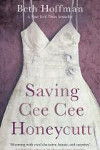
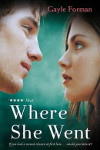
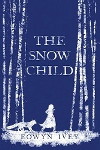
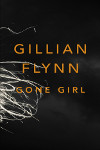
Finally, as there are 70 books here in total I’ve chosen to include covers for the absolute, in my opinion, cream of the crop for each year.
2010

- Ally Condie: Matched
- Asko Sahlberg: The Brothers (English translation: Finnish)
- Beth Hoffman: Saving CeeCee Honeycutt
- Catherine Ryan Hyde: Second Hand Heart
2011

- Elle Newmark: The Sandalwood Tree
- Erin Morgenstern: The Night Circus
- Gayle Forman: Where She Went
- J.B.: Zor
- Lauren Oliver: Delirium
- Louise Douglas: The Secrets Between Us
2012



- Ayelet Gundar-Goshen: One Night, Markovitch (English translation: Hebrew)
- Cheryl Rainfield: Parallel Visions
- Eowyn Ivey: The Snow Child
- Gillian Flynn: Gone Girl
- J K Rowling: The Casual Vacancy
- J R Crook: Sleeping Patterns
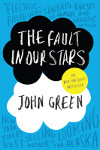
- John Green: The Fault In Our Stars
- Kate Forsyth: Bitter Greens
- Laura Navarre: By Royal Command
- Rainbow Rowell: Eleanor & Park
- Roelof Bakker (ed.): Still
- Sadie Jones: The Uninvited Guests
- Shannon Stacey: All He Ever Desired
- Shannon Stacey: All He Ever Needed
- Zadie Smith: NW
2013


- Adelle Waldman: The Love Affairs Of Nathaniel P
- Becky Aikman: Saturday Night Widows
- Chimamanda Ngozi Adichie: Americanah
- Elizabeth Chadwick: The Summer Queen
- Elizabeth Fremantle: Queen’s Gambit
- Helen Wecker: The Golem And The Jinni
- John Elder Robison: Raising Cubby
- Kate Forsyth: The Wild Girl
- Martin Wagner: Deutschland
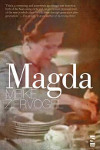
- Meike Ziervogel: Magda
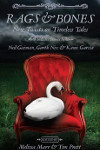
- Melissa Marr & Tim Pratt (ed.): Rags & Bones
- Pavarti K Tyler: White Chalk
- Taylor Stevens: The Doll
2014


- Anna Hope: Wake
- E Lockhart: We Were Liars
- James Rhodes: Instrumental
- Johanna Lane: Black Lake
- Meike Ziervogel: Clara’s Daughter
2015
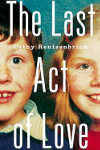


- Cathy Rentzenbrink: The Last Act Of Love
- Claire Watts: How Do You Say Gooseberry In French?
- Meike Ziervogel: Kauthar
- Nicola Cornick: House Of Shadows
- Patrick Gale: A Place Called Winter
- Sara Taylor: The Shore
- Sarah Howe: Loop Of Jade
2016
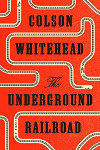


- Colson Whitehead: The Underground Railroad
- Dan Richards: Climbing Days
- Keith Stuart: A Boy Made Of Blocks
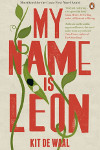
- Kit de Waal: My Name Is Leon
- Helen Oyeyemi: What Is Not Yours Is Not Yours
- Sara Taylor: The Lauras
- Tom Connolly: Men Like Air
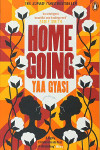
- Yaa Gyasi: Homegoing
2017


- Claire Fuller: Swimming Lessons
- Gail Honeyman: Eleanor Oliphant Is Completely Fine
- Nicholas Royle: An English Guide To Birdwatching
- Orlando Ortega-Medina: Jerusalem Ablaze
- Phillip Lewis: The Barrowfields
- Sofie Laguna: The Choke
- Weike Wang: Chemistry
2018

2019

- Julia Armfield: Salt Slow
- Samantha Sotto: A Dream Of Trees
- Seishi Yokomizo: The Honjin Murders (English translation: Japanese)
What have been your favourites these last years?
Today’s podcast
If you can’t view the media player below or to see all the details and transcript, I’ve made a blog page here.
Charlie and Phillip Lewis (The Barrowfields) discuss planning out fictional houses, the detail and beauty of classical music, books about books, and how real life in all its ups and downs makes its mark on your work.
The podcast is also available on iTunes and Spotify.
The 2019 Young Writer Of The Year Award Winner
Posted 6th December 2019
Category: Miscellaneous Genres: N/A
Comments Off on The 2019 Young Writer Of The Year Award Winner

The Young Writer of the Year Award 2019 was won yesterday evening by Raymond Antrobus for his poetry collection, The Perseverance. I was unfortunately unable to get there this year but I have details to share; it is fab news, a well deserved win. The poet has also won this year’s Ted Hughes Prize, the Rathbones Folio Prize, and a Somerset Maugham Award; he’s been shortlisted for many others. In terms of Young Writer, he joins Sarah Howe, Max Porter, Sally Rooney, and Adam Weymouth in the list of winners since the prize was relaunched.
Kate Clanchy, one of the five judges said:
“…We wanted to find a writer who both speaks for now and who we were confident would continue to produce valuable, central work. Raymond Antrobus’ The Perseverance draws together the worlds of performance and page poetry and speaks for his Jamaican British heritage and his d/Deaf communities in a way that is completely contemporary; but it was the humanity of the book, its tempered kindness, and its commitment not just to recognising difference but to the difficult act of forgiveness that made us confident we had
found a winner for this extraordinary year.”
The poet was six when his deafness was discovered; previously it had been thought he had learning difficulties. He worked in different jobs – removals, gyms, swimming pools, security – before becoming a teacher. He used some of the winning money from the Rathbones Folio Prize to mentor a group of deaf children at his old school, Blanche Nevile School for Deaf Children, and for groups of students from both Blanche Nevile and Oak Lodge Deaf School, where his former headteacher now works, to go on poetry, theatre and literature trips throughout the year.
This year all the shortlisted authors will receive a year’s membership to the London Library, where the award ceremony was held. The three other shortlisted authors were Julia Armfield (Salt Slow), Yara Rodrigues Fowler (Stubborn Archivist, and Kim Sherwood (Testament).
The photo of Raymond Antrobus is by Caleb Femi.


