




The Rathbones Folio Prize 2019 Shortlist
Posted 5th April 2019
Category: Events Genres: N/A
Comments Off on The Rathbones Folio Prize 2019 Shortlist
Yesterday I attended the shortlist announcement for this year’s Rathbones Folio Prize. It was great to see Annabel of Annabookbel and Clare of A Little Blog Of Books; we had a good natter about our thoughts so far and of course books in general. The setting was wonderful, a room with a view across the City. As the time came for the announcement we gathered towards the microphone.
Introducing the announcement, Andrew Kidd, co-founder, said:
“The 2019 Rathbones Folio Prize judges, themselves all writers of great renown, have tackled their brief – to identify the single best work of literature published in the English language last year – with amazing energy and flair. The eight, brilliant books now in the running for that distinction cut across all borders and genre, and are a testament to how writers are also the most astute and generous of readers.”
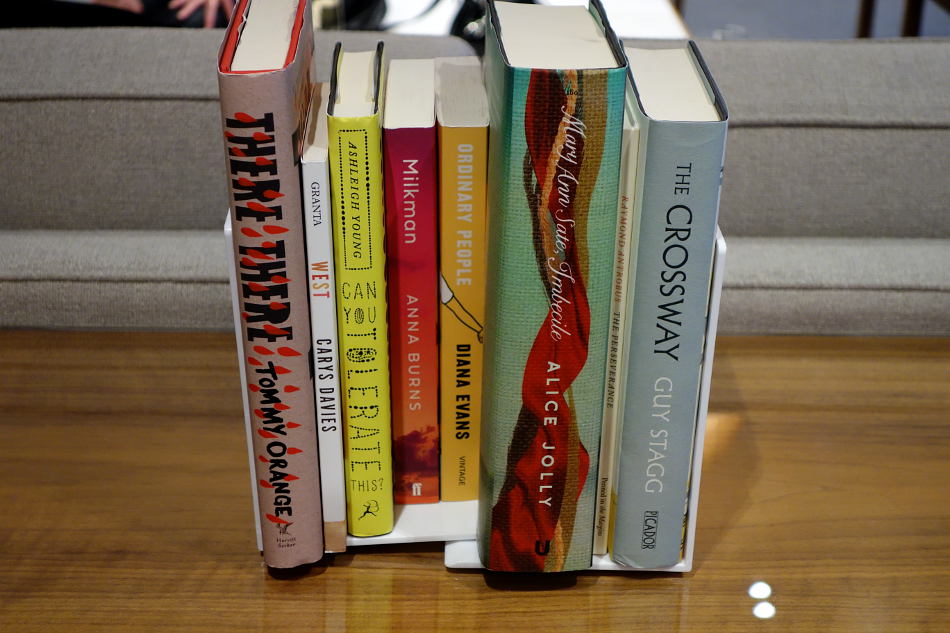
This year’s judges are writers Kate Clanchy (chair), Chloe Aridjis, and Owen Sheers. They chose the following eight books from a longlist of 20:
Ashleigh Young: Can You Tolerate This? (Bloomsbury)
Guy Stagg: The Crossway (Picador)
Alice Jolly: Mary Ann Sate, Imbecile (Unbound)
Anna Burns: Milkman (Faber & Faber)
Diana Evans: Ordinary People (Chatto & Windus)
Raymond Antrobus: The Perseverance (Penned In The Margins)
Tommy Orange: There There (Harvill Secker)
Carys Davis: West (Granta)
Established in 2013 and sponsored by Rathbone Investment Management, the Prize is open to writers from around the world who write in English. It is open to all types of books – the longlist included a collection of short stories, and the shortlist includes essays (Young), travel writing (Stagg), and poetry (Antrobus). Last year’s winner was Richard Lloyd Parry for Ghosts Of The Tsunami.
The winner of the £30,000 prize will be announced on 20th May at the British Library.
Nine Years
Posted 3rd April 2019
Category: The Worm Hole Genres: N/A
6 Comments
Tomorrow The Worm Hole will be nine years old. It’s been a strange year, a lot of difference, but full of good things. Whilst I haven’t been able to take on many review books due to uncertainty over deadlines (that’s recently started changing again) I’ve been able to spend more time on the books I already own as well as delve into classics in a more intentional manner. The necessity of posting less, due to various life changes but also to a major block (I got through eight years before having one so I guess it’s not so bad), made me think more about the content I did post. My plan for the next year is to find my way back to my schedule.
I thank you all for your support and for sticking with me when I haven’t been able to update.
Stats
Current post count: 1,208
Current review count: 465
Number of posts in the last year: 95
Number of reviews in the last year: 32
Most read post of all time thus far: The Ending Of The Awakening (7,606)
Most read post of the last year: (same as above; 3,671)
March 2019 Reading Round Up
Posted 1st April 2019
Category: Round-Ups Genres: N/A
2 Comments
March was pretty good: I didn’t finish many books but I’ve been reading a fair amount. I started the month with an easy re-read and that really helped; reading something you already know meaning less things to keep in mind and work out and as speed is something I struggle with it was very beneficial.
All books are works of fiction.
The Books

D H Lawrence: Lady Chatterley’s Lover – Unhappy with her life and marriage, an upper class Lady begins an affair with the estate gamekeeper as English social structures start to change. As full of sex as commonly believed, but also about the affects of industry; lengthy chapters and philosophising make this difficult but it’s a good read in terms of its place in the literary world.

L M Montgomery: The Blue Castle – A woman still living at home, stifled by her dysfunctional, critical, relatives, abandons all to live the way she wants following a sobering diagnosis. Fantastic.

Sofie Laguna: The Choke – A young girl from a bad background struggles to live her life despite her inability to understand what’s going on around her. A brilliant look at the cycle of abuse.
This was a high-quality month: The Blue Castle was obviously known, but I was pleasantly surprised just how much I enjoyed them – The Choke presented itself as interesting but is a lot better than it looks, and Lady Chatterley’s Lover had more to recommend it than I’d thought it would. I’d probably say the Montgomery still wins, but that’s partly because I’ve history with it; the Laguna deals with the extreme side of the same ballpark subject, so to speak, and is exceptional in its handling of it.
Quotation Report
Lawrence, on the changing nature of England:
“I consider this is really the heart of England,” said Clifford to Connie, as he sat there in the dim February sunshine.
“Do you?” she said, seating herself in her blue knitted dress, on a stump by the path.
“I do! This is the old England, the heart of it; and I intend to keep it intact.”
“Oh yes!” said Connie. But, as she said it she heard the eleven-o’clock hooters at Stacks Gate colliery. Clifford was too used to the sound to notice.
I’m currently almost half-way through Belinda and recently started The Death Of Baseball; both are over 400 pages so I knew I’d probably not finish them before April (Belinda is tough going) but I plan to chip away at the page count of both over the next couple of weeks.
What’s a recent favourite book of yours?
Classics Referencing Other Works (And The Problem With Dated Books)
Posted 28th March 2019
Category: Chit-Chat Genres: N/A
Comments Off on Classics Referencing Other Works (And The Problem With Dated Books)
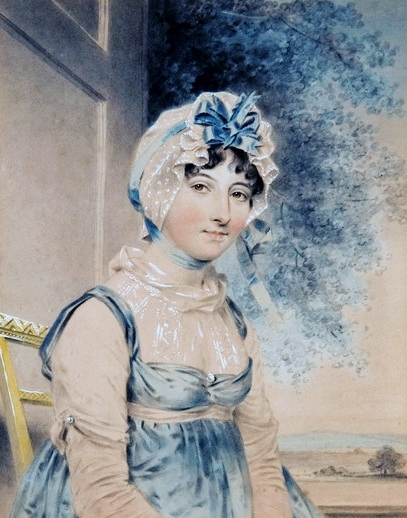
This month has brought with it the constant urge to read the book(s) that inspired the book(s). Last year I read Charlotte Lennox’s The Female Quixote first and foremost because the author was a Charlotte but in the time between deciding I would read it and the moment I started it, I discovered the connection to Jane Austen. If it wasn’t for the fact that the favourite novel of Lennox’s bookish heroine is 13,000 pages long, I would likely have moved on to it. But as it is, and as the other referenced books weren’t so memorable, I began and ended with Lennox’s work.
“I am no novel-reader – I seldom look into novels – Do not imagine that I often read novels – It is really very well for a novel.” Such is the common cant.
“And what are you reading, Miss-?”
“Oh! It is only a novel” replies the young lady, while she lays down her book with affected indifference, or momentary shame. “It is only Cecilia, or Camilla, or Belinda”; or, in short, only some work in which the greatest powers of the mind are displayed, in which the most thorough knowledge of human nature, the happiest delineation of its varieties, the liveliest effusions of wit and humour, are conveyed to the world in the best-chosen language. (Northanger Abbey, chapter 5)
Presently I’m reading Maria Edgeworth’s Belinda, mostly due to the above reference to it in Austen’s work; I am effectively now on my second read of a book that Austen was inspired by when writing Northanger Abbey. And through Belinda, as well as, if I recall correctly, the Oxford’s World Classics edition of Charlotte Brontë’s letters, I’ve been introduced to Oliver Goldsmith’s The Vicar Of Wakefield, which was apparently very famous in its day (less so now). I’d like to read that, too.
I have the exact problem I spied when I originally thought of reading books referenced in other books – I don’t know where I should stop. ‘Should’ is not quite right – I can read what I want, of course; it’s getting the right balance between choosing what you reading with a thought to time limits and increasing your literary knowledge in the way you’d like to. I’m personally yet to work out what is right for me; I wonder whether my interest in reading secondary sources will help or hinder. One thing I do know: considering the Goldsmith is a new addition to my list I may well not get to it, but if I do (it is apparently a riot) I’m very much hoping Goldsmith does not reference anyone himself.
Of course all this contextual reading – if at this point it can be called so – has taught me something I wasn’t aware of: the sheer number of past authors who haven’t worried about the longevity of their books. We talk nowadays of authors dating their books, putting in references to current culture that will mean they’ll likely be difficult to understand within a few years, but authors have been doing this since the early days of novels. I wonder if perhaps, with the fewer number of publications and the way it’s likely that authors were far closer to each other for the same reason, the idea of referencing wasn’t something to analyse prior to use. Definitely, if we look at works referenced, there was a strong element of trying to please those they admired (when the references were contemporary) and helping to form in-jokes that readers would understand (when references were a little older). This is where footnotes are of value; I’ve changed my mind on footnotes in books. I saw the value particularly when I checked a second, noted, edition of a book I was reading to find out who a referenced person was and found there was no entry for them.
There is a difference between then and now, however. References to popular books of yore are easy to look up, at least in the age of the Internet, and there were fewer books to start with. Nowadays there are many and the references to culture are more often digital, things that will likely have a short shelf life. The author most referenced in the classics I’m reading is Frances Burney, who was popular for a great many years, so much so that even if her books weren’t read today it’d be easy enough to find out about her. And that she wrote books is an easy concept to understand. I wonder if Twitter, which requires understanding of the Internet, will be as easy to understand in centuries to come.
Social media in books is the likely-to-be-dated-soon element I always note because of Olivia Sudjic’s Sympathy, which I’ve heard a lot about and would like to read at some point. I know that it deals with familiarity and obsession with famous people, and whilst these themes are longterm, I wonder how understanding and empathy in a reader will change when social media is long gone.
The above said, for all our worries about dating today’s books, it has been going on for centuries. And what we think usual today may not be usual tomorrow; but we think about what is going into a book and how the future may consider it. I think it’s fair to say that authors today know well how future-proof their work will be. Reading older books, one gets the sense that that wasn’t often considered.
What is your opinion on books that include today’s technology?
Désirée’s Baby: An Alternate Ending?
Posted 26th March 2019
Category: Further Thoughts Genres: N/A
Comments Off on Désirée’s Baby: An Alternate Ending?
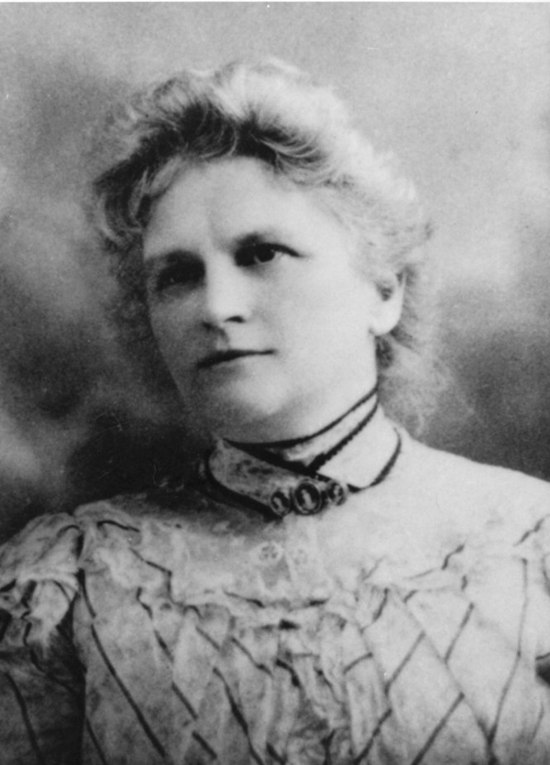
I’ve noticed this question coming up a lot lately in my site statistics, and it strikes me in the same way as an alternate ending for Edna’s story; I’m going to address it.
In sum, it would be difficult to say that there could be an alternative ending without losing what Chopin is saying. If Désirée’s Baby ended positively, there wouldn’t be much of a story, just a small study about race; it wouldn’t have much of a place in literary studies today.
But, if we do muse on the idea that there could be an alternative ending, what do we suggest? First and foremost would be that Désirée and her baby would not die. For that to happen, Désirée must not be heartbroken and in despair.
For that to happen, Armand would need to have a different personality. He would have to not be against the idea of a mixed-race wife, or he would have to be aware of his heritage early on. (There is an article by Margaret D Bauer that suggests Armand knew about his heritage all along but it is not available online. The article’s called ‘Armand Aubigny, Still Passing after All These Years: The Narrative Voice and Historical Context Of “Désirée’s Baby”‘; it’s included in Critical Essays On Kate Chopin, edited by Alice Hall Petry. It also appears to be in Race And Culture In New Orleans Stories, edited by James Nagal.)
The thing is, if Armand was not against the idea of a mixed-race wife and subsequent child, he might not have been in a position to marry Désirée. If his relations with La Blanche are anything to go by, he might, in such a situation, have married another. This would completely change his character: it’s likely that in the story as it is, he’s sleeping with La Blanche because he can as her ‘owner’. The quadroon mentioned in the story, La Blanche’s child, is quite possibly his.
And if Armand knew about his heritage, again, his character might well be different.
There is another possibility for an alternate ending: Désirée could have left Armand and gone home. Perhaps others in her situation would have. Certainly Valmondé wanted her to return. If she did, Chopin’s point would still remain but it wouldn’t be nearly as strong as it is in the actual tale – Armand would still be ‘able’ to burn the affects and find the letter, but the story would be about racial issues leading solely to heartbreak instead of heartbreak with no way to return. In Chopin’s ending, Désirée’s choice is symbolic; she shows how awful racism is.
If you’ve read the story, what do you think about a different ending?


