




Little Women: Why Is Meg’s First Kiss Given To Marmee?
Posted 11th December 2019
Category: Further Thoughts Genres: N/A
Comments Off on Little Women: Why Is Meg’s First Kiss Given To Marmee?

Screen shot from Little Women, copyright © 2017 BBC.
It wasn’t at all the thing, I’m afraid, but the minute she was fairly married, Meg cried, “The first kiss for Marmee!” and turning, gave it with her heart on her lips. During the next fifteen minutes she looked more like a rose than ever, for everyone availed themselves of their privileges to the fullest extent, from Mr. Laurence to old Hannah, who, adorned with a headdress fearfully and wonderfully made, fell upon her in the hall, crying with a sob and a chuckle, “Bless you, deary, a hundred times! The cake ain’t hurt a mite, and everything looks lovely.” (Alcott, Chapter 25)
This scene in Little Women Part Two (Good Wives) wherein Meg marries John is one that balances the continuation of the story – it gets you right back into it after what, at the time of publication, had been a gap of three months1 – and a new beginning – the sisters are starting to come into adulthood, and they are getting married just as Alcott’s readers wanted and Alcott half wanted (she wanted Jo to remain single).
The scene is also distinctly uncomfortable – albeit that it’s prefaced with an apology. As we can see from the extract above, after Meg and John have made their vows, Meg gives her first kiss to Marmee. How John felt about this is anyone’s guess – and whether Meg kissed him after kissing Marmee we’ll never know.
It is all contained in one sentence, a very brief interlude. Likely readers accepted it – Alcott’s apology tries to mitigate any criticism before the fact. But regardless, the scene is… icky, particularly as Meg doesn’t just kiss Marmee but ‘gave it with her heart on her lips’, rather as she ought to be kissing John. An act that signals the confirmation and the beginning of a romantic union is effectively changed, pushed aside by one of the two people it affects the most.
So why does it happen? There are a few book-related and Alcott-related reasons to consider. Looking at the novel first, at both parts in their entirety, we see that for all four sisters – Meg, Jo, Beth, and Amy – Marmee comes first. This is evident from the first scenes, wherein Marmee returns home to a great reception – the sisters have been thinking about how they will spend their money and decide to buy Christmas presents for their mother. When she arrives home and there’s a letter from their father – he’s a member of the clergy during the American Civil War – they all gather around her in positions of affection to hear her read it. It’s incredibly sweet, a sign of a loving family, and in many ways that’s ‘just’ what the book is about. It’s also, perhaps, influenced by the absence of the father, how it has affected everyone and pulled them closer together. But one thing it definitely is is a sign of the domesticity to come.
Looking at the wedding, Marmee coming first for the sisters is evidenced by the first kiss. Unfortunately for John, he’s a bit player on his wedding day. Sarah Rivas touches on the scene in her article, Defining Nineteeth-Century Womanhood: The Cult of Marmee and Little Women (2014). Rivas looks at Marmee’s influence as a whole, and points out something about Jo that we can apply to Meg’s first kiss. She discusses a passage that is included in the novel later on; Jo says, in response to Marmee telling her to wait ‘until the best lover of all’ comes along, that ‘mothers are the best lovers in the world’ (Alcott, Chapter 42). This passage comes as Jo is struggling with the idea of being in a relationship with Laurie. Jo’s response, says Rivas, indicates that ‘though Jo is interested in a romantic relationship, her interest does not supersede her adoration and reverence for her mother’ (Rivas, p.55). It’s certainly a response that’s edging towards being irrelevant to the subject at hand – out of context, one might consider Jo to be much younger than she really is.
We can presume that Meg feels the same way as Jo, this ‘adoration and reverence’ that Rivas notes. Meg’s action, kissing Marmee instead of her husband, is an action to match Jo’s words. As Rivas says, the kiss ‘illustrates only one of several incidents in the text in which Marmee is equated with a male lover’ (ibid.). Jo’s response to her mother certainly suggests the value of Rivas’ statement, and the descriptions and dialogues of and about Marmee take this further.
Given what we know about the book in relation to the author – both parts of the novel are largely autobiographical; Jo is Alcott and the sisters her own – should we assume that the happily single Alcott’s rebellion against a marriage for her fictional counterpart plays a role in Meg’s action? It’s possible, but if so it is in terms of the overall context rather than specific to Meg. If we look at Jo as Alcott then she could have extended her thoughts towards Meg but it’s unlikely – Meg is based on Anna Alcott, who likewise married a man called John, and thus the writer was likely happy to include the wedding in her book.
But even if the rebellion against marriage doesn’t play a role in Meg’s first kiss, Alcott’s family life in general does. Alcott was interested in including a lot of domesticity in her book, as is apparent in the text, and it matched her world. She had a reverence for her family. This is where all the love for Marmee comes into the Alcott-related reason for the kiss. A look at Alcott’s diaries, collected by Ednah Cheney, shows just how well the fiction matches the reality, extremely positive language and even the occasional use of ‘kiss’ in entries and letters about and to family.
Affection was important, and no more to the rest of the family than to Alcott. There are examples aplenty so we will stick to those that include kisses. Here is one from 1843, when Alcott was ten and the family were living at Fruitlands, a fairly short-lived attempt at a utopian community that was formed by the Transcendentalist society they were members of:
October 8th.– When I woke up, the first thought I got was, “It’s Mother’s birthday: I must be very good.” I ran and wished her a happy birthday, and gave her my kiss. After breakfast we gave her our presents. I had a moss cross and a piece of poetry for her (Cheney, 1898, p.37).
Two years later she wrote a poem for her mother. We have this as well as the text of the letter her mother sent in return:
Dearest Mother,-I have tried to be more contented, and I think I have been more so. I have been thinking about my little room, which I suppose I never shall have. I should want to be there about all the time, and I should go there and sing and think.
But I’ll be contented
With what I have got;
Of folly repented,
Then sweet is my lot.From your trying daughter,
Louy. (ibid., p.46)
My dear Louisa,-Your note gave me so much delight that I cannot close my eyes without first thanking you, dear, for making me so happy, and blessing God who gave you this tender love for your mother.
I have observed all day your patience with baby, your obedience to me, and your kindness to all.
Go on “trying,” my child; God will give you strength and courage, and help you fill each day with words and deeds of love. I shall lay this on your pillow, put a warm kiss on your lips, and say a little prayer over you in your sleep.
Mother (ibid.).
Considering Alcott’s age here, we can only use these extracts to help illustrate the sense of family and the values of those Alcott was growing up amongst rather than as an absolute reason for Meg’s action, but that in itself is very telling. Most telling, however, and most useful in our case, is the following extract from Alcott’s journal, written in May 1860 when the writer was twenty-eight. Interestingly, it’s titled ‘Meg’s wedding’:
The dear girl was married on the 23d, the same day as Mother’s wedding. A lovely day; the house full of sunshine, flowers, friends, and happiness. Uncle S. J. May married them, with no fuss, but much love; and we all stood round her. She in her silver-gray silk, with lilies of the valley (John’s flower) in her bosom and hair. We in gray thin stuff and roses,–sackcloth, I called it, and ashes of roses; for I mourn the loss of my Nan, and am not comforted. We have had a little feast, sent by good Mrs. Judge Shaw; then the old 122 folks danced round the bridal pair on the lawn in the German fashion, making a pretty picture to remember, under our Revolutionary elm.
Then, with tears and kisses, our dear girl, in her little white bonnet, went happily away with her good John; and we ended our first wedding. Mr. Emerson kissed her; and I thought that honor would make even matrimony endurable, for he is the god of my idolatry, and has been for years (ibid. pp.121-122).
From this we can see that as much as Alcott may have been happy for her sister on the occasion of her marriage, she was also filled with a sense of loss – her sister was leaving the family to set up home with her husband. There is no mention of the first kiss, but there is the mention of the fact that Anna was getting married on her parents’ wedding anniversary. That this is mentioned is a further sign of the Alcott family life and values.
The kiss that is mentioned is that given to Anna by Ralph Waldo Emerson, who was a close friend of the family. But it is not the fact of the kiss itself that is poignant here, but the remainder of what Alcott says about him, that he is ‘the god of my idolatry’. Alcott is comforted by Emerson’s gesture to her sister; she looks at the situation with something that resembles a crush. Alcott doesn’t want to marry, but if being a bride meant being kissed by Emerson – not as the bridegroom, though her words edge towards that idea – she might well be happy. It says a lot about how she felt about him.
Alcott didn’t mince her words – she really did see Emerson in a particularly brilliant light. As editor of Alcott’s journals and letters, Ednah Cheney adds her own commentary to the collection. Here is a paragraph from a letter Alcott wrote to a friend followed by a paragraph from Cheney’s commentary on it. The letter was written later in Alcott’s life about a time during her fifteenth year:
Not till many years later did I tell my Goethe of this early romance and the part he played in it. He was much amused, and begged for his letters, kindly saying he felt honored to be so worshipped. The letters were burnt long ago, but Emerson remained my “Master” while he lived, doing more for me,–as for many another,–than he knew, by the simple beauty of his life, the truth and wisdom of his books, the example of a great, good man, untempted and unspoiled by the world which he made better while in it, and left richer and nobler when he went.
[…]
Miss Alcott was safe in choosing her idol. Worship of Emerson could only refine and elevate her thoughts, and her intimate acquaintance with his beautiful home chastened her idolatry into pure reverent friendship which never failed her. She kept her worship to herself, and never sent him the letters in which she poured out the longings and raptures which filled her girlish heart (ibid. p.345).
This ‘worship’ of Emerson, particularly when combined with the journal entry about Anna’s marriage, is something that brings us back to Rivas’ concept of the cult of Marmee, and the opinion, which Rivas includes, of the critics Gregory K Eiselein and Anne Phillips who call Marmee an ‘omnipotent presence’ (Rivas, p.54). As well as the statement about Marmee being equated to a male lover, there is another from Rivas which is particularly relevant here: ‘throughout the novel, Meg, Jo, Beth, and Amy do not seem to question Marmee’s goodness, wisdom, or absolute authority’ (ibid., p.55).
It is in this way that Alcott’s worship of Emerson and her love for her mother intersect: her idol kissed her sister after her wedding, and it had a great impact on the way she, Alcott, saw the concept of marriage – or, at least, a wedding – if only for a moment. In her novel, closely following reality, Alcott replaces her idol with Marmee, who receives the adoration and reverence from Meg that we can see Alcott feeling for Emerson, an emotion only heightened by the way she’s included her mother, too. This doesn’t mean, necessarily, that Alcott actively replaced Emerson with Marmee, but the same emotions hold forth in the fiction as they did in reality. And if Anna felt similarly about her mother as did her sister, then perhaps this is why Alcott felt comfortable writing the wedding scene in her novel in the way she so chose.
It is incredibly interesting that Alcott prefaces her scene with a note about the inappropriate nature of what Meg is about to do; it suggests that she knew it might not be well-received but that she wanted to do it regardless, and with so much passion. Perhaps Alcott knew her family might read it and wonder why she’d written it, or perhaps it really did happen with Anna and thus was included. Whatever the reason, it shows that she realised it wasn’t the best idea in the book, and that the idea went too far away from what she knew. Perhaps it is where the real domesticity meets the perfect, utopian domesticity that was a part of her world.
Footnotes
1 Part one was published in September 1868 and part two three months later.
Book References
Alcott, Louisa May (1869) Good Wives, Roberts Brothers, Boston
Cheney, Ednah D (ed.) (1898) Louisa May Alcott: Her Life, Letters, And Journals, Roberts Brothers, Boston
Article References
Rivas, Sarah (2014) Defining Nineteeth-Century Womanhood – The Cult of Marmee and Little Women, Scientia et Humanitas, Vol 4, pp. 53-64
My Best Of The Decade Round Up For 2010-2019 + Podcast
Posted 9th December 2019
Category: Round-Ups Genres: N/A
4 Comments
For today’s podcast, see the bottom of this post. A link to the transcript is included.
Many people are making lists like these and it looks like fun so I’m joining in (if you’re making one, too, do link to it below). I’m doing it now rather than any later because I’ve only a half-plan to read one more book from the decade before the year is out; my reading until January is going to be re-reads and a couple of 2020 publications.
I’m including my 5 star reads from each year and choosing ‘best of’ books from there, and, particularly because I don’t read all that many books in the year they are published, I’m including books no matter which year I read them in. Any future books read from this decade will not be included here; I’m not going to leave this post open to be constantly updated. Some years obviously have more competition than others given length of time since and review copies; the list is a reflection of my time blogging, particularly as I started blogging a couple of months into the decade.
Non-fiction and poetry have been mixed in with the fiction. I’ve used the very first publication date for all books except translations, for which I’ve used the first English translation publication date.
Finally, as there are 70 books here in total I’ve chosen to include covers for the absolute, in my opinion, cream of the crop for each year.
2010

- Ally Condie: Matched
- Asko Sahlberg: The Brothers (English translation: Finnish)
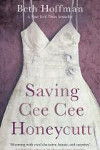
- Beth Hoffman: Saving CeeCee Honeycutt
- Catherine Ryan Hyde: Second Hand Heart
2011

- Elle Newmark: The Sandalwood Tree
- Erin Morgenstern: The Night Circus
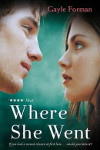
- Gayle Forman: Where She Went
- J.B.: Zor
- Lauren Oliver: Delirium
- Louise Douglas: The Secrets Between Us
2012






- Ayelet Gundar-Goshen: One Night, Markovitch (English translation: Hebrew)
- Cheryl Rainfield: Parallel Visions
- Eowyn Ivey: The Snow Child
- Gillian Flynn: Gone Girl
- J K Rowling: The Casual Vacancy
- J R Crook: Sleeping Patterns
- John Green: The Fault In Our Stars
- Kate Forsyth: Bitter Greens
- Laura Navarre: By Royal Command
- Rainbow Rowell: Eleanor & Park
- Roelof Bakker (ed.): Still
- Sadie Jones: The Uninvited Guests
- Shannon Stacey: All He Ever Desired
- Shannon Stacey: All He Ever Needed
- Zadie Smith: NW
2013



- Adelle Waldman: The Love Affairs Of Nathaniel P
- Becky Aikman: Saturday Night Widows
- Chimamanda Ngozi Adichie: Americanah
- Elizabeth Chadwick: The Summer Queen
- Elizabeth Fremantle: Queen’s Gambit
- Helen Wecker: The Golem And The Jinni
- John Elder Robison: Raising Cubby
- Kate Forsyth: The Wild Girl
- Martin Wagner: Deutschland
- Meike Ziervogel: Magda
- Melissa Marr & Tim Pratt (ed.): Rags & Bones
- Pavarti K Tyler: White Chalk
- Taylor Stevens: The Doll
2014


- Anna Hope: Wake
- E Lockhart: We Were Liars
- James Rhodes: Instrumental
- Johanna Lane: Black Lake
- Meike Ziervogel: Clara’s Daughter
2015


- Cathy Rentzenbrink: The Last Act Of Love
- Claire Watts: How Do You Say Gooseberry In French?
- Meike Ziervogel: Kauthar
- Nicola Cornick: House Of Shadows
- Patrick Gale: A Place Called Winter
- Sara Taylor: The Shore
- Sarah Howe: Loop Of Jade
2016



- Colson Whitehead: The Underground Railroad
- Dan Richards: Climbing Days
- Keith Stuart: A Boy Made Of Blocks
- Kit de Waal: My Name Is Leon
- Helen Oyeyemi: What Is Not Yours Is Not Yours
- Sara Taylor: The Lauras
- Tom Connolly: Men Like Air
- Yaa Gyasi: Homegoing
2017


- Claire Fuller: Swimming Lessons
- Gail Honeyman: Eleanor Oliphant Is Completely Fine
- Nicholas Royle: An English Guide To Birdwatching
- Orlando Ortega-Medina: Jerusalem Ablaze
- Phillip Lewis: The Barrowfields
- Sofie Laguna: The Choke
- Weike Wang: Chemistry
2018

2019

- Julia Armfield: Salt Slow
- Samantha Sotto: A Dream Of Trees
- Seishi Yokomizo: The Honjin Murders (English translation: Japanese)
What have been your favourites these last years?
Today’s podcast
If you can’t view the media player below or to see all the details and transcript, I’ve made a blog page here.
Charlie and Phillip Lewis (The Barrowfields) discuss planning out fictional houses, the detail and beauty of classical music, books about books, and how real life in all its ups and downs makes its mark on your work.
The podcast is also available on iTunes and Spotify.
The 2019 Young Writer Of The Year Award Winner
Posted 6th December 2019
Category: Miscellaneous Genres: N/A
Comments Off on The 2019 Young Writer Of The Year Award Winner

The Young Writer of the Year Award 2019 was won yesterday evening by Raymond Antrobus for his poetry collection, The Perseverance. I was unfortunately unable to get there this year but I have details to share; it is fab news, a well deserved win. The poet has also won this year’s Ted Hughes Prize, the Rathbones Folio Prize, and a Somerset Maugham Award; he’s been shortlisted for many others. In terms of Young Writer, he joins Sarah Howe, Max Porter, Sally Rooney, and Adam Weymouth in the list of winners since the prize was relaunched.
Kate Clanchy, one of the five judges said:
“…We wanted to find a writer who both speaks for now and who we were confident would continue to produce valuable, central work. Raymond Antrobus’ The Perseverance draws together the worlds of performance and page poetry and speaks for his Jamaican British heritage and his d/Deaf communities in a way that is completely contemporary; but it was the humanity of the book, its tempered kindness, and its commitment not just to recognising difference but to the difficult act of forgiveness that made us confident we had
found a winner for this extraordinary year.”
The poet was six when his deafness was discovered; previously it had been thought he had learning difficulties. He worked in different jobs – removals, gyms, swimming pools, security – before becoming a teacher. He used some of the winning money from the Rathbones Folio Prize to mentor a group of deaf children at his old school, Blanche Nevile School for Deaf Children, and for groups of students from both Blanche Nevile and Oak Lodge Deaf School, where his former headteacher now works, to go on poetry, theatre and literature trips throughout the year.
This year all the shortlisted authors will receive a year’s membership to the London Library, where the award ceremony was held. The three other shortlisted authors were Julia Armfield (Salt Slow), Yara Rodrigues Fowler (Stubborn Archivist, and Kim Sherwood (Testament).
The photo of Raymond Antrobus is by Caleb Femi.
Nancy Bilyeau – The Blue
Posted 4th December 2019
Category: Reviews Genres: 2010s, Crime, Historical, Political, Romance, Thriller
Comments Off on Nancy Bilyeau – The Blue

Colour shades and shady practices.
Publisher: Endeavour Quill
Pages: 434
Type: Fiction
Age: Adult
ISBN: 978-1-911-44562-3
First Published: 3rd December 2018
Date Reviewed: 3rd December 2019
Rating: 4/5
1700s London – Huguenot Genevieve Planché wants to train to be an artist, but that is not the done thing for women; she steals her grandfather’s invitation to an event hosted by William Hogarth, hoping to gain his support. Instead she meets Sir Gabriel Courtney, a man who seems open to her ideas; the next day he arrives at her home to talk to her and her grandfather and later presents her with a proposition – if she goes to work at Derby Porcelain (as her grandfather wishes) and spies for him to find out the formula of the latest shade of blue the factory are working on (which isn’t her grandfather’s plan) he will see that she gets to Venice where she’ll find people willing to train her in painting. It’s not the best thing Genevieve’s ever heard – she doesn’t want to work on porcelain full stop – but the promise for the future proves too irresistible.
The Blue is a thriller that looks at the extent people might go to in history in order to be ahead of the rest of the game. It also gives time to the Huguenot refugees (as Genevieve says, ‘refugee’ was a word coined in this period) and the political situation between England and France in the time of King George II/Louis XV.
Bilyeau’s attention to research, first highlighted in her Joanna Stafford trilogy, is alive and well in The Blue. The amount undertaken as well as the careful balancing of fact and fiction when fiction is needed for the story, is evident on the majority of pages. The use is careful too, with the detailing abundant yet never straying into info-dumping territory; when the characters discuss contemporary industry, it is always necessary to the story. You’ll learn a good amount about early western porcelain and the creative industry in general. (You just have to keep in mind the areas that are fiction – easily discovered thanks to the author note. Genevieve’s story itself is fictional but it’s woven around many different factual elements to the extent that the majority is true.)
Genevieve is a fair character for the fictional ride – she’s not always ‘strong’ per se, but it’s with good reason (she falls in love, whilst a spy). There are anachronisms involved, mostly in terms of Genevieve’s phrasing – she is the narrator – generally limited to times when the stakes are high.
For the most part the book is fast-paced; it slows down towards the middle when Genevieve starts to like her above-board work, gets used to Derby, and starts to question her role in Sir Gabriel’s plan, but the last third is as swift as an arrow and an absolute riot for it, the truths and lies flying quickly at you as the full extent of the espionage on all sides shows itself.
As well as the main story and the industrial history, Genevieve’s experience as a Huguenot and a close descendant of those who fled from France is given time. As well as the idea of the refugee and the basic history of the Huguenots, you also see the effective cycle of experience as Genevieve corrects those who would call her French, worries about what will happen if France wins the war, supports England wholeheartedly, and so forth. Her experience, her description and thoughts on it, echo in many ways present-day debates and stories of refugees and immigration which brings a nice comparison and particular historical look at the issue.
There are quite a number of proof-reading errors in the book which do detract, but given the research and storytelling, you may find that to be less of a problem than it might have been.
The Blue looks at how something so seemingly simple can create a commotion on an international scale, and it does this not only in the context of manufacture but of many other social and political concepts and issues of the time. It’s informative, and for all its many pages it flies by.
Related Books


Speaking to Nancy Bilyeau about the Joanna Stafford trilogy, The Blue, and Dreamland (spoilers included)
Charlie Place and Nancy Bilyeau discuss the lifestyle of Dissolution-era nuns, using a website’s ‘contact me’ form to great success, there being more relics than there were items, using your family’s name in your work, and the grand amusement parks and luxury hotels of New York’s past.
If you’re unable to use the media player above, this page has various other options for listening.
November 2019 Reading Round Up
Posted 2nd December 2019
Category: Round-Ups Genres: N/A
4 Comments
November has been brilliant, full of books. I decided on the 30th to try and finish the 250-odd pages I had remaining of the book I was looking to finish next and spent the evening with it to success. I’ve also read a wider variety of books, which most likely helped.
The Books
Non-Fiction

Gabrielle Malcolm: There’s Something About Darcy – Malcolm looks at the continuing interest in Jane Austen’s Fitzwilliam Darcy, from early in its publication to the present day. This is a 50/50 book; the first half, which deals with Austen’s near contemporaries and extends just to the 1995 adaptation, is excellent, but the second half is all about fan-fiction, where books are summarised repeatedly.
Poetry
Raymond Antrobus: The Perseverance – A collection about the poet’s life as a Jamaican Brit, a person in the deaf community, and various related historical and contemporary stories. Utterly fantastic.
Fiction

Julia Armfield: Salt Slow – A collection of short stories about identity, mostly women’s, which takes concepts and realities to their extremes in order to look at them closer. A brilliant collection.
Nancy Bilyeau: The Blue – 1700s’ Hugenot descendant Genevieve is recruited by Sir Gabriel Courtenay as a spy at Derby Porcelain factory to steal for him the formula for the newest shade of blue; she has agreed because he promised to send her to Venice to train as a painter, but when she comes to know those involved and the reality starts to show itself, she has to make a few decisions. This book is chock full of research to good effect, and whilst the middle is pretty slow it’s worth it as the latter third picks up the pace considerably and the secrets and truths fly everywhere.
Phillip Lewis: The Barrowfields – Henry looks back on his childhood, his father who tried so hard to be a writer, his distant relationships with mother and sister, and his own attempts to be someone. Utterly fantastic.

Samantha Sotto: Before Ever After – Shelley’s younger-than-middle-aged husband died and a few years later a boy claiming to be his grandson turns up at her door. Brilliant story combining a mass of different genres.

Samantha Sotto: Love And Gravity – The cracks in the wall start happening in Andrea’s single digit years and although no one believes her she comes to look forward to the rare sightings of the historical boy, a budding scientist, on the other side of her wall. A great time slip/travel novel that makes use of a box of manuscripts found amongst Issac Newton’s possessions to tell its story.

Seishi Yokomizo: The Honjin Murders – A couple on their wedding night are murdered in the annex building of the family estate; a three-fingered man was seen around the place the night before and his hand prints are on the wall, but why did it happen? An excellent 1940s novella that is a lot more about the ‘why’ than the ‘who’.

Stein Riverton: The Iron Chariot – One evening, a little way away from his hotel, our narrator sees the forestry inspector leave the company of a woman the narrator admires, and a bit later the narrator hears the sound of chains rattling which a fisherman says precedes death; the next day a dead body is found. Not bad at all – quite of its time but there’s a lot to appreciate in context.
I don’t have a favourite this month – there are some 5 star reads amongst the above, all but the non-fiction are 4+, and I appreciated various things about every one. It has been a very good reading month all round.
In this last month of the year and decade I’ve a few books to get to that are yet to be started and I hope to finish up a few more; I’m not sure I’ll read as much – Christmas is almost here, after all – but it should be good.
What do you hope to get to in this last month, and what has been your favourite book of the last few weeks?


