





April 2020 Reading Round Up
Posted 1st May 2020
Category: Round-Ups Genres: N/A
5 Comments
As discussed last week, I have a number of books on the go, so it’s not surprising that I finished very little this month; beyond a small reading slump that has coincided with the onset of rain (I’d been reading mostly outside) reading a number at once means I’m in right about in the middle of a few.
In unrelated news, I watched My Fair Lady on bluray yesterday and it was like I’d never seen it before. If it’s a film you enjoy, I very much recommend the bluray – it makes the theatrical aspect far more obvious and somehow brings more clarity to the slightly ambiguous (wholly ambiguous?) ending. It was like it was released yesterday.
The Books
Non-Fiction

Dan Richards: Outpost – The author travels to various buildings and locations around the globe that are isolated, seeking to discover why they draw us, and what their various roles in creativity are. Good stuff; some of it is unexpected but that does round it off well.
Fiction

Caroline Lea: The Glass Woman – A young woman in 1600s Iceland agrees to marry the leader of another settlement so that her mother will always have money, but the man seems to hide a secret, and they say he killed his wife. This one creeps up on you – the story goes along fairly steadily for a long time, with some Brontë/Du Maurier aspects before turning into something rather spectacular; it’s a well-written, haunting, last several chapters.
No thoughts of favourites; I’m looking at reading in terms of enjoyment – did I enjoy my reading, as an interest? Yes. The variety definitely helped and my laid back attitude to it all did, too. Looking forward, I’m going to continue as I have been [pauses typing as a massive booming firework goes off and after a shock I realise it’s 8pm on a Thursday in UK lockdown], just perhaps not add any more books to it until at least one is finished…
Due to our present situation, I’d like to note that Nicola Cornick’s The Forgotten Sister (link goes to my review) was released yesterday. On 14th May, Nicholas Royle’s Mother: Memoir, will be released (he wrote An English Guide To Birdwatching – awesome literary fiction with a lot of meta content). Finally in late May, Isla Morley’s The Last Blue will be published.
What kind(s) of stories are you drawn to at the moment?
Dan Richards – Outpost
Posted 29th April 2020
Category: Reviews Genres: 2010s, Adventure, Art, Commentary, Nature, Social
Comments Off on Dan Richards – Outpost
Isolation before it was cool.
Publisher: Canongate
Pages: 295
Type: Non-Fiction
Age: Adult
ISBN: 978-1-786-89155-6
First Published: 24th April 2019
Date Reviewed: 28th April 2020
Rating: 4/5
Richards looks into the value of various isolated buildings and places – sheds, Svalbard, a Martian research centre, a Japanese temple high in the hills – seeking to find out why we are drawn to them and how they inspire creativity. The book includes elements of Richards’ previous books on art, nature, and travel, pulling the subjects together.
I’ve always been drawn to simple structures (p. 57).
The places Richards visits sometimes gel with what you might expect – a small building in the wilds of Iceland; Desolation Peak in America which Jack Kerouac visited and wrote about – but others are very much the opposite; when looking at isolation, you might not think of those places that inspire community. Chapters focused on the research centre in Utah – which Richards spends mostly on an interview (some chapters are more about his own experience, others focus on other people) – and in Svalbard, where the author is never alone, call into question our inherent need for society.
The Svalbard chapter is particularly poignant – as it shows the requirements for others (away from the tourism people need to be careful given the danger) so too does it show how society, humanity, can have a detrimental effect. As much as we may enjoy the isolation, the impact of it – the continual movement of people through it – so too does the ecosystem become impacted. Perhaps the most notable part of the book is Richards’ contemplation and further discussion with the reader of the role humanity plays in the life of the polar bears, in which he recounts the story of bears drowned in the sea as they have to go further and further out to find slabs of ice; having memorised where the slabs were, there comes a problem when they are not found. The irony in being able to witness the movement of polar bears whilst being a part of the problem is not lost on the author.
I believe the more we know about our world, the more we see, the more deeply we engage with it, understand its nature, the more likely we are to be good custodians and reverse our most selfish destructive behaviour (p.10).
Shedboatshed – the chapter about the modern artwork of the same name – will likely divide opinion; it’s certainly one of the more prominent examples of the unexpected. The art work, by Simon Starling, is covered in an effective two step process – a museum visit and an interview with the artist – marking a change in the proceedings. It’s a different travel and a wholly new concept of isolation – the piece is, both in short and literally, made up of a shed that was then dismantled and recreated as a boat, taken to the water, and then rebuilt into a shed; if you like modern art or are even just interested in the idea from afar, it’s a fascinating chapter, but nevertheless may take some getting used to. If it’s not your sort of thing, it may feel like you’ve started a different book. Whichever side you fall on, however, you will probably appreciate Richards’ motive for discussing it, as well as the various extra ideas surrounding it. (One such is the idea that the display of the piece as well as its practical use adds to its history and conversation). The spin off mid-chapter to briefly cover Roald Dahl’s writing hut also helps provide more context, however much it may seem fairly far from Shedboatshed.
The book’s language and general structure make it an easy read. Richards very much takes the reader with him, always addressing them, and the focus on a few core concepts for each location means an in-depth look at what the author deems most important and interesting to relate; you don’t always get a ‘full’ feel for everything but the attention to the overall theme means a more coherent book.
Richards’ enthusiasm for the places and the travel ensures you come away from Outpost with a fair amount of knowledge, and serviceable knowledge, too. It is in many ways – inevitably? – escapist, but the various points of poignancy in it leaves you with much to think about.
I have interviewed the author.
Related Books


Speaking to Dan Richards about Climbing Days, and Outpost (spoilers included)
Charlie and Dan Richards discuss asking to join well-known people for lunch and producing fascinating interviews for your book, travelling the less beaten paths of your mountaineering great-great aunt, finding society in isolated places, and looking ahead to how we might continue to approach humanity’s harming of nature after the benefits to scaling back have been shown by this current crisis.
If you’re unable to use the media player above, this page has various other options for listening.
Analyses Of Last Lines #1
Posted 24th April 2020
Category: Close Reading Genres: N/A
3 Comments
I’d thought about it for a while: what to do about last lines? Having started to look at first lines, as I currently do on occasion, the idea of looking also at last lines occurred to me but I didn’t know where to start. Should I go back to my first line beginnings and study the last lines of those same books? That would constitute quite an undertaking, be a very long post, and whilst I’d enjoy it, would my readers like it? Should I just start as I did the first lines, taking books that were currently in my ‘sphere’ and work from there? Or should I – this idea just in and I’m mulling it over – look at first and last lines of books concurrently?
The one thing about that last, latest, idea – it could get confusing. I was edging towards number two – starting at relative random.
But Covid’s come along and whilst I was struggling, the nice weather has arrived and it’s helped. The on-again-off-again break has done me good: I’m raring to go. And my head really likes the idea of going back to all those books, trawling through them, and comparing. So I’m going to look back at the books whose first lines I’ve covered, just not all at once.
It won’t be every book – some books were borrowed from the library and I don’t have access to them, and there are a few wherein the lines are either not stellar or (more often) too woven into the story’s context to make sense away from it. That is of course one big difference between first and last lines.
Anne Melville’s The Daughter Of Hardie (1988)
As the sun rose higher in the sky, there was nothing to suggest that 23 July 1932 was to be anything other than the most ordinary of days.

This is obviously setting up for a sequel, and it gives you an idea as to where the story might go (and, without concept, perhaps where the story has been, too). There’s a potential foreboding – or is it the complete opposite? Either way, whether read out of context or in it, it’s a good line; interestingly it’s more of a first line; it certainly works well as one.
Ben Fergusson’s The Spring Of Kasper Meier (2014)
And the ship groaned gently, rising and falling, rolling softly in the icy black water.
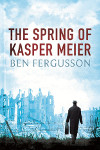
Minor interlude: this line reminded me of Fitzgerald’s “So we beat on, boats against the current, borne back ceaselessly into the past.” A comparison between Fergusson’s book and The Great Gatsby would, I feel, be of little merit; the one thing that can be said in our context is that Fitzgerald has his – or, rather, Nick’s – eyes on what has been, whereas Fergusson is potentially looking at the future. (The darkness and ‘groaning’ of Fergusson’s book is in the context of the story set in German WWII.)
Fergusson’s final line here offers both an ending and a continuation, ‘rising and falling’, and it must be said that the book is the first in a series. It offers something perhaps sinister, chilling, perhaps a bit more hopeful – a groaning ship, particularly one doing it ‘gently’ is not necessarily a bad thing. As a last line it is as gentle as the ship, it flows smoothly, and it leaves you with a potentially eerie image in mind, not being quite a completion.
Charlotte Mary Yonge’s The Heir Of Redclyffe (1853)
Still there was one who never could understand why others should think him stern and severe, and why even his own children should look up to him with love that partook of distant awe and respect, one to whom he never was otherwise than indulgent, nay, almost reverential, in the gentleness of his kindness, and that was Mary Verena Morville.
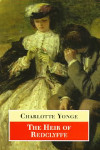
This line perhaps shows a lack of change of the person whose society confuses Mary. Or perhaps – likely, given the book’s title, this speaks of a romantic couple; a grouchy male heir who no one else understands?
In a vacuum, it’s easy to wonder at the true character of the man. Do his children love him? It seems this may be what Yonge is saying, and in this way the line, in a vacuum, can invite us to look closer.
Chigozie Obioma’s The Fishermen (2015)
I opened my eyes, cleared my throat, and started all over again.

Obioma takes us back to the beginning, be it the beginning of the book itself or a smaller story that’s being told within it. Does the way it goes back to the beginning suggest a thoughtful story?
Is the current situation difficult, those closed eyes, now open? It sounds an important situation that the character is in.
Conclusion
There is a second reason for going back – as I looked at the last lines, I inevitably compared the ‘success’, in its many literary definitions, of each book’s first and last lines and found a lot of merit in the comparison. Last lines are often more interesting than the first; whilst in many books both are good, those books where the start isn’t as strong do often have strong last lines, which is pretty fascinating. The opening of the book is where you first draw the reader in, so in a way it’s surprising. (The ending is sometimes read by potential readers – I do this sometimes – but in the strictest of senses, it shouldn’t be.) But of course by the last line you have far more reader knowledge to draw from to inform it, and tidying ends up is very important. Last lines are also more likely to be clever compared to first lines; for just one example, consider ending lines that in someway cycle back to the beginning of the book.
To me, the whole concept warranted doing what I’m going to do. I may not always compare, but the mere fact of it made me want to give the previously-used books a second innings. However, and this is a big however, this is still somewhat of an experiment as I work through the general ‘usability’ of last lines.
Does this concept work or should I stick to first lines?
Reading Life: 20th April 2020
Posted 20th April 2020
Category: Reading Life Genres: N/A
1 Comment

I have talked previously about being able to have two books on the go, and every now and then I’ll have three, which includes an ebook. With the Coronavirus causing concentration issues, I found taking on extra books to be helpful. And whilst I’ve gained more focus, I’ve still those books on the go, and I’m adding more. Although it’s not particularly sensible in terms of getting anything finished, starting a new book when I fancy has helped keep my spirits up.
I currently have… (seven)… books on the go. It’s a variety, which has been key, and I do have a small raison d’etre for each of them beyond the ‘want’.

Lillian Li: Number One Chinese Restaurant. I’ve been trying to get into this one for a while, so it is the book on this list I’m likely to finish last. I’m hoping the familial connections are better explained as the book moves on, because keeping track of who is family as opposed to friend or business associate is difficult, however I recognise that that confusion may be part of Li’s point, with the restaurant’s future and effective spin-offs centre stage.

Oliver Goldsmith: The Vicar Of Wakefield. A book that was wildly popular in its day (1766), this one is pretty funny, though at the moment the humour is all in the travel; a previously well-off family have to move elsewhere when they lose their money. The language is easy, it’s simply that I made the mistake of starting it when the news turned grim and so I haven’t followed the narrative as closely as I normally do – I may well restart it.
Caroline Lea: The Glass Woman. Lea’s book is incredibly different to her first; whereas When The Sky Fell Apart, was a devastating story of fictional residents of Jersey during the Nazi occupation, The Glass Woman is set in Iceland in the 1600s. The use of history is good; it’s very much character-driven and has few of them so it’s easy to keep a hold of even whilst there is lots of story detail. The social details are abundant. There’s a long-term woman in the attic atmosphere to the book; I’ve since gone past that part and as you’d expect, there’s a difference, but regardless the atmosphere of the Brontë novel remains and it’s incredibly interesting; 1600s Iceland is pretty different to 1800s Yorkshire but there are interesting similarities between her story of an isolated married woman (which, considering her first book, could well be based on facts) and the governess on a deserted moor.

Michael Wolff: Fire And Fury. In any other time the following would make no sense: I’m reading this for the escape. Given the presidential events of the past week, I should add that I started the book a couple of weeks ago; after finishing Dan Richards’ Outpost, and having thoughts of non-fiction at this time due to my spring-summer non-fiction reading last year, I picked it up. It’s to be a purposely slower read.

Shannon Stacey: Yours To Keep. My reasoning for this one is the good weather. It’s an enjoyable contemporary romance set in Maine and steeped in family that I first read some years ago. It’s my read for when the sun is out. I’m speeding through.

James Rebanks: The Shepherd’s Life. Bedtime reading was going well until I forgot to choose another book to follow my previous; I remembered. I’ve had Rebanks’ book sitting on my desk for a couple of years; it’s actually my Dad’s copy that I bought for him, he read it, then lent it to me. Dad said I’d like Rebanks’ book. Reviews and the general raving a few years ago said I’d like the book. I like the book. I’ve only just started but the introduction is great in itself, detailing a day at school when Rebanks was a child; a teacher waxed lyrical about the Lake District in romantic, tourist-like terms, which the pupils – born and raised there – cannot yet relate to.

Diana Evans: Ordinary People. Another ‘sun’ read. It’s different enough to all the others, and it’s very good – a promising beginning and a lovely, somewhat relaxed, literary style. I’d been interested in Evans’ work since last year’s Rathbones Folio Prize; I’m happy to have gone for it.
As I’m speeding through the Stacey re-read and am mostly through the Lea (68% – ebook) I should at least have some content for a round up at the end of this month. I highly recommend breaking at this time previously-imposed reading rules.
Are you reading differently at the moment?
What Is The Impact Of The Nickname ‘Doss’ In L M Montgomery’s The Blue Castle?
Posted 17th April 2020
Category: Further Thoughts Genres: N/A
Comments Off on What Is The Impact Of The Nickname ‘Doss’ In L M Montgomery’s The Blue Castle?
‘Doss’ – verb, Brit:
1) Sleep in rough or makeshift conditions
2) Spend time in a lazy or aimless way— Waite, Maurice (ed) Paperback Oxford English Dictionary, 7th ed, Collins, Glasgow.

The nickname the Stirling family give to heroine Valancy of The Blue Castle has always bothered me, as well it might. To me it has always sounded a bit too close to ‘diss’, a slang term used in recent years (though since overtaken by even newer terms) to dismiss another person’s opinion or self, to disrespect. ‘Dis’ fits a far amount with ‘doss’.
But as we’ve seen, ‘doss’ is itself a word and in the case of the story, that second dictionary meaning matches the usage of the nickname perfectly. I’ve always thought that the lack of any similarity to the name ‘Valancy’ was crucial in Montgomery’s employment of it and the idea of Valancy being lazy and aimless in her family’s opinion fits like a glove.
You wouldn’t buy good gloves for a Doss.
If we consider that dictionary definition to fit, then everything the family believes, as well as what they force Valancy to fit into, is contained within that nickname; as much as Montgomery shows through dialogue and action how awfully the family regard and treat Valancy, you could almost remove the scenes in their entirety in favour of just the one simple word. It says it all.
(‘Doss’ is also one letter away from ‘toss’ which Brits have expanded to ‘tosser’ – the politest definition may be one found online: ‘an obnoxious jerk’.)
Is there irony in the way ‘doss’ is used, that it’s so obvious (at least in a British dictionary)? If we consider the definition, then the family might have simply called her ‘Lazy’, which, whilst becoming old quickly, would make swifter work of the meaning. In calling her ‘Doss’ there is a lighter feel to the whole idea; it’s easier to call it a cute nickname – who would object to such a sweet name?
Valancy definitely would not have said, whilst working on that rosebush that never blooms, that a rose by any other name would smell so sweet.
Unsurprisingly, Valancy objects to the nickname. This comes before her wrongful medical diagnosis:
But on this particular morning Valancy’s unbearable grievance was that she was called Doss. She had endured it for twenty-nine years, and all at once she felt she could not endure it any longer. Her full name was Valancy Jane. Valancy Jane was rather terrible, but she liked Valancy, with its odd, out-land tang. It was always a wonder to Valancy that the Stirlings had allowed her to be so christened. She had been told that her maternal grandfather, old Amos Wansbarra, had chosen the name for her. Her father had tacked on the Jane by way of civilising it, and the whole connection got out of the difficulty by nicknaming her Doss. She never got Valancy from any one but outsiders.
“Mother,” she said timidly, “would you mind calling me Valancy after this? Doss seems so–so–I don’t like it.”
Mrs. Frederick looked at her daughter in astonishment. She wore glasses with enormously strong lenses that gave her eyes a peculiarly disagreeable appearance.
“What is the matter with Doss?”
“It seems so childish,” faltered Valancy.
“Oh!” Mrs. Frederick had been a Wansbarra and the Wansbarra smile was not an asset. “I see. Well, it should suit you then. You are childish enough in all conscience, my dear child.”
“I am twenty-nine,” said the dear child desperately.
“I wouldn’t proclaim it from the house-tops if I were you, dear,” said Mrs. Frederick. “Twenty-nine! I had been married nine years when I was twenty-nine.” (Chapter 3)
The family never do change tack; whilst they start using the nickname in slightly more positive terms more often, it remains a way of communicating Valancy’s lesser status. She’s still a silly child.
And as Valancy grows as a person, the continuing use of the nickname by her family shows the difference between her – a changing person – and them – set in their ways. The continued usage highlights differences in perception and the growing irrelevance – if it ever was relevant – of the family’s opinion of the heroine.
It’s interesting – literarily good – that the impact of ‘Doss’ has to do with our view of the family rather than Valancy. The word is a whole description for a perception that has had its day and its continual use shows the impossibility for fair change. The family come to see Valancy differently – at least some of them do – but it takes her marrying Barney for that to happen, an event that backs up Mrs Frederick’s above refrain in regards to Valancy’s ‘old maid’ status. And then there is all that wealth to be considered…


