





Jane Eyre: Jealous, Prejudiced, Or Racist?
Posted 8th October 2014
Category: Further Thoughts Genres: N/A
3 Comments

Screen shot from Jane Eyre, copyright © 2011 Focus Features.
Recently I have been enjoying The Secret Life Of Books on BBC Four. I’ve had to play catch up as our aerial isn’t working and it’s been a pleasure to have a few to watch at once. But the last episode on Jane Eyre I found disappointing.
Others have looked into the problem of the presenter focusing on racism from a 21st century perspective, so I’ll only be dealing with the subject when necessary. My own take away was that Bidisha didn’t consider many options or opinions when summing up her views.
Though I disagreed with her, I did appreciate the difference in perspective from the point of view of debate. I found her discussion with Rebecca Fraser (whether Jane was submissive) of value because it made me think, and I did like that she introduced ideas about the book that aren’t discussed as much as, say, identity or gender. But I felt she missed important points in her quest to state that Jane and her creator were racist.
One of the aspects that stood out to me was the fact she never once considered the role jealousy must have played in Jane’s view of Bertha and the way that Rochester’s view of Bertha would have been influential, too. (If we view the book in the past tense in which it’s written then Jane’s addition of Rochester’s view is something to consider, even if that could be considered meta.)
More than racist, which I personally see far less of, is what you could ascribe to the jealousy Jane could easily have felt and, more obviously – in my opinion, given the word choice – a hatred and/or fear of mental illness.
Bidisha paraphrases from the following (the paraphrasing itself I find troublesome as it removes it from its context):
“Fearful and ghastly to me – oh, sir, I never saw a face like it! It was a discoloured face – it was a savage face. I wish I could forget the roll of the red eyes and the fearful blackened inflation of the lineaments!” […] “[T]he lips were swelled and dark; the brow furrowed: the black eyebrows widely raised over the bloodshot eyes.”
What Bidisha paraphrases is the response Jane gives to Rochester when he questions who she saw in her room, long before she sees Bertha in the attic, and Jane ends by saying the figure – because it could have been a ghost at this point – reminds her of a “German spectre – the Vampyre”. To me this is more in favour of a prejudice against disability and illness rather than race, though in this particular dialogue, it sounds more your standard fear of the literal unknown. This is compared to the following, which is Jane’s description of Bertha upon meeting her:
What it was, whether beast or human being, one could not, at first sight, tell: it grovelled, seemingly, on all fours; it snatched and growled like some strange wild animal: but it was covered with clothing, and a quantity of dark, grizzled hair, wild as a mane, hid its head and face. […] The maniac bellowed: she parted her shaggy locks from her visage, and gazed wildly at her visitors. I recognised well that purple face, – those bloated features.
She’s mad; she’s a ‘hyena’. This view of mental illness, to me, is far more the subtext than any view of race. At the same time I believe you can’t separate the prejudice completely from the jealousy and you have to view the passages through the lens of both Jane’s prejudice and fear, and Charlotte Brontë’s own thoughts. I think it’s fair to say that given the time period, the prejudice would be the same or similar on both accounts. It was so normal to be prejudice, I’d argue Brontë wouldn’t even have thought about it.
In regards to the jealousy, I say this because if Jane Eyre is to be considered a fictionalisation, of sorts, of Brontë’s own life and love for her teacher (as Villette more obviously is), then we can assume some form of jealousy is in play. Brontë’s teacher was married so there was bound to be some sort of jealousy or envy in there somewhere.
More so I think hatred and jealousy should be considered in this way because Jane’s are strong words. In Villette we are shown Brontë’s hatred of another religious denomination, so much of it that it’s almost impossible to separate author and text – whether or not Brontë felt as strongly as Lucy Snowe, the probability of her using her character to preach is fair.
To look at Rochester’s description of Bertha (a demon, “that fierce ragout”, “that bulk”) I think we have to factor in frustration. Frustration not only of having been tricked, as he sees it, but of having managed to get Jane to the altar without her knowing and having it all fall apart because of this person he doesn’t love. The pacing of this section says much, as does the fact that Rochester has kept Bertha with him rather than send her away, that he ultimately tries to save her. He was frustrated before, but now at this crucial moment when he’s in love, everything is unravelling. I don’t think we can dismiss what he says, far from it, but I think it’s worth remembering the fact we don’t always say what we mean when angry.
I think it’s very possible Jane was racist, Brontë too, but I’m not sure we can consider it as crucial, as Bidisha did. We certainly can’t hang on to it too much unless it’s a study in contextual differences because we can’t really apply our thinking today to people who wouldn’t have shared or even known our beliefs. So I do disagree with Bidisha. I think it’s far more about the situation at hand, that everything fell apart for both characters at a time it should have been perfect (or at least they would have thought it should be). I also think it’s more about the literal darkness of the attic that emphasises emotions and acts as a metaphor of the ‘dark’ day. Possibly even that Brontë wanted her hero to really want the heroine as her teacher did not want her.
What do you think? And did you watch the programme?
Subscribe to this site via email and you’ll receive 3 posts a week. If you use Gmail, you may find the posts are stored in your ‘social’ or ‘promotions’ tab.
A Trail Of Thoughts On The Ending Of The Hunger Games Trilogy
Posted 6th August 2014
Category: Further Thoughts Genres: N/A
2 Comments

If you haven’t read my review of Mockingjay I should tell you that I wasn’t keen. This post is very subjective.
I was quite disappointed by the ending of the series. I thought that it would have been appropriate for Katniss to become president, or, better yet, Peeta.
This said, I did appreciate the ending. Katniss had always been a reluctant heroine and in that vein it was appropriate that she left the limelight. She had always just wanted to run away and live her life. She wanted to be a regular person and everyone finally saw that. It’s just a pity it took something so colossal to show them.
I think that in killing Coin, Katniss put paid to the possibility of history repeating itself, or at least I think this is what we’re supposed to take away. I think the mention of another games is enough to show that Coin was going to be another Snow, and Katniss saw that. I do think Snow may have been lying, that he died laughing because Katniss trusted him after everything that had happened (though I believe Coin did have the children and medics killed and at the end of the day Collins needed Prim killed in order to get the story to where she wanted it to be).

But I still think that the way the trilogy was set up warranted Katniss coming to power, and whilst the reluctance was always there, the games in books one and two were stronger – Katniss was broken by book three but else the pace dictated presidency.
My biggest issue, however, was that we never find out what happened to the government, not really. And that people in 12 carried on again as they used to put me in mind of situations described as after death, the way it was written put me in mind of books that end in a journey of that nature. I wondered if Katniss died and Haymitch’s collecting of her wasn’t ‘real’. I doubt it, very much, but I know I felt a little teary when it occurred to me that it was a possibility.
I don’t think Katniss truly got to choose between Gale and Peeta. They made the choice for her somewhat, albeit that we can assume Katniss wouldn’t have wanted Gale if he’d had a role in Prim’s death. I admit to not being too interested in Katniss/Peeta because I didn’t feel Collins gave us enough reason for them to be together, nor do I think she gave Katniss the interest required. But I would have believed it had she, Katniss, made the concious decision instead of things just happening around her, the boys making plans by themselves. It was sort of how I recently felt about Mansfield Park, the author tied things up too quickly and the story of the future was just that bit too cute.

Yet I do understand why Katniss had to end up with Peeta. She did need Peeta to survive, literally. In order to survive the Hunger Games, and to win, Katniss needed Peeta. She didn’t need Gale. And if Gale did play a role in Prim’s death then Katniss needed him to leave forever.
Similarly, Katniss was suffering mentally. She had been since the first games and she really just needed to leave the whole thing behind. Furthering the suffering from the games, she suffered from the effects of exploitation, a pawn in the game of war. (The war was effectively a third hunger game in that way, a hunger for power, a hunger for change, a hunger for freedom.) It’s interesting to think of Katniss in this way because although she is the heroine of the book, she is not the heroine in your usual sense. It’s more the case that she got ‘lucky’ once and people decided to watch her progress. A normal person who got caught up in the process of war. She needed to be left alone.
I suppose it’s right to say that I appreciated the ending but it was too quick. I found the addition of children a little unbelievable given Katniss’s refrains and I wondered if their existence pointed to the world repeating its mistakes – Katniss has children, what if there was another Games?
How did you feel about the ending of the trilogy?
The Fault In Our Stars And “You Used To Call Me Augustus”
Posted 16th July 2014
Category: Further Thoughts Genres: N/A
5 Comments

Screenshot from The Fault In Our Stars (film), copyright © 2014 Temple Hill Entertainment. This post is about the book as the film does not include the subject discussed.
“You used to call me Augustus.”
There are many metaphors in The Fault In Our Stars and of note is the fact that most are obvious. I know I personally appreciate this and Green’s further efforts to the same effect, because his topic would not do to be drowned in the need to study. This is a particularly interesting point when you think of the way disease is often hidden due to distaste, fear, and trying to pretend it doesn’t exist.
What I’m thinking about today is something that can slip under the radar until Green tells us: Hazel’s transition from calling her boyfriend Augustus, to calling him Gus. The theme begins upon Hazel’s noticing, whilst Augustus’s condition deteriorates, that his sisters call him Gus in a context of pity. She notes that they see him as frail, as a person who needs looking after.
As the book gets closer to the end, Hazel adopts this new term herself. She adopts it as Augustus’s sisters have, but seems unconscious of it. (She never mentions the change and as it is her narrative, you would expect that she would have, had she realised.) A person in a similar position to the one dying is going to understand that person and is very likely to see them as their equal, at least in terms of health and so forth. They will see them as a full person as they, too, are, unfortunate circumstance be damned. At the same time, the fact that Augustus is dying (or is it that we should see him as already dead and replaced by a ‘Gus’?) lends itself to the change, to explain things. If you, the reader, catch Hazel’s transition when it happens then it’s surely a subtle head’s up as to what is going to happen later on.
In Augustus’s statement, the quote above, we see the difference in perspective. Augustus sees himself as no different. He’s dying, but that doesn’t mean he’s changed in the ways that matter. That he’s in a relationship with Hazel hasn’t magically changed with the switch in health. Hazel sees a difference, however, and she is technically rendering her boyfriend as different no matter his thoughts. Certainly the romance is altered.
You could go further and say that the possession in “me”, as spoken by Augustus, shows a reluctant submission to the term and change, although by that same possession we can see that he’s noticed the difference in attitude and doesn’t like it.
The statement ends the discussion, for us at least, bringing us full circle on that theme. And it’s the literal nature of it, that we have something textual to compare to Hazel’s earlier analysis, that closes the thread. Poignantly, although the film replaces the last line of the book (why it does, and the consequence, is a question for another time), in the book, Hazel reverts to ‘Augustus’ by the end. Did she need the distance to remember who he was?
What personally strikes me most about this theme is the way Green comments on the larger society. There is the sense throughout of a slightly wider message, plain when you think of the humour, that cancer sufferers may be in pain and be limited in various ways, but they are still the people they always were, not weak and helpless. Yes, they need physical help and emotional support, but they are the same intelligent person they always were. I saw this as in the context of cancer, of course, but as also applicable to many other situations – accidents, disability, old age, and so forth. People have their ideas and listen to the (often wrong) opinion of the majority and people who generally have no first hand experience, and treat those categorised by a stereotype in accordance to that belief, no matter the individual they are dealing with. It may be that the book is about cancer, and it may be that not everyone will view the themes as owing to a wider context, but I think the wider context is there for the taking.
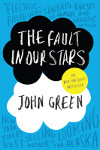
Just thinking of the Anne Frank house episode furthers this. On IMDB there is a discussion about the relative moral values of this (filmed) scene (warning: bad language), which invited comment on the reaction of the ‘audience’ when the couple kiss. Were the audience clapping a cute couple, a cute oh-poor-dears couple, or were they applauding triumph? Green provides no answer, the answer depends on the reader and will possibly change over the course of their reading depending on where they were when they first approached the book.
Instead of writing any more, because I could but I’d inevitably start repeating myself, I’ll ask you.
What did you make of the naming transition? What did you make of the scene at Anne Frank’s house? And what do you think of the possibility of a wider message? If you’ve not read the book/seen the film, feel free to comment on what’s been discussed as you will – after all, the theme is by no means limited to the text.
Subscribe to this site via email and you’ll receive 3 posts a week. If you use Gmail, you may find the posts are stored in your ‘social’ or ‘promotions’ tab.
Further Thoughts On F Scott Fitzgerald’s The Great Gatsby
Posted 30th June 2014
Category: Further Thoughts Genres: N/A
5 Comments
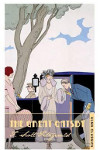
Ever since I read The Great Gatsby, I’ve wanted to write a ‘further thoughts’ post on it, but haven’t because I wasn’t sure I had enough to talk about on one theme to warrant it. Call me silly, no, really, you can, because it’s only just occurred to me that I can put all my thoughts into one post. What does it matter about my rigid posting rules if they are stopping me from writing what I want to write?
First I want to consider the conscious irony between the ‘great’ and Jay Gatsby. Jay Gatsby isn’t ‘great’ at all. He seems a nice person, misled and naïve perhaps, and in all he’s a fair enough character that you can’t help but feel for. He’s had lots of luck in his life, it’s true, but he’d trade it all in to have Daisy. He’s nice, but only ‘great’ to those who don’t really know him. His parties are great – but not what they seem. They aren’t for any of the people who turn up. He’s great, he’s cool, he’s rich, and his life is all about a woman who he can’t have and who doesn’t know of his whereabouts.
This said, we can consider Gatsby from a different perspective. He’s great in his love, if incredibly over the top. He’s greater than Daisy, who doesn’t deserve him. He’s a great person to Nick even if it’s so that Nick will help him get to Daisy, and even if Nick’s narrative has some bias due to his awe of Gatsby. But if Gatsby, both the book and the character, portrays the American dream, then Jay shows the flaws that can occur in the plan.
Thinking of the American dream, it’s interesting to delve into the way that Fitzgerald presents the dream as wonderful, but only presents it as such to a certain point. The issues he illustrates are far from specific to America or the dream, yet this doesn’t matter. The concept of happiness and wealth was banded about so much that people would have lost track of reality to it and kept believing. In a way, Fitzgerald is reminding us that greatness comes with a price (this greatness being both of Gatsby and of the dream). You can have fame and wealth (and thus work) and love, but you can’t always have them together.
Lastly, the aspect of the book I found the most compelling – the comparison to Fitzgerald’s relationship with Zelda. Fitzgerald had to be successful in wealth in order to call Zelda his wife1. Fitzgerald’s wasn’t quite so extreme a plan as Gatsby’s, however. Perhaps in Gatsby Fitzgerald is illustrating limits, and using Gatsby’s extravagance so that it’s more easily identifiable and of course not so damning as it’s so out of most people’s reach? Perhaps it’s something different, perhaps Fitzgerald is saying that it’s sad that he, Fitzgerald, had to go to such lengths? He got a job in advertising, but that wasn’t enough for Zelda in the beginning.
Gatsby wins Daisy to some extent, but is killed and Daisy doesn’t seem particularly bothered by it. Is this wealth and status so important they take over everything else? Could Daisy have been happier with Gatsby the soldier? To the last question, I don’t think so, but it’s interesting to consider other possibilities.
Have you read this book, or perhaps seen the film? What are your thoughts on the topics covered?
1 The Great Gatsby, Wikipedia, accessed 29th June 2014.
Explaining The Ending Of Tanya Byrne’s Follow Me Down
Posted 21st March 2014
Category: Further Thoughts Genres: N/A
Comments Off on Explaining The Ending Of Tanya Byrne’s Follow Me Down
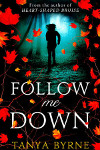
Byrne’s Follow Me Down is a novel that’s purposefully confusing. Red herrings flying in all directions, it can be hard for the reader to understand what’s happening – and it’s clear from Byrne’s writing that this is what she wants. The success of the ending depends on it.
In the book, Byrne never tells the reader exactly who the narrator, Adamma, is talking too when it comes to the male characters. The answer is hinted at, and of course the man in question displays his own particular traits, but both because it is simply ambiguous and because the fact the reader knows they are being confused actually causes them to be less sure than they might have been otherwise, it is hard to say you truly know what’s going on. In a way it’s almost as if the book is a study of personality, negating the affect visual impressions can have on a spectator.
To explain the ending simply, it’s suggested by Byrne that Daniel committed the murder of Scarlett to help Adamma. The times Byrne is less ambiguous show that Adamma’s teacher, Daniel, has always been worried about her and knows about Scarlett’s bullying ways. Therefore it is also suggested that Scarlett was killed because she was treating Adamma badly.
Of course whether Scarlett really was as bad as all that is suddenly less obvious. Her diary entries can be trusted, one assumes, but everything else is now suspect.
So if, as strongly suggested (or completely revealed, depending on your view), the killer was Daniel, what does this do to our interpretation of what was happening beforehand? Just like Scarlett’s actions, it’s time to reassess our thinking.
Whilst we were aware that the boy mentioned at any one time could have been either Daniel or Dominic, many may have seen Dominic as Adamma’s boyfriend. If true, this would’ve meant that Dominic would have been Scarlett’s crush, too. But if Daniel was the killer then we have to see him as having been Adamma’s boyfriend all along, and we have to of course reassess the reasons behind Daniel and Adamma’s hiding their relationship. (Because had it been Dominic the reason was simply that they didn’t want Scarlett to know.) In the boyfriend being Daniel, we see that the reason is the inappropriate nature of a relationship between a teacher and his pupil. It no longer matters that Scarlett loved the teacher (who is, incidentally, now revealed as the family friend), it matters that Daniel has potentially killed other pupils.
Did Daniel manipulate Adamma? Did Adamma push for a relationship? Who knows?
As for Dominic, he’s revealed to be just another friend, no one special. He’s not special to Scarlett, either.
Subscribe to this site via email and you’ll receive 3 posts a week. If you use Gmail, you may find the posts are stored in your ‘social’ or ‘promotions’ tab.


