





On Not Leaving Reviews Until Later
Posted 8th August 2012
Category: Chit-Chat Genres: N/A
6 Comments
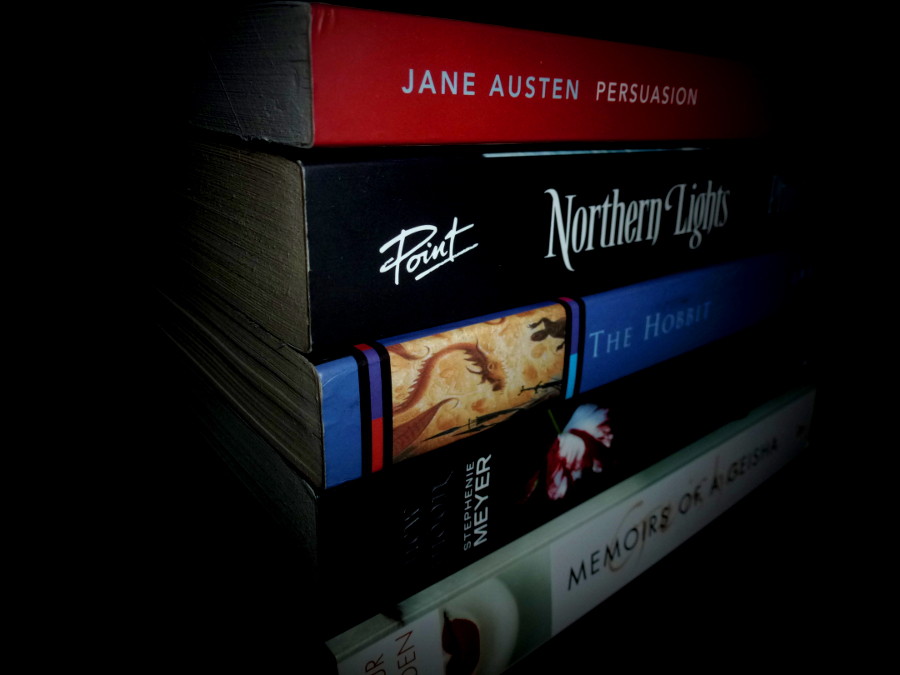
A few weeks ago I had just finished a book and written down the points I wanted to cover in my review, but after that set my notepad on the desk with the intention of writing the full piece the next day.
Then I realised I had lots of time on my hands and that it was only 2pm and I thought, heck, let’s get the review written already. I ended up writing something I was really proud of and having written it made me feel I’d been really productive whereas before writing it I had felt the day had been somewhat lost.
It has me thinking. Sometimes, writing a review straight after I’ve finished the book leaves me feeling that if I hadn’t done it then I wouldn’t have been able to match the same level of pride. I wonder what I’d have written if I’d left it to such-and-such a time. These are questions I think about a lot, akin to such concepts as what would happen if you hadn’t caught the last bus. I know others think the same, there’s a whole movie based on it.
There are of course many times where I’ve left a task until later, done it well, and wondered the reverse, but here’s the nub: I have more pride and it comes far more often when I get something done straight away. I think that when we do something now there’s this unconscious imperative to do it fully and to do it well because we are happy to have it finished. And we’re all the more aware that tomorrow could bring no time for writing – and hey, if it does then we’ll only need to go through the editing phase rather than drafting.
The feeling that everything is done is amazing. So much better than the feeling that you’ve got lots of time left to complete all your tasks. And it beats the good feeling that comes with having lots of topics in mind.
How do you structure your writing time?
Book Bloggers And Commenting On Author Blogs
Posted 9th July 2012
Category: Chit-Chat Genres: N/A
2 Comments
Like, I would presume, many book bloggers, I often come across interesting blogs written by authors. Some of them are authors whose books I’ve read or plan to read, others are authors whose books I’d not heard of before. In the case of authors whose work I know, the posts might resonate with me because they are on subjects I’m well-versed in, and in the case of unknown authors a well-written interesting post could gain my attention. Further reading of the blog could lead to me reading their book.
Sometimes I feel the urge to respond, to comment, just as I do when reading the blogs of book bloggers. And while I tend to have no qualms responding to a post by an author I’m not familiar with (because I’m more anonymous), I tend to pause before commenting otherwise – this pause tends to lead to me closing the browser window without replying. I wonder if there is a certain unspoken etiquette in regards to conversing with an author in such a way. It was this thought that inspired me to write this post today.
Should book bloggers be refraining from interacting on author blogs, or is it to be encouraged?
It is natural that at times we are going to want to join in a conversation, as already discussed – author posts often resonate with us. Authors are bound to write on topics we can relate to because we are two groups of people existing in the same world, the same industry. And we know that authors often pick up on subjects book bloggers have talked about, and put their own spin on it from their angle, adding to the conversation.
Is commenting acceptable or is it a line not to be crossed? In general the target audience of an author blog is other authors, you can deduce this from the style of the post and of course sometimes from the subject. However our place as book bloggers is still blurry. We often get noticed if we review an author’s book – is commenting okay if we’ve given the author a glowing review? What would happen if we later gave them a negative one, would our place on their blog cease to be appropriate?
As for myself I would not comment on the blog of an author whose work I had reviewed negatively. It’s not nice or necessary to further circulate the criticism, which replying on their blog would inevitably do. Whilst I may be reviewing the book rather than the author, commenting on a blog in this case would create needless tension.
But to go back a couple of paragraphs, what do you do when an author you previously loved the work of published what you believed was a bad book? Would you silently slip away from their blog? That would seem the polite thing to do, but then it detracts from the fact that you found their backlist fantastic. It places all the emphasis on the negative review rather than celebrating the positive ones. But could you continue to comment knowing you’d written a critical review, wouldn’t you feel guilty? There is always the option of not reviewing a book you didn’t like, but surely that is bordering on being untruthful – and if we constantly did that we’d end up not only producing hero-worship on a daily basis but also in reducing the amount of authors we could review the work of. Is it okay to comment if you’ve only ever given the author positive reviews and it’s highly unlikely they’ll produce a bad book?
There is the question of friendship. From what I’ve gleaned it seems to be acceptable to comment on the blogs of authors who are the book blogger’s friends. This makes sense. But a friendship leads to the suggestion that one cannot really review the books produced by a friend and so surely this would not cause issues. People who do nevertheless review their friend’s books are often scrutinised over their opinions for the duration of that review.
The last question to consider – does commenting look like self-promotion? If you’re responding to an author you’ve never read could your presence come across as a request for free books? Similarly, if it’s a newly discovered author whose book you’ve just reviewed would it look like you were really saying, “I’m over here and given you a good rating, please promote my book blog?”
Does commenting with the URL (web address) to a book blog suggest you’re trying to get the author’s audience to take notice of you? If you’re the sole book blogger amongst a sea of author comments does it look out of place? Does it appear as though you’re trying to drum up interest for people to contact you with requests?
For me the jury’s out. I like to comment on author blogs but I generally feel bad for doing so. I do it to join the discussion, to connect with like-minded people, just as I do in commenting on my fellow book bloggers’ blogs. I don’t know the answer.
What do you think, should book bloggers feel eligible to respond on the posts of an author?
Small Press Fortnight: Persephone Books & Peirene Press
Posted 8th July 2012
Category: Chit-Chat Genres: N/A
2 Comments
About a year ago, likely more, I said that I would soon be talking about my adventure in London, going to Persephone Books for the first time. That day of posting never came and I still cringe at the thought of a promise not kept, no matter if anyone was interested or not. Jodie’s Small Press Fortnight seemed the perfect opportunity to revisit my visit especially as I know that many of the other bloggers joining in will know of Persephone. After Persephone will come Peirene.
My visit to Persephone Books, then, occurred when I was wanting to explore places in London I’d not yet been. Persephone was reaching the peak of our (bloggers) discovery of them, and having read about the shop on various other blogs I wanted to go there myself. The shop, which combines both store and office, is a rather unassuming terraced building down Lamb Conduit’s street, a street that has seen local and national fame recently due to The People’s Supermarket, and which boasts a few lovely-looking pubs. It’s a small shop, made a lot smaller by the number of books, but it is an absolute gem.
The décor is simple, white, and the room is split in half, the front section housing the books, the back being where the team work. In almost every spot available, books are shelved, stacked, piled, and the front is a wash of grey owing to the monochrome nature of the books. The books are unsurprisingly organised according to title and in a way that means you have to look at each of the stacks carefully to find the one you want. Indeed in the end I had to grudgingly accept defeat and ask for the location of The Victorian Chaise-Longue, the book I was wanting to buy, but this difficulty is nothing like it would be in a regular bookstore, because it gives you the opportunity to discuss the books with the publisher themselves and to know that what you’re being told isn’t just what they’ve learned from a blurb. There is something wonderful about buying a Persephone at the shop itself and in truth the reason why my reading count has stayed at the two books I bought when there is because I want to buy my next Persephones this way again.
In the early days when I read about Peirene Press on blogs and then bought a copy of Beside The Sea (if you’re counting, that is now three books just in this one post that have been bought because of blogger recommendations), I saw Peirene Press as a publisher of good books, but since going to a Salon and seeing the HQ for myself, they have grown in my affections.
I attended a Salon last year and it was a wonderful experience. A lot of us bloggers start our writing because we have no one to talk to offline about books. My reason was partly this and so being able to go to the Peirene event where the subject of conversation was by and large books, and not just any books but literary books (I’ve no preference but having a particular subject was great), was like all the coffee dates with friends you ever wanted. To talk about books and not have to watch people’s eyes glaze over, to loiter over a theme or topic no one saw as boring, was something I hope every book lover gets to experience. We chatted informally downstairs before moving upstairs to listen to the author discuss the book with a guest, and the atmosphere was lively and comic despite the fact that in the main the audience only listened. Then it was to the kitchen for a lovely light meal. The mix of people who attended was interesting, so many different opinions and ages to learn from from a variety of backgrounds.
The Peirene HQ is very professional whilst being very homely, indeed I believe it serves as both office and home. And it has the same relaxed yet passionate feel that Persephone does, a true love of the books, each and every one of them. The service of the publishers is brilliant, they do not just sell you a book, they sell you an experience beyond that.
Books by Persephone and Peirene Press are considered expensive, and it is difficult to refute that, the books being often short. But the quality of writing and story, the beauty of the production, the sheer effort and passion of the publishers that is obvious in every copy, makes the price worth it. I said in the comments of my review of The Murder Of Halland that the price is right because of these things and because you always know that with Peirene you are pretty much guaranteed that every book is going to be brilliant. Whilst Persephone publish different sorts of books, I have read enough and read enough opinions of others to suggest that the same is true there also. These books are rather magical which is apt considering their publisher’s names.
I know that if it weren’t for blogging I would never have heard of these publishers that have enriched my reading life so much. As such I hope that their reach continues to grow because in a world where everything is about copying the latest bestseller, their uniqueness is something many would appreciate.
How The Time We Spend On A Book Impacts Our Review
Posted 25th June 2012
Category: Chit-Chat Genres: N/A
8 Comments
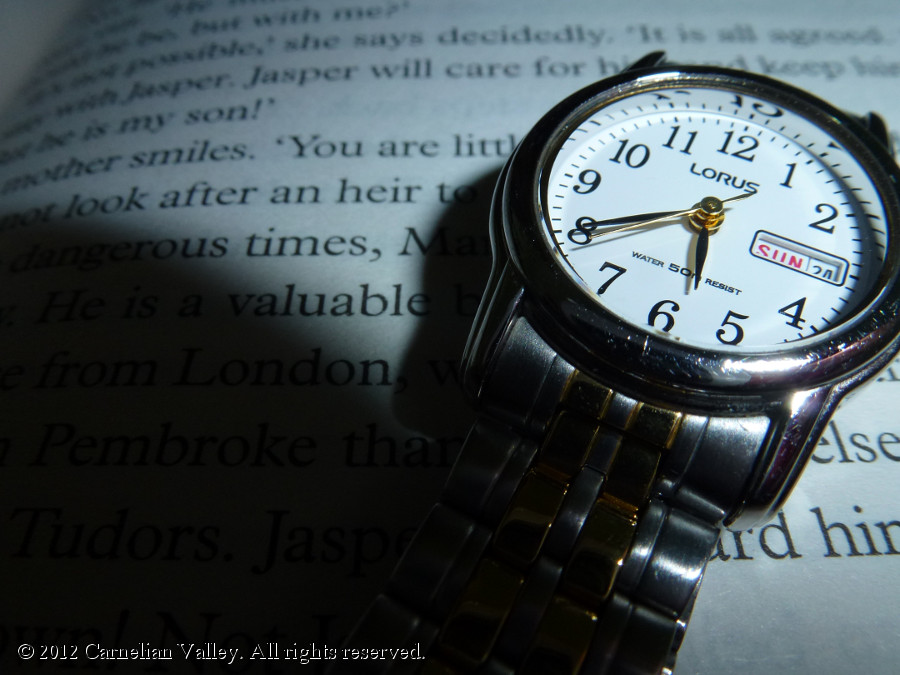
A couple of months ago I had a commenter suggest to me, in reference to the 24 Hour Readathon, that I write about the experience of reading a book in a day. Such a subject could make for a very short blog post mainly detailing times, speed reading, caffeine, and snacking; but what the commenter said made me wonder if I could take her suggestion and put a certain spin on it.
So, thanks to Anndie, I am going to talk about how the amount of time you take to read a book, overall, can impact what happens when you come to write about it. These are of course observations from personal experience and will not be true for everyone, however I would expect that a lot of them do correlate across the board.
To begin with the following questions must be asked – why do we read a book in a day and what might make us want to do such a thing? We might read a book in one day if the book is short; this makes perfect sense. We might suddenly have a whole free day in which to read; we have the time. We might not have read much this particular month and want to push our count up (I do this when I can). Or we might do it because the book is so good we can’t put it down. Of course there will be occasions when more that one of those reasons are employed.
But what happens as a result of reading a book in a day? To be sure there are positives, positives that link up with the reasons we’ve just examined, but there are negatives also. Something that happens when we read a book in a day, and this has the most effect on us when it is a book we’re planning to review, is you find that reading everything at once in a short space of time hinders your ability to process separate themes and ideas. Yes, you could have been making notes throughout, but your mind is full of these notes all at once, it’s like you’ve just left a busy crowd of people who were all giving you information and now you’ve got to try and remember everything they said as well as what each piece of information meant. When you’ve not processed themes properly you start to forget them easier and you find your comprehension lacking. It becomes very difficult to write the review.
Yet just as there are reasons to not read a book in one day, you need to consider the other side.
Why do we take a long time over a book? A lack of time is probably the most widely-used reason, with people being so busy that they only have time for a chapter before bed. However we also like to savour what we read, to feel it has had an impact and that we’ve been emotionally invested – and that is more difficult to achieve through quick reading. And of course there is that other reason – if the book is too academic and confusing, or if we’re simply just finding it boring, we’re very unlikely to rush through it unless pressed for time (review deadlines).
Interestingly, one of the results of reading a book over a long period is exactly the same as the overall result of one-day readings. We inevitably forget things. But this time it isn’t a matter of having too many notes, it’s that, just like memories, over time we naturally forget some of what we’ve read before. This will cause us to have less of a grasp on the book’s themes because whilst you may have had a good understanding after your last time slot, you’ve now forgotten key parts of the story that helped to form your understanding.
While reading a book over a longer period of time may help you become more emotionally involved and attached, there is the chance that in taking so long you become blasé about it. Because even if it’s a book you love you will lose some of your focus, and this links straight back to lack of understanding of themes.
From all of this you might conclude that a scheduled reading might be best, a same time every day sort of plan. You’d be creating a happy medium between short-term and long-term readings of a book, but wouldn’t that simply make reading into a chore, more work than play? Many of us already read books with a work mindset – we accept free books in return for a review – and creating a routine could be very dull.
There’s no right way to read. And we don’t always have the luxury to read in our preferred manner so we may have to change our method at times, though it might not suit.
What’s your preferred way to reads in regards to what we’ve discussed, the way you find lends itself best to your reviews?
Today is a double posting day for me, I am guest blogging over at author/book blogger Andrew Blackman’s site, talking about why reading is a social activity. May I recommend that after you’ve read the post, if indeed you wish to, you have a peek at Andrew’s own posts because the combination of author and book blogger makes for a very informative and interesting blog. The post will be up by the end of lunchtime, British time, to coincide with Barbados resident Andrew’s timezone.
What My Exam Taught Me About Being Productive
Posted 20th June 2012
Category: Chit-Chat Genres: N/A
Comments Off on What My Exam Taught Me About Being Productive
Last week I took my first exam in almost nine years. It was an event that I found difficult to digest.
My last exams had been for my A Levels, the courses that bridge the gap between compulsory education and higher education, and – and this is something I will not shy from admitting – I did not revise. I had not revised for my GCSEs either. I didn’t know how to revise, and no one had given me advice.
This time, at university, the decision to study had been completely my own, not an exercise in pleasing my parents and teachers as my time in sixth form had been. This time, because it was something I wanted to do and it was a subject I am passionate about, I made a great deal of effort, studied hard, and most importantly, I revised for my exam.
But having now left the claustrophobic room and the feeling of being a sardine in a tin, I can see where I had moved towards the other extreme. This time I had in fact revised too much, swallowed too much information. The result was that I wanted, and intellectually could have, answered every question on the paper. This left me with two issues, the first being that I spent a lot of time deciding which to answer and having a couple of false starts, and the second that I ended up not answering a question in the way that my instincts told me to – because I was conscious of including the same information in two different essays. I have learned my lesson.

When we take a lot of information in, especially for something like an exam where we know we are being judged for how we’re writing, what we’re writing, and how much we know, we tend to want to get it all out. We end up producing that most unsavoury of terms, “word vomit”, because if something is left out, we might have lost a mark. We end up not answering the question in every point we make – we ramble, we move away from the question in order to show what else we know, because we feel the need to prove something.
In order to be a good student, a good writer, a good reviewer, marketer, news source, helper – everything that comes with blogging – we must be selective. Never has this been more apparent to me than now. When I read, knowing that I have put it upon myself to review the book afterwards, I write down everything that comes to mind, and I try to include all of it in my review. And sometimes it works, but most of the time it doesn’t. It’s the same when I find lots of interesting articles about the book world or the world in general, I feel a need to share it, to promote it, but there is definitely such a thing as too much in this sense too.
To be good at what you do you need to be selective, you need to recognise that you can’t always include everything and you have to grudgingly accept that that awesome sentence you just wrote can’t make the final edit. You want to spend time writing about your best ideas, not using it on less worthy ones. There is only so much time in a day and using it productively is of paramount importance.
It is one thing to know your stuff and to know that you are good at what you’re doing. It is another thing for you to actually apply it – and perhaps it is that, rather than gaining information, that is the most important thing to work on.
How have you used a recent experience to improve how you approach part of your life?


