





Working In Coffee Shops
Posted 29th January 2014
Category: Chit-Chat Genres: N/A
10 Comments
My inclusion of Coffitivity is to add variety – this post isn’t sponsored.
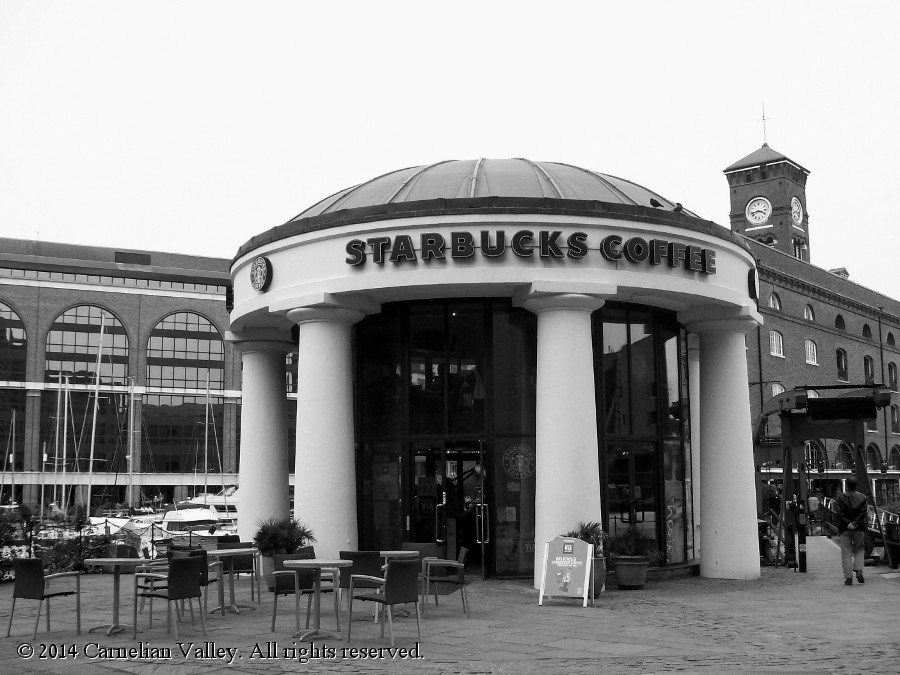
Do you work well when installed in a chair at a coffee shop? I know I do. The sound of the drinks machine as it brews, the smell of the coffee in front of you, the taste of the yummy sandwich beside it, the sight of the somewhat sultry décor. And of course the ability to feel as though you’re being social whilst (sometimes) spending time by yourself.
Writing in a coffee shop is a preface for “I got stuff done”. There are few distractions unless you actively create them. If you have a notebook and leave your phone in your pocket there is no email or Twitter to interrupt you. Even if you take a laptop there’s this feeling that comes with being in public that makes you feel silly using the Internet for too long.
That feeling is surely paramount to the reason coffee shops are the perfect solo working environment. There is this urge to keep writing, coding, designing, so as not to look silly. If you look like you’re thinking, that’s fine – up to a point. You can’t ponder forever and expect people not to notice. You keep writing, you don’t stop because you know how it might look – you get stuff done. You’re forced to work but you put yourself in that position, so it works.
Coffee shops create a nice balance between noise and silence. Obviously if there’s a loud conversation at the next table, you’re better off working elsewhere, but a general hum is useful to many people.
I find I work best in coffee shops when I arrive with my plans already made, the list of what I want to cover in the full article prepared. Alternatively I can work on creating a plan from scratch – but I’ve not yet mastered the art of planning and drafting in one outing. That’s something I can only achieve at my desk. Often I’ll write posts at double the speed, but even if it takes longer I always leave having been absurdly productive regardless.
What happens when you need a change of environment but cannot find or go to one? You used to have to accept that you might not get anything finished. Recently I came across Coffitivity. It’s not the same but I feel it’s something a person can learn to ‘live’ with. The site hosts a sound-scape of a coffee shop that you can plug into whenever you need a different ambiance or if you’d prefer the sounds of distance chatter and crockery to your colleagues.
As for my local, they’re probably sick of the sight of me.
Do you find coffee shops to be a productive environment? If not, or instead, where do you like to go where your normal environment isn’t inspiring or working for you?
Do You Start The Year With A Clean Slate?
Posted 15th January 2014
Category: Chit-Chat Genres: N/A
16 Comments
Do you like to start the year with no unfinished books outstanding? This is of course primarily in the context of creating and keeping lists or databases to track reading, but at the same time there is no reason why people who don’t track their reading couldn’t feel similarly, either way.
I have now been reading Vanity Fair for over a year. I originally started reading it on 17th October 2012 and because I didn’t finish it I deleted it from the 2012 list to add it to 2013’s. A couple of days ago I moved it from 2013 to my new list for this year. (I will state here that I never change the ‘begin’ date for a book, so whilst – assuming I finish it this year – it will be added to one of this year’s reading round-ups, my personal log will show my procrastination.) Thackeray in 2012 was the first time, since I started tracking in 2009, that I ‘let’ a book remain unfinished from one year to the next. And it remains the sole entry in those stakes.
In the case of this particular book, I feel silly. It’s not exactly a dull book – whilst the middle dragged a bit and the names and continual use of the same prefixes have proved more confusing than any usage of ‘Miss Bennett’ in Pride And Prejudice (despite the 5 people assigned to it), Thackeray has made me laugh a lot. I love his approach and the opinions he seems to have, and I like the way he injects himself into the text. However it was the use of prefixes and, I admit, the sheer number of pages in the book, that defeated a person who had been, in 2012, a pretty dedicated reader. And as much as I tried to reason with myself that if I could read the entirety of
So yes, for all that I know I have a fair reason, it does seem silly that a book I’ve been enjoying is the one floundering, rather than a book I hated.
To get back to the main topic at hand and stop detouring, I’m personally not a fan, in the context of my own reading (because I can hardly dictate to anyone else), of letting a book linger from one year to the next. I believe that if I wasn’t so obsessed with data collection I wouldn’t be so ‘worried’, as it is the fact that I like to keep my information by the year that is the major cause of any anguish I’ve experienced in the past. Inevitably I’ve improved as the years have gone by, as one tends to once they’ve had some practise, but for the first two years of tracking I must say that I spent the respective New Years Eves struggling to finish books of which I had quite a few pages left to read. As that of course led to my boyfriend being ignored, and to me being more focused on page count than the story, it wasn’t ever going to be a good idea long-term.
Now I resist starting any new books in the last few days of the year unless they are very short, short enough that I can finish them and then some. It may mean I miss out on adding to my book count, but remaining sane is far more important.
Yet beyond the databases I am predisposed to finish books and start the next year with a clean slate. This time around it was especially important. I looked forward to saying goodbye to 2013 and to the change in numbering and everything else that would signal the new start, however artificial in terms of the universe, that is available to us. But I like the idea of the new year in general, anyway. And as much as last year’s list was long and I enjoyed watching it grow, there is a sense of peacefulness, of relaxation, that accompanies a blank list.
Even if I do still have a review to write from last year’s reading.
I’m not a fan of continuing books from one year to the next. It may mean that time ‘flows’ but it doesn’t suit my working method nor my way of read-review-repeat. And as this is something that everyone chooses for themselves, I think it is more than okay to have a strong preference without worrying about fitting in with others.
What about you – do you prefer to finish all your current reads by the end of the year or are you happy to let things happen when they will?
How Not To Pitch A Book Blogger (In 9 Steps)
Posted 8th January 2014
Category: Chit-Chat Genres: N/A
12 Comments

I’ve thought of writing a ‘how to pitch a book blogger’ post for some time, but others have done it better. Then, just recently, I received a pitch that rather irritated me. I have to say that by and large, those who contact me are polite, knowledgeable that bloggers can be very busy people, and cautious if they are new to pitching. Indeed just before the irritating pitch came one from an author who sent their book with the initial contact but said outright that they didn’t know if that was ‘correct’ or not. This was good in a way because it gave me (and I expect anyone else who received an email from them) the chance to give them a heads up as to what bloggers ‘expect’. And the email was polite and friendly.
The email that irritated me started out as an okay pitch, simply with a poor attitude. I emailed back to state what I was and wasn’t okay with in regards to their ‘rules’ and received a very long condescending email that was written as though I was a brand new blogger with no knowledge or experience of how to blog.
It was just that bit too much.
I know that this email was likely a one off but all the same the occasion made me realise that it might be prudent to write some guidelines. Lists of dos and don’ts may have been written before, but it seems there isn’t such a thing as one too many in this regard.
Here’s what you shouldn’t do when pitching a blogger with addition pieces of information to keep in mind:
- The blogger you’re pitching likely knows how to blog. They will also have their own way of going about it. Do not tell them what to do, and do not tell them how they can help you.)
- The favour being done is by the blogger for you. If you are asking for coverage you must accept that they might want to change a few things to better fit their blog and readership. See this as a positive – they are happy to give you coverage, and want to write the post they know will work best for their blog and their readers. Remember that unless you’re paying them in currency, they are giving you their time for free.
- If a blogger does not reply then they are either not interested or do not have the time required to cover your book. Likewise, they only have time to respond to requests they can accept. By all means try another pitch for another book at another time, but don’t keep emailing them about that present request.
- Don’t send mass emails that are not at all personalised. You might find success with some bloggers, but by and large bloggers like to know you took the time to read their site and their policies – this intimates the book you’re pitching is likely a good fit. If you’ve read their blog, let them know. Tell them why your book is a good fit.
- Don’t make bloggers jump through hoops to get your book. If you’re offering an ebook don’t send them to a page they have to sign up to for access to it. Exceptions to this are NetGalley and Edelweiss which are well-known sites for review copies.
- If you offer a certain ebook format and the blogger asks for it, supply it. Don’t say later that you don’t have that format. Some ereaders only accept certain formats and therefore it’s important you offer what you actually have available. Preferably you’ll have all the major formats available.
- Don’t pitch close to the time you want the review to be published. Pitch it a good amount of time beforehand. Bloggers read a lot of books and often schedules are created months in advance. As an example, I wrote this post late November, and was booking reviews for late February.
- Don’t pitch a blogger whose country you can’t or won’t send a book to. This is a waste of time for both of you and shows you didn’t research the blog beforehand. You can generally find the blogger’s location on their ‘contact’ or ‘about’ page.
- An infamous one, again regarding research – don’t say ‘Hi’ without the blogger’s name, or ‘Hi blogger,’ if this is the first email you’ve sent them. It’s not so bad when a person sends mass emails to bloggers they already have a working relationship with, but if you’re a new contact you want to be sociable and personal. You want to strike up a relationship – the blogger is not a robot.
Lastly, life happens. Know that in pitching, even if you’re accepted the blogger may still not be able to work to a deadline or may indeed end up not being able to cover your book at all.
What points have I missed that you’d include?
2014 Goals
Posted 3rd January 2014
Category: Chit-Chat Genres: N/A
17 Comments

In many ways I feel silly writing this post as I didn’t do very well with the goals I set for 2013, but it feels a good idea to have goals all the same. Here’s a summary of what my goals were and how I failed/changed.
- I did okay in the first Long-Awaited Reads Month Ana and Iris hosted, reading The Luminous Life Of Lilly Aphrodite and Shanghai Girls, but didn’t read Shogun or The Last Empress.
- I didn’t read anything from the specific list of classics I wrote as goals, nor did I read Anne Brontë or Collins, but I did read The Great Gatsby and Gone With The Wind and I did read Dickens.
- At the last moment – early December – I finally got around to reading a book by Elizabeth Chadwick. It was quite an epic at 467 pages. And I have acquired the entirety of her backlist (as it existed before To Deny A King). I specifically acquired the rest all at once because I like the old covers.
So really I’ve been a bit cheeky to myself, changing the ‘rules’ without really changing them, however this has taught me that I should make realistic goals for myself. Last year’s goals were realistic, it’s true, but as I found myself wishing to read more at random, they didn’t work. I forgot about them. I need something very different this year.
- Work further on my Classics Club list, no matter whether that’s one book or all of them.
- Accept that I enjoy historical romances and read more Sherry Thomas and Eloisa James.
- Read more of my own books.
- Read Neil Gaiman.
- Read more non-fiction, but don’t freak out if it doesn’t happen because fiction has its own intellectual merits.
- Take part in and finish the What’s In A Name challenge. (I hope I can do this – considering I’m hosting it this year it would be bad if I couldn’t!). For this challenge I wanted to read books I already had on my to be read pile so that I could get through some of my owned books in the process, and also because it’s just a lot easier to find books when you’ve placed a limitation on where you find them. I managed to find a book for every category without having to resort to the ones I’d used an an example in the sign up post – bonus! These books are The Undivided Past by David Cannadine, The Queen’s Promise by Lyn Andrews, The Hundred Thousand Kingdoms by N K Jemisin, My Cousin Rachel by Daphne du Maurier, and Cloud Atlas by David Mitchell.
And that’s it. Do-able, lazy-sounding, but far-more-likely-to-be-achieved goals.
Are you making reading goals for this year?
A Summer Person, A Winter Reader
Posted 25th November 2013
Category: Chit-Chat Genres: N/A
9 Comments
Most people who know me (and that includes you all) know that I dislike winter very much. I said this in my second castle update post, I often remark on it on Twitter, and my choice of book at any one time may be decided by which plot sounds like it spends more of its time on summer months. (I should note that I term late autumn ‘winter’ as well as the official months.)
However I’ve recently come to realise that where reading itself is concerned, winter is my ‘thing’. I find I am far more excited by the idea of reading in winter, I tend to be better at selecting books that work better in that certain order I’ve chosen, and I think I’m more proactive in reading my own books, too. Certainly the thought that the year is almost over and I’ve little time comes into play – because if I’m reading books I’m not enjoying I’ll inevitably take longer over them and thus shorten the count – but it is mostly down to that excitement I listed first.
One thing about summer that is an issue for me – I don’t like being inside. It’s not an issue in general, it’s better defined as a personal preference, but where reading is concerned it’s problematic. I can take a book outside. I can read in a park, or on the patio, but enjoying summer necessitates lots of time travelling and I can’t read whilst in the car. Of course I couldn’t if I was driving, nobody can unless it’s an audiobook, but I suffer from travel sickness so bad that I often send texts in short form, which as a rule I don’t like. I also can’t really read whilst walking. The man I once passed who was walking down a main road with his eyes on a copy of Anchee Min’s The Last Empress may have thought it worthwhile (and the book was a great choice) but I’m keen on the idea of safety coming before the concept of making the most of one’s time.
All that rambling to say I don’t read much in the summer because I like the sunny weather too much. Especially given that us Brits have to make the most of every sunny day because we never know when we’ll next be graced with one.
So I wonder if my excitement over winter reading choices is the result, a forced feeling if you will, of being stuck inside. I’m not stuck inside, I can go out if I wish, but I don’t enjoy it and I’m very much aware of all the time ‘wasted’ during summer. Not having to ‘worry’ about the weather being nice enough means that my attention is focused on the book. It means that I know I’m likely to finish the book soon. It means that I know I’ve much reading time ahead of me. By extension I suppose this is why I pick better books as a whole – I’m attuned to my preferences as well as that end-of-year ‘rush’. And, okay I admit it, Christmas books are a whole lot of fun and there are no holidays in the summer that warrant their own themed books. Unless you’re in Australasia where Christmas is in summer.
I also wonder if the fact my birthday falls in winter, Fireworks night falls in winter, my anniversary – and its resulting holiday – falls in winter, and that Christmas thing falls in winter (here) plays a role as well. There is much to look forward to, and many potential book gifts at this time, too.
In winter its cold, there’s little sunlight, and I’m forced to wear layers of clothing. I’ve never been a jumper person. But in winter I just feel this freedom to read what I like, the validation to read fun Christmas books, and for some reason Medieval fiction is better during winter too. I don’t know why that last one is so, maybe a feeling of superiority arising from being a 21st century person with access to central heating and hot water bottles?
Do you find you’re a ‘better’ or ‘happier’ reader during a certain season?


