




Series And Spoilers
Posted 26th November 2014
Category: Chit-Chat Genres: N/A
9 Comments

Laurie and Jessica brought to my post on blogging and spoilers the very good point about series, and it gave me enough food for thought that I’d like to expand on the linked post.
Because series are a different kettle of fish to stand-alone novels. You can’t generally apply the exact same rules to both ‘types’ and even if you like including spoilers in reviews, you still have to include more information to those about series than you would otherwise.
When I review series, and here I’m meaning from the second book onward as the first will of course be reviewed similarly to standalones, I know there’s a balance I need to find between keeping quiet and adding enough information about how this particular book fits in context to the others. I believe that making note of the general success when compared to the others is important, be it personal opinion or objective. I think that no matter whether a reader plans to carry on the series and regardless of how much they may like it, they are going to want to know the ‘truth’. Lower expectations can improve a book, for example.
To discuss a book in this context is to include spoilers from the previous. Readers might like to know how the new book relates to the last, and if it relates to the last beyond a minor connection (as can happen). And I think most people like to know how long after the previous book this new book is set (I know for me if the answer is years, I’m less likely to want to continue unless there is a very good reason for the gap). Some may want to know where the bad guy stands.
All this necessitates an explanation, often in depth, and thus spoilers for the first book and perhaps the current. I do think that in the case of series, spoilers for newer books aren’t as bad as those for standalones. In order to discuss themes, and ongoing themes, you require spoilers of some kind.
Of course most people will forgo reading a review of a newer book if they haven’t yet read the first, so in this way spoilers are fine. I’m yet to see a blog that doesn’t note in some way, before any spoilers, that such and such is the second/third book. It’s just common courtesy and sense.
My thought is that as long as you remain conscious of what it is you’re spoiling and have a good reason why, it’s okay. You need the context.
How much do you think ‘should’ be discussed of previous books, and/or how much are you comfort revealing in your own reviews?
Blogging And Spoilers
Posted 7th November 2014
Category: Chit-Chat Genres: N/A
9 Comments

I’ve written about spoilers in regards to reading; today I’d like to look at the way spoilers can impact blogging.
At some point when writing a book-related post, reviews in particular, I’d say it’s likely everyone considers whether what they are writing about constitutes a spoiler. Should they add a note? Should they not discuss the content? Even those who include spoilers still consider the effect.
This is all well and good but there’s the question: where do we stop? To some extent, everything can be called a spoiler. When I wrote last time I noted that I like to read classics with no knowledge of what they are about. In my case, knowing the career choice of a character can be a spoiler. And that’s fine for me, when I’m reading, but it becomes an issue when I start to write the review. If I wrote the review thinking of how I like to read my classics, there would be nothing to do except give a rating. So common sense has to be exercised.
(This begs the question: if I don’t like my classic spoiled, what business do I have discussing them? I reason that even if I write the review, people don’t have to read it.)
So where do we stop? Where we want to stop. We return to blogs that suit us as readers, so a variety of spoilers and no spoilers is good. The thing is that if you want to write about a book you often need to spoil it. Without any spoilers (without plot summary, opinions subjective or objective), like the above imagined review of a classic, the piece would be full of vague thoughts that would be of little worth.
I don’t believe it’s possible to claim you don’t include spoilers because what is a spoiler when the definition varies between readers and often per book? You might consider what you’ve written to be a spoiler; someone else might not, and vice versa. I also think being fastidious puts a lot of pressure on you if and when you undergo a change, and of course it places limitations on what you can discuss. I know from my own ‘journey’ that the decision to no longer refer to myself in my reviews sometimes meant I was unable to fully explain my thoughts. Reverting back, letting myself say ‘I’ when needed, has brought back a lot of my interest in writing.
I think ‘write what you want’ sums up my opinion on this subject, but I still think it’s worth considering, most if not every time, what you’re saying and why.
Spoilers can make or break a piece of writing, but not always in the way you’d think, and they shouldn’t necessarily be limited.
What are your thoughts on this subject? And, if you write about books, do you include spoilers?
A Brief, Obvious, Contemplation Over My Blogging Slump
Posted 29th October 2014
Category: Chit-Chat Genres: N/A
3 Comments
In order to write a book blog, one must read books. It sounds obvious and yet it’s not. Beyond reviews, writing reviews as content for a blog, beyond even thinking of book-specific posts, it’s important to read in order to be able to write a book blog.
I look back at the slump I’ve just got through and it’s silly really. There was I sitting at my desk trying to think up a blog post when I was going through a reading slump. Maybe it’s because I often like to write general book-related posts, but it didn’t occur to me that my lack of reading was what was holding me back from writing anything else.
But of course it was. Because it’s not just about the reviews, it’s about immersing yourself in the world of the subject you write about. Just being in the community, actively, and reading, helps to give you ideas, ideas you wouldn’t think you needed to be actively engaging and reading in order to find. But then I would expect the same of other niches. To write a fashion blog you obviously need to keep up with trends and whilst you always choose what to wear each day that in itself wouldn’t be enough. You’re thinking about the subject but are not a part of the discussion.
I think what intrigued me most about this revelation is that the ideas I’ve had are not to do with anything I’ve read be it in a book or online. They’re related only by medium. It must be like subtext or your subconscious, routine, getting back to the situation. I guess you have to be more in the zone than I thought.
My blogging slump caused by blogging needed me to carry on blogging and reading in order for me to get over it. It seems my new daily routine had nothing to do with it.
Project Get The Books Finished
Posted 10th October 2014
Category: Chit-Chat Genres: N/A
6 Comments
Once again I’ve missed days of blogging. I’ve been editing, it’s true, but more than that I’ve been suffering from an annoying illness that I thought was the effects of sleep deprivation until it outlasted the considerable amount of sleep I threw at it.
I’m better now, I think, and looking at the space between now and next year I’m aware I have a reading list full of books I haven’t finished. I’ve got into the nasty habit I thought I’d combated – I have 5 ‘current’ books on my reading list. And I have many ARCs to get to as well.
So my plan right now is to not only get back into blogging consistently, to visit other blogs and reply to comments, but to finish every book on my list. Well, all except Vanity Fair as I reckon if I’ve already had it on my list for two years, another won’t hurt. Here is my list.

Leo Tolstoy: Anna Karenina – I am going to try, I am. Despite all the agriculture I am going to try and read the remaining 500 pages or so before the year is out.
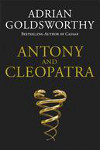
Adrian Goldsworthy: Antony & Cleopatra – I knew when I started this it was the wrong time, and that’s not really fair on either the book or myself, so I’m hoping to find time to really soak up all that information.

Erica Vetsch: A Bride’s Portrait Of Dodge City, Kansas – An inspirational novel I first downloaded long ago that was going to be my first attempt at the genre. I started it this year because I felt bad for having never read it. It is inspirational but the faith is, for now at least, a lot more natural than what I’ve read so far. I’m unsure whether or not I’ll be reviewing it – would you be interested in reading a review of it?

Merryn Allingham: The Crystal Cage – This needs to be finished by mid next week. I’ve found it difficult to get into.

Pasi Ilmari Jääskeläinen: The Rabbit Back Literature Society – A great book I’ve neglected purely for lack of time. I aim to finish it shortly.
So that’s my plan. To finish books I’ve started. It’s not particularly grand but I am aware that the number on my list is actually a lie if I don’t finish these books, that despite the fact that I can kid myself I’ve read 44 books this year, I’ve actually only read 39, and that will show in my round-up if I don’t do something about it.
And whilst I know you’ll all say that doesn’t matter and I’d agree with you, I want to try regardless.
Do you have a reading plan at the moment?
Book Suggestions For Breaking Out Of Reading Slumps
Posted 22nd September 2014
Category: Chit-Chat Genres: N/A
9 Comments
Last week I asked you all for your suggestions of books to help a reader out of a slump. I thought it might be an idea to compile them all into one post because not only are the suggestions good, that they come from many different readers should mean that there’s something here for everyone. I’ve listed the books by suggestor (suggestee?) and linked accordingly. Obviously some of the content is paraphrased from the comments as I’ve tried to pull them all together into one post.
As for my own reading slump, I’m happy to say I have finally broken it. Interestingly the book that broke it wasn’t one I enjoyed. Lisa Jewell’s Before I Met You had many issues, but I reckon what ‘did’ it was that there was a lot to discuss and think about. Maybe for my slumps that’s most important, the thinking, I don’t know, but I do know it worked.




Jennifer of Books, Personally recommends Anthony Doerr’s All The Light We Cannot See for the writing, enchanting elements and history. Sounds like a bit of everything.
Christine of Buckling Bookshelves suggests re-reading an absolute favourite. (I think ‘absolute’ is a very good thing to keep in mind.) Jessica of The Bookworm Chronicles suggests favourites you haven’t picked up in a while. A good point about not having read them recently; it would feel quite new. And as for Jenny of Reading The End‘s re-read suggestion, the point of it being a mix of novelty and comfort is very good.
Jamie suggests Erin Morgenstern’s The Night Circus, Stieg Larsson’s Millenium series, and Tayari Jones’s Silver Sparrow. I have to second the Morgenstern.
Laurie of Bay State Reader’s Advisory suggests Alan Bennett’s An Uncommon Reader for its shortness, humour, and because it’s about reading. If reading doesn’t work, maybe reading about reading itself will?




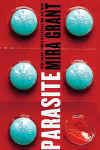
Fiona’s last reading slump was broken by reading Mira Grant’s Parasite. She said the premise is intriguing and the story moves along well, which I’d say is just what you need, so if you like eerie reads you might want to try Grant’s work.
I reckon Blodeuedd of Book Girl Of Mur-y-Castell’s statement that she doesn’t find herself in serious slumps because she reads a lot of genres is something to think about. Literary Feline agrees, recommending mixing genres.
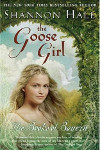
Here are Scott of Some Smart’s suggestions: Garth Nix’s Sabriel, Jonathan Stroud’s The Screaming Staircase, Maggie Stiefvater’s The Raven Boys, Shannon Hale’s Goose Girl, Brandon Sanderson’s Mistborn: The Final Empire, and Patrick Rothfuss’s The Name Of The Wind. Some excellent names there.
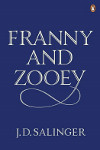


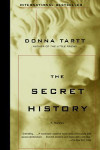
Alice of OfBooks reckons on Donna Tartt’s The Secret History or something short, for example J D Salinger’s Franny And Zooey. Chunkster or novella?
For the classics and/or literary fiction lover, Violet of Still Life With Books has a fair-sized list: I Capture The Castle, The Prime Of Miss Jean Brodie, We Have Always Lived In The Castle, Cold Comfort Farm. She also recommends anything written by Barbara Pym or Beryl Bainbridge.
Whether you commented on the previous post or not, have you any (other) suggestions for slumps?


