





The Worry Of Not Having Blogging Ideas
Posted 19th January 2015
Category: Chit-Chat Genres: N/A
10 Comments
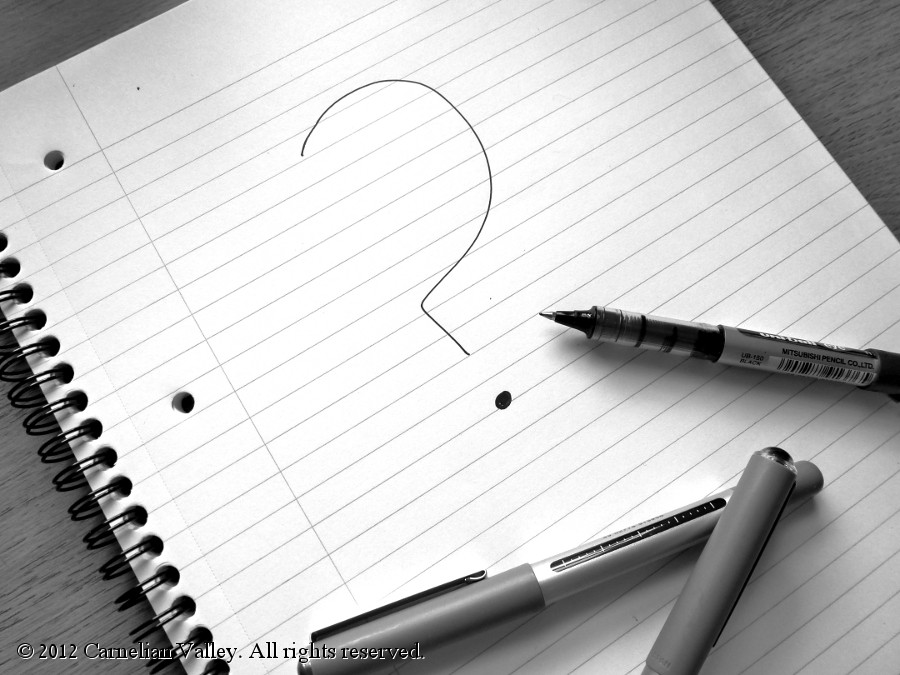
The worry of not having writing ideas is big when you blog and potentially more so when you’ve a regular schedule. Once you fall out of sync it’s not only hard to get back emotionally, you do worry a little (or a lot) what effect it might have on your readership. Of course you can ditch the schedule but that can cause its own issues.
You can also worry about the change in ideas. I know I seem to be running out of the general book topics that have been part and parcel of my blog, and whilst it’s not so bad as no ideas at all, again you wonder about the effect. I know I even worry about myself as a blogger in this context.
Does worrying about the lack hinder the formation of new ideas? Worrying is, in a way, good – it keeps you on your toes – but it can pull your focus away from brainstorming. It can make you more susceptible to rambling or running down the wrong pathways that are unrelated points. It can ruin a good idea by stopping you writing in the way you ought to be. We’re unlikely to come up with good ideas if everything we think of is dismissed as bad because it’s a fact that bad ideas (if, indeed, they are bad and not good ones we’ve glossed over) can be joined to good ones to make a great post.
(Though of course one can be far more astute when worrying and write something wonderful.)
I’ve been dealing with ‘idea anxiety’ for a few months now, in part, of perhaps mostly, because of the time I’ve not spent blogging. I find it ironic that last year I said that when there’s a deadline ideas happen, because they’re not happening so much now. I know there’s a lot to be said for my being out of sync and just away from blogging, but there have been times when I’ve had to accept that I won’t be posting and albeit that it’s not the end of the world, it’s hard to reconcile the fact. But of course I have to be reading and blogging to write.
There’s probably a post to be had about the irony that is editing books – being right ‘there’, in the thick of it – but not having ideas.
Having had this experience now I think regardless of how well I’m doing I’ll always worry about running out.
Do you worry about not having blogging ideas?
On The Reasons For Censoring Names And Places In Victorian Literature
Posted 16th January 2015
Category: Chit-Chat Genres: N/A
5 Comments

When I first started reading Victorian literature I was confused by the way places were written as, for example, —-shire. I mentioned it in a review as a drawback, and even after realising it was a common device I left my review as it was because it was, after all, a fair point).
As you likely all know, explaining an idea to Google is difficult but I finally found a related result. There were a variety of ideas included which I liked because it seems there may indeed be different reasons. It was nice to finally have answers and in the hopes of helping others I’ve decided to compile what I discovered. The answers I’ve paraphrased can be found in the links at the bottom of this post.
It’s been said that because Victorian readers were less able to recognise fact from fiction or appreciate the difference (I read this as similar to the hysteria – melodrama – than in regards to intellect), names and locations were censored to avoid any issues. I suppose we could liken this to the disclaimers in books – ‘resemblances are coincidental’. I do wonder, however, if this answer was more of a Chinese whisper of the rest.
In a similar vein it’s been said that censoring occurred so that the author could write freely, make things up, and the reader would be free to use their imagination or to pretend the story happened in their own country. This sounds fair enough, even if we might today consider it a strange way to go about it.
Censoring would aid the writer who wished to use a true story as the base for their own.
There was the suggestion that it was a throwback to times when people hid behind the idea of an ‘editor’ in order to tell a true story without getting into trouble.
I like the thought that by Austen’s time it disturbed the illusion. I know it pulls me out of the story simply because I end up trying to place the location she’s talking about, trying to work out if it is a real place and if it’s not real then which part of England is it supposed to be most like. I find it hinders my imagination and I just pick whichever place I’d prefer it to be, which might sound a good thing but, like imagining the wrong American accent when reading, ultimately means you might miss nuances and so forth due to the differing contexts and local cultures that accompany such a misunderstanding.
In regards to Austen, it’s said she could discuss politics and similar without it looking like she was openly criticising the government. If this is true then it worked – I don’t think anyone considers Wickham and his group (I can’t actually remember what he was exactly – maybe that’s the point?) as one and the same.
Lastly, there’s the suggestion that censoring could be used to give the impression that a writer was talking about real life. Are you as confused as me now? These ideas contradict each other…
I think the comparison made between translations is interesting – it seems this was mainly a British device and thus does point to censorship. Tolstoy cussing; translation clean.
Obviously there is a be all end all answer, even if it is different for each author. I think to say there is one answer, whilst satisfying, wouldn’t ring true. But I do think it’s fair, given that it can be disruptive to us today, to speculate and decide which reason(s) works best for us individually. For me, that is the avoidance of trouble and the desire to aid the imagination. I suppose I want the truth to prevail and to see the author in a good light!
Or did Austen just want to play Hangman?
What have you heard on this subject? What reason works best for you?
References
2015 Goals
Posted 5th January 2015
Category: Chit-Chat Genres: N/A
10 Comments

Considering I essentially forgot my goals for last year (I feel as though I should be saying ‘this year’…) I didn’t do too badly. I didn’t exactly do well, but it was a surprise to read them:
- I had wanted to work on my classics club list – I finished one book, Mansfield Park, am in the midst of two others (Anna Karenina and Nicholas Nickleby) and am technically half-way through Vanity Fair
- I wanted to read more Sherry Thomas and Eloisa James – I didn’t get anywhere with this one but I have a couple of books ready.
- I wanted to read more of my own books – 31 out of the 50 were my own books.
- I wanted to read Neil Gaiman – I failed.
- I wanted to ‘read more non-fiction but don’t freak out if it doesn’t happen’ – I read non-fiction but technically did not read ‘more’, so I’d say I half fulfilled this goal.
- Take part in What’s In A Name – I didn’t read the books I’d listed but I did take part.
I have but one literary goal for this year. The changes last year and the time it’s taken to adjust to them led to me realising I wanted just this one goal, to ease myself back into things.
- Read as much as I (comfortably) can.
That’s it.
What are your reading goals for 2015?
Who’s To Blame If We Dislike A Book And/Or It Fails To Make An Impact)?
Posted 15th December 2014
Category: Chit-Chat Genres: N/A
2 Comments
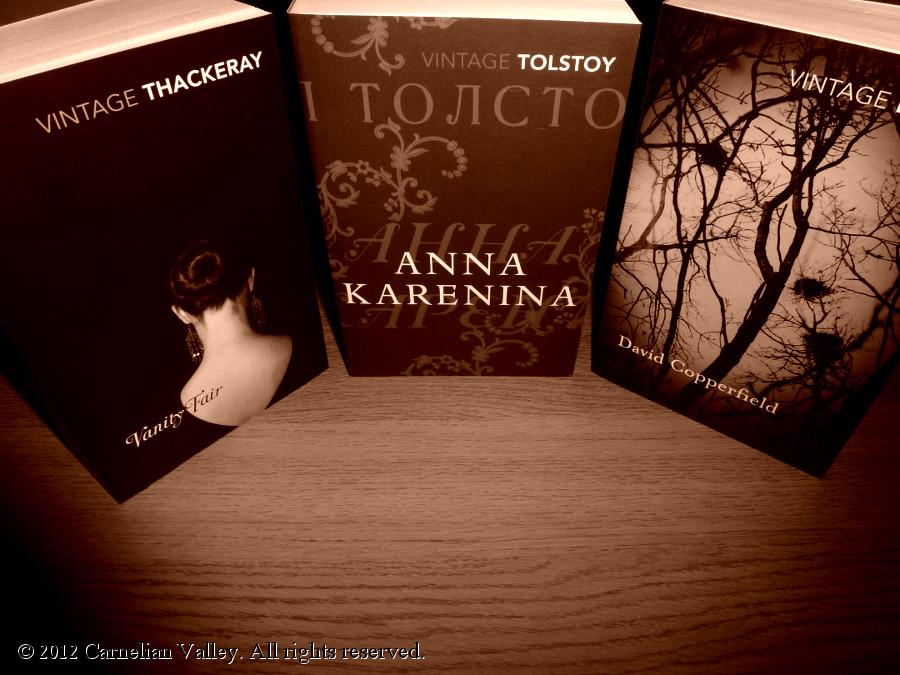
A while back, Maria said something in her comment on my post about finishing books you’re not enjoying that got me thinking. It was the following that I picked up on: “I think reviewing and saying I didn’t finish would make it look like it was the book’s fault while I usually assume that I was not in the right mood or I’m not in the book’s primary audience.”
I started thinking about to what we could – ‘should’ is too strong a word – attribute the lack of an impact a book has on us as individuals. I’ve used the word ‘blame’, but only so that my meaning is obvious. There isn’t anyone to blame as such because the thoughts, backgrounds, and reading contexts change per reader.
I want to consider target audience. If we (you or I) pick up a book and we’re not the target audience, and most certainly if we know we’re not the target audience, it could be argued that it’s more our fault than anyone else’s if we dislike it. We chose to read it. However there are some elements of books that tend to unite people whether or not they’re the target audience, so in that respect it’s more difficult to say it’s the ‘fault’ of the reader.
But, where elements are concerned (let’s use the love triangle as our example), we can’t exactly say it’s the author either. Yes, an author may choose to include a love triangle, but if that is what sells or is what the publisher is looking for, you can understand why they might have chosen to include it. It may indeed be the case that self-publishing means writers can now truly write what they want to write but we’re not quite ‘there’ yet overall.
Questions can be asked – should we have to be the target audience in order to read the book, to appreciate it? What about expanding horizons? What about reviewers and readers who are new to the genre and are reading it to analyse or dip their toe into the water and see if they like it?
Being new to a genre, trying something different, you’re possibly not the target audience or at least you’re not yet the target audience. There are books that don’t require prior knowledge but most assume you’re familiar with and like the genre. I know I was not and likely never will be the target audience for inspirational romance, but I’ve read and reviewed a couple of them. It could be said I’m to blame for choosing to read them; the background I brought to my reviews somewhat gelled with my little knowledge and hesitation (writing as objectively as possible is something else). I liked reading them, I liked gaining knowledge about the genre. But I was not the target audience.
Where reviews and general conversation are concerned, readers only ever read books targeted to them, the context and angles for discussion wouldn’t be as varied as they are. A reader may read a book about a historical period they aren’t really interested in and/or knowledgeable about, but sometimes those reviews and conversations contain points that readers who do know a lot about the subject might have missed. It’s the usefulness of the outsider opinion.
I think it’s important to acknowledge when you’re not the target (when it’s obvious to you) but it’d be impossible to suggest, for good, a fault one way or the other.
What, if any, responsibility does an author have? I think it would be unfair to suggest an author always (always, always) take the reader into account. It’s important for the author to be creative, to experiment and to be able to use the idea, ‘write the book you want to read’. (Of course aligning themselves with this thought could match what a reader wants to read.) If you’re not the target, there’s little the author can do; but clarity, fun, and the story, are all down to the author.
To think of everyone would limit an author, that they think of their audience is best.
I think that if anyway, the answer is another question. ‘What’. ‘What’ is to blame if we dislike a book? Answer: difference, individuality. And that’s the problem with the word ‘blame’. It isn’t blame because it’s good to be different.
What do you think about this subject?
My Fear Of Long Books
Posted 12th December 2014
Category: Chit-Chat Genres: N/A
13 Comments

I would apply the words ‘fear’ and ‘daunted’ to the way I feel when considering reading a long book, because if ‘daunted’ means you’re scared but still carry whatever it is out, then ‘fear’ is a bit more serious.
I often approach my shelves wanting to take out a long classic or other suitably long book. This is because of the idea, at least it’s my idea, that the longer the book, the longer the story and the more developed and engrossing the world. I suppose it’s correct to say that that’s the way I feel it should be, and of course it often is. It’s the same thought I have when I hanker for fantasy – I love the idea of it, what it represents, but do I at this particularly moment want to spend the time the complexities require? (I find fantasies complex and admire those who read many of them. This has a lot to do with my slow reading speed.)
Anyway. I have a fear of the time needed to read long books. There are a few reasons for this. Firstly comes my mindset: in the time it’s likely to take me to read Bleak House, I could be reading two or three shorter books. Forget yearly book count; I will have read and experienced more books in that same time if I read shorter books. The second reason is that I know the long book is likely to contain filler material of some sort. It’s almost inevitable. I know that if there is filler material which, let’s face it, is something that tends to be boring or at the least frustrating, I’m likely to put the book down and I’ll have difficulty picking it up again. As much as I can acknowledge that merely thinking this can cause it to happen, it’s a valid consideration.
Related to this, then, is the knowledge that deciding to read a long book is rather akin to confirming your place in a project. It’s saying you’re going to spend the next week/fortnight/month (a month in my case) devoted to this one book, because you will even if you read another at the same time. It’s saying that as much as you’ll be happy to be able to say you’ve read it, it is nevertheless still just one strike on your list.
So my perusal of my shelves goes like this: approach bookcase; spot long book and know I want to read it; I really do; realise it’ll take a while; look at other books; play a game of eenie meenie miney mo I’ve no intention of honouring the result of if it lands on the long book; choose the shorter book even if my gut tells me the longer one is the one for me right now.
And yes, the whole reading another book alongside anyway thing does mean this is silly. But I’ll still go along with my fear.
The only way for me to read long books is to just do it. I haven’t mastered it yet.
How do you feel about long books in this context?


