




Books Picked Up On A Whim
Posted 13th July 2016
Category: Chit-Chat Genres: N/A
5 Comments
Here is a citation: this post was inspired by Lori’s post in which she diverts from the subject to compile a list of books about New England (it’s worth a read). Lori’s post was in turn her offering for a meme created by Brandy. In addition, Jessica’s own post following Brandy’s meme includes some excellent recommendations.
I hope I’ve got that right!
I’ve picked up quite a few books on a whim in my time, more so before I started blogging when it was harder to find recommendations. Split roughly between the time before the Internet was a thing and the few years before I started writing here, I tended to go by subject, popping into Waterstones or one of the bargain indies we used to have and heading first for the young adult section and then various others. (What I love about bargain bookshops is the way they just pile up the books with no organisation – it can be frustrating but there’s no better way to find books you wouldn’t have heard of otherwise. Jessica’s post reminded me of The Works – a book/art supply chain we have in the UK which tends to have tons of books stacked under tables, disorganised on shelves, and piled high on tables. It doesn’t feel like a bookshop because the decoration is art-focused, but it’s an awesome place to find random books.)
I’ve decided to talk about books I got on a whim that I’ve since read because other than a brief tale of how I got them, there’s not much else to say about the unread ones. I’ve also stuck to books I’d never seen before that I picked up on the same visit I encountered them.


Anchee Min: Empress Orchid – I remember being drawn to this book because it was about Chinese history and my school education had never looked at China… or Africa, or America, or anywhere other than Europe or the Arab-Israeli conflict, actually – thank god for university and books. I’d actually had enough of modern history by this point but that the book was about China, and an empress at that, was enough of a difference to sway me. I loved it. This is the book that started me on the Chinese history studies I’ll likely never finish. I went on to read Keith Laidler’s biography, I have Jung Chung’s biography ready, and I’ve read around the subject, too. A random choice had a big impact.
Jennifer Donnelly: A Gathering Light – I understand this has become semi-lauded, if I can use that mash-up of words. I liked the sound of it and read it in the year I started blogging. It was okay but not quite as compelling as I’d expected.
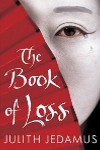
Julith Jedamus: The Book Of Loss – I got this from a cut-price store that was closing down; I may have been young enough that I didn’t realise how cringey it would be to remark to the cashier that I couldn’t believe I’d just found this place and how awful it was that it was closing down. It’s difficult to find reviews and references to the author online and I believe it’s out of print – it promises much but doesn’t deliver.
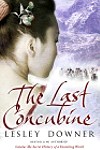


Lesley Downer: The Last Concubine – One of my first adult books, you can see the pattern. It’s a fair read and I’ve been circling Downer’s second book for years.
Lisa Jewell: A Friend Of The Family – And this was my very first adult book. I had been old enough, not that my parents censored my reading, to read adult books for a while but I’d stuck to YA because adult books just didn’t appeal – the covers were all dull. The day I got this book was the day I decided I should step up and give one of those dull-looking adult books a go. The cover was standard for the time and I felt mature picking it up. It turned out to be a fair enough read and started me off on my Lisa Jewell phase – for a few years afterwards I bought her new releases and gobbled them up. It came to an end when I decided I’d had enough samey main characters and was bored of Jewell’s usage of ‘retard’ in every one.
Madeleine Thien: Certainty – The cover was pretty, the book was small in size (mass market paperback) and the summary sounded nice. A completely random book; one I didn’t like.


Maile Meloy: Liars And Saints – Another dull adult cover choice. I do know that I never told my parents what it was about because there was a lot of sex in it. I’ve spoken of this book many times over the years I’ve been blogging; the theme work is excellent. I’ve read it three times now and had to get a second copy when I lent it to a family friend who I believed was going to read it overnight but instead took it back home with her; I gave it a year before I realised if I didn’t get another copy soon it might go out of print – the sequel/spin-off, though admittedly not well received, was in that state.
Sheila O’Flanagan: Someone Special – This book took a long time to read; it was 500 pages, which I felt similarly about then as I do 900 pages now. It’s all right; nothing special, ironically, but perfect for summer.
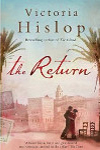
Victoria Hislop: The Return – I expect many of you know this book and more know of Hislop in general. As you can imagine, this turned out to be an excellent whimsical decision.
Whenever I pick up a book on a whim, I worry, but thinking about these books I realise that whilst it may be a snap decision, whimsical book choices are at least 50/50 – there is always a very real chance you will like the book and the possibilities for broadening your horizons aren’t to be sniffed at. As we see many times, for instance in the recent revival in the blogging world of the work of Barbara Comyns, and all those excellent Persephones, the most unknown, random books can be transformed by our picking them up. I very much believe a book diet rich in random choices is important. Even when the book isn’t so good, the act of discovering it can be a boon in itself. And in our days of so many recommendations and publishers going on about book discovery, we need to make time for random choices.
What books have you picked up at random and what’s the story behind your acquiring or borrowing them?
Discovering Alice Dunbar-Nelson
Posted 29th June 2016
Category: Chit-Chat Genres: N/A
1 Comment

Last month, Anne Boyd Rioux wrote a post about a forgotten writer. Alice Dunbar-Nelson is also known as Alice Moore and sometimes in a fashion that covers all bases, Alice Ruth Moore Dunbar-Nelson. As you know, I’m not one to pass up a literary learning opportunity, so I read the post and went straight to Project Gutenberg to download the cited text. I read it that evening.
Dunbar-Nelson was an African American writer. Like her peer, Kate Chopin, she wrote books on subjects that people found difficult to deal with. Her colour and background made her even more controversial. (Need I say that if you’ve ever wished Chopin wrote more, let me introduce you to Dunbar-Nelson.)
The author favoured female agency, independence, and the right to work, the right to remain childfree. She spoke out about racial problems. Out of her work, the pieces published were those which submitted more to the views of the day – but they succeeded in progressing nonetheless. She wrote articles for papers and helped organise suffrage events. She campaigned against lynching and was a successful speaker. Her diary is available as well as a few novels.
An interesting fact, or not interesting if you consider the time, is that she married. Three times. She was first courted by a fellow writer, poet Paul Laurence Dunbar. He died of Tuberculosis, but Dunbar-Nelson had separated from him four years previously; he’d abused her. She went on to marry twice more, first a physician and then poet and civil rights activist, Robert J Nelson. Some sources say she took female lovers, too.
As I said, I read the work cited by Rioux. It wasn’t the best choice (at least I believe that will prove to be the case) – there’s a vagueness to Violets And Other Tales that I suspect is down to a dampening down of subjects but also due to the writer’s age at the time. There’s a certain pretentiousness to the non-fictional pieces that speaks of immaturity.
The work sports both an introduction by Dunbar-Nelson, in which she intimates a fair lack of ability – likely to appease society? – and a preface by a Sylvanie F Williams who Laurie helped me discover was a fellow member of the Phyllis Wheatley Club, a group of women, most, if not all, coloured. A list here infers various interests such as medicine, literature, and philanthropy. (The linked piece also states that the group included three men – “it is redeemed from the flatness and general unprofitableness of a gathering in petticoats by three real, live, flesh and blood, healthy men…”) Back on topic, Williams’ preface is rather ingratiating which is both understandable (young, new, writer, forgive her!) and sadly a product of the time, having to conform (a woman has written, forgive her!)
Violets And Other Tales is a collection of short fiction, poetry, and review-esque non-fiction. It’s very short and as I said, a bit vague and lacklustre, but you can see the potential in it, enough that it makes you wonder about Dunbar-Nelson’s later work and also what might have been had she been born later in time. Given that I came to the work with expectations, it may come as no surprise that I favoured pieces in which the author’s themes were more obvious.
There are a few pages titled ‘Why Should Well-Salaried Women Marry?’ Dunbar-Nelson states that a woman who works and is not married is able to spend her free time as she wants – she has neither husband nor children to look after. The author makes the case, through what she says as narrative, that a woman is quite capable of doing things by herself, that a woman knows about money:
Her mind is constantly being broadened by contact with the world in its working clothes; in her leisure moments by the better thoughts of dead and living men which she meets in her applications, by her studies of nature, or it may be other communities than her own.
To paraphrase, why should a woman give up her liberty in exchange for serfdom, all too often galling and unendurable?
It’s interesting to think of Dunbar-Nelson marrying when she had these thoughts but aside from it being the usual thing in those days, to marry, and aside from the fact books and real life are often two different things, we do have this:
The attraction of mind to mind, the ability of one to compliment the lights and shadows in the other, the capacity of either to fulfil the duties of wife or husband – these do not enter into contract. This is why we have divorce courts.
Another piece I liked was The Beeman, a short story about a beekeeper who is approached by a fairy, offering to transform him into his true self. Having discovered he was once a baby – I love that! – the fairy keeps her end of the bargain. Some years later she comes across a man who is a beekeeper and it’s that same man she turned into a baby, all grown up. It’s a nice message – whilst something may not be high status, that doesn’t mean it isn’t important. We can force change but if our heart is not in it, it won’t work for long.
It’s a good work, but her others are likely better – my guess is that her diaries would be most compelling. And I’ll be continuing my foray; I’m glad to have found someone to staunch my sadness over our relative lack of Chopin.
Had you heard of Dunbar-Nelson?
Should Translated Fiction Be Considered A Genre?
Posted 22nd June 2016
Category: Chit-Chat Genres: N/A
4 Comments

I must credit New Statesman for this post. The link goes to an interesting article which examines many ideas, albeit from a firm view point.
Do you categorise translated fiction in some way? I don’t, except in the case of my goals, which isn’t really categorising: one of my goals is to read more translated fiction so I do note numbers without thinking how much each book is akin in genre to another. In this way I do sort of bunch them all together but with good reason – in my specific case, any genre will do – it’s that ‘translated by’ byline I’m looking for.
But away from this, translated fiction sports a difference you don’t see in fiction you’re reading in its original language. Other than the obvious ones (it’s a different beast, it can require – does require – a different mindset) you’re kind of reading the work of two writers: the author and the translator. In effect you’re reading someone’s plot and characters in someone else’s words, someone else’s language. Not quite fully, not like the work of David Eddings that in recent years has been shown to be as much the output of his wife, Leigh. And not quite like the work of Ilona Andrews where it’s a fully fledged team. As much as the original author has written the words, someone else has adapted it for another language. Interpreted it. It’s a bit like reading a primary source and a secondary source at the same time because a translator’s interpretation could be said to be akin to commentary. It’s a collaboration after the fact.
Do some people see translated fiction as different because the books are full of the translators’ (choices of) words? I think it would be fair to claim so. This is in a similar vein, though not verging towards intolerance, as people who won’t watch foreign films with subtitles. (Perhaps it’s more in line with people who might not want to read foreign fiction full stop.) But it’s vastly more… palatable… a decision than the film one. (I’m not too tolerant of the film situation because I’ve met too many people who match their stance on media with a refusal to learn about other cultures.)
I’d like to highlight the following quotation from the article:
“Where there is space and a strong local market for translated fiction, it makes sense to at least have a table which encourages a Ferrante reader, say, to try Knausgaard. That’s not to say that people with a predisposition to one translated author will necessarily enjoy another just by virtue of their both being translated, but that customers who are keen to experience new voices from around the world appreciate some direction in making new discoveries.”
This strikes me as a good blend of business sense – can we sell more books in this way? – and passion for reading – whilst these books we want to promote and sell may be in different genres, they may well appeal to people who want translated fiction simply due to the nationality or ‘continental nationality’ of the author, so let’s help them. And I think we all appreciate direction, and are often led by other people’s unremarked-upon marketing decisions.
It’s true that translated fiction unites its readers and because readers of it wish, often, to read more, and to gain knowledge of other places, cultures, even languages (that may sound odd given the translation factor but I trust you know what I mean – metaphors and ways of talking and so on) categorising does make some sense. You’re interested in learning about other countries than Britain, liked that particular book? You may like this one.
I think contention around categorising translated fiction, lumping it together, is more about the fact categorising is already a sticky subject – ‘women’s fiction’ anyone? It’s a difficult one. Are we squashing diverse countries together?
The writer of the article has this to say in response to the above quote:
But why not include international authors who write in English in the same section – authors from Nigeria and India, New Zealand and Canada? Giving translated fiction its own section – and a separate Man Booker prize – suggests that these books are fundamentally different to English-language novels.
This statement has merit to it but a Nigerian writer, for example, writing in English, is limited to and by that language. They can and do of course use Hausa and Arabic words – I’m thinking of Elnathan John here – but for the book to work it has to adhere to English language conventions and as such to western conventions, because it won’t work as well otherwise. No matter if the readership was composed entirely of Nigerians and thus all were able to understand all the Nigerian references, the very fact of the use of English would limit the storytelling somewhat. It’s a different experience to translated fiction; in the case of my example you’re hearing directly from the writer but for whatever reason the text is in your own language (possibly because it’s the writer’s first language, too!) That’s sometimes the reason for foreign words in English language books – that you have to use them because there’s no English counterpart. Though translations still have issues with counterparts, translators can at least work with sentences rather than specific words which may make it easier to show, in the translated language, what the author means. (Not that authors writing in English don’t use foreign sentences of course, but too many of those and you cause your readers a lot of frustration, so it doesn’t happen often.)
Another quote the writer includes:
“I think that by not integrating translated fiction into the general fiction shelves and display tables [sic],” Reyes says, “some readers see it as ‘not for them’ – a category apart from normal fiction.”
That’s Heather Reyes of Oxygen Books, to provide a full reference.
This, the case for a full integration with which the writer of the article agrees, harks back to what I said about films. If it’s different, if there’s not a deliberate effort to make it blend in (if the film isn’t dubbed) then many people won’t give it a second look. Of course this begs the question should we be making it so easy, should we be doing something that will mollify people to try it? That question will receive subjective answers but we can compare the situation to the one wherein we separate translated fiction – by putting it on its own table, we are trying to usher readers to buy (more of) it, and that’s in part a business decision. Why should full integration be any different?
I personally think the answer lies somewhere in the middle – a table set near the ‘regular’ fiction shelves, a table that isn’t always there, books that aren’t solely confined to it. I have to say I’ve only seen Elena Ferrante on general fiction display tables, but she’s hot news at the moment – she’s on display tables because many people are going into stores specifically for her books and so the stores want to make it easy for fans to find her whilst her place on a table means the fans won’t necessarily walk in and out without browsing. And I think it’s fair to say that this is what happens, and it happens also with new and/or popular books in general – table whilst ‘in’, shelves once others take the top spots in the charts. I found One Night, Markovitch on the shelf and Penguin’s publications of George Simenon’s Maigret series from last year are also on the shelves. Do they get noticed, and not just by me or you who happen to be attuned to them? I reckon so. Pushkin Press have done well by Gundar-Goshen – two excellent covers and much promotion. Penguin’s been publishing so much Simenon that you can’t not notice the line of thin white books in the S section (and this is leaving aside his fame).
Translated fiction isn’t a genre as such but a distinct effort to lead people to it on occasion can only be beneficial.
What do you think about all this? Do you read translated fiction? And no matter whether you do or don’t, how do you/would you categorise it?
When Reviewing Older Books
Posted 15th June 2016
Category: Chit-Chat Genres: N/A
6 Comments

Something’s been on my mind recently. It works itself up the more I review and whilst I’ve no firms plans to change my style – though it happens naturally over time – I’d like to discuss it with you and get my thoughts down on digital paper.
It can be summed up as ‘do I review this older book with thoughts as to its past context or do I review it in my modern context?’ When I say this and speak of past context I’m meaning both social context and the specific views reviewers had at that time. And I’m saying all this because I already look at social context. (The book I reckon started this whole thing off was The Awakening, a book ahead of its time that was panned by critics in its day but is lauded by us now.)
I think that to review a book with its own context in mind is interesting but you’d have to be careful because there wouldn’t be anything new to say. You’d be talking in hindsight unless you created a hybrid, a comparison of thoughts. You’d also have to do a lot of research every time, more so than usual.
Now this is kind of in line with newspaper reviewing. Here’s a confession: I don’t find newspaper reviews to be so much reviews as they are general articles related to particular books. They tend to go off subject, talk of the author’s life instead of the book – in cases such as Irène Némirovsky it’s relevant; often it’s not – and I’ve always found it to be more of a lesson and a bit of a showing off of knowledge rather than something that tells you whether or not you might like the book itself. It doesn’t happen all the time but certainly there are many occasions wherein I’ll finish reading the review and be none the wiser as to what the person thought of the book. For all the assertions that ‘I didn’t like it’ or ‘I liked it’ aren’t helpful by themselves, they are more helpful than something that doesn’t say anything.
And with that potentially monstrous admission, I’ll move on.
Reviewing in one’s own modern, present, context, is where you’ll find new thoughts. It’s where a book still has more to say, to pinch the thoughts from a previous post. You’re talking about the book in the context of what you know and whilst this wouldn’t score much in an academic environment, it’s surely much more useful to the person who is looking to find out whether they’d like the book themselves; whether their ancestors might have liked it is irrelevant.
But then you can’t apply modern contexts to older thinking, you can’t say that any book, written in the Victorian period, for example, that uses the word ‘cripple’, is awful because it uses a word we’ve since blacklisted, instead you must speak of how the Victorians treated disability or, indeed, state that in such and such a book’s case the author is using ‘cripple’ as we use the word ‘table’ – the bog standard word at the time. Thinking was different back then.
Then there is the question of not-so-old books – how do you review books that have been published in your lifetime, a decade or more before, particularly when it’s been long enough that the world has changed? I recently reviewed Mavis Cheek’s Dog Days and it seemed very outdated – it was written in the 1990s! (I’m also thinking of Susanna Kearsley’s Mariana – a book in which a person smokes in a pub in England. This doesn’t happen any more – there’s been a smoking ban for some time now – and I’d almost forgotten smoking in pubs was once a thing, enough that I was wondering why no one was telling the character to put it out. The smoking made the book seem a lot older than it was yet I can remember the day the ban began, what I was doing, the clothes I was wearing, the building we’d come across that turned out to be full of asbestos…) It sounds mad to me, but I had to really think about what I wanted to say in my review of Cheek’s book, in my review of Kearsley’s book. My review of the Kearsley will be shorter than usual, though I could relate to the book, time-slipping aside (I wish I could relate to that!). My thought process: should I mention the lack of computers making the rural setting even more romantic?… I doubt anyone said such a thing when the book was released in 1994, because whilst there were plenty of computers around there wasn’t much Internet and it was still more of a hobby than an essential part of life…
Ultimately I did mention the lack of technology because we can’t go backwards and everyone in future will likely be drawn in part to the book’s nostalgic feel… which of course they wouldn’t have been at the time. Had I read the book in 1994 my review would have been very different. And likely full of spelling errors. I think 22 years in the past is long enough ago to create comparisons, especially considering leaps in science.
How many years could you apply this ‘in your lifetime’ thinking to? I think in this present era not so many. The world is moving too fast. Young adults don’t know what life was like before the Internet. But there’s some leeway there – it’s a question of intuition.
Have I gone off subject? I think so; I’ve been thinking about this for a long time, but the most important thing to me was to get your opinion:
What do you think about older books and reviews and context and time moving on?
On The Maude And Pevear & Volokhonsky Translations Of Anna Karenina
Posted 18th May 2016
Category: Chit-Chat Genres: N/A
3 Comments

I’ve mentioned before the switch I made from Louise and Aylmer Maude’s translation of Anna Karenina to Richard Pevear and Larissa Volokhonsky’s, but today I want to explain it a little in case it could help others.
I switched translations at 500 pages in. I was incredibly frustrated with the Maudes – a lot of the text didn’t make sense to me and I just didn’t find it well done. I found out many people considered Pevear and Volokhonsky’s translation to be the definitive and took the plunge, deciding to start from the beginning because it had been a while since I’d picked up the Maude and I’d forgotten too much to be able to say I’d truly read it. I definitely wouldn’t have been able to review it. I’d stuck to the Maudes for 200 pages more than I should have simply due to my preference of persevering. I knew it wasn’t Tolstoy’s fault.
I wouldn’t say Pevear and Volokhonsky’s version is as excellent as the marketing describes but it’s a lot better than the Maudes’. It’s a lot clearer, more thought through – it obviously went through more editing stages. The team also, without overdoing it, are evidently writing with the reader in mind – a reader who might not know anything about Russian literature, the period, and so on.
Something I’ve since learned that bears reflecting on if you’re trying to decide on a translation, is that the Maudes were acquainted with Tolstoy. Now I’ve learned two further things, that conflict. The first is that the couple didn’t particularly like the man. The second is that they were friends and visited him. I’m wondering if perhaps it was one of those ‘frenemy’ situations – Aylmer’s views were not Tolstoy’s, but either way, apparently Tolstoy authorised Aylmer to translate his work and liked it.
If the above linked article is right then the translation was actually just Louise’s and so there was no real team work; Pevear and Volokhonsky, on the other hand, did work as a team. The pair are married; Volokhonsky translates and Pevear checks it over, edits it. They converse on word choice and so forth. They’ve many accolades and awards and whilst there may not have been awards in the Maudes’ time, it does speak highly in Pevear and Volokhonsky’s favour.
Whilst the Maude has been around since 1918 and continuously in print, I’d recommend the newer translation unless you want a historical version. Whilst Tolstoy liked the Maudes and that’s in their favour, there was of course no way for him to read Pevear and Volokhonsky, so we’ll never know if he’d have liked that one, too.
How do you choose translations when there’s more than one?


