




Julie Kagawa – The Iron King
Posted 19th July 2011
Category: Reviews Genres: 2010s, Domestic, Fantasy, Romance, Science Fiction
Comments Off on Julie Kagawa – The Iron King

A brilliant illustration of what is happening as we embrace technology and forget our dreams. Because it isn’t all about the fantastical.
Publisher: Mira Ink (Harlequin)
Pages: 355
Type: Fiction
Age: Young Adult
ISBN: 978-0-7783-0434-0
First Published: 2010
Date Reviewed: 19th July 2011
Rating: 4.5/5
Meghan has never been popular owing to her family’s relative poverty. She is also not particularly happy as her mother often neglects her, her stepfather reacts as though he genuinely forgets she exists, and her real father disappeared when she was six. But she does have a brother and her best friend, Robbie. Yet four year old Ethan says there are monsters in his wardrobe, and Meghan keeps seeing things that aren’t really there – or are they? And come to think of it she doesn’t really know who Robbie is. When Ethan is taken by the monsters that truly were in his wardrobe, Meghan finds herself on a quest to the world of the Fey to save him. Everything she’s ever known is viable to change.
The Iron King is a piece of fiction that, like many other works being published in this era, successfully blends the current trends in young adult literature with a strong lesson for life. There is a high school, there are cranky parents, but Kagawa is focused on the faery world she has created. As soon as she can get Meghan out of our own world, she does.
The initial journey through the world is very quick and definitely seems rushed but the reader shouldn’t be put off because it slows down sufficiently once Kagawa reaches the main storyline. The world is well developed and magical, if you’ll pardon the pun, the differences between the Winter Court and Summer Court, the two opposing imperial domains, making for a broad reading experience that enables the place to be utterly engrossing. And the book uses elements from different beliefs about faeries to create a diverse land. There are many different creatures, there is the idea that faeries die when humans stop believing in them, and there are fragments from classic works such as Alice’s Adventures In Wonderland and the plays of Shakespeare.
The characters are the usual fare for young adult literature – a kind of love triangle, a good guy, a bad guy – but the heroine is difficult to stereotype because she is neither weak nor strong. She has the capacity to get on your nerves at times, but you can’t say that she doesn’t try to fight, and does.
The book is at once a true fantasy and technologically futuristic. It deals with the idea that our dreams create fairies and that as our dreams change to those of technology, and logic brings an end to faith, then the creations change to suit. Thus the book holds a powerful message: although technology is good – and Kagawa never suggests we abandon it, the heroine keeps hold of her iPod throughout – the proposal is that we should not forget the magic that is nature and all the happiness it can grant us. Where nature is colourful, technology is more often monotone and where nature brings true happiness, technology helps us achieve, but we are constantly having to ask if it makes us happy. Indeed one could say that with the advent of social networking and the demise of the requirement to meet people in person in order to communicate, we are missing out on the happiness contact with others can bring.
The cautious reader should be aware that there are a few references to sex that are rather explicit and sadistic in nature owing to the darkness that the author presents the faery world to be. The romance in the book is chaste, but the fey enjoy taunting humans sexually in a way that a younger reader may find frightening simply because of the descriptions. This explicitness speaks for Kagawa’s approach overall, she is not afraid to include horrific images when appropriate and, apart from Meghan’s weak episodes, doesn’t shy away from being straight with you.
Ultimately what happens while reading is that the idea we have that there can be too much technology is re-enforced, because nobody wants a techno fairy over the sparkling beautiful things we think of now, do they? The difference between adults and children is incorporated – where children have the freedom to imagine whatever they wish and believe in what they will, there are faeries; where adults cease to believe because it is considered childish, but believe in science, there is a creativity that can be harmful if left unwatched. Forget the faeries, it’s a very important issue in our world in general.
Of course a book that deals with faeries that are under threat was never going to be more emotionally invested in the Iron fey than the original fey, and throughout the book, while the reader roots for the originals, you can’t help but remember that yes, life was okay without some of the technology (medicinal advances are very important), and that we got by without it.
But perhaps the most pressing lesson is that we should simply keep believing. Kagawa is not saying we should always believe in fairies but that maybe we should keep an open mind, or at the very least consider the possibility of other phenomena. There are plenty of supernatural things in the world that different people believe in but that science cannot prove, because it is beyond the realm of science at this time. And just because science cannot prove something does not mean that something does not exist. We know this anyway, because of life, and faith, and also because science can get it wrong. But sometimes we need reminding.
Kagawa’s book uses the usual formula but creates something different from it. In this way the book will appeal to those looking for your standard paranormal young adult literature and also those specifically interested in faeries. It succeeds in being both a good read and a verdict on how we manage our creativity. And, like all good young adult literature, it does it without preaching.
I waited many months before picking up The Iron King, although I had seen it everywhere and been intrigued by the set-up. And although it wasn’t quite as fantasy-based as I’d expected, the reality of it made its mark. Very highly recommended to fans of fantasy, history, steam punk, social issues, domestic relations, angst, and romances. The crossover value of this book is extensive.
Related Books




Shannon Stacey – Yours To Keep
Posted 10th July 2011
Category: Reviews Genres: 2010s, Domestic, Romance
2 Comments

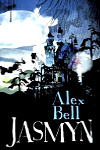
Should you judge this book by its bright, colourful, happy cover? Yes, you should.
Publisher: Carina Press (Harlequin)
Pages: 191
Type: Fiction
Age: Adult
ISBN: 978-1-4268-9172-4
First Published: 2011
Date Reviewed: 5th July 2011
Rating: 4.5/5
When Sean Kowalski got home from the army he thought he’d spend some time relaxing before working out what he wanted from life, but when Emma turns up at his door he doesn’t know what to think. Emma needs a boyfriend, well, she doesn’t need one in the usual sense, she’s happily single for now, but she’d told her Gran that she had a boyfriend in the hope that said Gran wouldn’t feel bad about living in Florida away from her granddaughter – the lie is as extensive as this sentence. Now Gran is coming home for a month and Emma needs to find a real person to support her story of a boyfriend. The problem is she’d already used Sean’s name and face to back up her story, so she needs the man himself to act for her. After pondering on the madness of it all, Sean reluctantly agrees. After all, it will only be for a month.
Just when I say no to contemporary romance, one comes along that rocks my world. The only way I could describe the story and give you a good idea of what it’s like was to write a long summary. I am, it must be said, very surprised to have enjoyed a contemporary romance so much. And if you are like I was at the start of my venture into romance, and want to dip your toes into the genre but are hesitant, may I be so bold as to suggest that you begin with this book?
The set-up is completely barmy but it creates a fun situation to read about and the possibilities for plot development are endless. There are a lot of descriptions in the book that fill it with life. A big focus is placed on family, and although this was necessary as the book is the third in a series on couples in the Kowalski family, it expands the narrative and brings in plenty of dialogue and characters.
And the characters are great. They are realistic, they are funny, they are quirky, and the development of the relationship between Sean and Emma is never dull. Once an element of their relationship, or non-relationship, has been covered, Stacey moves straight on to the next. What’s good is that they are solid romance characters but would work just as well in other genres.
The speed at which the storyline takes a turn to a place that was always a possibility, is rather quick, but it is what allows the story to go up a notch. And the writing is very good. One thing I have found in the romance genre is that the writing is different to other genres, but in this case that’s not true, and it confirmed my thoughts that there must be a style of writing in romance that would make for a suitable transition for people wanting to give it a go. The only thing that brings it down are the numerous spelling errors dotted about the pages, the content could have done with another look over.
“Now she had to pretend not to love the man she was pretending to love while pretending she wasn’t sleeping with him.”
The story is fantastic, it really is, Stacey develops everything in it so well throughout, that although in theory it’s a rather simple tale, there is much to savour. For example, the way Sean lets Emma know more about him by leaving impolite notes on the bathroom mirror, which of course change in tone as the story continues, and the way Emma is a particularly strong heroine whilst being allowed to feel heartache. It’s the little things that are the best, the little things that each realise about each other that come to mean so much, while the big things are important but take a backseat.
Although there are many of them from a certain point onward, the sex scenes are tasteful and there are no crude words that could alienate a cautious reader. They are sexy rather than romantic owing to placement.
The narrative does repeat itself at times, however it is difficult to say whether this is a negative aspect or not, because the fact is that in the situation the characters are in when they think things they have thought before, it is all too understandable that they would be doing so. It’s a case of a book being incredibly true to life that in reading it one can see how silly us humans can be when we get in a pickle.
The subplot of Cat’s (Gran) relationship with her potential boyfriend works when it’s part of a scene or is a way of advancing the main plot, but otherwise it can be distracting and out of place. Of course there is nothing wrong with an older couple beginning a relationship, and indeed it’s rather lovely to read about and on a par with Sean and Emma, but it would have been better in it’s own book.
When I read Jane’s review of this book at Dear Author I was torn – I loved the sound of it but at the same time I couldn’t help but think that I’d find it too stereotypical. Jane was right. Stacey has written a fantastic book that looks at different issues couples face (from the time Sean moves in) in a way that means it’s incredibly easy to relate to no matter if you can relate to one of the issues or all of them. And she does so with humour and sincerity, and a great deal of heart.
And I am going to step forward and say I really, truly, enjoyed it.
I received this book for review from Carina Press.
Related Books


Shelley Munro – The Spurned Viscountess
Posted 22nd June 2011
Category: Reviews Genres: 2000s, Historical, Mystery, Paranormal, Romance
1 Comment
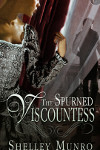
In a time when witches were burned, having a special ability could be a gift or a curse. It could even be both.
Publisher: Carina Press
Pages: 241
Type: Fiction
Age: Adult
ISBN: 978-1-4268-9058-1
First Published: 2005
Date Reviewed: 27th April 2011
Rating: 4/5
Please note that this is a revised version of an earlier book and that it is the earlier book’s release date I have referred to.
Rosalind, a young woman considered a witch by her village, took her chance and married Viscount Hastings, the man her cousin didn’t want. But there is far more to Hastings than the scar that everyone looks away from, as he comes with baggage from a doomed previous marriage. Rosalind can read people’s thoughts and comes to accept Hastings’ issues, but can he? And who keeps trying to harm Rosalind and why?
I really wasn’t sure what to expect with this book. The title suggested something clichéd, and the historic period and romance genre emphasised my thoughts. But I wanted to read more romance and it seemed a good place to begin, something away from Mills & Boon but not something erotic. This is in my attempt to get a good overview of romance and all it offers.
Aside from a weak start, which did suggest cheese, The Spurned Viscountess is rather good. There are a few repetitions employed by Munro that could have been left out, such as Rosalind always lifting her chin, and “a moue of disappointment” used a few too many times for one to appreciate the interesting description, but the story is sound and the characters agreeable.
What is great about the development of Rosalind is that it is something that affects the reader more than the character, that is to say that in the beginning Rosalind doesn’t impress very well but as the story continues it becomes easy to root for her. She doesn’t listen to advice from men to stay at home, although admittedly sometimes she should, and apart from a few stubborn moments, is a strong woman. Hastings is a good hero and his slow development into realising his true feelings is well written. That he bucks the trend of the day and doesn’t wear a white wig is fantastic. Even the bad characters are interesting.
The romance is important, as expected, but it doesn’t rule the story so much that you forget the backdrop. The mystery surrounding Hastings’ problems and Rosalind’s accidents comes to the fore many a time and is the reason to keep reading as you already know where the romance will lead. The identity of the mystery person may surprise you, the descriptions of locations delight. Although the book focuses on the two main characters you get to experience the odd social event.
As this is a romance rather than erotic romance the love scenes are few and comfortable enough to read.
There is a slight paranormal bent coming from Rosalind’s telepathy, but it is not treated in the same way as general paranormal fiction and is actually quite believable for the way in which it is written.
As a lover of the classics and what is known as “literary fiction”, although I do not like the term myself, you may wonder why I rate this book so highly. True, the writing is in a different league to the books I generally read, but for what it is it is good and it is with this in mind that I rate it. As a romance it is worthy of a read and provides that all important element – for it’s story and mystery it stays in your head after you’ve finished it.
Related Books
Charlaine Harris – Dead Until Dark
Posted 10th May 2011
Category: Reviews Genres: 2000s, Comedy, Mystery, Paranormal, Romance
Comments Off on Charlaine Harris – Dead Until Dark

Elvis isn’t dead, but unlike the band Scouting For Girls who say that it’s because they heard him on the radio, Harris has seen him in person.
Publisher: Gollancz (Orion Books)
Pages: 326
Type: Fiction
Age: Adult
ISBN: 978-0-575-08936-5
First Published: 2001
Date Reviewed: 4th May 2011
Rating: 3.5/5
Sookie Stackhouse can read minds and is met with caution by most people. She could date, heck there are enough guys about who would like to take her out, but the idea of knowing what they want to do in the bedroom beforehand makes desire an endangered species. When Bill walks into the bar Sookie hears nothing, and that makes him a possibility. Except that Bill’s a vampire – except that doesn’t matter. Vampires are an accepted minority now, after all, and her grandmother certainly approves. But then women start being murdered and Sookie isn’t sure of anything.
This was pretty exotic stuff for a telepathic barmaid from northern Louisiana.
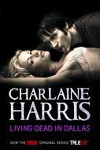
Dead Until Dark is nothing like the cover suggests. Well, ok, there is some blood, obviously, but it’s actually a pretty quirky book and at times hilariously funny. Harris has created a world where vampires are slowly being accepted into mainstream society, and the name of the hero himself, Bill, should give you a good idea of the angle she takes on the whole fantasy element.
The style of writing is rather different and although it fits the book I found it difficult to get used to. Sookie is the narrator and her voice is very unique. In due course you discover that the style is something Harris has constructed specifically to aid the comedy and strength of the book itself. The emphasis is on short sentences and natural reactions. However the writing is still rather bad and a lot of times I had to re-read a sentence to check if I really ought to have felt so shocked by it – and it turned out that yes, I should have.
He was unconscious or dead. With a vampire it was hard to tell the difference.
Because of the style of writing you get a real sense of how Sookie feels, in fact if I were to meet her and tell her that she’d probably say “well you don’t say” – in other words she’s very casual, very open, and more personal than if she were writing a diary; however she is also very naïve about some things to the point of it being silly. Bill is good to read about mostly because of Sookie’s descriptions, but also because of his efforts to be as human as possible.
Vampires aren’t the only paranormal creatures in this book. I’ll just say that if someone told me Stephenie Meyer studied this series before she wrote hers I wouldn’t be surprised. But unlike Meyer, Harris is compelled by humour and because of the age of the characters, and the situation, it’s a lot more fun to read. There’s a reality, almost, that Meyer didn’t reach.
One of the themes is romance but the other major theme, mystery, and the genre of comedy, mean that the narrative never slows down. The mystery is well planned and the importance given to it stays the same throughout.
Make no mistakes, this is more horrific than most paranormal books released in our current era, as, might I say, most pre-Meyers are, but the light-heartedness makes it an ok choice for most adults – be aware that this is very much an adult book and some of the subplots and the sex are not for younger readers.
Dead Until Dark has its flaws and is maybe a little too easy a read at times but if you are up for the challenge of story surpassing, by far, the writing, then I’d give it a go. Just make sure you read it where the idea of someone reading a book with a bloodthirsty cover while laughing their head off would be acceptable.
Related Books

Lauren Oliver – Delirium
Posted 4th May 2011
Category: Reviews Genres: 2010s, Romance, Science Fiction
1 Comment
The only thing worse than love or hate is indifference.
Publisher: Hodder & Stoughton
Pages: 393
Type: Fiction
Age: Young Adult
ISBN: 978-0-340-98091-0
First Published: 1st February 2011
Date Reviewed: 1st April 2011
Rating: 5/5
Lena has grown up in a world where love is treated as a disease and everyone must undergo a procedure around 18 years of age in order to eradicate it. She’s been looking forward to becoming an adult for a long time. Then she meets Alex.
Whereas Before I Fall was a very good book exploring social relationships and the mind, Delirium is a brilliant book that takes it one step further.
It may appear to you at first glance, as it did to me, that the love discussed in the book is romantic love. It is, but it’s also every other kind of love out there. Therefore a constant wish of Lena’s is that her family members might hug her like they used to before they had their procedures. The procedure basically means that people don’t care anymore, children could hurt themselves but their parents wouldn’t bat an eyelid other than to soak up any blood for purely hygienic reasons. This is what makes Delirium so difficult to read. The government says that getting rid of love stops pain, but of course for the children it causes it, having to live with parents who aren’t much better than zombies.
It is a horrific thing to think about, a world without love, but it takes Oliver’s careful and deep examination to really show us what such a world would be like and how important love truly is. Without any affection, any feelings, the minor characters simply go about spouting rules and often have trouble trying to think of what to say to a family member. Without any affection the people in charge have no problems bludgeoning resisters to death.
A world without fear. Impossible.
Lena’s development obviously rests on her discovery that all the things she’s been taught are lies. The catalyst here is the introduction of Alex, an outsider, the boy she falls in love with. When he tells her there are no rules, meaning to their race across the sand but the subtext being about his own outsider life, Oliver clearly means it as an early sign to her heroine.
Something that’s interesting is the amount of hatred shown by the governmental groups. One can’t help wondering why they didn’t get rid of hate as well – but maybe that’s the point because as Oliver shows, hate leads to fear and thus control. The government workers can threaten, can kill, indiscriminately. The perfect world is not really perfect at all.
I found Delirium to be as much a dystopian tale as a parable for today. We are given so many rules and things such as CCTV that we’re told are for our protection, but are they really? Don’t they just allow people to spy on us and find out everything, things they shouldn’t really know? In addition to this I found a connection between the way outsiders and resisters are treated and how, until recently and even still sometimes today, mental health patients are treated.
That’s the irony of it. She’s looking at me like I’m the crazy one, the dangerous one. Meanwhile the guy downstairs […] is the savior.
The love is forbidden, a great love story set in the future. It’s well written and delved into without ever being too much or unbelievable. The hero himself is the backup to Oliver’s statements.
Delirium demonstrates just how much we value love in this world, and shows how everything we do would change if it did not exist, would change in ways we might not have thought of. Not only is it a brilliant book, it’s a valuable lesson.
Related Books


