





Celia Rees – Sovay
Posted 8th May 2010
Category: Reviews Genres: 2000s, Historical, Political
1 Comment

Sometimes an author’s light fades miserably. And sometimes it’s their fault entirely.
Publisher: Bloomsbury
Pages: 404
Type: Fiction
Age: Young Adult
ISBN: 978-0-7475-9808-4
First Published: 2008
Date Reviewed: 28th February 2010
Rating: 2/5
Sovay finds that her family are more caught up in the political turmoil than she thought. She assumes the role of highwayman to steal documents that incriminate her family and won’t rest until her father and brother are safe. The country is on the brink of civil war and the male members of the family are high up in the ranks of the revolt for freedom.
The subtitle on the front of the book and the blurb on the back suggest that the story revolves around highway robbery. This is not the case. Sovay robs for love for all of 5 minutes and only robs otherwise a handful of times. The book is far more about politics and struggle than adventure and scandal. It’s also a very slow read; towards the last quarter the story picks up significantly, but it remains easy to put down.
There are many main male characters in this book who enter at different stages of the story and remembering them all can be challenging, but the upshot is that Sovay is strong enough a character herself, even in her weaker moments. In her Rees has created a perfect example of the balance between strength and courage and the expected hesitations and thoughts of a teenage girl. Sovay is forward thinking and would be fine as a character in a present-day novel, while retaining her historic features.
Rees’ previous novel, Pirates!, dealt with the concept of rape and if you’ve read my review of the book you’ll remember that I discussed the fact that it went too far for the teenage target audience. Sovay goes further and it is incomprehensible why the publishers thought it could be categorised as a book for children. Sovay becomes friends with a boy who lives in a brothel. The boy is a prostitute and he and other boys dress up in drag for their older male clients. The idea of prostitution is bad in itself for a children’s novel, but to include such perversion and deprivation of young people is incredibly worrying. Rees doesn’t describe what goes on in detail but she drops big obvious hints of it, and although the characters aren’t happy with their lives they are content enough. There isn’t the big escape or lesson for the brothel owner or clients and the whole subplot is very disturbing. There’s the definite sense that Rees wants to write more freely – so she should try adult literature instead where her stories would be acceptable. If the style of adult literature and forming appropriate characters is difficult then maybe she should realise that children need to be protected from such ideas until they are old enough to understand; and if she can’t perhaps she should stop writing altogether.
The book takes an abrupt turn about two thirds of the way through, first sending Sovay to a scientist’s home and then packing her off to France. Although France is referenced several times it isn’t implied that she’ll go there at any point and the whole thing feels forced, as though Rees wanted to add more adventure to it. This doesn’t work when you’ve set your story in a hideous period of history and the seriousness of events that follow, in this book, swing back and forth between coming across as not so bad and being horrific in nature. Rees should also have spent more time on the ending as there are threads left loose.
For a long while there are a possible two or three men that Sovay could end up with. The final result could prove a shock; it comes out of nowhere but is treated as something you knew all along. Badly handled would be the right phrase here as anyone harbouring notions of Sovay becoming attached to one of the other men will be bitterly disappointed, it’s rather like someone entering an auction just as it finishes and taking the item from the auctioneer’s table.
One thing stands out and is exquisite, so it’s a pity it’s contained within only several pages and that at the end. The revolution in France causes all the main characters to be suspected of being against the changes and Sovay ends up in prison. Rees makes the poignant observation that the revolution itself had failed in it’s promise to make everyone equal, condemning anyone who was so much as in the wrong place at the wrong time without a proper jury or any defence – and that it’s ironic that it was on those journeys of people from court to the guillotine that class and wealth lost importance and everyone sort to give solace to each other. We then experience this court and the prison to which the condemned spend their last night for ourselves. We share in the knowledge that those who first sort equality had images of domination, and rejoice when those who killed thousands for no reason are brought to justice.
Sovay had potential, but it was not realised. The book would be a good basic, and I stress basic, introduction of the French revolution – for adults – but it is not appropriate for the target audience and definitely not recommended for any children who are of a nervous disposition, especially if the parents or guardians are uncomfortable with the idea of a discussion that will compromise their innocence at such an age.
Related Books




Markus Zusak – The Book Thief
Posted 20th April 2010
Category: Reviews Genres: 2000s, Historical, Political
1 Comment

We are taught that Nazi Germany was a hateful place and full of hateful people, but in reality the citizens were just as badly off.
Publisher: Black Swan (Random House)
Pages: 542
Type: Fiction
Age: Adult
ISBN: 978-0-552-77389
First Published: 2005
Date Reviewed: 19th April 2010
Rating: 5/5
I was introduced to The Book Thief by an old friend. It stayed on my to-be-read pile for some time while I got over the demise of the friendship, in actual fact I almost packed it away, unread. That would have been a mistake.
The story is narrated by Death who explains the basic end before launching into the beginnings. Liesel, a nine-year-old girl, is sent to live with foster parents, presumably because her family is on the wrong side of a hijacked law (the blurb says concentration camp but the topic is never explained in detail). With them she lives for a time in relative happiness, finding friendship and learning to read, the latter being the cause for her initial interest in stealing. But this is Nazi Germany and her family become involved in things they shouldn’t; and there is always the threat of the enemy.
It’s difficult to explain the plot of the book without giving everything away. Part of this difficulty stems from Zusak’s writing – it’s absolutely exceptional. It’s not that he’s just good with words, he uses them like a talented artist sweeps paint across canvas – you never once sense that he might have had trouble completing a sentence. This artist and paint metaphor is apt really because one of the characters is a decorator. Zusak doesn’t use “big” words, he never thrills you with academia, rather he moulds words and creates metaphors the like of which I, and I would guess you also, have never come across. A poet is someone who is clever with words but Zusak transcends that. It’s almost as though he is made of words and his physical body is but a mask to pacify humans. Consider the following quotations:
Pimples were gathered in peer groups on his face.
His thoughts criss-crossed the table.
His uniform was shiny brown. The iron was practically still on it.
Zusak’s style is one of colloquial phrases and bullet points. He surprises you in the way that he narrates often because it can be as if he doesn’t understand literary English, but what you realise is that he is saying there’s more to writing than being grammatically correct.
There are many characters in the book, and while they may not be detailed quite in the way you expect in a good novel, the descriptions are enough. Zusak ensures you feel a bond with them – it’s easy to imagine yourself there, to imagine the locations, and it’s the kind of intimacy that would make you want to stroll straight up to one of the characters and say “hi” as if you’ve known them forever.
The backdrop of the book is the Second World War but while it is the cause of a lot of plot elements the story is never weighed down by it like you might expect. As mentioned at the beginning of the review the people of Germany were in much the same situation as the rest of the world, innocent people, but this fact is not given as much airplay. Zusak puts these people in the spotlight, he provides the forgotten information and he ensures that if you read this before writing an exam your account will be broader than it would be otherwise. A book like this will scare history teachers, not because they don’t want their pupils to know the other side of the story in detail, but because this book could potentially cause people to want to go off on a tangent and explore ideas the examiners haven’t asked for. Make no mistake, this book will cause you to want to discuss.
Perhaps Zusak has thought about this issue and written accordingly, because he makes his characters affable to the outsider. Most people in The Book Thief have no animosity towards Jews and do not support the war at all. Again, there’s that bond. Zusak hasn’t thrown you in at the deep end or affirmed stereotypes and even someone who has never allowed themselves to so much as consider the other side of the story may be moved by it. Zusak is very clear in this – Hitler was the enemy, not Germany. In relation to this he makes the poignant supposition of the Jews. A Jew goes into hiding, but when he comes out he’s still German. He is and was German, that he is Jewish could never change his nationality.
You may look at the size of this book, notice the little space between lines in the text and put it back on the shelf. Don’t. One of the book’s biggest appeals is the spin off from the writing style: there are rarely long chunks of text. Most chapters are short – a few pages long – and there are many gaps where small pieces of information are supplied in the afore-mentioned bullet points. Zusak has made his story a work of art. Instead of writing everything in the usual way he’s enlisted an illustrator to draw pages of his imaginary books and bolded the important information. The Book Thief is more of an experience than a novel and although it may be off-putting at first (yes, I admit this in regards to myself) you soon get used to it.
When you think about it, a book like this is a hefty task for any author and a daunting task for any reader. In presenting it, Zusak strove to deliver a story that needed to be delivered in a way he knew would reach the hearts of the reader.
You may have bought it, borrowed it, or even stolen it. Read it, it’s what it’s there for and you don’t want to miss out.
Related Books



Victoria Hislop – The Return
Posted 8th April 2010
Category: Reviews Genres: 2000s, Historical, Political, Romance
Comments Off on Victoria Hislop – The Return
Just before the Second World War came the Spanish civil war. Its impact reached the deepest depths of the lives of the people.
Publisher: Headline Review
Pages: 574
Type: Fiction
Age: Adult
ISBN: 978-0-00-718036-3
First Published: 2008
Date Reviewed: 5th April 2010
Rating: 4/5
Sonia likes to dance, but she didn’t realise this until she started Salsa lessons on impulse after finding a shabby-looking studio. It stood beside the boring old cinema she visited with her boring old and ever-so-slightly alcoholic husband. When she invites her friend Maggie to join her lessons Maggie becomes even more passionate than she and books them plane tickets to Spain for an authentic experience. But what awaits Sonia in Spain is more than dance lessons. Woven into the fabric of cheery, tourist-attracting Granada is a whole history seeped in conflict, one that draws Sonia into the heart of a world she never thought to explore and which seems to relate to her rather personally.
The Return begins as though a modern woman’s novel, a Chick-Lit if you will. Both Sonia and Maggie are likeable and the temptation to put your feet up and prepare yourself for a journey with them is hard to resist. What stops you is the blurb and it’s just as well because Sonia’s story is but one part in a saga of love and loss.
For a long time dancing is the focus. It offers a firm grounding in the traditional culture of Spain, and more authentically than any tourist package holidays. Rather than learn the steps you’re taught about the reasons for them and the history behind it. Accompanying this is a brief introduction into the discipline required in the bullring and the stages from assistant to matador. These stereotypes of Spain are engaged to help you submerse yourself in the setting while being valid as common occupations of the era.
The narrative of the friends learning Salsa comes to a pause when Sonia meets Miguel. From this encounter comes page upon page of information about the war told through the lives of the Ramirez family. Their function is exquisite – rather than tell the story of the war through the usage of a famous person or one with a unique account, Hislop has opted to manage her own creations. She has constructed a family akin to millions of others in Spain at the time, people with little claim to fame and with no influence, to illustrate the plight of the ordinary person in the street. It is very easy to become indifferent to something when you hear it from a second-hand source, a summary of lots of things put together, so by means of putting a bog-standard group of people in the spotlight Hislop forces the reader to take note and experience the feelings and fears of the people who suffered most. While it’s likely she interviewed many survivors and compiled their accounts into one it never comes across as forced or weighed down with different elements.
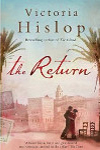
Laced into Mercedes Ramirez’s journey is a tale of love torn apart. While the cover of the book makes much of this romantic aspect the element is mostly confined to requited but unrealised love. It doesn’t lie at the heart of the book but rather to the side, as it’s not as important perhaps as the factual information but a defining part of the latter of the story. The character of Sonia is merely a vehicle until the end, where she holds the power to tie up the loose threads, more involved in this facet than your average character.
The book is very long and because of its nature one can at times sense a slowing down in the storytelling on the horizon. This does happen, but it’s not a burden on the reader because there are so many things you want to find out about that you’ll keep reading regardless – and sure enough, within the subsequent few pages you see the focus of the story change to another character. The different characters’ stories are provided for fairly and sections are split up allowing the book to move back and forth between them. The characters are as ordinary in themselves as the collective family, they each have varying interests and dreams but in war they are nothing special. Because of this you hear from the opposing side, the soldier, the traveller into exile, and the prisoner.
Hislop’s disclosure of the events that took place has been watered down enough for the disposition of readers easily affected by distressing descriptions, but only to an extent. Aeroplanes from both sides of the conflict rained down bombs, indiscriminate of the support of their victims for their parties. The aftermath of this was catastrophic but their further pursuit of the innocent when they fled their homes is incomprehensible. Hislop describes the gaping holes in massive crowds of exiled people as the planes followed their slow progress away from their native lands: the women burying their children and the suicides of those who could go no further. Being on the front line with the soldiers is only easier because of the greater publicity given to warfare. The novel also deals with the part religion played in the war. When the Nationalists took over they did so with the blessings of the Church, despite that fact that by taking over they had killed and continued to kill afterwards so many innocent people and ironically people of faith.
Without a doubt Hislop’s endeavour was to provide details of the Spanish civil war to a readership little informed, and a reminder for those who may have let it fade away. The Return will give you an insight into a long-spanning event left out of most basic curriculum. It will encourage you to see the atrocities committed, however for that you will also be welcomed into the world of Flamenco and be lead towards the beat of the music where the here and now are unwittingly left outside the confines of the bound and printed wad of paper in your hand.
Let yourself be entranced and educated, no matter how much you already know. The Return won’t let you down and yes, you will be rewarded with a happy ending. It may just be the one you’re guessing.
Related Books
Lesley Downer – The Last Concubine
Posted 7th April 2010
Category: Reviews Genres: 2000s, Historical, Political, Romance
1 Comment
Lesley Downer is a British-Chinese historian in love with all things Japanese. She has written many books on the subject but The Last Concubine is her first work of fiction.
Publisher: Corgi (Random House)
Pages: 596
Type: Fiction
Age: Adult
ISBN: 978-0-552-15520-5
First Published: 2008
Date Reviewed: 20th June 2009
Rating: 2.5/5
The Last Concubine has been on the recommended list of Amazon’s Japanese fiction for some time. If you go in to look at another book of the genre it often pops up. As well as this, Waterstones bookstore has had it as part of its 3 for 2 offer for months.
Sachi is the adopted daughter of country Samurai. When the procession baring the country’s princess stops in her village the Princess whisks her away with her to the palace of the Shogun, the ruler of the land. There she becomes his concubine for the briefest of periods before he dies. Soon after the armies in the south rise up against those who support the new Shogun, wanting to reclaim the land for the emperor. Sachi is forced to flee under the guise of princess but her journey turns out to be far longer than planned as she meets significant people and learns more about her mysterious heritage.
The book is split into parts that are in turn split into chapters before once again being split into parts. Although this can make it confusing it allows the book to be read in bite-sized chunks, which is perfect when you don’t have much time. The locations are breath-taking and so well described that it’s easy to find yourself absorbed in the book from the first couple of pages; a mean feat that most authors don’t manage. It’s obvious that Downer has spent plenty of time researching 1800’s Japan; one of the many pieces of evidence lies in her elaborate paragraphs on kimonos.
On the face of it the storyline, until the end perhaps (which is one of the biggest cop-outs you could come across), is sturdy: a woman trapped by a life of ritual is given a second chance with the valuable insight that comes with having lived to the extremes. The main female characters are strong and likeable. They fight like men and know intricate tricks of the trade. The main male characters are happy enough to leave the spotlight to the women, the English character being particularly welcome as he arrives and shakes up the other’s beliefs on life.
But there are many flaws in this book. Downer’s plot descriptions are poor. The reason is this: she repeats herself. It’s as simple as that, and as it’s so simple one cannot understand why it wasn’t addressed during editing. Practically every time Sachi encounters something that sparks her memory into motion we are given a full run down of everything she remembers. Each time she remembers a particular place we are given the exact same structure of memories and as Sachi does a lot of remembering, far more than your average person, it becomes very wearing. In fact it’s rather surprising that Sachi never has a mental breakdown with all the remembering she does.
This takes us straight to the next big faux pas. The latter part of the book reads like a cheesy romance movie script that no director worth their salt would take on. From being a likeable and strong character Sachi turns into a drama queen, a fragile little darling who believes that the person trying to kill her should do it (the person in question thinks she is someone else and Sachi is happy for them to think that because she thinks she should bare the brunt of it). This is completed by a corny interlude where her friend rushes to take a bullet that was meant for another major character. All of the above happens within four or so continuing pages and if you weren’t already rolling your eyes and wanting to throw the book across the room you will be at this point.
Most of the book, the middle, is given to a journey, while the first part is wholly about the palace and the last about the war and then the war’s aftermath. This means that it has a tendency to drag; aptly like Sachi’s feet after all the walking Downer forces her to do. The beginning may have caught you and coerced you to enter into the palace with it, but the length of the journey will mean you lose your way. There are just far too many times where the characters are walking and looking at mountains. The only thing one learns is that Downer can fit the word “walking” in a paragraph several times over by using a thesaurus.
Downer makes Sachi remember time after time – is this to distract the reader from the fact that she cannot remember herself? Downer keeps reminding us that Sachi knows she can’t do what she wants as she is a woman – and then has Sachi think about the idea that if it weren’t for the war taking her mind away from her personal feelings she might have cherished her meeting with a foreigner so that she could tell her grandchildren about the event. As the late shogun’s concubine, we are told, Sachi must remain celibate for the rest of her life – and Sachi knows that, accepting it as her duty. Why then would she dream of having grandchildren to tell in the first place?
The saving grace of the book as a whole is the romance. The word of choice here is “you” which Sachi’s hero utters twice with no good reason and thus all the good reason in the world. You hope it will soar to dizzy heights but it doesn’t really go anywhere in style which is a shame as it was otherwise well handled.
Downer is a non-fiction author and undoubtedly this means that she spends a lot of time reminding her readers of facts they may have forgotten about in the mists of a book bogged down with dates and names. This has rubbed off on her work of fiction to bad effect. She is quite possibly a brilliant historian but that doesn’t equate to being a good novelist. She must learn how to convert her knowledge into a work of fiction that readers not acquainted with non-fiction will be able to relate to. She must also learn to use the English language correctly and wisely and keep track of her characters.
For a book that held so much promise, The Last Concubine fails in all aspects. As my boyfriend said on witnessing my frustration of the last chapter, at least the character is the last concubine so there won’t be any more.
Related Books
Simon Montefiore – Sashenka
Posted 5th April 2010
Category: Reviews Genres: 2000s, Historical, Political
Comments Off on Simon Montefiore – Sashenka
Simon Montefiore is a scholar of Russian history and has written on the subject previously. His first novel, based on that history, was published recently and was pictured on banners in the entrance to Waterstones bookshops.
Publisher: Corgi (Random House)
Pages: 591
Type: Fiction
Age: Adult
ISBN: 978-0-552-15457-4
First Published: 2008
Date Reviewed: 29th May 2009
Rating: 2.5/5
Picking up a copy of Sashenka is an easy task at the moment with it being readily available and highly thought of. The quotes of critics line the covers and the blurb promises a wondrous tale. Using an illustration that is almost photographic for it’s cover, the publishers have given it a bonus first impression: we already know what the main character looks like and thus, they hope, we’ll feel a sense of intimacy even before we peruse the summary.
Sashenka, born to Jewish parents of new money, was recruited by her uncle as a Bolshevik. In joining the party she had to lie to her family and put them to the back of her mind while going about political business in secret. Her choices as a young girl ultimately decides her fate as does an affair she has during her thirties. Her actions cast a dark light on her family until a historian in the 90’s is employed to track down the details of her last days.
The story is split into three parts, the first two revolving around Sashenka and her immediate family and the last on the historian’s search, years later, to uncover the truth about the heroine. Each part is split again into bite-sized chapters making it deliciously easy to keep up with as part of a varied and busy life-style and aids it’s speed in some way. The downside to the sectioning is that the first is focused purely on a winter in St. Petersburg, a particularly dreary one which casts a certain dullness over it, making it seem practically endless.
The first thing that’s striking about Sashenka, is the myriad of details the reader is given early on. Something that isn’t apparent in the blurb is that the book requires a good working knowledge of the period. This sets it apart from many historical novels that give the audience a hearty back-story before raining down on them with cultural references. As such it may just cause the book to be unappealing to anyone wishing to learn about Russian history and chosen Sashenka as their introduction, so a quick bit of research into the era is recommended.
The writing itself is mixed in standard. Mostly it is average but there are times when the imagination can go into overdrive over its beautifully described backdrops. St. Petersburg in winter and Moscow in summer, in spite of the heavy political story, give the book the luscious landscapes one needs in order to get through the taxing chapters.
One of the biggest problems of the book is its choppy structure. It darts to different situations too quickly and Montefiore shies away from providing the physical details of characters until long after they’ve been introduced. This is a problem due to the severe lack of details given in the first sense – it’s fine at the time because one can be creative but when more details filter through it can be quite a shock to the imagination.
Above all is the sex of the author. There are few male writers who have captured both the emotions and sexuality of women well, one being Philip Pullman, and Montefiore isn’t one of them. Some of Sashenka’s sexual discoveries are portrayed in a strange light, she says the kind of things that men want to hear but women would never utter. Montefiore does not understand women to the extent that he should as a writer of them, he would’ve done better had he made his hero a man.
In conclusion, Sashenka is an easy to put down, mostly dull, and slow moving book that would have faired better as Montefiore’s second or third novel at which time he might have improved his skills in the genre. The fact that he has written only non-fiction before is obvious as the narrative is too bogged down in factual details. His characters are not fully realised and one feels little reason to really care for them as they’re given to us at face value – a great pity as the history behind it all is very real and terrible.
As an add-on to studies in Russian history it may prove valuable, otherwise it’s not worth the large number of pennies for its purchase.
Related Books


