





Interview With Laura Barnett
Posted 7th June 2017
Category: Interviews Genres: N/A
Comments Off on Interview With Laura Barnett

I’m delighted to welcome Laura Barnett to the blog today (she’s the one on the right – on the left is Kathryn Williams who Laura tells us about). Laura is the author of The Versions Of Us which I reviewed a few years ago – even if it really doesn’t feel that long ago! – and her latest novel is out this month. She’ll be at the Balham Literary Festival this Friday and more details are at the end of this post.
How did the move from journalist to novelist occur?
Slowly! Writing novels was always my primary ambition from about the age of five, and I wrote novellas and short stories throughout my teens. But after graduating from university, I didn’t feel ready to sit down and write that big first novel – I felt like I needed to get out and experience life a bit first. So I trained as a journalist, and spent the next few years working hard on staff at the Telegraph and the Guardian. I was still writing in my spare time, but that time was in short supply – until, in my late twenties, I took the opportunity to go freelance and dedicate myself more fully to writing fiction. It still took several years – and a lot of rejection – before I actually saw my first novel published, and could finally allow fiction to take precedence.
The ‘versions’ in The Versions of Us aren’t all that dissimilar to each other, there are no extreme differences, and each is a very regular life. Had you considered bigger differences? (I thought the lives as they were worked well.)

Yes, I spent a lot of time thinking about how to distinguish the three versions, but I knew I didn’t want them to be too different – to see Eva, say, become a zoo-keeper in Atlanta in one version, and a librarian in Burnley in another. I wanted the novel to consider the smaller permutations of our decisions: the ways in which life draws us down one path over another, changing certain aspects of our circumstances, relationships and personalities, while keeping others the same.
Do you have any ‘what if…’ moments of your own you could share with us?
Like everyone, I have many! Perhaps the most significant is the fact that I was very nearly not born at all… My mum had a fiancé when she was twenty-one who decided to move to America. She broke off the engagement as she couldn’t see a future for herself there; had she not done so, I’d never have existed. We can probably all look back and imagine versions of our parents’ lives in which we would not have figured. I find the thought both disconcerting and intriguing.
Where did the idea for Greatest Hits come from and can you tell us about the decision to bring real music into it?
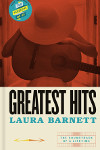
Of course. As so often with a novel, or any creative project, it was the coming together of several different ideas. After The Versions of Us, I knew I wanted my next book to be what we might call a ‘long-view novel’, centred on a character in later life, looking back over her experiences and trying to make sense of them. And I also knew that I wanted to somehow expand the reading experience beyond the page – to work with another artist, from another medium, to forge something really new and original.
From there, it was a short step to deciding that the character at the centre of this new book would be a musician – and that therefore the best way to expand the reading experience would be to work with a real-life singer-songwriter to bring the character’s songs to life.
Can you see yourself working with other medium in future?
Yes, absolutely – I’m really open to anything, and I’ve hugely enjoyed the process of collaborating with Kathryn Williams, not least because novel writing is usually a pretty lonely process! I’m very interested in the visual arts, and I have several ideas about combining fiction with photography and painting. I’m also really excited about the possibilities offered by the recent explosion of interest in podcasts and audiobooks. In fact, Kathryn and I are planning to launch our own podcast soon, so watch this space…
My thanks to Laura, and to Ashton of FMCM.
Laura Barnett is the author of Greatest Hits (Weidenfeld & Nicolson) and will be speaking at Balham Literary Festival on Friday 9th June. If you’re in London in two days time and would like a literary start to your weekend, I would say it’ll be a good evening, and tickets are still available. The festival as a whole runs from tomorrow until Sunday and it’s been created by Dulwich Books.
Hay 2017
Posted 5th June 2017
Category: Events Genres: N/A
2 Comments

Every spring the Hay Festival commandeers the town of Hay-On-Wye, the ‘town of books’. For 11 days from late May to early June, the festival site is abuzz with people.
It’s very inclusive. Many residents of the town get involved – I would assume all the residents like books; you’d be completely out of luck if you didn’t. Likely many join the festival itself but what is particularly great is the way the home-owners along the road running between the town and the festival site make use of their properties; front lawns and driveways become pop-up cafes and clothes shops, people sell breakfast and fish and chips cooked outside.
And the festival is incredibly diverse. People of all backgrounds, ages, colours, religions, fashion styles and, something I noticed particularly this year, abilities. In a world where disability is still ‘other’, Hay is a wonderful outlier and equaliser, and for the past two years now, at least, there have been absolutely spot-on talks about autism and acceptance.

Some of those who set up shop at the festival this year were the Quakers, the Woodland Trust, a cable tidy company, a furniture maker, a dessert group, and a university. The usual Oxfam bookshop is in a fairly large tent, at least when compared to the other shops, and then the main Hay festival bookshop is set up at the back of the site, devoting its place to the books of the current festival’s authors. And of course there are comedy sets and concerts, this year including Andy Parsons, Reginald D Hunter, Amy McDonald, and Amanda Palmer.
There are plenty of places to eat on site and then there are all the places in town. The town is decked out in bunting, effectively joining it to the festival. The main attractions here are the bookshops – there are many – and the overall beauty of the place. Sadly Hay Castle is currently closed but you can walk around it, and Barbara Erskine’s book on the place is a suitable substitute.
This year it felt as though more time had been given to political sessions, understandably. Due to recent events in the UK, there was a fair police presence and extra security in general. The camaraderie at Hay increased.
Something the festival has been promoting this year is the latest international festival in Aarhus, Denmark. I mentioned it last year as I’d got talking to people involved in it, but this will be its first time running. Aarhus will be a children’s literature festival and a couple of anthologies of short stories were released early in the 11 days. I’m working on a post about the books and the related events and information and will share it once it’s finished.

The last things I should mention here are the Hay, Brecon and Talgrath Sanctuary for Refugees which had a place at the festival, and the festival’s funding of the town’s library. Hay Festival has effectively taken on the responsibility for the library remaining open. Library hours have been cut but it’s still there.
Have you ever been to a festival, whether literary or otherwise?
May 2017 Reading Round-Up
Posted 31st May 2017
Category: Round-Ups Genres: N/A
2 Comments
It’s very unlike me to post a round up before the month is over, in fact I think this is the first time, but it’s unlikely I’ll finish any more books today. True to last year’s form I’ve read very little whilst at Hay. Other than this, however, I’ve read a fair amount. As soon as the sun comes out and the weather improves I find myself reading a lot more and this year is no exception. I’m having a reading ball.
The Books
Non-Fiction
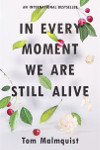
Tom Malmquist: In Every Moment We Are Still Alive – When Tom’s pregnant wife is diagnosed with late-stage Leukaemia he faces the likelihood that he’s about to become both a widower and a new single father. You’ll find this book in the fiction section because it’s being called a fictional autobiography but everything in it is true; as much as one can use the word it’s a good book.
Fiction
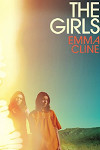
Emma Cline: The Girls – In the 1960s, a young teenager spent her time with a group of women lead by a charismatic man, and looking back at the horrors this later caused she reflects on her life. There’s not much here that is original.

Joanna Cannon: The Trouble With Goats And Sheep – Mrs Creasy disappears during the 1976 heatwave and the village thinks Walter must have something to do with it; meanwhile Grace believes that if God is everywhere he must be at a neighbour’s house and she plans to find him. A great book about discrimination and stereotypes against a backdrop of supposedly perfect domesticity.

Juan Carlos Márquez: Tangram – A tale of red herrings and seemingly-unrelated stories that culminate in a murder. A very clever use of characterisation of playing with the reader’s assumptions.
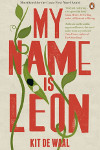
Kit de Waal: My Name Is Leon – Confused as to why he can’t stay with his mother as he is doing a good job looking after her, Leon is taken in by a foster carer whilst his white brother is adopted. A fantastic look at the British social services in the 1980s and the wider issues involved.

Nicholas Royle: An English Guide To Birdwatching – Silas and Ethel have handed their undertaking business to their son in exchange for a relaxing retirement by the sea, and meanwhile an unrelated Stephen Osmer is hammering out diatribes on his computer keyboard, but both stories are woven together in the form of their unfortunate connection to a literary critic called Nicholas Royle who has unwittingly upset them all. A brilliant piece of meta fiction by one of the two writers called Nicholas Royle.
My favourite this month was the de Waal. It will make my ‘best of’ list; it’s absolutely excellent in every way. The Cannon and the Royle were both pipped to the post; both were a lot of fun. Cannon’s book could have done with a slightly stronger ending, and Royle’s book is only held back by the amount of attention and consideration it requires – it is a great book but de Waal’s is arguably easier to enjoy.
Quotation Report
None this time.
Looking forward, I’ve some books from Hay to read; whilst the usual case of a reader not getting to every book they acquire will likely prevail there are a couple that have gone straight to the top of my list. I’ve the 600 page Christina Stead to get to and get through and I really want to make June the month I read Sarah Perry’s novel. We’ll see!
What book are you currently reading?
Hay Post Preview
Posted 29th May 2017
Category: Events Genres: N/A
Comments Off on Hay Post Preview
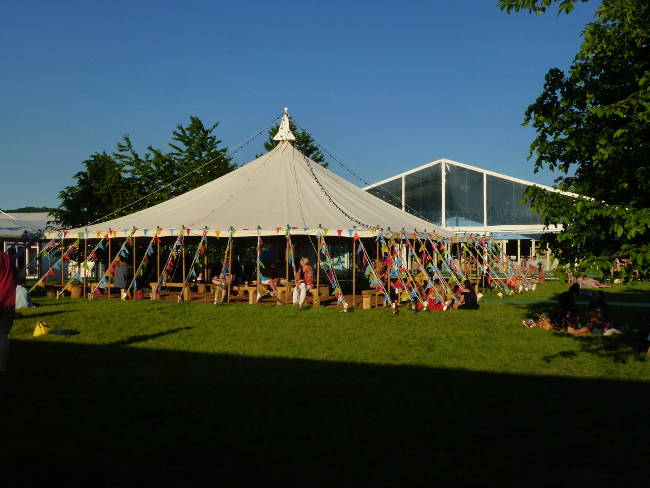
My intention for today’s post was to detail happenings here and to post lots of photographs, however something that can’t be banked on is internet connection – I’m typing this in a valley area where the wifi is poor. So here are a few photographs, made small; I’ll post in detail once I’m back.



Tom Malmquist – In Every Moment We Are Still Alive
Posted 26th May 2017
Category: Reviews Genres: 2010s, Angst, Domestic, Memoir, Spiritual
1 Comment
Sudden changes.
Publisher: Sceptre (Hodder)
Pages: 277
Type: Non-Fiction
Age: Adult
ISBN: 978-1-473-64000-9
First Published: August 2015; 1st June 2017 in English
Date Reviewed: 25th May 2017
Rating: 4/5
Original language: Swedish
Original title: I Varje Ögonblick Är Vi Fortfarande Vid Liv (In Every Moment We Are Still Alive)
Translated by: Henning Koch
When poet Tom Malmquist’s fiancée became very ill late in her pregnancy, the couple thought it was flu. But when her breathing starts to become affected, Karin is taken to the ward. In the horror of the idea of loosing his lover, Tom must get to grips with the idea that he will be bringing up his daughter on his own.
In Every Moment We Are Still Alive is a sobering memoir told in a rush of words that communicates the effect of the events on a person’s mental state. I have termed it non-fiction but it’s also considered fiction – the events are real but the style of writing, beyond the words themselves, means the book is somewhere between the two.
Looking at the words and the style together, Malmquist has opted for stream of consciousness and a sort of distancing. In view of the communication of his mental state, both the lack of full stops and the lack of quotation marks mean that you, the reader, are inundated with the information Malmquist received in the same way he received it, putting you in his shoes. Sometimes it’s fairly easy to see what is happening – fairly, not completely – and other times it’s almost impossible but in this book your incomprehension is paramount to your understanding of the way Malmquist is feeling. It is frustrating to read on a literary level, especially considering the text never stops rushing towards you, but it plays its part – it might seem to be a book with a lot of telling but actually, it’s all about showing.
The length of the book is part of this display of showing, too; it’s fairly short – just like the few weeks that pass – but feeling longer than that – again just like the few weeks that pass. In terms of the action of reading it’s a swift one, easily read in a few hours, but it will feel longer.
Karin is going to miss so much, Livia was a black-and-white ultrasound photo, Karin only knew her something that moved inside her.
One can’t really review the story itself; suffice to say it’s told very well and Malmquist often looks back on his life with Karin. There are no clear time changes so sometimes it’s difficult to work out when a scene slots into the timeline but that doesn’t take much away from the overall experience.
Something that must be touched on, however, is the bureaucracy Malmquist details. Because the author was not married and because Karin was too ill and everyone too busy to so much as think about any paperwork, despite the obviousness of the author’s paternity he has to go through Tax lines – yes, makes no sense – in regards to his baby daughter. He has to call Social Services and courts and various other places to try and change her surname to his, to get reports, all that sort of stuff; you don’t get to hear the result, how it ends up, but suffice to say Malmquist now has custody of his daughter, however, according to what is written in the book, he has to check in often until she reaches her majority. The author’s writing style, that deluge of information, further shows just how bizarre the whole thing is. And this all happens whilst he’s reeling from the death, making it even worse. As far as the book goes, Malmquist’s examination and peeling back the layers for all to see, is brilliant.
This is a difficult book in many ways, and a bit more so when you know you’re dealing with a translation. The translation is okay but there are some grammatical choices and turns of phrase that are so English (language) it’s hard to forget you’re reading a translation. But the heart of the story, or, rather, hearts – that communication and fight for parental rights – is very good and well worth your time.
There have been books that have dealt with similar topics before, but In Every Moment We Are Still Alive puts you in the author’s head in a very different and meaningful way.
I received this book for review.
Related Books
None yet.


