




July’s Curious Arts Festival
Posted 7th March 2018
Category: Miscellaneous Genres: N/A
2 Comments

Photography: images one and three copyright © James Gillam; second photograph copyright © Richard Hanson/StillMoving.net
Summer 2016 – the heat was sweltering for a couple of days until the wind started. It was a very strange weekend in terms of weather, two days of basking in the sun and the next you were looking for a puffy jacket, but it was a fantastic few days that made for some great memories, and lead to the discovery of a few now favourite books.
The festival takes place in the grounds of Pylewell Park in the New Forest. Now in its fifth year, 2018’s dates are Friday 20th – Sunday 22nd July. The line-up is better than ever.
On the music side a big announcement recently made – John Newman will be playing a concert on the Saturday evening. And TV choir master Gareth Malone will be hosting a stunning Sunday evening featuring various pieces from his time as a choirmaster in The Choir and Military Wives.

In books and poetry, Lemn Sissay heads the line up, and Matt Haig, Kate Mosse, and Rupert Thomson will be in attendance; the latter was in conversion at Curious in 2016.
The comedy line-up is yet to be announced. (Last year saw Ed Byrne and Paul Tomkinson, and Zoe Lyons attended in 2016.) There is also always a lot of events for children.
Two whole days of events in one area where you can come and go as you please, and a well designed Friday late afternoon and evening that seems all day in itself. For what is available the price is very good. Early Bird Tickets Weekend Tickets are £103, with the full price Weekend Tickets set at £128. Family tickets can be purchased for between £191-279, depending on when you book them. Tickets for children are £23 for the whole weekend and under 5s are free.
The ticket prices include camping costs – you can park your camper van or pitch your tent at the campsite which reaches from just beyond the estate’s garden wall to the river’s edge. Your trip from bed to breakfast in the morning is between 30 seconds and a few minutes. If you’d rather your accommodation is set up for you you can glamp in a luxury bell tent or hire a VW camper.

Food on site provides all three meals of the day. Companies currently confirmed include Cheeky Burger, The Green Grill (vegan options), Pad + Sen for your noodle fix, Juma for Iraqi street food, Savage – sea food, and Purbeck Ice Cream. There will be a couple of coffee companies in tow.
And the cherry on top? You can bring the dog.
For full details, tickets, and T&Cs please see the Curious Arts website.
Do you have plans for the summer?
Getting Back Into Blogging And Reading
Posted 5th March 2018
Category: Chit-Chat Genres: N/A
7 Comments

From around December to just the last couple of weeks I’ve not had as much time or focus. I considered putting the blog on hiatus for longer than the Christmas holiday I’d set, partly because I’d been ill and not really had much of a holiday but also because I knew I was having this issue of focus. Mid-January I decided I had to push myself – I knew I didn’t really want to go on hiatus, it was more of a block between what I wanted and what was happening – and thought to push myself only a slight bit, gradually get back into the swing of things, and accept the missed posting days.
It’s worked – I finally started commenting on other blogs last week and the week before that got back properly to Twitter. I’d definitely recommend a very slow, lenient-on-yourself approach for those who are a bit burned out.
This has helped my reading. Whilst I’ve review copies ready for the very near future, I’ve allowed myself to read what I want, when I want, and in February I found my choices to all be good, which was great. At the moment I’m reading Charlotte Turner Smith’s Emmeline (I wrote last year about wanting to read her work) and whilst it’s not at all what I’d imagined or hoped it would be, the fact that I had a prior interest in it and that it’s another older book to add to my list, is helping. I’ll be covering the problems in it extensively enough in my review so I won’t go further here. What I am doing that I will mention, and it’s something I did whilst reading Twelve Years A Slave, too, is reading around the subject at the same time. Emmeline has created a few ‘eh?’ moments, so hearing the thoughts of others – both contemporary and modern opinions – is helping to add to the reading experience.
I’m enjoying continuing to use the Kobo; 3 books in succession so far, and I’m getting used to all the extra spaces Project Gutenberg adds into the texts. (Does anyone know why they do this?) And I’ve gone down a few research rabbit holes, reading up on classical authors and adding to my TBR. I just wish there was a way to turn off the page count!
Having had a weekend of flurrying blog activity I’m going to stop here; I’m still having to be lenient. But I should have a post on Wednesday, something I haven’t been able to say for definite for a while.
How do you deal with long reading slumps?
February 2018 Reading Round Up
Posted 2nd March 2018
Category: Round-Ups Genres: N/A
4 Comments
In the first few days of March each year, I listen to a couple of versions of Les Eaux de Mars, a happening that has come to mark for me the coming of spring. But this time I woke up, saw the snow, and realised that the tradition would have to wait. The children on my street are playing; they’ve managed to cobble together small snow balls from snow that melts as soon as it touches your skin, and are skidding along the pavement in lieu of being able to sled. Schools might be closed for safety reasons, but as our last proper snowfall was in 2013, it’s nice to think closures have afforded them an experience of weather we so rarely get.
As it has been in past years, this February was another success for me in reading, in relation to previous months. I didn’t read as much as I have in other Februarys, but it’s a vast improvement on the last 3 or so months; whilst I actually read similar numbers in those other months, it was mostly forced. I’m in a classics phase at the moment; I’ve finally finished Twelve Years A Slave – not a difficult book but daunting – and read my first Wharton. And I’ve started Charlotte Turner Smith’s minor tome, Emmeline which is proving difficult – my review is going to have to be in two parts: one in the context of the time, a second in the context of today. Romance has been a big help in getting over my lengthy slump and I’ve a few more ready to read, to be turned to when easier reading is required.
The Books
Non-Fiction
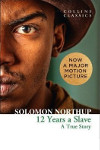
Solomon Northup: Twelve Years A Slave – Northup’s account of his time as a kidnapped freeman from northern states America, when he was taken into slavery in the south. Absolutely worth reading.
Fiction

Edith Wharton: The Age Of Innocence – A man engaged to a young woman he believes he loves falls for her cousin, who has separated from her husband; society wants rid of her. Fantastic.

Jessie Greengrass: Sight – A woman, pregnant with her second child, ruminates on the time she was first deciding whether or not to have children and looks on her time as a grieving daughter, as well as a subject for her psychoanalyst grandmother. Super.

Shannon Stacey: What It Takes – A newly divorced woman moves from her rich, restricted home, to the campsite at the Kowalski’s Northern Star Lodge to find out who she is as an individual, but meets a very eligible friend of her employer’s family. It’s moving towards the ‘I can’t keep going and write about the saga family’s plumber’ situation Stacey spoke about, but it’s still good.

Sherry Thomas: The Luckiest Lady In London – A rich man with a history of childhood neglect marries a poor woman who is looking for a husband who can provide for her family, and of course neither imagines they might fall in love. The thing I like most about this book is the way the author gives a firm nod to the concept of a romance novel needing a conflict but does not drag it out, creating instead other, less device-like, ways to keep the story going.
In terms of literary enjoyment this has been an excellent month. Every book was very good; even the one that wasn’t quite so good, the Stacey, was still fun to read. At a push I think my favourite would be the Wharton – the mastery of the set up and its execution…
Quotation Report
In The Age Of Innocence a man of great means but lack of general awareness as according to his station in the novel, laments the absence of independent thought of his beloved and looks forward to the opportunity he will have to educate her… to a certain point… she shouldn’t be too knowledgeable after all. Whilst in the same book, a few chapters later, the author of it all produces this fun line:
She sang, of course, “M’ama!” and not “he loves me,” since an unalterable and unquestioned law of the musical world required that the German text of French operas sung by Swedish artists should be translated into Italian for the clearer understanding of English-speaking audiences.
Looking into this new month I’m hoping to start a few books that will be released in the spring and carry on with the classics.
What are you reading?
Solomon Northup – Twelve Years A Slave
Posted 1st March 2018
Category: Reviews Genres: 1850s, History, Memoir, Political
3 Comments
Whilst I’ve formatted this post as I do my reviews, this isn’t quite a review, more an information post.
Publisher: N/A
Pages: N/A
Type: Non-Fiction
Age: Adult
ISBN: N/A (Collins is 978-0-007-58042-2)
First Published: 1853
Date Reviewed: 27th February 2018
Rating: 5/5
Twelve Years A Slave is Solomon Northup’s account of his time as a slave in Southern states America, the Bayou Boeuf to be exact. It was used by the abolition movement though not necessarily written for it1; like so many others, Northup was forced into slavery and his story has a specific background – he was one of a number of Northern states freemen who were kidnapped and sold into bondage.
Every sentence in this book has been thought through. Debate has surrounded who exactly wrote this book – whilst unarguably Northup’s account, there are a few possibilities due to the presence (most definitely in the preface) of an ‘editor’, one David Wilson. There’s the possibility Wilson took Northup’s story and wrote it up, which seems most likely, reading around the subject [see end note]; the possibility it is completely Northup’s work; the possibility that it’s a bit of both. These possibilities are apparent upon reading the preface and then subsequent work and situating the book in its political and social context; in the same way the work of other former slaves – such as Olaudah Equiano who wrote 60 years prior to Northup – seeks to reassure the reader that there are good white people out there, including some masters, so too does Northup.
The book is as harrowing as you’d expect though a lot may well have been left out; you get a report of horrors but there were surely more details. Included also are the good days, the few days of leisure in which Northup expresses the normality of his fellow slaves, demonstrating further how inhumane slavery is, how everyone is the same.
Northup drops out of history ten years after this publication – we know that he was often a speaker at abolition events but the records then start to become ambiguous. Someone saw him at someone’s house once – that sort of thing. History believes he was kidnapped back into slavery or simply died of natural causes. You can’t but hope it was the latter possibility and that it happened in due course rather than soon after Northup was freed. The first doesn’t bare thinking about.
As Northup himself did, so too did the book fall into obscurity2. It’s quite possible that, with slavery abolished, Northup’s book was deemed to have served its purpose and was dually forgotten. It was rediscovered in the 1960s.
Certainly you have to be prepared to read between the lines on occasion and this is one of those few books that would be difficult to read out of context. It’s an incredibly important book.
If you’re interested in finding out more about the authorship, David Fiske’s article on the book is an interesting read. It says that Wilson was not an abolitionist – which would suggest a less political motive on that man’s part, and goes further into general reasoning and the way the book was written.
Footnotes
1 Lieblich (2015) says the book “…achieved a remarkable degree of success as an abolitionist indictment against slavery […] In the wake of newspaper reports of his rescue from slavery, Henry Northup (a white attorney and lifelong friend from New York whose family had once owned Solomon’s father), Solomon Northup, and David Wilson collaborated and published his story within the first few months of his return to the North. Henry Northup gave Wilson an incentive to publish the book as quickly as possible in the wake of news reports of Solomon’s rescue. The attorney rightfully figured that information from the book would quickly reach readers who could, and who eventually did, identify the kidnappers.”
2 More information can be found on Wikipedia.
Online References
Lieblich, Mollie (2015), The Cultural Significance of Solomon Northup’s Twelve Years a Slave, US History Scene, accessed 1st March 2018.
Related Books
Analyses Of First Lines #4
Posted 26th February 2018
Category: Close Reading Genres: N/A
2 Comments
Time for another of these posts – I’m over a slump that, I think it’s time admit, lasted three months, and I am desperate for some literary study. It made sense to focus on those books that have helped me out the most, as well as some I’ve simply enjoyed.
I don’t know what it is about close reading but it’s very appealing. As a slow reader, the current discussions on the benefits of close reading are heartening – I may not read that slowly but the idea that in slowness there’s the chance you’re engaging more with the text makes up somewhat for my eternal dismay over not getting through books quickly; I say that in view of my opinion of myself – I’ve always wished to be able to read faster but it’s one of those things that I can change only when concentrating.
Chimamanda Ngozi Adichie’s Americanah
Princeton, in the summer, smelled of nothing, and although Ifemelu liked the tranquil greeness of the many trees, the clean streets and stately homes, the delicately overpriced shops and the quiet, abiding air of earned grace, it was this, the lack of a smell, that most appealed to her, perhaps because the other American cities she knew well all smelled distinctly.

Referring to one of the five senses without falling to the oft-used ‘look’. The use of smell here, with the author’s writing style, does a good job of setting the scene and highlighting what she wants to highlight. Would the thought of the ‘stately’ part of Princeton be as easy to imagine if she’d just ‘shown’ them? You also get the idea that Princeton is above all other American cities she’s known – perhaps the smell of nothingness is a sign that she relates it to success, to where she’s meant to be. It’s different to all the others and, as this is the start of the book, this difference is where the ‘conflict’ of the story may begin.
Edith Wharton’s The Age Of Innocence
On a January evening of the early seventies, Christine Nilsson was singing in Faust at the Academy of Music in New York.
Date, time, place, straight away. Contemporary reference that if it were written nowadays might be considered a way to ‘date’ the book. We’re also given a hint as to the society we’re about to read about – one that likes the theatre, or opera (if we know who Nilsson is, we can assume she’s singing an adaptation of the Christopher Marlowe tale).
But beyond that we’re in the dark – this book could be about anything, and as it happens, the opera will serve more as something for Wharton to use to further her story.
Jessie Greengrass’ Sight
The start of another summer, the weather uncertain but no longer sharply edged, and I am pregnant again.
I love this, because you know exactly where you are – a book about motherhood with at least two children, or a book that will concern the pregnancy itself. You can also expect to be in one of those climates with ‘uncertain’ weather (this book is set in London) and that, owing to the choice of words and writing style, it’s a literary novel. And whether about motherhood or pregnancy, it will be about the self, wistful, maybe, poignant, perhaps.
Sherry Thomas’ The Luckiest Lady In London
For as far as he could trace back in time, Felix Rivendale had spent half an hour each day with his parents before teatime.
We know rich people in the 1800s didn’t spend all that much time with their children, but this line, placed first, infers that that was the only time Felix got. We’re likely going to read further about his childhood, but as we already know the genre of this book, it’s apt to assume that one – it will be short – and two – this sentence will inform most of the rest of the text. It’s highly likely that the conflict between the main characters will revolve around Felix’s childhood.
Tony Peake’s North Facing
Sticks and stones, Paul’s mother would say, may break your bones, but words will never hurt you.
That common phrase that we’ve long since noted doesn’t mean anything good.
Away from any knowledge of the book, this ushers in a few possible storylines – a friend’s mother looking out for the character; Paul having a conversation with his mother; something said that may turn out to be otherwise irrelevant to the story. The last can often happen but given the phrase used, that isn’t likely.
Is this going to be a story involving bullying? Almost certainly. As inferred, a book doesn’t start on this with no good reason. Either there’s something to be dealt with immediately or, if you start to consider the story, a young boy in a war, something in the future, or at least sometime during the book.
In Conclusion
I think what caught my attention most whilst I was looking at these lines was Sherry Thomas’ beginning for her romance book – it doesn’t tell you where you are as some books do but it does tell you what you can expect the conflict in the book to be about, and I found that interesting. In any other genre it might be considered a spoiler – the remainder of the chapter lays out exactly how Felix feels about other people based on the treatment of this parents – but here it’s provided freely. Romance is often termed predictable – the reader is generally looking for a happy ending but for there to be a book there has to be conflict beforehand – and so there’s not really any harm in telling you upfront in this way. But it is different.
Hot on the heels of that was Peake’s first sentence – also somewhere in the realm of letting you know what will happen, but an example of the more ambiguous usage of the device. Particularly given our modern day retort that words can indeed hurt.
In reading these first lines I’m starting to sense a trend – the relative succinctness in today’s literature is apparent in general and is something most people know about, but the changes in terms of introductions are less so. It’s been an interesting journey so far – there is more to close reading the more you do it.
What is the first line of the book you are currently reading and how does it relate to the rest of the text?


