


Sadie Jones – The Outcast
Posted 5th April 2010
Category: Reviews Genres: 2000s, Angst, Historical
Comments Off on Sadie Jones – The Outcast
Sadie Jones is a new novelist from London. Before she turned her hands to books she was a screenwriter.
Publisher: Vintage
Pages: 441
Type: Fiction
Age: Adult
ISBN: 978-0-099-51342-1
First Published: 2007
Date Reviewed: 2nd June 2009
Rating: 5/5
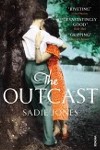
The Outcast has done very well. It garnered rave reviews and Jones herself a lot of respect and an expected glittering future as a successful novelist. Signalled as a great summer read (often one to be wary of) and with a cover that, although attractive, glazes the eye with low expectations, the book is a shocking tale of domestic violence and unnecessary discipline hidden behind a veil of flowers, forests, and the beautiful English countryside.
Lewis has been in jail the last two years for reasons unexplained. He is neither joyful nor unhappy to be back; to him life is exactly how he left it. When he was ten years old his mother drowned and he was the only one there. There was little comfort to be found amongst family and friends, everyone expected him to pull his socks up and be a man. Kit has lived for years in love with Lewis and in hate of her family. She has been broken down just like him. The book takes the reader through their past in order to discover the reason for their turmoil and continues until a couple of months after Lewis’s arrival back home from prison where the two finally find their solace.
The book begins quite abstractly, as Lewis comes home, and we don’t know anything about him. But just when you’ve started to accept the idea that you’ve been thrown into his life at random, Jones takes us back on the journey where we meet Kit and, as much as one can through a book, live their childhood alongside them. We learn a lot about them, their family, and their surroundings – every detail that is needed in order to feel a part of their world is included.
Detail is something that Jones does to perfection. It may be in part due to her choice of period and setting and the pure bliss that radiates often when readers in this modern society encounter them, but mostly it’s down to her passion. She doesn’t use “big words” yet promotes a picture so strong that creating the backdrop in your mind of her story is easy and not the difficult and time consuming task it can often be with other authors’ work. Everything you need to paint your landscape has been put out already on the palette ahead of your arrival; all you need to do as a reader is fill the canvas with the colours provided. My own creation was very clear and I basked in it; the little things I did create from scratch matched Jones’s text completely as she had given me enough of a foundation to work with – and that’s a mark of a good writer.
Still in the realms of detail, the information Jones presents regarding day-to-day life can be quite subtle but again it assists greatly in helping to get the story moving. The more detail, the more one is pulled in, the quicker they read the book, and the more satisfied they feel.
For the first several chapters the reader may find themselves wondering where all the darkness referred to on the back cover of the book is. The story is for sometime dreamy and idyllic, dull even, and it’s hard to see why it’s so loved. But when the darkness comes, while it certainly isn’t the most horrific darkness out there, it never lets up, always hanging over the characters like a strong black cloud about to release it’s wears. Jones never makes excuses for the pain and violence and thrusts everything out in the open, like her main character does at the end of the book. We read about the self-harming in all its bloody pain, and the scars, and the bruises from domestic violence, and it makes for difficult reading – but it makes you think.
The ending is exceptional and has all the makings of a high-grossing film. One aspect of the book that Jones makes obvious is the way Lewis sits on the train and while reading it can seem an irritation. At the end she explains herself by having Lewis sit the opposite way. It’s fantastic imagery; where once he watched the train pull away from the station, leaving him separated and alone, now at last he watches it move along it faster and faster, towards happiness.
Perhaps the real reason why this book is so difficult to read, again something subtle that takes until after you’ve finished it to realise, is the lack of parental care towards the children. One reviewer remarked that Jones had shown the careless nature of a typical middle-class fifties parent flawlessly, and a quick browse through the book reveals this to be true. It’s difficult to read because Lewis needs love and love only to get over his pain, he can’t simply pull his socks up, and we know this from the beginning and that’s what’s so frustrating because in our world today parents are much more in tune with their children.
The one and only kink in this otherwise smoothly written novel is the language. There are times when Jones displays a distinct lack of the articulation generally expected from one such storyteller as herself. Phrases like “he played that there were lions” rather than the usual “he pretended that there were lions” and “speeded up” instead of “sped up” grate against the otherwise finely-tuned composition. Fortunately these occasions are few and far between.
The Outcast is a beautiful yet haunting novel of two broken lives that has at its heart long-lasting love and redemption. It would appeal to anyone seeking something historical and engrossing yet lighter than most. Not quite the regular summer read advertised it is a book that will remain with you long after reading without leaving you wanting. Sheer excellence.
Related Books



Simon Montefiore – Sashenka
Posted 5th April 2010
Category: Reviews Genres: 2000s, Historical, Political
Comments Off on Simon Montefiore – Sashenka

Simon Montefiore is a scholar of Russian history and has written on the subject previously. His first novel, based on that history, was published recently and was pictured on banners in the entrance to Waterstones bookshops.
Publisher: Corgi (Random House)
Pages: 591
Type: Fiction
Age: Adult
ISBN: 978-0-552-15457-4
First Published: 2008
Date Reviewed: 29th May 2009
Rating: 2.5/5
Picking up a copy of Sashenka is an easy task at the moment with it being readily available and highly thought of. The quotes of critics line the covers and the blurb promises a wondrous tale. Using an illustration that is almost photographic for it’s cover, the publishers have given it a bonus first impression: we already know what the main character looks like and thus, they hope, we’ll feel a sense of intimacy even before we peruse the summary.
Sashenka, born to Jewish parents of new money, was recruited by her uncle as a Bolshevik. In joining the party she had to lie to her family and put them to the back of her mind while going about political business in secret. Her choices as a young girl ultimately decides her fate as does an affair she has during her thirties. Her actions cast a dark light on her family until a historian in the 90’s is employed to track down the details of her last days.
The story is split into three parts, the first two revolving around Sashenka and her immediate family and the last on the historian’s search, years later, to uncover the truth about the heroine. Each part is split again into bite-sized chapters making it deliciously easy to keep up with as part of a varied and busy life-style and aids it’s speed in some way. The downside to the sectioning is that the first is focused purely on a winter in St. Petersburg, a particularly dreary one which casts a certain dullness over it, making it seem practically endless.
The first thing that’s striking about Sashenka, is the myriad of details the reader is given early on. Something that isn’t apparent in the blurb is that the book requires a good working knowledge of the period. This sets it apart from many historical novels that give the audience a hearty back-story before raining down on them with cultural references. As such it may just cause the book to be unappealing to anyone wishing to learn about Russian history and chosen Sashenka as their introduction, so a quick bit of research into the era is recommended.
The writing itself is mixed in standard. Mostly it is average but there are times when the imagination can go into overdrive over its beautifully described backdrops. St. Petersburg in winter and Moscow in summer, in spite of the heavy political story, give the book the luscious landscapes one needs in order to get through the taxing chapters.
One of the biggest problems of the book is its choppy structure. It darts to different situations too quickly and Montefiore shies away from providing the physical details of characters until long after they’ve been introduced. This is a problem due to the severe lack of details given in the first sense – it’s fine at the time because one can be creative but when more details filter through it can be quite a shock to the imagination.
Above all is the sex of the author. There are few male writers who have captured both the emotions and sexuality of women well, one being Philip Pullman, and Montefiore isn’t one of them. Some of Sashenka’s sexual discoveries are portrayed in a strange light, she says the kind of things that men want to hear but women would never utter. Montefiore does not understand women to the extent that he should as a writer of them, he would’ve done better had he made his hero a man.
In conclusion, Sashenka is an easy to put down, mostly dull, and slow moving book that would have faired better as Montefiore’s second or third novel at which time he might have improved his skills in the genre. The fact that he has written only non-fiction before is obvious as the narrative is too bogged down in factual details. His characters are not fully realised and one feels little reason to really care for them as they’re given to us at face value – a great pity as the history behind it all is very real and terrible.
As an add-on to studies in Russian history it may prove valuable, otherwise it’s not worth the large number of pennies for its purchase.
Related Books


Marian Keyes – This Charming Man
Posted 4th April 2010
Category: Reviews Genres: 2000s, Chick-Lit, Domestic
Comments Off on Marian Keyes – This Charming Man
Marian Keyes is ahead of the game. One thinks Chick-Lit and her name comes up. She has made that name for herself over the years with regular releases and generous helpings of her irrepressible Irish humour. Her books are the ultimate in modern women’s holiday reading.
Publisher: Penguin
Pages: 885
Type: Fiction
Age: Adult
ISBN: 978-0-141-02675-6
First Published: 2008
Date Reviewed: 10th May 2009
Rating: 4/5
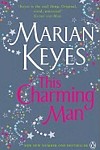
Copies of This Charming Man are currently sitting on shelves in every book store and supermarket in the UK; it’s star-struck and ironically charming cover self-assured in it’s ability to catch the eyes of passers by. The grey background of the otherwise glossy cover speaks volumes, though they are best reserved for an epilogue wherein the plot cannot be spoiled.
I admit I had serious troubles in finishing my last attempt at a Keyes novel, Angels, which seemed to go nowhere and had as much interesting content as a bottle of flat lemonade, but something made me want to give the woman a second chance and the knocked down price was tempting.
The plot revolves around three women (the blurb says four but the fourth gets little airplay) trying to make head and tails of the sudden marriage of one Paddy de Courcy, a politician with an impeccable record. Each have had more than their fair share of history with the man and the book studies them as they move from pain to happiness.
There’s Lola, Paddy’s girlfriend, a stylist with Molichino hair – purple, to use a non-Prada-fan’s word. There’s Grace, a journalist, and there’s Grace’s sister Marnie who fifteen years on is still not over Paddy and has let her anguish rule her life. The book focuses on each of them, chapter by chapter, sometimes running parallel and at other times giving details about one character for one period of time. Lola just wants to get her life back together, Grace wants to frame Paddy for the hurt he’s caused her family, and Marnie is still waiting in hope that he’ll come back to her while she drinks and loses her children and husband.
On the face of it the book is very stereotypical of the genre, an easy read that is as predictable as it is un-stimulating, and it takes a good half or so of the story for this to change. What starts out as a light gushy read turns into a rather sinister exploration of domestic violence and at times it’s quite frightening. The first displays of this come at the end of the first chapter but it’s like a sub-plot, almost a completely different story that bares no relation to the main one. But as the book continues and connections between each character start to form the reason for the notes become clear. It’s a cleverly planned device that creeps up on you before you realise what’s happened.
The chapters have all been given individual treatment depending on which character is in focus. Lola’s take the form of diary entries and are quite sparse in punctuation and grammar. This can come as a shock at first and will prove an irritation if one is looking for an emotive read as the emotions are lost in the errors; but all entries are dated in detail and it appears Keyes has put a lot of effort into making sure she never re-uses a particular time of day. Grace’s chapters are narrated by the author and written in full as are Marnie’s, however whereas Grace’s are typical narratives Marnie’s are drenched in repetitive sentences and thoughts as she becomes ever more a slave to the drink.
As expected for a book revolving around domestic and sexual violence, sex is referred to many times, though a good amount of that time is reserved for innuendo of a far more innocent if explicit nature. There is also plenty of swearing and racial humour, the latter being written in such a way as to subtly condemn racism. There is little in the way of “big words”, any book lover looking for a masterpiece will not find it in this release.
The biggest drawback of the book is sadly part of Keyes’ writing style. It often drags for short periods of time during which a closing of it and finding something else to do strikes as preferable. Thankfully as the story hits crunch time the narrative speeds up considerably. The other drawback, in a way, is the page number and the reasons for why it appears so long. The font is big, there is a lot of dialogue, constantly going back and forth in short blips between characters, and many breaks in parts. If structured like a regular novel the book would lose a good third or so of its thickness.
But away from these negatives stands a solid look at society today and many of the issues facing it. Keyes demonstrates a large amount of awareness for the world and a heart full of passion for it. The book forces you to really think about things that you may not want to or feel comfortable with and that is it’s biggest success. By wrapping her novel in a coat of Chick-Lit silk Keyes has brought those issues to the forefront of her fan’s minds while still holding up on her promise of an escapist fantasy.
It’s pleasurable, it’s fun, it’s fearfully realistic – and it’s all in one package.
Related Books