




Analyses Of First Lines
Posted 4th March 2016
Category: Close Reading Genres: N/A
6 Comments
In this slump of mine, which if it carries on much longer I’ll have to baptise with a formal name, I’ve flicked through several books. Mostly they’ve been books on my pile – next in line and then next after that and so on. As I’ve been previewing these books in a manner akin to window shopping, I’ve read many opening pages and in the absence of any deeper thought posts and reviews it occurred to me I could still discuss what I’ve read, just in a different manner. I’m opting for first sentences because often they are long enough in themselves to be paragraphs, and because to use any more than a sentence – especially considering the length of some, would require counting words for fair usage; an arduous task for little gain.
Please note this post is subjective – I’m no expert in close reading. It’s also very long (2000 words) and quite possibly boring – do let me know if this post should be a one-off.
I’m going to begin with Su Dharmapala’s Saree; reading it was what gave me this idea in the first place. Here’s the opening line:
There is a small park outside the town of Sirsa in Haryana, India.

Dharmapala’s first sentence seems to fly in the face of all we’ve heard about making your opening line attract the reader; there’s nothing particularly alluring about it. Yet, if you’ll pardon my stereotypical metaphor, it’s a bit like the beginning of a guided meditation session wherein the words you’re hearing start with a place commonly associated with peace delivered in a peaceful manner. There’s no action in the sentence but it does set you in place right away.
I’ve heard it said that authors of colour are almost expected to produce works of importance about their ethic origins. Whether that’s true or not I don’t know but certainly I can think of many more books by people of colour that are about profound subjects rather than run of the mill everyday living (I’ve chick-lit in mind for that second group). Dharmapala sets Saree‘s record straight at once – yes, this is going to be about India. (However, and I’m putting this in brackets because it’s not specific to my plan here, as you later discover, the book is more chick-lit than literary which asks a potentially intriguing question of Dharmapala – she’s subscribing to her ethnic origins but writing a book that’s more everyday-ish.)
Going on from that, Dharmapala is very specific: this near Sirsa in Haryana. She doesn’t assume you know where Sirsa is, in fact she’s adopted a style akin to Victorian writers, that slow description that sets the story as early on as possible. Perhaps it’s the info-dump factor, but often books leave the specifics of location to the reader to imagine. Dharmapala believes the debate should fall on this side: combat it quickly.
Here’s Chigozie Obioma’s first line from Man Booker shortlister, The Fishermen:
We were fishermen:
My brothers and I became fishermen in January of 1996 after our father moved out of Akure, a town in the west of Nigeria, where we had lived together all our lives.

What’s special here is the line break – Obioma states his mission almost, repeating his title and informing you that he’s going to get straight to the point. But he doesn’t want to just state it and continue, from the start it’s important to connect the title with the context. At the same time one could suppose the author has noticed the need to use description early on to offset any claims of info-dump. We were fishermen and this is how we came to be such – the word ‘fishermen’ does not provide the layers of meaning Obioma has adopted and so he must tell you.
We can say that context is the name of the game in the usage of a specific year. Yes, it gives a briefing of what time we’re reading about but also Obioma is almost suggesting that, if you do not have the knowledge, you do your research into the state of Nigeria in the 90s now, before continuing your reading. He will of course use social and political history himself anyway, later, but if you like to know background context, the first line is your cue to go and check it out.
Obioma’s lengthy description (because it continues on for a fair time past this sentence) is offset by his writing style. I often start to think of how I’ll write my review early on in the reading – the way I’d describe Obioma here in The Fishermen, I’d call to mind any well-spoken narration in a Victorian novel-based film in which the lead character talks to the viewer, slowly, wistfully. You know the sort I mean; in fact the only difference in delivery, to my mind, is that Obioma is male, his character male also, and I can’t think of any films or TV serials that use male narration in quite the same way.
Certainly I think Obioma’s first line is verging on info-dump but it’s as though the author knows that and will style his voice accordingly so that the text isn’t as dull as it might have been otherwise.
So that’s one mid-list and a prize nominee, let’s jump back in time, shake it up a bit. Here’s the opening line – paragraph – of the book that laid claim to Everdene long before the birth of Katniss:
When Farmer Oak smiled, the corners of his mouth spread, till they were within an unimportant distance of his ears, his eyes were reduced to mere chinks, and diverging wrinkles appeared round them, extending upon his countenance like the rays in a rudimentary sketch of the rising sun.
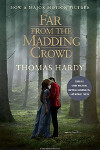
And breathe. Thomas Hardy shows us how it’s done. The beginning of Far From The Madding Crowd is enticing even though nothing palpable is going on. Personal, facial, action, yes, but unlike Dharmapala, who wants you to focus on a place and Obioma who wants your focus to be on a place and time, Hardy’s introducing you to someone who will undoubtedly turn out to be an important character. I’m reminded of the level of detail Markus Zusak employs in The Book Thief, all those pimples moving across faces – perhaps he read Hardy first. In a short paragraph Hardy successfully breathes life into a fictional person, sets in your mind an allure not unlike Tolstoy for Anna Karenina. He makes you want to read more about this Farmer Oak. It’s surface dressing at the moment but it’s that first impression and Hardy knows how to win on that front.
Whoever this Farmer Oak is, his face could launch a thousand ships – who wouldn’t want to continue reading about him?
Certainly, I was thrilled to be galloping along on this beautiful June day with my gentle brother Samson and our valet Miroul, traversing the highways and byways of France, and yet I kept feeling sudden waves of regret at leaving the barony of Mespech behind.
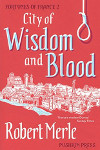
This, translated from the French, is the opening of Robert Merle’s City Of Wisdom And Blood. I love it; this is the second book in a series and Merle throws you into the action from the first moment – there’s no gap between the end of book one and this opening. That the rest of the sentence is a recap is no problem – it’s short and could be considered the opening of a chapter rather than a whole book.
As books go, however, you do have to factor in the… fact… that Merle has the upper hand. As far as the other books in this post are concerned, no one else could have opened as strongly as this – they’re all standalones or firsts-in-series.
Away from that, Merle does what I know I wish, and I expect many of you, too, authors would do – continue a series from where the previous book left off. A jump in time can be all the disconnect required to halt the momentum or motivation. I will always wonder why there was a jump; it’s often the case that the meantime is not refered to or not referred to enough. I’ll feel I’m behind the fence whereas before I was a fly on the wall.
As a continuation of a series, there’s less need for a thrilling, alluring first line and yet Merle does it anyway. (I reckon it’s too involved and specific a line to worry about the translator’s input in this regard.)
Ben Fergusson’s The Spring Of Kasper Meier begins on the following note:
Frau Leibnitz’s tiny bar in Prenzlauer Berg was filled with shouting Russian voices and the smell of sweat, cheap schnapps and vomit.
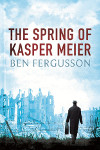
Well it sets a scene even if it’s not quite what you’re looking for in your lunchtime reading. Does it invite further reading? Scene aside it is rather average on the whole and reflective of the book at large – more telling than showing. This said it tells you what you need to know about it: it’s historic – there are Russians in this German pub and the latter part, the sweat, cheap drinks and vomit indicates the war. These aren’t Russian holidaymakers, they’re World War II soldiers. And this is post-war. What it doesn’t do is introduce you to the main character, Kasper. Fergusson’s opted for time rather than his fiction.
If you’re looking for a book with Oxford commas you’re out of luck.
Back to Hardy’s era and here’s Elizabeth Gaskell:
In the first place, Cranford is in possession of the Amazons; all the holders of houses above a certain rent are women.

This book will be turning ideas of gender on its head, says Mrs Gaskell. The reference to tribal people in the first part enables her to point to the women as strong, in control, knowledgeable. The second part allows her to show that this isn’t going to be a book about rowdy people (bearing in mind the views at the time). There may not be men in this book and if there are they aren’t going to be particularly important. With her first sentence Gaskell sets out location, society, gender, manners and suggests that this book may go against the grain a bit… but it’s nothing like Ruth so if your Victorian sensibilities were hurt by that book then please be assured I’m going for something different here. She inserts a bit of humour – see, we’re okay – and suggests that there’s much more to know so keep reading.
My personal opinion is that this is a stellar opening. It tells you everything at a glance and is inviting to boot.
Lastly, we’ve Fitzgerald:
On the pleasant shore of the French Riviera, about halfway between Marseilles and the Italian border, stands a large, proud, rose-colored hotel.”

In this, the first line of Tender Is The Night, Fitzgerald tells us two things. Firstly, that this will not be like The Great Gatsby with its draw-you-in-quick beginning but that secondly, if you’re looking for a potentially relaxing Parisian novel you’ve come to the right place. So much does Fitzgerald want you to be sure on this second point that he details the initial setting down to the mile; and his description of the hotel will inform you of the sort of people you might meet on your trip – well-off, well-connected, and proud like his nature-inspired hotel. But you had that idea already, the pleasant shore telling you.
The book begins in the way it means to go on, slow, leisurely, with a firm sense of vacances.
Due to my last few posts you likely know which book I continued with – Cranford. It was the one that spoke to me at the time, the one that’s least literary – that turned out to be the problem (too much literary fiction without a break for another genre – I’ve since finished the Obioma after which I plumped for an Elizabeth Chadwick as my primary read and moved the Gaskell to second).
How important are first lines to you when choosing your next book? Are you a fan of close reading? Have you read any of the books I’ve discussed here?


