





Contemplating My Favourite Genre(s)
Posted 21st July 2017
Category: Chit-Chat Genres: N/A
4 Comments

I’ve the urge to read some books that have been on my backlist. Specifically I’ve been wanting to read historical fiction of the fantasy variety, mostly time travel and time slip; in the case of the books I’ve had on my shelves, it’s primarily time slip.
I’ve been wanting to do this since I briefly picked up The House On The Strand some time ago. It occurred to me earlier this week as I sat with Susanna Kearsley’s The Shadowy Horses, that I might have been wrong all this time that historical fiction and fantasy fiction are my favourite genres. It’s far simpler – I like both put together.
Historical fantasy is a genre I always feel comfortable with in that particular way of sitting down to read and feeling the need to relax back into the chair and not do anything else for a good few hours. Even if I don’t think the book’s great, as I ultimately found with the Kearsley, the feeling remains. Historical fantasy speaks to my passion for history and my longing to be back in time, the part of me that loves visiting castles and old houses. It’s like coming home.
And I think it’s more like coming home than reading a good classic can be. I’m surprised to find that my joy in reading classics is pipped to the post by historical fantasy.
I don’t mind a romance, but only when it works. Could The Shadowy Horses have done without the romance? I’d say so, yes. Could Nicola Cornick’s The Phantom Tree? Yes. But I think Cornick’s previous, House Of Shadows, would have been a little less without the progression of a relationship.
Historical fantasy is a genre I don’t own many books in. It does take a bit to get it right and where it’s something I don’t read too often (and whenever I do read it I have to stop myself reading too much) I don’t often actively seek new books.
I should. I have only the Du Maurier, that I stopped reading because there were other books I had to read that I knew I’d abandon if I didn’t stop; Kearsley’s Season Of Storms and The Firebird; Barbara Erskine’s Sleeper’s Castle – my current read. Unless there is time travel/slip in a book that I do not know about, that’s my lot. Everything else – not much – has been read.
I think I need to get better at identifying what I like the most and making it more of a priority, both in terms of reading and when at the bookshop/library/when reading requests.
Has your favourite genre changed over the years?
How Soon Can You Trust The Author?
Posted 21st June 2017
Category: Chit-Chat Genres: N/A
2 Comments

I’ve recently discovered something interesting of the sort I expect you can relate to. It’s something I reckon is always there, particularly the more we read, but it’s taken until now for me to have that light bulb moment where it all comes together as a full concept.
I’m finding that I can generally tell within a couple of pages, sometimes sentences, whether I can trust the author I’m currently reading to tell a good, well-written, story.
I expect it comes down to two things, both subjective: 1) I’m increasingly knowledgeable of what, to me, constitutes a good book, and 2) some authors are just too good at pulling you in from the start. The kind of writing and voice is often very similar in a basic way and the feeling oof trust is that lovely feeling of knowing what you’re getting into, where you start a book and it just feels right and you settle down into your seat because you’ve – definitely now – every intention of staying there a few hours.
Sometimes I’m wrong about trust but it’s generally on a sliding scale. The more the initial trust, the more likely the trust wil turn out to be warranted. There’s probably a mathematical formula out there…
A lack of feeling of trust doesn’t mean a book will be bad, often far from it, but it does more often than not to books I think are great but profound. (This is related to my year round up five stars and ‘best of the best’.)
I do believe we all feel this, just in different ways, our preferences creating differences.
What elements of a book cause your ‘I’m going to love this’ feeling and how often do you find books meeting your initial expectations?
Author Biographies In Books
Posted 16th June 2017
Category: Chit-Chat Genres: N/A
2 Comments
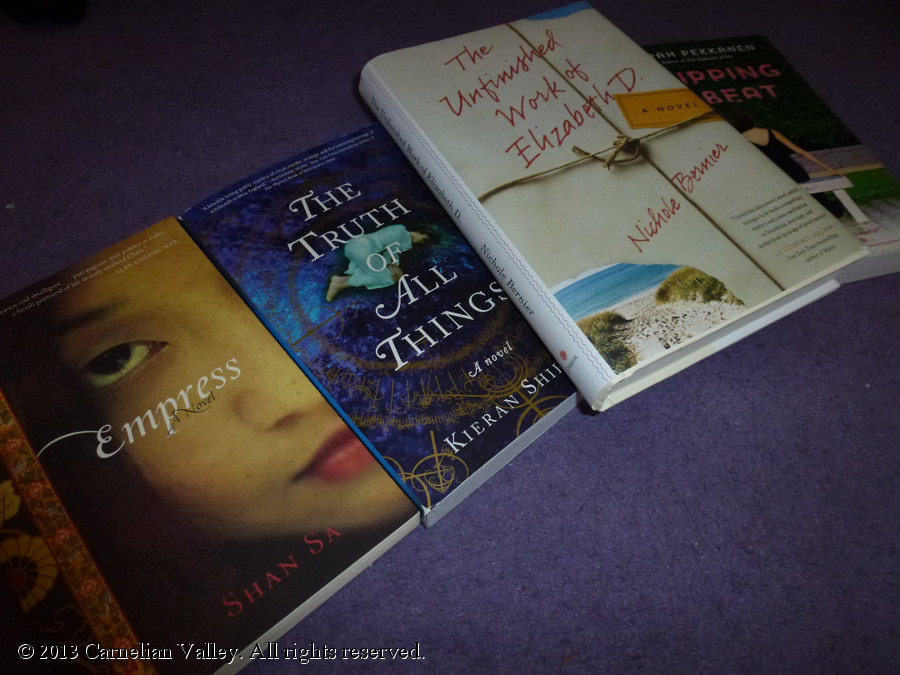
Many hardbacks nowadays have dedicated biographies on the jacket cover, providing brief information about the author and often a photograph. Education details, social media links, family. When paperbacks sport biographies they’re generally more limited, on the front pages, less information, and photographs don’t tend to be included. Biographies are something I consider often because I’ve a default primary action, particularly in the case of hardbacks, whereupon if I’m browsing shop shelves or about to pick up a book I already own to read, one of the first things I do is decide whether or not to read the biography.
If I’m wanting to stay in the dark about the plot of the story I’ll generally skip the biography just in case, especially if I don’t already know anything about the author; in reading the biography first you are unable to read the book without those slight threads of influence the biography may supply.
But because a biography often provides details that enable you to roughly gauge how informed the book might be, for example Kit de Waal’s work history shows that My Name Is Leon will most likely be trustworthy and full of knowledge (she’s worked in the social care system for years and has adopted children) it sometimes pays to read it if you’re undecided about the book.
Sometimes I do want to know more about a book and so I will read the biography to get a better sense of it when the blurb on the back is lacking (think hardbacks and the favouring of praises over summaries – I know in those cases summaries can be found on the jacket flap but they tend to give too much away). Sometimes I want to know as much as the book will tell me through all the various snippets provided.
Meaty biographies have spoiled brief ones for me. The short ‘X lives in location with her X family members and dog, this is her first novel’ disappoints me even though it means there’s little to influence you, not much to make you consider the author whilst reading. They often do not include photographs.
Photographs – good or bad idea? Seeing a smiley face can influence your decision to buy or borrow, just as a poker face might. I sometimes wonder about those poker faces – presumably they help keep away bias but they can bring a feeling of negativity. A biography without a photograph, whilst it keeps the mystery, often makes me want to look the author up to complete the picture – having seen so many biographies include them, those that lack them are surely… lacking.
Can biographies sway opinion? I think so. A person whose biography does not suggest any links to the content of the book might cause pause for thought, especially in non-fiction – why would something, anything, related, not have been included? For example (and made up), ‘Shelley has lived her life on the south coast where she works on a farm’, as a biography in a book about the city of Manchester – Shelley’s likely, hopefully, spent some time there or read a lot about it, so it should be included. It’s not absolutely necessary but, again, consider Kit de Waal, whose biography that shows very clearly why her book deals with all the subjects it does and why you can trust her.
I’m a fan of the biography when it isn’t too brief. A line or two just makes me wonder why it’s so short.
What do you think of biographies in books?
Which Series Would You Have Liked To See Continued?
Posted 19th May 2017
Category: Chit-Chat Genres: N/A
3 Comments
What it says on the tin; looking at series that ended rather than any that may not have been actively finished, if that makes sense. (The photograph is just books from different series.) Most series I read are Young Adult, particularly fantasies, so that’s what my choices are. The series are His Dark Materials, The Hunger Games, and The Chronicles Of Narnia, one paragraph each, and thoughts include spoilers.
It’s kind of (hopefully?) happening now, but like many people I wanted to know if Lyra and Will of His Dark Materials would meet again. I wanted to find out if they were successful in their quest. Should a continuation happen? Whilst this is a mute point now, with the upcoming publication of The Book Of Dust, I’m not sure whether a continuation would work or not. I’ve written about my feelings for The Amber Spyglass; I wonder if Pullman had continued the series at that time, if it would have just got worse. Perhaps The Book of Dust will benefit from the years that have passed since the completion of the trilogy. But I don’t think the story can work without Mrs Coulter and Lord Asriel. How a story would work without them I don’t know.
I’ve read many articles and reviews in which people say how much they loved The Hunger Games and Catching Fire, but disliked Mockingjay. I didn’t dislike the last book but I stand with general opinion that it was a poor finale to an otherwise strong series (albeit that I have my reservations due to the similarities with Battle Royale, a book I won’t lie in having read but know a bit about). I think the thing with the first two books is that although the Games are horrific, they are fun in that sort of can’t-stop-reading way, much like people think reality TV is awful but they’ll still watch it. The fast-paced action and also, I reckon, the element of knowing what you’re getting, combined, perhaps, with the shock of it all, made the first two books what they were. Without it, the third book couldn’t win. So I would have loved to have stayed in Collins’ world in terms of the no-holds-barred way she explored her subject but I wouldn’t want to read a continuation of the series as it stands. It wouldn’t make sense for another book to be included unless it had been a book slotted between the first two and the third, or if it was a spin-off. Personally, I’m not the biggest fan of spin-offs, Xena excepted, so I’m not sure I would read one anyway. The story has been completed.
I think The Chronicles Of Narnia could have continued for many more books and people would have enjoyed it just as much – so long as it continued adding characters and new travels rather than looking at Heaven post-The Last Battle. It would be different – perhaps we’d emphasise new characters over Lucy; perhaps Susan could have returned and Lewis made her a more prominent character without the hate – but I think it would have still been just as good. Looking at how wonderful both The Magican’s Nephew and The Lion, The Witch And The Wardrobe are, as very separate parts of one whole, he could feasibly carried on without issue.
You?
A General Post On Discovering ‘New’ Classics: Persephone, Virago, And Apollo
Posted 17th May 2017
Category: Chit-Chat Genres: N/A
2 Comments
I’m going to start with a couple of quotations because they sum up the whole idea and are just great to read:
“The criterion for inclusion in the Apollo list is that its editors have to feel passionately about the books, and that they should be, on the whole, forgotten or unread. There are novels on the list that have never been part of any canon, but deserve to be, and there are also respected authors like Christina Stead whose absence from lists of essential classics is astonishing to us.” — Neil Belton of Head Of Zeus imprint, Apollo.
“Founder Nicola Beauman’s original concept was to publish a handful of ‘lost’ or out-of-print books every year, most of them interwar novels by women… a grey Persephone cover is a guarantee of a good read. In fact, by far the most important criteria is that we only publish books that we completely, utterly love.” — Persephone’s website.
I’ve been reading quite a few classics lately (or at least what I’ve decided to term classics when it comes to my reading, because it really isn’t straightforward otherwise, as you all know). It’s kind of crept up on me; I had been aware for a long time that I hadn’t been reading many and that my Classics Club list wasn’t getting far (I recently changed the scope for that) and now suddenly I’m reading a lot of them.
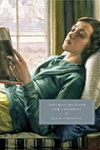
It begun a couple of months ago when looked at the numbers of books I’d read for different categories, but I’ve found myself carrying on choosing classics without much thought. Partly due to review copies and partly due to just being in the zone, it’s happening.
What helps is redefining ‘classic’ and working with books that have been forgotten. You know what I mean: Persephone, Virago. A bit of Pushkin, and now Apollo. Persephone introduced me to Julia Strachey and Marghanita Laski and a whole host of others I should have read by now. Virago – Thirkell. (I’ve also a few from their Du Maurier collection, but the author has never been forgotten; I expect she’ll be around for the foreseeable future!) Apollo is a new imprint from Head Of Zeus so they’ve just started out: Margaret Laurence, Josephine Johnson, and I have Christina Stead on my to-be-read, that book that was daunting but now no longer. [As I edit this post I realise it’s very focused on women. That wasn’t my intention but it does reflect my recent reading.]

I’ve found something wonderful in reading classics and I’ve found even more wonder in reading forgotten books. It’s not the idea that you’re reading something few have, though that is reason for excitement, it’s that feeling that you are indeed reading a classic. There is just something about a great old book that you can ‘see’, that’s there to notice. Even if you don’t like the book, that reason for it being well-known, or ex-well-known, seeps from it. It’s like reading a wonderful book, that you’d never heard of before you saw it in the shop and bought it, magnified.
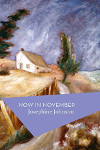
I’m not sure exactly what it is about Thirkell, some sort of semblance to Gaskell, perhaps, and a feeling not dissimilar to the books my mother introduced me to, but with Josephine Johnson it was Little House In The Big Woods, and a feeling of the moors, like it could have been a forgotten Brontë if they’d written about the Southern States of America. Now In November won the Pulitzer Prize in 1935. It’s very of its time, lacking in what we would consider action, but just so good.
Of course its date is more modern classic – 1935, just a year before Margaret Mitchell’s publication – but it still felt good to have read it. It’s hovering just around being forgotten; it’s likely Apollo’s reprint will help it gain ground, particularly given the Prize. Was it forgotten because it was so relevant to a particular period in history, as the Prize might suggest?
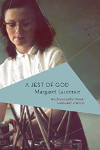
The story behind Margaret Laurence’s The Stone Angel fascinated me because it’s considered a Canadian classic and from what I’ve found out, it seems it’s still read in the country. It fascinates me because it’s on a topic that will likely never be irrelevant, unlike, perhaps, Johnson’s work – however much the life trappings have changed since, Laurence’s protagonist could be transplanted into a book from today, a person who is oblivious to why her son doesn’t want to look after her any more – we can see why and it’s all to do with her behaviour. Apollo have just published Laurence’s A Jest Of God and thinking it might be similar, I had a look. It is, from the other side of the story – the daughter of an overbearing mother. You can’t see it from the image I’ve used but there’s a quotation from Margaret Atwood who says it’s “An almost perfect book”.

If judging a book by its cover then I’m very interested in Eudora Welty’s Delta Wedding, a ‘portrait of family life in the American South during the 1920s’. The focus is on a particularly mundane year which meant that ‘initial reception of the novel was chequered, with many reviewers challenging the absence of plot’1. Likely what we’d now call a character-driven novel, Apollo’s decision to publish it suggests it’s one to read. Another author who won the Pulitzer, though not for this book, Welty used technology as symbols in her work. Her home in Mississippi is now a museum. Like Kate Chopin’s house it was damaged by fire, but unlike that building there was enough remaining for it to be restored.
I’ll be reviewing Christina Stead’s Letty Fox: Her Luck soon and as I featured it in my first lines post last week I won’t include it here except to say I’ve since found out it was loved by Angela Carter.

In terms of other books I’ve not read but want to, Monica Dicken’s Mariana, published by Persephone, has been on my list since I first saw it. It was the cover that drew me mostly because , at the time, it was the first non-grey Persephone I’d seen. Finding out later that Dickens was a granddaughter of the Victorian novelist cemented it. Don’t ask me why I’ve not read it yet – I’ve no excuse.
With Virago, I hope to get to all of Barbara Comyn’s and Du Maurier’s books… if I can say that when particularly in the case of the latter it’s been a good few years since I read Rebecca and I have four other novels on my shelves waiting.
Which little-known books would you recommend, particularly those published no later than 1960? (Arbitrary decade, I know.)
1Wikipedia’s page on Eudora Welty, accessed 17th May 2017.


