




Reading Without Regard For The Author
Posted 26th March 2018
Category: Chit-Chat Genres: N/A
4 Comments
I want to revisit this topic, updating my thoughts due to the added reading experience I’ve gained since I last wrote about it.
Nicolai Houm’s The Gradual Disappearance Of Jane Ashland, my recent read, says this on page 58:
It was even in line with the dominant theory at the time, which insisted that reading must be done without reference to the lived life of the author.
It’s a fascinating idea to think about because putting a book in its context seems so important, the relation of a book to their life can be critical to understanding it. General historical context is good to know, but so often it’s the author’s context that’s important.
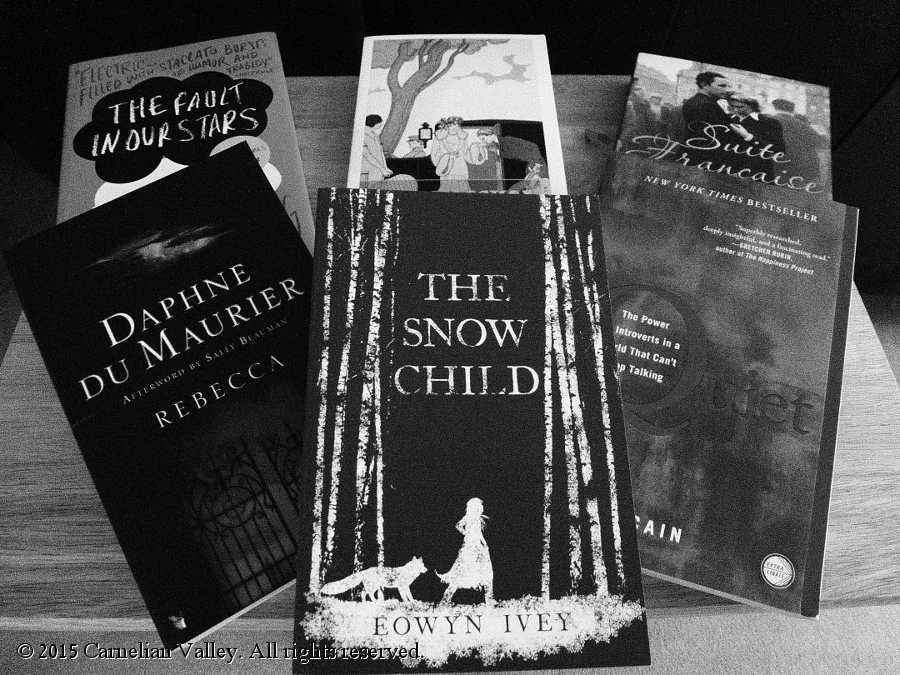
What would Tender Is The Night be without context? I’d argue it’d still be a bad book, but context does redeem it somewhat. The use of a mental health hospital, and alcoholism, wouldn’t be anywhere near as ‘good’ as it is in a literary sense if it wasn’t for that relation to Zelda Fitzgerald’s health and Scott Fitzgerald’s increasing dependence on alcohol. The author’s life, when set against the book, transforms it from a somewhat confusing look at fictional rich Americans in Paris to a semi-autobiographical novel.
Then there are books that go that one step further, wherein you can’t really read them without author context. Tom Malmquist’s In Every Moment We Are Still Alive is billed as a novel about the death of a wife and mother, but Malmquist’s own experience is so intrinsic to what you take away from it that the book would lose some of its impact without knowledge of it.
I remember well my first blogging years, when I had little knowledge in which to set my reading. I used to rail against context – I had never got on with it as a concept for study. My reviews and reading experience were adequate but I am aware of the difference between then and now, and vastly prefer where I am currently. And I know I wouldn’t have written as much as I have without it.
Not referring to an author’s life does ensure a particular sort of objective reading. Some books may be better for it – those books that feature ideas and values in their characters which the author themselves does not ascribe to, can not be confused as items that match their thoughts. But non-referral doesn’t have longevity beyond this – at some point knowledge of contexts will seep through; even without actively reading about an author, in reading their books you tend to gain an idea for who they are.
I think I understand why no referencing has been preferred – it could be easier that way, less ‘messy’, more escapist – but it prevents a certain progression of thought and may wrongly influence opinion. There’s something isolating about it. Perhaps this is a case for re-reading – read once without context, read again with it.
But I personally think knowing about the author in terms of a book’s content is a good thing.
Where do you stand on literature and contexts?
On Classics, Average Older Books, And Contrasting Values
Posted 20th March 2018
Category: Chit-Chat Genres: N/A
Comments Off on On Classics, Average Older Books, And Contrasting Values
I’ve been thinking about classics and, for want of a better descriptor, bog-standard older books, in terms of how they match up, and where the term ‘classic’ begins and ends.
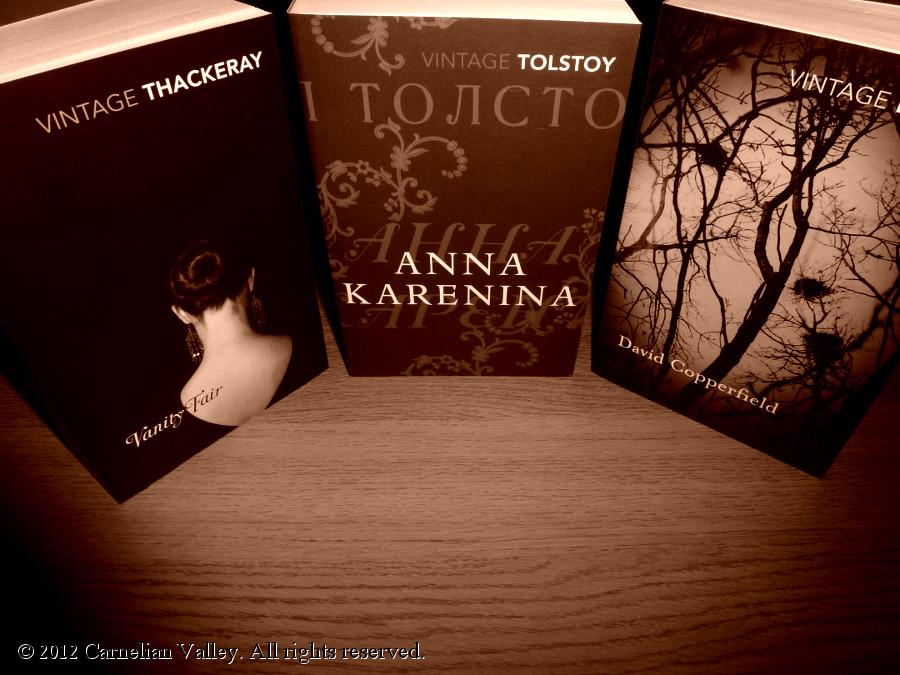
When I first began to develop an interest in reading famous books, and for a fair length of time into my journey reading them, I used to call all older books classics. True, I was naïve back then and didn’t realise just how many older books the world had managed to retain, but mostly I saw historical books as being equal to each other, all full of value – albeit that I started to see it more as a perceived value once I’ve read my first dull book that everyone else seemed to like.
(On the note of needing a better descriptor – I’d like to see one. Does the fact there isn’t a proper descriptor for average older books a reason why so many of them are still put on a pedestal?)
A recent article on Lit Hub included this:
Classics are classics for good reason, and forgotten books are most often forgotten because they weren’t excellent (Wirkus 2018)
In many ways, never was a truer word spoken, but there are a lot of books that were forgotten and then remembered – forgotten because they didn’t seem relevant at that time; I believe Twelve Years A Slave would be in that category – a book that was relevant during abolition but perhaps not so much after slavery ended, until it was discovered again in the last few decades. (And that’s why I didn’t add ‘forgotten books’ to my bracketed paragraph – whilst the article says ‘most often forgotten because’ I reckon it’s a bit less than ‘most often’. There are many more reasons books are lost, and we likely won’t find out about all of those reasons.)
Having now read a few older books of that non-classic variety, particularly those in the ‘was very popular and a classic for a short period of time’ category, I find it interesting how we change; some books are forgotten because they have values we no longer, or had no longer, ascribe(d) to.
I’m thinking of Charlotte Turner Smith’s Emmeline, the book I’m currently struggling through, a book in which a man follows the unhappy main character everywhere she goes, having tantrums when anyone suggests he leaves her be. Turner Smith’s publishers and contemporary readers would doubtless be surprised to hear the book is now virtually unknown – it was incredibly successful in its day (which is a reason to read it – a book by a female author in the 1700s). It was considered excellent by most.
Mary Wollstonecraft did not like it much at all, however, and this is something else to consider – if a writer who is revered so much today for reasons that are completely opposite to the popular book’s qualities did not like it, it does stand to reason that it would be obscure now.
[She] “lamented […] that the false expectations these wild scenes excite, tend to debauch the mind, and throw an insipid kind of uniformity over the moderate and rational prospects of life, consequently adventures are sought for and created, when duties are neglected, and content despised.” (Wollstonecraft, in Fletcher, 2003)
The Light In The Clearing I read a few years ago. I likened it to Great Expectations insofar as literary atmospheres go; it was a popular book by a very successful author. Nowadays it’s obscure, its topic and messages far surpassed in execution by others from the same period whose fame has only increased.
It’s both sad and understandable – as the world changes, books that used to be important may cease to be so. The good thing now is that we can at least save them, retain them digitally where they can be uncovered in the future whereas previously they might have been lost.
Online References
Wirkus, Tim (2018) Our Obsession With Lost Books, And How They Often Disappoint, Lit Hub, accessed 20th March 2018
Books References
Fletcher, Lorraine (ed.) “Appendix A: The Reception of Emmeline”, in Lennox, Charlotte (2003) Emmeline, Broadview Press, Peterborough, pp. 478-80
Getting Back Into Blogging And Reading
Posted 5th March 2018
Category: Chit-Chat Genres: N/A
7 Comments

From around December to just the last couple of weeks I’ve not had as much time or focus. I considered putting the blog on hiatus for longer than the Christmas holiday I’d set, partly because I’d been ill and not really had much of a holiday but also because I knew I was having this issue of focus. Mid-January I decided I had to push myself – I knew I didn’t really want to go on hiatus, it was more of a block between what I wanted and what was happening – and thought to push myself only a slight bit, gradually get back into the swing of things, and accept the missed posting days.
It’s worked – I finally started commenting on other blogs last week and the week before that got back properly to Twitter. I’d definitely recommend a very slow, lenient-on-yourself approach for those who are a bit burned out.
This has helped my reading. Whilst I’ve review copies ready for the very near future, I’ve allowed myself to read what I want, when I want, and in February I found my choices to all be good, which was great. At the moment I’m reading Charlotte Turner Smith’s Emmeline (I wrote last year about wanting to read her work) and whilst it’s not at all what I’d imagined or hoped it would be, the fact that I had a prior interest in it and that it’s another older book to add to my list, is helping. I’ll be covering the problems in it extensively enough in my review so I won’t go further here. What I am doing that I will mention, and it’s something I did whilst reading Twelve Years A Slave, too, is reading around the subject at the same time. Emmeline has created a few ‘eh?’ moments, so hearing the thoughts of others – both contemporary and modern opinions – is helping to add to the reading experience.
I’m enjoying continuing to use the Kobo; 3 books in succession so far, and I’m getting used to all the extra spaces Project Gutenberg adds into the texts. (Does anyone know why they do this?) And I’ve gone down a few research rabbit holes, reading up on classical authors and adding to my TBR. I just wish there was a way to turn off the page count!
Having had a weekend of flurrying blog activity I’m going to stop here; I’m still having to be lenient. But I should have a post on Wednesday, something I haven’t been able to say for definite for a while.
How do you deal with long reading slumps?
Reading Cause And Effect: The Early Days Of Film
Posted 7th February 2018
Category: Chit-Chat Genres: N/A
Comments Off on Reading Cause And Effect: The Early Days Of Film

My current read, Jessie Greengrass’ Sight, has two plot threads, told in one narrative by one person. In the first narrative – the main fiction, so to speak – a woman looking back at the time when she was struggling to make a decision as to whether she should have a child. The other is factual – although narrated by our fictional character – and covers the discovery of X-rays and what they could do by scientist Wilhelm Röntgen at the end of the 19th century.
Röntgen’s story is an interesting one, particularly as Greengrass includes the problems that arose due to a previous scientist having seen X-rays but not investigating – where Röntgen had seen a light and investigated it, this other scientist had seen the same light but not thought anything of it.
Most interesting to me, however, was the information that is included at the start of Greengrass’ tale of Röntgen – the author compares the beginnings of his discovery with the creation of the first motion pictures. She chooses the evening of 28th December 1895, wherein early filmmakers the Lumière brothers, Auguste and Louis, hosted the first public film screening. Ten very short films were included, and Greengrass’ nameless character speaks most of La Pêche aux Poissons Rouges (Fishing the Goldfish), which features Auguste and his daughter:
Users of IMDB have given it only 5.2/10, which kind of defeats the point…
It’s an astonishing film, really; the quality of the picture and the speed of it… when you compare it to later ‘feature’ films, it seems far ahead. (I’m thinking here of the crackly nature of black and white films, all those dots and lines, though admittedly a one shot, one angle film wouldn’t need to work with transitions.)
Greengrass moves on to X-rays from here, but I was interested in carrying on the research into film. The reputed first ever film was created in 1871. Sallie Gardner at a Gallop was the result of an experiment and technically more a precursor to film that one itself.: twenty-four photographs shown on a zoopraxiscope, creating an effect very similar to flip books.
The first copyrighted film was Fred Ott’s Sneeze, a 5 second film in which a man pretends to be feeling under the weather; Fred inhales some snuff. He breaks the fourth wall at the end. The film was shown through a Kinetoscope, a massive device created by Thomas Edison, who knew the creator of Sallie Gardner at a Gallop. When Edison exhibited his creations at the Exposition Universelle (Paris, 1889), what we would now call his stand was an acre in size and featured an entire power station.
There are a lot of very early films out there, and most of them are available to view. Thinking on why I hadn’t known about them before and why there is so much general knowledge on photography but not film, I concluded that since we are so invested in photography for the purposes of personal and societal history, it makes sense that early films – often random and very very short – would not be so well known. At least that’s my thought.
What have books taught you recently?
When An Author Returns To An Old Series
Posted 29th January 2018
Category: Chit-Chat Genres: N/A
1 Comment

As I was reading La Belle Sauvage, it struck me how relatively inaccessible it was to new readers. I say relatively because it is accessible; it’s a case of there being a lot left unsaid that relies on you having read His Dark Materials, but what’s left unsaid isn’t anything that would actively detract from the experience of a new reader, who would quite likely not notice. Pullman achieved a good balance.
Should a new book for a series that started (and ended) years ago – thinking, of course, of situations like older trilogies and new ones – be written for the original audience only – since grown up and thus creating the situation wherein you want an adult book for what was once a children’s series – or should the new book be written with an eye to the new generation?
What responsibility does the author have in the context of ages? If they were to call the new book an adult book then the intention would be clear but the result would be a book that may well not be appreciated because the original audience would be looking for more of the same – the same magic that was in the previous books.
In that way, writing in the same fashion – for children – works for both original and new readers. You want the magic of the original series; in many ways you’re actively looking for a children’s book. (With all the debates about adults reading Young Adult books, a point must surely be made about YA books in a series that started long ago. Certainly the buzz around La Belle Sauvage suggests that’s perfectly acceptable.)
There’s also a basic responsibility the author surely has – that previous fan base is most likely where sales will begin. And it’s the adults who have been waiting or, if not actively waiting in the case of a new book being a more sudden occurrence, the most appreciative.
Should we or can we expect new, younger, readers, to start with the older books? The young readers who will likely be most interested in the new books are those who have been introduced to the older books by parents, siblings, and so on, so they’re effectively in the same boat. If they haven’t read the original books yet but planned to/have had them put on their reading list by an enthusiastic adult, we can assume they’d not be ‘allowed’ to read the new book until they’d finished the originals.
This naturally moves on to content – should prior details be regurgitated? Pullman didn’t do this – if he had it may have been more of a filler book that it is – but how much is detail needed? Should the length of time between books be considered or is it safe to assume that fans who feel they’ve forgotten will have re-read the original series prior to the new release? I think it is.
Of course the lack of old details – in Pullman’s case there isn’t a long description of the ‘bad guys’ and not much world-building – may stop new readers starting with the new books. That could well be argued to be a good thing.
A lot of all this depends on the individual – what they remember, how much time and inclination they have to re-read, and whether they’re happy with any big changes. But considering the fact that there are lots of books that do include repetitive details in series – in my experience the worst is another old series, The Babysitter’s Club which effectively paraphrases or copies and pastes (I always skipped them so can’t say either way) the same first several pages of the first books continually, presumably to aid memory but actively making it look as though there’s more story – a book that doesn’t has the effect of trusting the reader to remember instead of creating the unfortunate other effect of making the reader feel the author doesn’t trust them to remember.
I think continuing for the original readers is a good thing. And it provides another book for them to introduce to the new generation (or provides the excited conversation that would intrigue a young reader to look for the older ones themselves… we can hope!)
Your thoughts?


