




Reading Life: 15th March 2017
Posted 15th March 2017
Category: Reading Life Genres: N/A
4 Comments
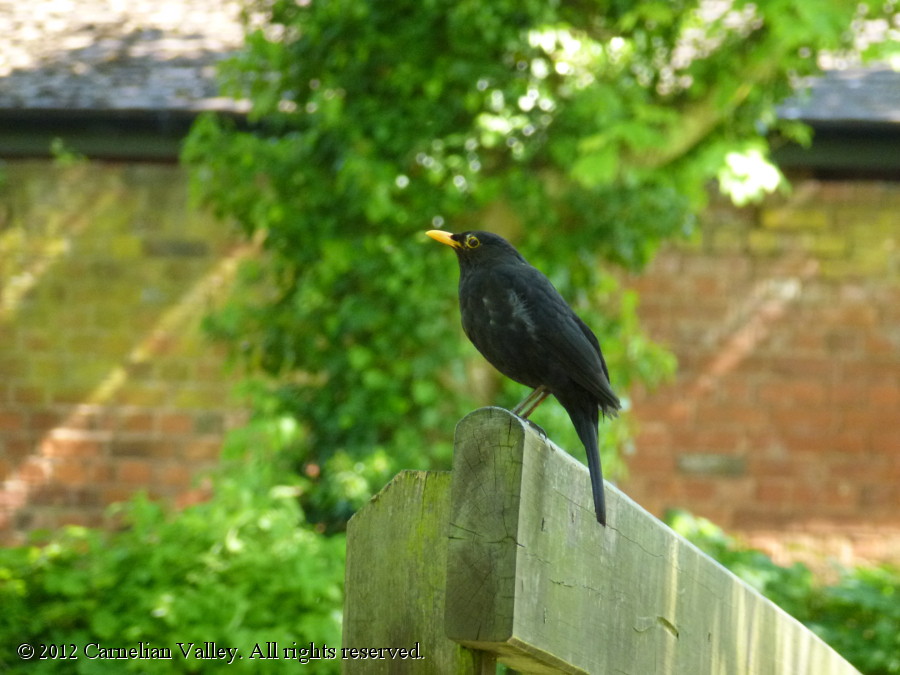
I’ve read outside, sleeves pulled up to the elbows, twice now this month. Glorious. I currently have a couple of books I’m right in the middle of and a couple more I’ve put on hold for the time being. Those on hold I hope to get back to soon – I know I should finish them anyway but there’s the additional downside of it seeming as though I’ve read more books than I have: my reading log has six unfinished books on it which inevitably ups the overall number of ‘books’.
At the moment I’m concentrating on two novels – Sally O’Reilly’s Dark Aemilia and Rory Gleeson’s Rockadoon Shore.
The O’Reilly is a book I chose from a back catalogue. It’s one I heard a lot about around the time it was published and was intrigued by, but I’m glad of the space in-between its release date and my reading it. It’s about Aemilia Lanyer, a poet/minor courtier who lived in the 1600s. She was the first woman, at least in Britain, to be paid for her craft and knew Queen Elizabeth. ‘Craft’ in the other sense is also relevant – literature about her involves a level of what would have been termed witchcraft (herbs, potions) and Lanyer is known to have visited an astrologer.

I’m glad I waited because I have added context in which to read it; Elizabeth Fremantle’s most recent release, The Girl In The Glass Tower, is another interpretation of Aemilia and so I liked the idea of hearing two different voices on the subject in a short period of time. Both books are indeed very different – whereas Fremantle’s Aemilia is widowed, poor, and focused on her possibly fictional friendship with the Lady Arbella Stuart (great-great-granddaughter of Henry VII), as well as the rumours of witchcraft, O’Reilly’s book takes place at court during Aemilia’s younger years and concerns the possible connection between the poet and Shakespeare. Both books are written in very differing manners so whilst they’re fictional you do get the feeling you’re reading widely.
(Of Shakespeare it has been proposed Aemilia was his ‘Dark Lady’, hence O’Reilly’s title. It’s suggested that Aemilia may have been his muse; the film Shakespeare In Love seems to have been a starting point for O’Reilly and after having read up on Aemilia, I was rather surprised to discover the film does not directly reference her.)
Dark Aemilia is a good book; there is a lot of period detail and O’Reilly’s evidently taken her time over it. The chapters are appropriately titled ‘scenes’ and there are a fair number of nods towards the theatre in the narrative but for me it’s proving a little too theatrical. Aemilia, here, is also quite black-and-white in her thinking and quite frustrating. I’m appreciating the book rather than actively enjoying it.
Rory Gleeson’s Rockadoon Shore is a book I picked up at the John Murray Fiction Showcase earlier this year. Many of the books highlighted will not be published until much later in the year; Gleeson’s publishing date was January. At the event the author made the book sound quite humorous and very intriguing; it’s about a group of friends who go on a weekend away – the story takes place over a couple of days. Growing up I always wondered why characters in books so rarely ate lunch and hardly ever bathed so the short time period in the book appealed to me. There are indeed more showers and much food and drink is consumed. The general style of it I’m enjoying – there’s a lot of white-space as the dialogue often consists of single words (the F word is one of them) and Gleeson has a pretty good knack for characters. Interesting is the way he writes the women, often in the male gaze and yet other times a lot more objectively, more as a woman would write them – I’m sensing a deliberate decision here to portray both genders from various perspectives. This said, when it comes to the female characters’ narratives (Gleeson’s narrative is third person and the chapters cycle through the characters, one at a time) they aren’t completely realistic.
I’m yet to work out where the story is going; at this point I’m under the impression it may just be an exploration. If it is an exploration then I’m not sure how successful the whole will turn out to be, partly because the scope is so limited. But it’s a good escape and relatively short, an easy read. As a slow reader I’m enjoying being able to read 70 pages an hour.
As a general update on the books I’ve put aside for now: Vanity Fair is still there, but now alive and kicking. I recently decided to re-start it which may be ill-advised as I was already half-way through but I could not see myself getting through it otherwise; Tender Is The Night lounges somewhere at home – I last picked it up at Christmas and I’m not worried about that; Twelve Years A Slave is excellent, I’m just aware I can’t give it the full attention it requires; A Brief History Of Seven Killings I’ll be going back to after my current two books; With Her In Ourland I’m slowly making my way through. The ‘problem’ with the Perkins Gilman is it’s very much a lecture, a sort of fictional political tract, than a novel, and as Herland was so good it’s been quite a let down.
So that’s my reading – a bit all over the place at the moment, rather like me in general. I’m hoping it’ll settle down sometime soon.
What have you read recently?
Contemplating My Reading Statistics 8 Years In
Posted 13th March 2017
Category: Chit-Chat Genres: N/A
2 Comments
| 2009 | 2010 | 2011 | 2012 | 2013 | 2014 | 2015 | 2016 | |
| Men | 7 | 21 | 8 | 13 | 14 | 5 | 15 | 22 |
| Women | 20 | 39 | 45 | 37 | 61 | 45 | 39 | 35 |
| POC | 4 | 3 | 4 | 4 | 9 | 3 | 4 | 13 |
| Anthology | 0 | 2 | 0 | 1 | 1 | 1 | 0 | 4 |
| Translation | 2 | 1 | 3 | 3 | 1 | 6 | 8 | 6 |
| Pre-1970 | 1 | 8 | 6 | 6 | 3 | 1 | 9 | 4 |
| Poetry | 0 | 0 | 0 | 0 | 0 | 0 | 1 | 1 |
| Non-Fiction | 2 | 3 | 5 | 6 | 9 | 3 | 3 | 9 |
This is data taken from my reading logs. Some of the data has been added retrospectively – as a prime example, I didn’t start keeping records until mid 2009 but having read few books in the prior months it was easy to remember what I’d read. As the years have continued and my goals and general reading interests have changed or increased, I’ve added categories of the sort that can be completed just from basic information, such as ‘Pre-1970’ – so long as the publishing date is online that one’s easy. There are many authors left out of this table due to writing as part of a duo or team – too many zeros in those categories to make it worthwhile.
It’s taken looking through these stats to see I’m not reading as I used to. As I started to add categories it became increasingly apparent that pre-blogging me and during-blogging me are rather different. Given there are 7 years in-between those times this sounds obvious – it’d be worrying, if I hadn’t changed somewhat, but some things stand out:
Taken as a whole, I have been reading far fewer authors of colour and far fewer books by authors white or otherwise that concern non-western countries. As I said previously, in the few years before blogging I read a lot of Asian authors and some books set in Asia by white authors. You can see that hike last year where I noticed the dearth of colour and made a decisive effort to improve. I tend to say yes when review copies are offered.
Without much thought, my reading is skewed towards women. It was before blogging, but not so much. I believe I have a tendency towards female authors due to the emotions/domestic/social versus political stereotypes. I prefer reading about individuals rather than great big armies, for example, and in my experience the likelihood that any one ‘army’ book will have been written by a man is high. Whether this will change as literary expectations of men and women change I’m not sure. I do reckon that if I wasn’t so big on historical fiction the number would be more balanced.
My translation number has increased and it’s mostly down to reviewing for Peirene Press and Pushkin Press. I’d read a few translated novels prior to blogging but it was by accident, so to speak, for example when I read Shan Sa’s Empress for the first time, I didn’t realise that the book had been translated from the original French. Translation is something I’ve worked my head around slowly – I’m very much an original language person.
As said in my goals post, I want to read more classics, and I’m including in ‘classics’ some pre-1970 books; this is my version of classics, if you will, including the likes of Du Maurier and Thirkell. I added pre-1970 as a category to my list retrospectively last year. 1970 was the date I chose as my then and now point, somewhere between my birth date and what would be considered historical. It’s far from perfect – it effectively renders my parents’ childhoods historical and that’s just weird – but for now it’s the best date I’ve found. This number, this ‘pre-1970’ is a ballpark figure – I use it as an initial sorting method – many will not end up on my Classics Club list because objectively they really aren’t classics.
My non-fiction reading officially needs help. I’ve found I love narrative non-fiction, there is often so much detail in it, but it’s often long. For the most part my reading in this genre is limited to review copies so it varies, and as contacts and publishers change, so too has this number. However I can’t deny that I’ve a few hardbacks I’m still putting off.
Poetry I’m keeping in mind but not making any plans for. I’m starting to enjoy it much more – Andrew McMillan’s Physical and Sarah Howe’s Loop Of Jade have been turning points for me – but it’s a bit like my feelings for anthologies – I prefer longer works and do feel sometimes that adding a book of poetry, with its white space and general shortness, is cheating. Perhaps if I wasn’t a slow reader I would feel differently.
So there’s a lot I’m working on, a lot I’m keeping in mind, and I admit to loving having all this data. I know many of you will empathise with that last one and I know a lot of posts both here and on others’ blogs would not exist without it.
How are your stats looking?
Knowing About An Author: The Effect On Our Reading
Posted 10th March 2017
Category: Chit-Chat Genres: N/A
2 Comments

In the context of this post it would be more appropriate to use a photo of Elena Ferrante, but I don’t want to do that.
We know a lot more now about the lives and views of authors than we used to. I remember choosing books in Waterstones as a young adult; few included photos, some included mini biographies; while that can still happen, in those days you couldn’t just turn to the Internet to gain the knowledge. I find myself disappointed now when a book doesn’t have much author information in it.
We’re ‘supposed’ to be able to read a book in a vacuum as far as author information goes. People write articles about how we shouldn’t judge a book by its author but even if you try to adhere to this, you hardly have to make an effort to learn details – they’re a few clicks away. Authors are more often in the news or features section. You’ll often hear about them anyway. The increased access we have to authors is a great thing – it was the main reason I started events and made them free, because I wanted people to be able to have access to authors and literary events – but it makes it difficult to read a book without any extra details, details it could be argued are irrelevant. Our reading has changed: knowing about an author will impact on us somewhat no matter how much we try not to let it.
In thinking about this, the recent unmasking of Elena Ferrante comes to mind. I’m very aware that when I get to her work it will be with the knowledge of who she is. I wonder how this will affect my experience – so many people had already read the books and I had naturally (rightly?) assumed my reading would be similarly in the dark. I looked forward to it. How will my reading, now, differ to others’ for that reason? What would my experience have been if she hadn’t been unmasked? I do know that it will be different to what the author may have hoped because of the anonymity. I rather liked not knowing – yes, I felt curious, it was an exciting mystery – and not knowing wasn’t a drawback.

Contrast this with a musician whose first album was released in 2001. Rurutia is a new age Japanese singer who until recently never showed her full face in music videos or photos. She used make-up and costumes, veils and lighting. As far as I can tell, allowing the photos, when they surfaced, and the gradual increase in quality of them, was her choice. Her real name is still unknown. While the mystery might have grabbed the listener’s attention, not knowing about her allowed your focus to be fully on the music.
Some books require context. There are books that don’t make sense until you read about what the author wanted to do, others that seem a political tract – for example – that prior research better prepares you for. In these cases, knowledge enhances your reading. But otherwise it could be said to harm it or to distract – are you too focused on the author? Has reading about them changed your stance on the work?
Do you prefer to know about an author in advance?
Extract From Julia Chapman’s Date With Death
Posted 6th March 2017
Category: Miscellaneous Genres: N/A
1 Comment

I’ve been pretty interested in this book; in light of my recent slow reading I’m posting an extract before/instead of a review.
Julia Chapman is a pseudonym for the writer Julia Stagg and Date With Death is out on 9th March. It’s the first novel in a series and published by Pan Macmillan. This is the prologue:
Mist. Fog. Or even brume. Dense cloud lapping at the muted glow of the station lamp; twin tracks emerging suddenly from the murk, the edge of the platform softening into nothing. It was too far inland to be a haar or a fret. But however it was labelled, it made the dark, early-morning hour redolent of death.
Richard Hargreaves, alone in this cold, shadowy world, stamped his feet, the sound smothered by the dampening shroud, and lamented the paucity of words to describe this recurrent feature of autumn in the Dales. Unlike the Inuit in the frozen north with their wealth of terminology for snow, the locals here had very few ways of representing these dark, damp, drizzly days.
Fog, then. It was too thick for mist, visibility almost zero, and gave no hint of being burned off, should the sun ever rise above the hills to penetrate the low-lying vapour mass. He pulled his scarf tighter against his chilled neck, thrust his hands in the pockets of his overcoat and smiled into the gloom.
Last day of the week. Two days without having to get up to catch the six-thirty train. And this evening with her. There was a lot to look forward to, despite the dreary weather.
He had no idea how wrong he was.
To his right, the flare of an approaching light bled into the blanket of grey. Richard Hargreaves, for the last time in his life, hunched his shoulders, shoved his hands further in his pockets, and stepped towards the edge of the platform.
When the blow struck him in the back, he had no means of defence. No means of stopping himself falling.
The press release looks to fans of Alexander McCall Smith, Robert Galbraith, and Midsomer Murders. Author Cath Staincliffe describes it as ‘A classic whodunit set in the spectacular landscape of the Yorkshire Dales, written with affection for the area and its people’. If you like the sound of it and would like to know more, there will be further extracts and other posts this week:

Do you enjoy reading ‘whodunits’?
February 2017 Reading Round-Up
Posted 1st March 2017
Category: Round-Ups Genres: N/A
3 Comments
In terms of time, February has been better. I struggled at one point with blogging and reading but all considered I managed to get a fair number of books read. As much as it’s been raining recently, there was one day when I sat outside in a t-shirt. Our overall good weather and lesser colder temperatures are still here.
All books are works of fiction.
The Books
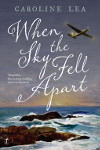
Caroline Lea: When The Sky Fell Apart – A group of residents live through the Nazi occupation of Jersey. A great, if harrowing, book.

Charlotte Perkins Gilman: Herland – A trio of exploring gentlemen discover a land of women and decide to journey there to see how primeval it must be. A very good commentary of early 1900s society.
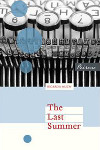
Ricarda Huch: The Last Summer – Lyu decides to aid the plotters and assassinate the governor who has closed the university. Great early 1900s novella.

Tom Connolly: Men Like Air – Three British and one American man in New York, living their lives, getting the flu, ending strange relationships, and working in art galleries. Difficult to summarise, I’ve opted to show the comedy element; this is a fab book.
I really appreciated Herland. I think ‘love’ is a strong word because there are some problems with it – in a modern context at least it can be a bit uncomfortable but I found it to be well structured and created, the use of extremes in the trio of male visitors and the relative balancing Perkins Gilman aimed for in making the more moderate character her narrator, a good set of things. Due in part to the sudden ending (one of those ‘where is the next page?’ situations) I moved straight on to the sequel, With Her In Ourland which can be found at Feedbooks. This sequel seems to be less read and studied but with good reason, I believe: as much as you might want to complete the story, it’s more a set of thoughts than a novel. I very much enjoyed the Huch and the Connolly, too. The Huch was a nice quick read that boosted my feeling of accomplishment as well as added to my goal of reading older books. The Connolly was rather clever and contained so much. The Lea was fantastic, too, just a few steps behind the Connelly for me.
Quotation Report
None this time.
Spring is certainly on its way.
What book did you most enjoy in February?


