




My Podcast Is Going Live!
Posted 16th December 2024
Category: Events Genres: N/A
Comments Off on My Podcast Is Going Live!

I’m thrilled to announce that on Wednesday 26th February, I’ll be doing a live podcast recording under my podcast’s new name, Author’s Afterword, with guests Alex Hay, Stacey Thomas, and Lucy Barker. It’ll be held at Goldfinch Books in Alton, Hampshire, and will consist of a general bookish conversation with time for audience questions and book signing afterwards. I’m over the moon that Alex, Stacey, and Lucy have agreed to join me – they are fantastic both alone and as a group and I’m looking forward to a second round of conversation with them following Milestone Episode 2.
Tickets are available from Goldfinch Books here. It’s a great, fairly new, indie bookshop with a great bar and I’m happy to say it’s fully accessible. Hope to see you there!
And, because it’s only right, given it’s a podcast event, here’s the announcement in audio:
Alex Hay is the author of The Housekeepers, an Edwardian heist novel which sees a group of disgruntled former employees and associates plan to clear a Mayfair mansion of all its contents over a 24 hour period whilst the mistress of the house hosts a ball. Optioned for film, The Housekeepers was the Waterstones Thriller of the Month for May 2024. Alex’s new novel, The Queen Of Fives, is set in the Victorian era and focuses on a confidence trickster who has five days to win the hand of the richest man in England and make off with his money. It will be published in the UK on 30th January 2025.
Lucy Barker is the author of The Other Side Of Mrs Wood, a comedic tale of Victorian mediumship. The eponymous Mrs Wood is getting on a bit, at least by Victorian standards, and when she spies a young woman watching her house she seizes both the moment and the girl and suggests an apprenticeship – that’ll keep her at the forefront of everyone’s minds! But Miss Finch has a way about her and soon Mrs Wood finds herself with a particularly gifted student who is close to stealing the spotlight.
Stacey Thomas is the author of The Revels, a beautifully written novel set during the witch trials. We follow Nicholas, a man who can hear the dead sing, as he attempts to end the witch hunts. With a theatrical atmosphere courtesy of the period and James I’s obsession with stamping out anything related to the Occult, Thomas shows us the horrific reality of the time to stunning effect.
On Losing And Regaining Excitement For Books You Didn’t Read Quickly Enough, Or An Ode To N M Kelby
Posted 9th December 2024
Category: Chit-Chat Genres: N/A
1 Comment
I mentioned in my last reading life post that I was working on the idea of soon adding to my reading list books I’d let fall by the way side; I think it would be a bit silly to focus too much on new books and not use the list as an opportunity to read some books I really should have already read.
I know I’m not the only one to have this happen – you acquire a book in whatever way, are very excited about it, and then all often have other books to read first or you decide to wait a bit before reading it, and then because you haven’t capitalised on that initial excitement you lose at least some measure of interest in the idea of reading it. The book is no longer new and shiny. The honeymoon period is over.
(It was quite damning writing that because it made me think of the times I have read a book when it was still exciting and how – as long as the book is at least an average read – it categorically is a better experience to read when the iron is hot.)
So I guess my main question was, can that excitement be regained, reconstructed?
I think it depends on seeing it as a new start, effectively wiping the excitement slate clean, or perhaps alternatively, leaning in to why you were excited originally… so long as your excitement extended beyond ‘new book!’ Certainly you have to let go of any guilt or feelings of burden you might have over not having read the book already. I think the only big issue with achieving this would be if you received the book with an effectively time-limited period in which to read it – say a review copy you didn’t get to (I used to get a fair number of unsolicited books). But it’s not impossible even then.
I’ve a particular book in mind as I write this: N M Kelby’s White Truffles In Winter. I acquired it so long ago I had to check my archives to find out whether I’d bought it or been sent it for review… I got it in August 2013 only three years into blogging and when I was yet to always declare whether I’d purchased or received a book. So I haven’t a clue.
It was so long ago I had it on my (albeit later abandoned) Long Awaited list… in 2019. It was so long ago the author isn’t on social media or to be found online at all – for whatever reason she hasn’t published anything since. (I will avoid making any theories here!)
I remember being taken by the title, cover, and the thought that it might be a perfect choice for Christmas, which I think is understandable. I left it for longer than I’d planned and then found out the title didn’t much reflect the contents; it was simply one of the first of those books with a title that worked as a marketing tactic – oh it did indeed!
I think of it now and then but the magic of before is gone; I wonder if I have to do something else in regards to that loss, perhaps just accept that it’s long gone and just read the book regardless.
I’d like to know from you all: what do you do about books you’ve left unread for too long? Do you get to reading many of them later? If so, how has the experience of reading them been?
Episode 111: Elaine Chiew (The Light Between Us)
Charlie and Elaine Chiew discuss early 20th century Singaporean photography and its influences on Elaine’s novel in depth, which involves looking at social issues and the history of the qipao. We also dive into the time travel aspects and the use of Chinese spirit-mediums.
If you’re unable to use the media player above, this page has various other options for listening as well as the transcript.
November 2024 Reading Round Up
Posted 6th December 2024
Category: Round-Ups Genres: N/A
Comments Off on November 2024 Reading Round Up
November did not go nearly as I thought it might but in terms of reading, when AnAn died I was reading a couple of really good books, the Hay and the Stokes-Chapman – having those to fall back on later was very helpful in getting me back to some sort of routine and I’m happy to say I completed four books.



Alex Hay: The Queen Of Fives – Quinn, the current Queen of Fives among a group of tricksters in Spitalfields takes on what will be her masterpiece, conning the richest man in the country into marriage in order to fleece him of his money. She has a few close friends helping her, however what none of them know is that there is a Man In The Blue Waistcoat and Lady In The Cream Dress that have their own ideas of what should happen. This is Hay’s second book and if you thought his first was excellent (I sure did!) you’re going to be blown away by this one. It’s got the same over all vibe in terms of this-is-an-Alex-Hay-book but has a lot of new concepts in it. It’ll be published late January and I highly, highly, recommend it.
Lee Seong-bok: Indeterminate Inflorescence – A book of aphorisms from university lectures by the famed South Korean poet, collected by his students. Strange comparisons made at times but over all a lovely book. I would recommend reading up to a couple of sayings a day as opposed to the all-at-once method I used given it was for review.
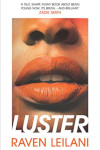
Raven Leilani: Luster – A young working class woman, Edie, looses her job after her team’s put up with ‘issues’ with her and she ends up moving into the house of the older man she had been seeing after meeting his wife and adopted child who, like Edie, is black. Said older man is in an open marriage (at least that’s what he says) and the wife seems to get on with Edie but Edie knows she needs to move back out but the occassional sex continues. This is quite a unique book, a bit like Megan Nolan’s Acts Of Desperation but more relatable and with more going on. I feel I may have ‘missed’ some of it, so to speak, which I put mostly down to not being American, but the vast majority of it was accessible. There’s a lot of good stuff here about the experience of Black Americans, subtle and overt racism, poverty and the difficulties of getting a job, and manipulation. There’s also fun to be had in video gaming and Comic Cons.
Susan Stokes-Chapman: The Shadow Key – In the mid-1700s, Dr Henry Talbot from London is given the position of doctor to a wealthy family in Wales. When he gets there he finds a community hostile to his arrival, a house full of secrets, his charge is a woman seemingly mentally ill but with off symptoms for it, and his employer is mysterious and at odds with his niece who favours the working people on their land. And Henry’s home, the gatehouse, has been destroyed. The Doctor needs to work out what’s going on and find out why the local people are trying to kill him. This is a wonderfully immersive and Gothic book with a strong sense of place and a steady use of pace and secret reveals.
I have already finished one book in December and have two more I want to complete by the end of the month if I can with others I’ll finish if I can.
Latest Acquisitions (November 2024)
Posted 2nd December 2024
Category: Acquisitions Genres: N/A
Comments Off on Latest Acquisitions (November 2024)
A few more books here since the last, recent, post – it’s my birthday month.


Aliya Ali-Afzal: The Big Day – Tasneem Abdur-Rashid featured this book on her Instagram and the premise was it; I put it on my list.
Ashley Poston: The Seven Year Slip – When I was more active on TikTok earlier this year, this book was doing the rounds and the time travel aspect and nod to Marilyn Monroe’s film were enough for me.
Christina Courtenay: The Runes Of Destiny – The second book in Courtnay’s series of Viking time travels, I read this book a few years ago in ebook and very much wanted the series in hard copy. I’m yet to read books 3-5, I hope to do so soon.
Natalie Jenner: Austen At Sea – From the author for review; the book is out in May. This book sees a cast of characters including Louisa May Alcott travelling across the Pond and discussing Austen; the two main characters, who, if I recall correctly, are fictional, are travelling to meet Sir Francis Austen for a purpose they do not yet know. I have high hopes for this book and I have a feeling Jenner will meet them. This book is the exact sort of thing she does very well.
Nydia Hetherington: Sycorax – From the publisher for podcasting purposes, this is a retelling/expansion on the story of Sycorax from Shakespeare. The Tempest is probably my favourite of the Shakespeare plays I have studied or seen so I’m very much looking forward to reading it and also talking to the author about it.
Phoebe McIntosh: Dominoes – I originally put this book on my TBR after reading Andrew Blackman’s review. Then I got the ebook on Netgalley, but couldn’t read the format. This hard copy was a surprise to me – I had forgotten I had added it to a wishlist but I’m very glad to have it now.
I’m looking forward to working some of these into my reading list soon; the Hetherington has a time set, effectively, but the others don’t. That said, I’m very likely to re-read the Courtenay because I enjoyed it so much – it has time travel one way and then both characters go to the future which I absolutely love.
Film Review: Rebecca (2020)
Posted 25th November 2024
Category: Film Genres: N/A
Comments Off on Film Review: Rebecca (2020)

Netflix’s Rebecca offers something that was sorely lacking in Alfred Hitchcock’s original adaptation; owing to the Code of the time, Daphne Du Maurier’s original ending was changed. I’ve been surprised that it’s taken so long for Hollywood or anyone else to produce an updated, ‘true’ version, in film – there have been TV series – but Netflix has done it.
I’ll refrain from saying what either Du Maurier’s or Hitchcock’s endings are just in case someone who doesn’t know them stumbles across this review, but I do expect most reading this will at least know one or the other.
To speak more broadly, to get this review properly in motion, this new adaptation is in many ways very different. It has proved controversial – many have not liked it – but then I’d question how many are basing their dislike with only Hitchcock for reference. (Though certainly any dislike here would be better than those who only know Lawrence Olivier’s version of Wuthering Heights and compare it to a newer adaptation, given how much more horrifying the book is compared to that film. What is it about Olivier and films that fundamentally change the book’s ending or story… yes, I know, the Code!)
At the risk of reiterating a well-known premise, our unnamed narrator is employed as a companion to a fairly wealthy woman and when they are holidaying in Monte Carlo, the narrator meets Maxim de Winter, a rich widower. When her employer falls ill, the narrator is taken on a number of dates by Max, who has taken a shine to her, and they ultimately end up suddenly marrying, much to the employer’s irritation and warnings. The couple travel back to the de Winter seat, Mandeley, but much of the house is a shrine to the first wife and the narrator starts to be drawn in by the obsessed housekeeper and Rebecca’s decorative influences everywhere she looks.
Lily James is our narrator character, not as much a narrator as the character is in the book, but the film follows her. She isn’t a bad choice for the job but I have to agree with other reviewers who say the character seems a little too… I’m going to use the word ‘confident’ for ease, and that due to this the character’s later decent into paranoia doesn’t quite pass muster. This is surely an issue of direction because it is all in the unspoken gestures and actions – the script itself is fine. This does, then, all mean the character isn’t always believable but I do wonder how I might have felt if I didn’t have both the primary and secondary source material so well known to me. It’s quite impossible to avoid comparisons and due to the differences the production has made, most particularly the overall look and to Max’s character – in comparison to Olivier’s, I’ll get on to that – I can’t help but wonder how this film would seem were it the only adaptation or, at least, if there had been none from Hitchcock.
Essentially, then, I do not think Lily James’ narrator is… wrong, but she had a lot already riding on her. As I wrote in my notebook, this film is about giving her more agency than Joan Fontaine’s had.
Armie Hammer’s Max is where it gets interesting. Pushed back a bit, as it were, to seem less of a presence, less important than even before, you get more of a sense of it being the narrator’s story here. However what you also get, which is, I’d say, the best aspect of the film, is a real sense that Max loves the narrator. Hammer’s Max still says that iconic line, ‘I’m asking you to marry me, you little fool’, but in this case, he actually really seems to love her, ‘fool’ aside. A lot of this is due to the fact more scenes are spent in Monte Carlo but whoever chose to put Hammer on the list for casting, deserves some points for a scoring system I haven’t created. I’ve never before felt that Max was really into his relationship. Watching this film, I do now. Hammer also makes Max more appealing in general – you can see why the narrator loves him. This said, the age gap is not apparent, which possibly has something to do with it. It does render ‘you little fool’ a little foolish.
Kristin Scott Thomas had big boots or high heels to fill in her Mrs Danvers but also nothing too fundamental to change – Mrs Danvers will always be Mrs Danvers, Hitchcock ending or not. Scott Thomas’ version of the character is not all that terrifying, mostly due to the cinematography doing a lot of the legwork and the character being updated in actions and direction to better fit our present day (there are no squealing strings or psychotic, film, looks, for example) but she is scary enough – more manipulative. Scoot Thomas also manages to humanise the character a bit, which is fascinating to witness.
The biggest aspect then, as said, is the reinstatement of the book’s ending. It also helps humanise Max (a lot of the film is about humanisation, really, which is something I came to realise while writing this review) and it is, as a result, a lot more interesting. It also allows the narrator to come full circle from being confident to vulnerable to confidence once more. She holds her own at last. And it gives Mrs Danvers more to do. In fact the only thing I wasn’t sure about was the very, very, end where the film finishes on Lily James breaking the fourth wall before the title on a backdrop breaks the contact – by the end things have changed, yet here is Rebecca’s name once again.
All in all, then, while, yes, there are ways it could have been better (I do hope we don’t have to wait another 82 years for another film adaptation) it is satisfactory. There is a lot to enjoy – Rebecca’s suite suits her to an ‘R’ and that cinematography is perfect.
I don’t think James and Hammer will be replacing Fontaine and Olivier in the popular culture, but it’s a bloody good attempt.


