




Interests, Time, Frustration, Balance + Podcast
Posted 10th February 2020
Category: Chit-Chat Genres: N/A
1 Comment
On today’s podcast I’m joined by Andrew Blackman, author of On the Holloway Road and A Virtual Love. Andrew’s also a fellow book blogger. We discuss life on the road, following in Jack Kerouac’s footsteps, offline and online identity, climate change activism, and withholding – for very good reason – the endings your readers expect.
Email and RSS subscribers: you’ll need to open this post in your browser to see the media player below.
The main episode page, which includes the full episode details, the transcript, and a question index, is here. The podcast is also available on iTunes, Spotify, Stitcher, and now Google Podcasts as well. (Those apps may take a few hours to receive the episode.) You can also subscribe via RSS.

Something I struggle with, and I had a particularly difficult time of it Saturday evening which is why the concept came to mind, is the way that I feel like I’m not using my free time well if I’m not reading or doing a bookish thing. It may well be a me-only thing; it may be something where the activity that feels important changes based on the person at hand; it might be because I’m a recovering perfectionist; it’s probably because I’ve made books such a big part of my life, that it transcends ‘hobby’, much as it does others who’ve chosen to blog about them. It’s a self-created pressure.
If I’m only reading, however – in other words doing the exact thing I feel I should be doing – I then feel I need more variety in my life. When I’ve read a lot – say most or all of every evening for a week – and I’m not experiencing burnout, I often still have a need, almost, to watch a film or play a video game, and in turn doing those things will feel like I’m having a break.
Yep, it’s a self-created pressure of a recovering perfectionist… But I do know I’m not unique in feeling this sort of way.
It’s likely down to the question of attention span, again. Sometimes – most often when I feel this way – I wish life were more like it was before screens, of all kinds, came on the scene. I think of women gathered together in parlours and men in clubs, visiting cards and so on, and wonder how having less to choose from would have felt. My guess is it would have been less demanding, but without any experience, that’s looking with rose-tinted glasses. Less to choose from probably made what you could choose from feel less… wasteful. No Fear of Missing Out – or less of it. But then of course we know women didn’t have as many options and if we know anything, it’s that sewing all day when it wasn’t your thing got boring quickly.
There’s no conclusion here; I’m still sorting out the best way to feel less unproductive and then less wasteful for differing reasons. Certainly it’s easier to relax into hobbies when on holiday, particularly when Internet signals are weaker. An idea of a schedule works – compartmentalising my days – but it’s something that needs more work and inevitably there are times I cheat a bit.
Do you ever feel like this? How do you deal with it?
In Which Jane Austen Reviews A Book And Makes Me Laugh
Posted 5th February 2020
Category: Chit-Chat, Further Thoughts Genres: N/A
Comments Off on In Which Jane Austen Reviews A Book And Makes Me Laugh

As I’ve mentioned previously, I’m currently doing some research for a post about Jane Austen. It’s taking a lot longer than I’d thought it would so I’ll share a brief part of what I’ve noted and add to it.
On Sunday 25th November 1798, Jane wrote from Steventon to her sister Cassandra about a variety of things that were happening. Her letters to Cassandra are often lengthy, and at present I have a hunch (from the bit of research completed so far) that she is more open about her opinions of books to her sister than to anyone else; this is to be expected – as we know, they were very close.
On this day, Jane included a fair paragraph of fun background context and opinion of a book that had been published earlier that year; I’ve not been able to trace the month, but it was Arthur Fitz-Albini by Samuel Egerton Brydges, a novelist/bibliographer. Here is Jane’s opinion:
“We have got ‘Fitz-Albini’; my father has bought it against my private wishes, for it does not satisfy my feelings that we should purchase the only one of Egerton’s works of which his family are ashamed. That these scruples, however, do not at all interfere with my reading of it, you will easily believe. We have neither of us yet finished the first volume. My father is disappointed – I am not, for I expected nothing better. Never did any book carry more internal evidence of its author. Every sentiment is completely Egerton’s. There is very little story, and what there is told in a strange, uncorrected way. There are many characters introduced, apparently merely to be delineated. We have not been able to recognise any of them hitherto, except Dr. and Mrs. Hey and Mr. Oxenden, who is not very tenderly treated.” (Jane Austen in Le Faye (ed.) (2011), pp. 22-23)
Had they been a thing, I think she may have given it one star.
I’ve made a cursory search for contemporary reviews of this long-forgotten book, but it’s been difficult to find any. What I did find was an obituary for Brydges, written by John Bowyer Nichols and published in The Gentleman’s Magazine, November 1837. I’ve redacted it down to the most poignant sections on the man himself as well as the novel because as you might expect, it’s Dickensian in length:
“The biography of this gifted and laborious litterateur, this imaginative poet, and in one sense we may accurately say, this imaginary character, can scarcely be treated in the sober detail of our ordinary narrative; yet, as our object in this place is always the relation of facts, we shall, in the first instance at least, state the circumstances of his birth and early life as we should do those of any other distinguished individual, premising that the particulars are derived from his own account …
The hopes and disappointments of his early years are disclosed in his Novel, called Arthur Fitz-Albini, in which he clothed a fictitious personage with his own sentiments and aspirations, and at the same time depicted with the utmost freedom the foibles not only of his neighbours and acquaintances, but even those of his own family and relations. In Arthur Fitz-Albini, “the few, whose penetration and freedom from envy enabled them to appreciate such a character, beheld the eloquence of the enlightened senator, with the independence of the country-gentleman, and the spirit and hospitality of the feudal chief, without his fierceness, his tyranny, or his uncultivated mind. Before such a man, all the paths of glory seemed to open, and the ascent to fame appeared to be covered with flowers.
[…]
In these and many similar passages may be traced the adumbrations of Sir Egerton’s own character, and proofs that he was not unconscious of the defects which repelled the affections of his fellow-creatures, though unhappily destitute of that sober discretion and that Christian humility which would have proved the only efficient means to control or correct them.” (pp.534-539)
It’s likely that, with this obituary, and references to Brydges’ own forays into writing for the magazine, there is at least one review of the book out there, likely favourable.
Later notes about the book can be found in various biographies. A Biographical Dictionary of the Living Authors of Great Britain and Ireland (1816) notes on page 43:
“Sir S. E. B. has distinguished himself in almost every sort of polite literature, but more particularly as a critic of English poesy, in which character it is not too much to say that he stands unrivalled by any living author.”
Next, a rather lengthy biography, which is titled an autobiography, likely due to John Gibson Lockhart’s over-use of Brydges’ own words (an amount that would cause a superb number of cautions for anyone using another’s material today) was published in the Quarterly Review, no. 51, in 1834. It does cite positive points, but the majority leans towards the negative in a way that rather supports Austen’s own view:
“The other great grievance is Sir Egerton’s literary one. With respect to it, we cannot do better than re-quote an emphatic sentence from Mr. Sharp’s “Letters:” namely, “A want of harmony between the talents and the temperament is, wherever it is found, the fruitful source of faults and of sufferings. Perhaps few are less happy than those who are ambitious without industry who pant for the prize, but will not run the race.” Sir Egerton has all his days been busy without industry — perpetually panting for the prize, but never sufficiently persevering to make out one real heat.”
Over all, biographies and other writings published later than the book was published speak moderately to highly of Egerton, who was an MP who, it seems, tried to style himself as the then-head of a baronetcy he was not entitled to. Nevertheless, whatever the objective truth to the novel may be (I must say I don’t plan to read it) Austen’s effective review is definitely, if snarky, the most entertaining there is. Unfortunately, perhaps, for Brydges, it’s also likely the one that will last the longest when it comes to literary studies.
References
Books
A Biographical Dictionary of the Living Authors of Great Britain and Ireland (1816) Henry Colburn, London
Courtier, Peter L (1806) The Lyre Of Love: Volume 2, John Sharpe, London
Le Faye, Deirdre (ed.) (2011) Jane Austen’s Letters, 4th edition, Oxford University Press
Articles
Gibson Lockhart, John (1834) Autobiography of Sir Egerton Brydges, Quarterly Review, no. 51, pp.342-365
Nichols, John Bowyer (1837) Obituary: Sir Samuel Egerton Brydges, The Gentleman’s Magazine, New Series, Vol 2, pp.534-539
January 2020 Reading Round Up
Posted 3rd February 2020
Category: Round-Ups Genres: N/A
2 Comments
This month has seemed both very long and incredibly short; people do say it’s February that drags, no matter the fewer days. I’ve spoken enough about my reading this month so I’ll simply say here that I managed to finish everything I planned and have made a start on another; two, actually, though the second may be a longer-term read.
All books are works of fiction.
The Books
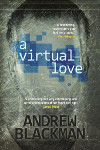


Andrew Blackman: A Virtual Love – Various narrators discuss their time and dealings with Jeff, a man who posed as a famous blogger when a woman mistook him for that blogger and proceeded to show a romantic interest. Very good commentary what was in 2013 a current issue and still is today (the environmental issues have expanded, now, too). A re-read.
Andrew Blackman: On The Holloway Road – A man discontent with his life embarks on a journey with a notorious local, aiming to find true freedom in a country full of restrictions. Excellent. (This was a re-read.)
Camilla Bruce: You Let Me In – Aged 74, popular romance novelist Cassie has disappeared, leaving a letter in the form of a manuscript for her niece and nephew to find; in it she explains her version of the story of her childhood, during which she believes she saw fairies (she still does) but that a therapist at the time saw as a coping method for severe abuse and neglect. This is a debut novel by a Norwegian writer; it’s out on 5th March and is absolutely fantastic.
E C Fremantle: The Poison Bed – Frances Howard and her husband Robert Carr have both been arrested for murder and are being held separately in the Tower of London; they each tell their stories. Dark, thrilling, fab.


Nicola Cornick: The Forgotten Sister – Dudley’s wife, Amy, has died, and, seen by the media as his likely lover, popstar and presenter, Lizzie, finds herself caught up in a suspected murder case; whilst this is happening, we read about Amy Robsart, wife of Robert Dudley, Elizabeth I’s favourite, who was found dead at the bottom of a flight of stairs. A thrilling, compelling, tale with time-slip elements and an intriguing, well-thought-out way of offering a solution to the historical mystery. The book will be published late April.
Sherry Thomas: Delicious – An ex-member of the nobility has a relationship with an Earl, and later a one-night-stand with his brother, somewhat unknowingly; years later, her lover is dead and she finds herself in the role of Head Cook for the brother. Strictly okay – the heroine was rather annoying and the plot artificially drawn out.
Susmita Bhattacharya: Table Manners – A collection of stories about human relationships and connections, linked by the theme of food, whether the food is an item, an idea, or a construct. Awesome.
Tracy Chevalier (ed.): Reader, I Married Him – A collection of stories by twenty-one women writers based on Jane Eyre. Seems longer than it is but the stories are all pretty good.
This was a stellar month; five 5 star reads, one 4 star, and only one less than those. I had a ball.
I now have a sort-of plan for this new month; I have three books I’ve started tentatively – subject to change, effectively. One is a book I want to read but is a little longer than I should be reading at the moment, another is a short-ish classic comedy I started purely because I only had my tablet with me and have read the majority of the books I had on there, and the last is a potential re-read. I’m going to take February more slowly in terms of planning – have a basic idea but some options for those.
What books have you started the year with?
How Much Does It Help To Have A Reading Plan?
Posted 29th January 2020
Category: Chit-Chat Genres: N/A
3 Comments

I’m currently looking at a good month of reading, in fact I only say ‘currently’ because I’m hoping to improve it in these last few days of January. The goal I set at the start of the month has really helped; I suppose when it comes down to it, it’s effectively a to-do list and being more specific (yet general, ironically) has been key.
So this month I’ve had a reading road map, as it were, for what I was to read and for where I wanted to be at the end of the month. The idea of where you want to be is somewhat repetitive if you’ve a list of books anyway – you want to read those books, ergo you’ll have finished them – but having a starting book and, particularly, an ending book has worked wonders. It’s pushed me to carry on.
I’m well aware I could be heading for burnout. (If only burnout could be scheduled and managed!) Reading a lot in a set period of time tends to mean a period of burnout afterwards, and I would be all the less surprised this time since I had a fairly strict order for my reading. At the same time, I’m currently on a high. Perhaps burnout could be scheduled for March?
My road map was as I’ve previously stated – books for the podcast, early review copies, and carry overs from last year. I also read a couple of books I would’ve read in December had the festive season not pulled me into bonkers games like pretending to be a dinosaur at the intensity level of 1.
I’ve written about the concept of a reading plan before, and how whimsical reading can be great. But the more time goes on and I practise both these ‘versions’ of reading, the more I think one is not better than the other. I think I’d go so far as to say (though I could only ever have first-hand experience of my own reading) that both are best for everyone and best practice is simply definable as what is best at that given point. Sometimes you need structure in order to get it done, sometimes you really don’t, and I’d argue that the natural follow up to structure is whimsy and likewise in reverse.
Reading effectively with a plan puts paid to the worry that you might dither over the possibilities on your shelves, though this isn’t absolute; in forming your plan you probably needed to do some thinking. But, hopefully, the idea of structure aids in keeping that time to a minimum. Browsing shelves works so long as you are strict about it.
Yes, I’m also on a mission to cut back on the time I waste on the Internet.
So my answer to ‘how much does it help?’ is ‘very much – within the limits of a well-rounded reading life over all’. I’m loving my planning at the moment but I know it can’t last; but the important thing is to remember to use it when possible, and also when it makes the most sense.
Where do you fall in regards to this topic?
Reading Life: 24th January 2020
Posted 24th January 2020
Category: Reading Life Genres: N/A
3 Comments

Whilst I’m currently in the middle of writing a couple of further thoughts type posts, one in particular that I thought would take only an hour or so and then ballooned in the research department, I thought I’d have a think on what I’ve been reading so far this month, though not everything because that would make this post very long and I don’t want to descend into naval-gazing. As I said on Monday, it’s been a fair amount, and I hope to finish at least a couple more. It’s also been immensely satisfying.
I started the year by finishing a book I’d carried over, Sherry Thomas’ Delicious. This is different for me as I like the idea of that first book of the year, a brand new page. But I did find that finishing a book you’ve carried over feels the same as if it were new, which was a nice discovery – I know, it probably should have been obvious. This all said, whilst it was a carry-over, I was only a quarter of the way through it, and this was because I was finding it difficult. I’d read three of Thomas’ romances before, liking two a lot and disliking the other, so I knew it was possible I’d like this next one.
(I’ll say here that I’m specifying Thomas’ romances because whilst she is known as a historical romance writer, in recent years she’s written Young Adult fantasy which I want to read regardless of the general ratio I find in regards to my enjoyment of her romances – her use of language has always been stunning.)
I found Delicious difficult because it was confusing, at least to me – perhaps if I’d read it quicker, with fewer breaks for other books, I’d have been less confused, but the basics of the plot are that a woman has relationships with two brothers, and she feels she has to hide her face from the second years later because it had up to then been a one-night stand and awkward. She also seems at the start of the book to be some sort of ex-Lady, which was also confusing at that point.
Anyway, over all I liked it enough. Subjectively I suppose it was always going to be less successful for me because it’s about a cook and I can rarely get into fiction books where food is a big feature. But I’m glad to have finished it. I will try another of Thomas’ books at some point, I might just double-check the storyline.
I’ve read Table Manners and The Forgotten Sister as you know, and I read E C Fremantle’s The Poison Bed.
Then I have my bedtime read – the short story collection Reader, I Married Him – which is a concept I’ve essentially instigated because I’ve been having trouble sleeping; I suppose Christmas hasn’t quite worn off. I picked a book I’d had for a while in the hopes that I wouldn’t be too excited about it – when thinking about the recommendation of a bedtime routine to foster good sleeping habits, I have to pause at the advice to read as a way to calm down. It is great advice, unless you like to write notes, or review, blog, and so forth. How am I to relax and get ready to sleep if I’m needing to make notes in the book or, in my case, note down anything I should remember for a review? Reading is relaxing, but not as much as I expect the people who write these guidelines expect it to be. Needless to say it’s not working as I’d hoped – I hope that’s a not yet – but it is at least enjoyable; I like that I have a book I’m reading in the evenings followed by a change to another book. It’s an unintentional nicety but I reckon switching books during an evening helps keep away any burnout, and the effective procrastination I’ve found previously when trying to change books for whatever reason doesn’t happen when there’s a routine reason for the change.
I don’t think that’s what the original advisors were imagining when they came up with reading as an aid to sleep, but it’s been an interesting experience.
Reader, I Married Him is effectively what you would expect it to be – a collection based on Jane Eyre, and the sentence in all its emotions and meanings. Some stories are quite distant to the classic text, others very close to it; this is to say there’s a fair amount of variety in it. I’m enjoying it – some of the stories I’m not quite ‘getting’, I believe, but it’s fun. It’s also more lengthy than you might think when picking it up, the differing subjects perhaps adding to the length as you have to ‘reset’ your thoughts ready for a different location, time period, and author.
So it has been a good month so far – I hope I can add a few more books to it.
Completely off topic, Lit Hub has compiled a list of the many literary adaptations coming to screens this year and it is worth a check if you haven’t seen it already – there are tons and a variety of genres are included. I’m looking forward to David Copperfield with Dev Patel myself.
Do you read before bed?


