




2011 Goals
Posted 4th January 2011
Category: Chit-Chat Genres: N/A
4 Comments
Last year I told myself it was time to make a start on the classics, to forget how dull school made them, to choose books I hadn’t been made to pull apart during lessons first, to reach place from which you can say that you’ve read the classics.
I didn’t really think about how many I wanted to read, I simply came up with some names and set myself the task of reading everything per author I’d picked. I didn’t quite get that far because I didn’t know how many books Austen and the Brontë sisters had written, and I’m glad I swayed from my original plans of reading everything by one author before moving onto the next because as much as I loved Pride And Prejudice I don’t think I’m likely to find another of Austen’s books as brilliant.
I intend to continue my journey this new year, adding Elizabeth Gaskell, Anthony Trollope, and Frances Burney to my list of authors. For those additions I must thank Iris, Ana, and Simon. In reading North And South, I’ll be entering this new stage of reading authors I probably would have taken many more years to find out about if not for blogs, and am very excited.
In 2010 I reluctantly signed up to a couple of challenges. I did it because it seemed fun but even then I wasn’t sure I wanted to define my future reading by them. The first challenge I joined, a Tudor one, stopped being hosted immediately after the hostee posted the sign up so while I made an effort to read Tudor books I stopped checking the site. I had more success with the Historical Fiction Reading Challenge, reading 10 out of 20. I didn’t quite make my goal because my love of fantasy was rekindled, but I’m happy nonetheless.
This year there will be no challenges barring the ones I’ve set myself. Aside from the aforementioned classics, I want to read more non-fiction, more series in their entirety, and I want to plough through Elizabeth Chadwick’s work because Shadows And Strongholds calls to me constantly. I want to read holy books, Harry Potter (of which I only read two), Kazuo Ichiguo’s work, Haruki Murakami’s books, Lian Hearn’s Tales Of The Otori (Across The Nightingale Floor is one of my all-time favourites), and C J Sansom’s work.
It’s a lot, but I’ve decided on a preference order and as long as I get a good deal of it achieved I’ll be happy.
Do you have any reading goals for this year?
Books I’m Looking Forward To In 2011
Posted 12th December 2010
Category: Chit-Chat Genres: N/A
2 Comments
I’ve never written a post of this kind before but then I’ve not had so many releases at once that I can’t wait to read.

Alex Bell: Lex Trent Fighting With Fire – The second in the Lex Trent series. I enjoyed the first a lot and so it only makes sense to read the next. Bell’s series is more Terry Pratchett than, say, Tolkien, and it’s a style that’s easy to read and lots of fun. This book is set for release around February.
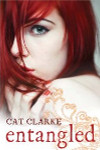
Cat Clarke: Entangled – I’ve seen this mentioned on a few blogs and added the author on Twitter so I’ve been reading a lot more about it since then and I have to say the plot sounds brilliant. And just look at that cover!

Kimberly Derting: Desires Of The Dead – This book carries on from The Body Finder which was a surprise favourite for me. I love the way that Derting isn’t scared to be truthful and push boundaries.
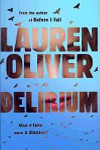
Lauren Oliver: Delirium – I don’t think there are many people out there who read YA and have not read Before I Fall. With such a fantastic novel this year, having Oliver’s next book on my list was no question.
So two series’ additions, a second novel, and a debut, all out within the first three months of 2011. And for someone who said they weren’t going to get into the whole paranormal thing I’ve lost my path.
Which new releases are you looking forward to next year?
Thoughts On The Fifth Wife
Posted 16th November 2010
Category: Chit-Chat Genres: N/A
2 Comments
It wasn’t long ago I read The Lady Elizabeth and The Six Wives Of Henry VIII by Alison Weir. Both have been eye-openers.
The first time I read about Katherine Howard, I was eight years old and the information given was scant in detail and basic. It provided only the most hard hitting facts and thus I came to think of her a vile and horrid woman who brought unnecessary shame on her husband’s house. It’s only now, having read copious amounts about her husband, his personality and reign, the Tudor dynasty as a whole, and more in depth information on Katherine herself, that I see the great injustice done.
Katherine’s life was cut brutally short by Henry, which isn’t surprising when you consider how he treated the rest of his family. But what gets me the most is how fearfully young she was, 16 at death, and no matter how much you reason that in those days one was brought up to be older than their years, it’s no less jarring.
Katherine was 15 when she married, her husband was nearing 50. She was a typical teenager who loved dancing and dressing in finery and was very possibly prone to dreaming of true love, for status and protocol could never truly take over the mind. Her husband was past his best: overweight, could no longer do anything that involved walking a fair distance, and omitted a foul smell wherever he went on account of a great sore (possibly a boil) on his leg. To say that they were totally incompatible would be an understatement.
Let’s look at those ages, 15 and 50, and consider with them the fact that Henry was “in love” with Katherine. No matter whether people married young or not the fact remains that even here the age gap was monstrous. Such a man would be labelled worse than a pervert today. The reason Henry gave for beheading Katherine (he didn’t need to divorce her because according to him she wasn’t his wife – he tended to come to that conclusion when they weren’t perfect) has been held as true fact for years. Katherine was unfaithful. But fair dos to her, her husband was an infirm old man and not of her choosing. For some small-minded reason – ok, in truth it was as simple as the purported distinction of men over women, in other words the Tudor period was sexist – it was deemed ok for a man to go about offering himself to all and sundry but forbidden for a woman to do the same, becoming treacherous when it came to royalty.
Much like Lady Jane Grey, the niece of Henry who ruled for nine days, Katherine was used by those who should have protected her. Jane was set up as a puppet queen, Katherine was told to flirt with Henry so that her family would be given riches. Whether Katherine wanted to do what they set her is little known but it would be fine to assume that she was ok with it. The idea of flirting with a king and then becoming the most important woman in the land no doubt appealed to her. At that age she probably wouldn’t have thought much about what would happen if she fell in love with someone else. It’s very unlikely that Katherine felt anything for Henry, like almost all his other wives. The only woman who it could be said definitely loved him was Catherine of Aragon, his first wife who was left widowed after his elder brother died. Would Katherine Howard have cared for him at all, again it’s unlikely.
Katherine, presumably accidentally, made it easy enough for her enemies to find out about her adultery. There is no evidence to suggest she wasn’t guilty of the charges put forth against her. What is obvious as always is her age which should have but of course wasn’t taken into consideration. Does a 15 year old truly know what they are doing? In most cases the answer would be “no” and there is no evidence that Katherine was particularly intelligent. Henry had her sent to the Tower Of London, refused to see her, and had her beheaded while he carried on with his life.
It is therefore safe to say that to his fifth wife Henry VIII was a worse husband than ever before. And that the murder, for I will call it that, of Katherine was wholly unjustified.
The Autobiographical Book Post
Posted 29th October 2010
Category: Chit-Chat Genres: N/A
1 Comment
Here, self-important, up-one’s-self, and all the other adjectives you can think of for self-serving behaviour, is an interview with myself. I know I don’t cover much on my “about” page, so hopefully this will suffice.
Describing my literary background:
I’ve been reading all my life but as a child I rarely finished books, becoming bored easily and picking up a different one too many times to count. I remember times where I had 10 on the go at once, and I’d never finish any because of the workload I’d given myself.
I stopped reading as much as I got older, and although I look back and think I could have reduced my wish list by hundreds by now, I think it was the right decision. Not focusing on it so much caused it to be fresh and new again and when I chose to take the plunge and give myself a goal for the first time last year, I wasn’t just intent to finish it but looked forward to it too. I do find myself checking page numbers sometimes, but I’m still enjoying myself and feel better for it.
With almost every book I complete I have a reason to research something or other, and I love that. My writing has improved as well. It definitely helps to read when you’re a writer, of any kind of writing, and that’s what I wasn’t doing previously.
Why I chose to blog on books:
There are very few things I can remember being said word-for-word to me when I was a child, but one of them was “you can never have too many books”. Although my mother may regret that now, she instilled in me my love of reading.
I know that my opinions on books are often strong, in fact I really dislike finding a book average because I’m not able to go all out one way or the other, and because of the strength I felt the need to discuss them. My friends and family don’t want to hear me talk about books all the time, but I knew there would be people who would be interested, ones who gave their own opinions on their own blogs. I wanted to be part of that. I also wanted a way to gain recommendations from reviewers who weren’t pressured by newspaper affiliations, and of course the community aspect was incredibly appealing. I love Twitter!
I’m up for reading all genres, but about my favourites…:
I absolutely adore history. Ever since my parents gifted me, at eight years old, a small and basic book on the royal dynasties of England, I’ve been a slave to studying the past. I remember copying a couple of the drawings in the book, those of Henry II and Jane Seymour, and sticking them on my wall. They stayed there a long time, long after I’d realised that I was a terrible artist. Reading is as near to the real thing as I’m going to get, nearer than any theatre productions or castle visits are going to get me to the court of Henry VIII. I love to get absorbed into the world, to imagine the buildings, the streets, the clothes, the simpler way of life (one can definitely be a web designer and still be awed by limited technology!) and I admit that there is something incredibly sexy about relationships in those days. It was only the other day I told my boyfriend he needed to be more gallant. A knight in shining armour would suit this part of my personality well.
But there is only so much history I can take, and that’s where the lighter, chick-lit comes in. I do enjoy chick-lit and I’m not ashamed of it. It was when I discovered chick-lit, at about age 18, that I finally felt I’d moved on to adult books because the book I chose had a completely domestic cover. It wasn’t quite Austen, but it was right for me. Fantasy is the last of my most favourite of favourites and, similarly to history, I love being able to get lost in another world.
And thus ends a very egotistical “interview”.
A Rant About C S Lewis’s The Last Battle
Posted 20th October 2010
Category: Chit-Chat Genres: N/A
5 Comments

Please note that because these are thoughts rather than a review, the post deals with spoilers. The one thing I will say to anyone who hasn’t yet read the series and plans to – it’s important to read The Magician’s Nephew and The Horse And His Boy before reading The Last Battle as the book refers to them.
The Chronicles Of Narnia ends in the way you always hoped it would, with the children in Heaven, but Lewis puts a spin on it that is quite nasty.
I had assumed that, constantly bringing the children into Narnia and sending them back again, the book would end with them going back to England and then there would be a short epilogue to say that when they reached old age they died and went to Aslan’s country.
A few minutes before the end, when Lucy sees her parents in England, I burst into tears because I knew what had happened. In one way the ending is beautiful, and in another wretched. Accustomed as they are to going home after an adventure, the children ask Aslan when they are leaving. Aslan basically turns round and says “oh, that bump you had in the railway carriage? It didn’t just bring you to Narnia like you thought – you’re dead. And remember your parents were on the train too in order to go to Bristol? Yeah, they’re dead too. You’re here to stay, welcome.” This content is the second to last paragraph. Did we really need this kind of ending? No matter how nice it was to bring in the various characters from all the other books. And yes, I do understand that it might have been more a case that the children had come to Narnia this time because of the accident rather than because of Trilian.
So everyone is dead, but Susan is left undead in England and although Lewis provides the happy-ever-after line it only applies to those in Narnia cough Heaven. He forgets Susan straight after he demonises her. Susan is left out of the story after Lewis explains that she had started using lipsticks and saying she no longer believed in Narnia. I’m sorry, but not believing in God (because let’s not forget what this story is truly about) is a regular thing that happens when you hit adolescence and it’s a good thing to question your spirituality because it is there that you really find out about what you believe. Lewis obviously believes this is a bad thing. And he is clearly demonising women for using cosmetics, suggesting that Susan, as she hasn’t come to Narnia, is destined to Hell. Yes, Hell – for using cosmetics. Perhaps you could say that women use cosmetics because we are ashamed of ourselves – but does that make us bad? Really, enough for Hell? The whole idea of Susan being excluded from paradise is abhorrent and what Lewis is effectively doing is warning children, or rather just girls, not to experiment in harmless things. He is wrong for slurring an entire gender of people.
Lastly, my issues fall on the title. What battle? I had at least, when I first started my journey into Narnia about 16 years ago, expected an epic battle when I reached this book. Instead there is a little tiff and then suddenly Aslan comes and splits people into the group for Hell and the group for Heaven, and destroys the world. It’s a bit too random and, horrid as the Ape’s plan was, it wasn’t bad enough for this. You could say that the Ape’s calling up of Tash (the devil) made it happen, but even then it was too sudden. And then Aslan closes the door on those heading to hell, leaves the people for Purgatory just inside in darkness, and goes off.
My writing rarely goes unedited and in such a streaming rush as it has here but this communicates just how much emotion and thought the end of this series has caused me. I am disappointed that a man writing for children did so in this bad way.
Further Reading
Revisiting My Thoughts On Narnia In The Context Of Jo Walton’s Among Others


