




‘A Classic Is A Book That Hasn’t Finished Saying What It Has To Say’
Posted 11th April 2016
Category: Chit-Chat Genres: N/A
2 Comments

A few years ago now, I wrote a post about what makes a classic a classic, looking at different ideas though mainly at what I was going to use as my definition in terms of my Classics Club list. A few weeks ago I read an article, Why Read The Classics? that included the line I’ve used to title this post, and it was a mini revelation to me. Not a complete light-bulb moment, because, and I think I speak for all of us when I say this, whilst I already had the idea mulling in the background, I’d never put it into words. Here was, in words, made into a statement, everything that seems true of a classic. I still think there isn’t one sole definition of a classic as the word encompasses so many concepts and interpretations (and I think that’s needed) but I love the statement and wanted to consider it further.
I do reckon it’s perhaps the unofficial ‘correct’ definition of a classic – and I realise that in saying this I’m to all intents and purposes contradicting what I’ve just said above. If you think about it, it’s the books we still talk about that are in the canon, it’s the books we still talk about that are, well, talked about, be they Victorian, from the 1930s, or a little beyond that. (In this way such a time limited definition would rule out my own definitions, of the work of Angela Thirkell and Barbara Comyns being called classics, because so few people read them – though there’s a case to be made for them becoming en vogue in the future just as many of the books from the Victorian period have done… and Thirkell and Comyns have been making their mark on bloggers.)
Such a definition requires a period of time to work: there needs to be a certain amount of time after the book’s release before we starting calling it a classic because there will always be a lot to say about a new book and time must progress before we find out if it has staying power. We can guess but we’re guessing in the moment what will be relevant in the future and we don’t know what the future holds.
How long should we wait? This is surely where the term ‘modern classic’ comes in handy. A newer book we think is likely to survive time can be a modern classic. It will then either join the canon as hoped or fade away from our collective consciousness.
But just as there are differing definitions of ‘a classic’, so ‘modern classic’ differs. I’d say Daphne Du Maurier – you knew I’d include her in this somewhere – is almost an author of ‘classics’ rather than a modern one; I hope she makes the canon. (I’m sure doing my accidental darnedest to make it happen!) But others might say differently. Certainly I’d say the definite, widely-accepted cut-off at present for ‘modern classics’ is the 1920s – we consider The Great Gatsby part of the canon.
There’s something else that affects the canon that I’d like to consider, briefly – defining moments in literary history. I wouldn’t be surprised, for instance, if Fifty Shades Of Grey ends up being known for a long time to come, not necessarily because it would still have an audience but because of its literary social context, the way it was the first erotic novel to break into the mainstream, creating a path others have followed. (Then again could we call that a reason to be added to the canon? I think not, but if a book is kept in the public consciousness for its social history then by all accounts even if no one likes it it’s still a classic.) Perhaps this is the reason why there are so many classics no one likes, then again the idea of ‘hasn’t finished saying what it has to say’ works with dislike as much as with like – we’re still talking about Heathcliff and by all accounts he did some terrible things.
To move away from E L James – yes please – and back to the main topic, the problem with the idea that a classic is a book still making conversation is that it’s subjective. Some books no one could argue against – we do still talk about the works of Jane Austen – but other books we could argue against. One could say that we’ve dissected a book, others many disagree. In many ways it’s down to individual taste, to personality and, whilst elitist-sounding, down to education, too. To speak personally, I think I’ve written all I have to say on Cranford in long-form (to be posted) but a literary student with a focus on Victorian social history, perhaps specifically on Victorian poverty or Victorian fictional towns full of women who prefer Samuel Johnson to Charles Dickens, would probably say I’ve made a start rather than a finish and that there’s plenty more to say. Many of us would say we’ve exhausted Twilight but someone who has experienced life both as a Mormon and in another religion, for example, might say everyone else has missed key points.
There will always be new interpretations as time goes on and that would be true whether the book in question is a classic or if one day in the future someone discovers a copy of a dated, out of print, forgotten everyday novel. The progression of time brings new information about things we already do and know about, as lead was once thought good for cosmetics and nowadays we can weigh in on ill health in a more enlightened manner – that sort of thing. And the progression of time brings new viewpoints, away from information itself, in the form of new social contexts, upbringings, and so forth.
If we apply this line of thinking then we see where books may enter and leave the canon – enter when relevant, leave once they’ve said everything. We can assume books like Orwell’s 1984, that are highly relevant right now, more so than they were when they were first published, will see us for a while longer but will eventually lose relevance, in Orwell’s case perhaps in the near-ish future. (That said maybe there will be a lot more talk in hindsight of that book in future.)
I agree with the concept raised by the statement. Personally I find it’s generally the classics that I get the most out of in terms of thinking and writing. Part of that is because I know there are more people out there who might be interested in posts on a classic, a book more likely to have been read than one of the plethora of others, and that spurns me on – obviously, whilst I might find posts about random books great to write, others may not know enough to ‘get’ them. But regardless, for me it’s easier to write more about the classics. And of course when we write about books our aim is to not repeat what’s already been said – at most we’ll take a well-used subject and put a new spin on it… and the book therefore still has something to say.
And we’re still doing all that for the books we call classics. It is what makes them classics and as such it’s surely fair to say that a classic is a book that hasn’t finished saying what it has to say.
What do you think about the statement discussed here?
A Moment When I Was Reminded I’m A Book Blogger
Posted 21st March 2016
Category: Chit-Chat Genres: N/A
10 Comments
A few weeks ago I attended a friend’s party. (As far as I know she doesn’t read my blog but if she does, please excuse my discussion.) This friend had told me a while back about her friend, a published author. We’ll call my friend Sarah and her author friend Ellen. At least at the time of telling me, Sarah was in the position of ‘friend who is yet to read the book’ so there wasn’t much to discuss in terms of the work itself.
Anyway, I realised this Ellen was at the party. We don’t know each other, didn’t speak. I don’t know whether Sarah’s told Ellen she has a blogger friend; maybe she has and Ellen decided not to talk books.
I speak of this event because it made me draw a firm boundary in my mind. I realised that in the unlikely but possible case of an introduction, given my role as someone who promotes books, this was a line I couldn’t cross. For me, personally – maybe others find it easier. I’d be comfortable featuring a friend of a friend’s book with full disclaimers added but not reviewing it. A friend of a friend may not be my friend but that mutual connection would be in the line of fire for awkwardness.
What do you think about this sort of boundary, and, if you’re a blogger, have you drawn your own?
My Experience Of Two Abridged Children’s Stories
Posted 14th March 2016
Category: Chit-Chat Genres: N/A
4 Comments
Some posts back I mentioned the abridgement of children’s books. What I’d discovered about my childhood sparked conversation both here and in my offline life and I started looking into the abridgement idea further.

I said that abridgement seems odd in the case of children’s books but time got me considering other reasons – or, rather, I remembered The Little Mermaid.
It’s a children’s story and it’s a dark one and features a bitter-sweet ending. The original Hans Christian Andersen tale ends with the mermaid unable to kill her prince and dying, becoming foam on the sea before being offered a chance to gain a soul after 300 years of work. It’s no Disney, that’s for sure.
Disney’s version, with its red-headed Ariel, makes the tale one of triumph. Ariel gives up her voice but she wins her prince and everything turns out okay. Whilst it glosses over the darkness of the original, one could say it was a needed change, at least for younger children. Because the original, is fine for children up until that bitter-sweet ending after which it’s surely confusing and upsetting. There’s a open-ended factor to it – did the mermaid succeed in the post-death tasks she was set? It stayed in my mind for years.
The Disney change also means the story could match Disney’s idea of princesses getting their princes. Perhaps they deemed the mermaid’s story a bit too realistic in the sense that she didn’t get her dream. Enough on that point.
Disney’s changes make sense as do adaptations that follow the same thinking. They ensure younger readers can be introduced to the idea and enjoy it whilst ‘waiting’ to be old enough for the real deal. Certainly, though, I was surprised at my Ladybird copy of the book and its sad ending, it’s beautifully drawn picture of spirits in the sky. Disney had guided my journey but I did feel duped. Whether I was really old enough to appreciate the real story is another thing; that it haunts me to this day suggests that perhaps there’s no good time for the story to be discovered.

Looking again at adult books, my copy of Around The World In 80 Days sported no more than 80 pages. It may even have been 50 – I remember that by adult standards it looked short but the text was crammed in. I stayed up all night to read it, proudly going downstairs around 2am to tell my mother I’d read it all and being escorted swiftly back to bed because I had school the next day. Whether it was because she set a time limit or because I’d realised she wasn’t as happy as I’d expected her to be, I didn’t read for that long in bed again for a good few years.
This was an adult book abridged for children and done right. It was fascinating; it had pictures throughout (it was another Ladybird), the scenes chosen ensured it kept your attention, and it made you feel as though you’d really accomplished something as my pride above showed. It made you feel you’d stepped up your reading, that you’d read a whole book. I don’t feel cheated, even now, because it was produced with so much thought.
Whether or not the book’s release date coincided or if it was just my ownership of it, around the same time the BBC adaptation, a cartoon, again for children, started its run, and again it was well done.
Abridgement can work but only when it makes sense, only when it will truly offer something of value that can’t wait until maturity. Have I read Around The World In 80 Days? No, I haven’t, but I do intend to, and my childhood experience of the story together with my recent reading of Palin’s Verne-inspired trip has made me excited about it.
Has abridgement worked for you?
Considering Ideas
Posted 11th March 2016
Category: Chit-Chat Genres: N/A
5 Comments
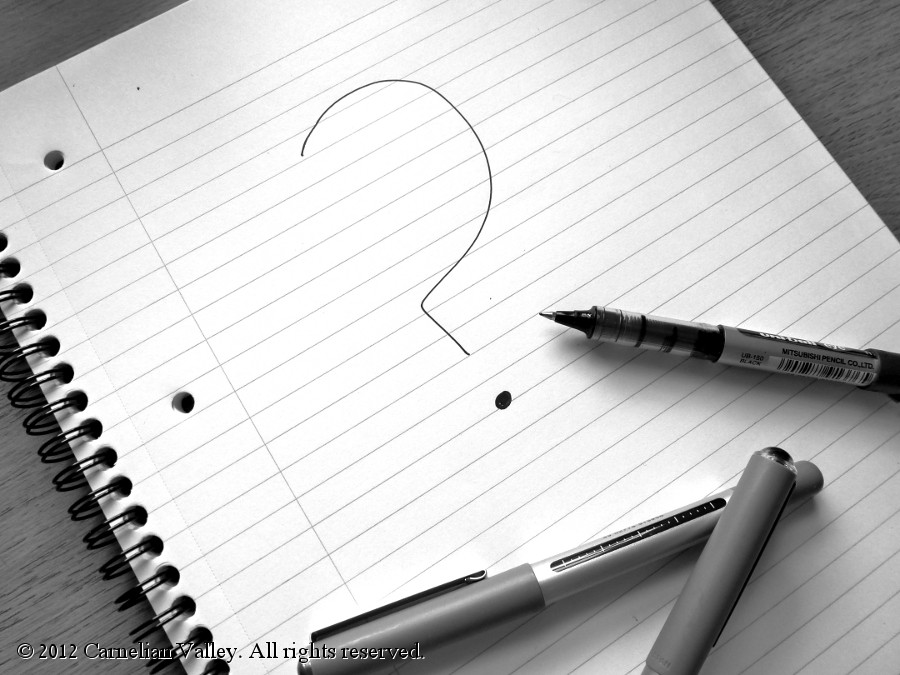
I have 23 pages of blog post ideas. Many have bullet points added to them but when you consider it’s 23 pages of tabled information in a smallish font… And I often say I have no ideas. The problem is that many of these ideas are rough, in-the-moment, ideas that would make poor and/or very short posts. Others I’ve simply grown out of.
But I never get rid of them, just in case: I’m following concepts from a number of blogging blogs. Namely two concepts – one: note down all your ideas because you never know; two (which links to the previous): even bad or tiny ideas can be combined to make better ones. That second concept is great but I’m yet to use it. Perhaps it’s the fact I do like to make rough plans as soon as ideas hit but the thought of combing through those pages each time I start writing is enough to make me stop altogether. And I’d always fear that in combining I’d made one post instead of a possible two, even though the object is to combine ideas that would never stand on their own.
Should we purge our lists of ideas every now and then? Perhaps. Like the culling of books, if the idea of the idea makes you want to run to the hills then it’s surely a good plan.
When you’re starting to wonder if you should buy shares in the company that makes the word processor you use perhaps it’s time to purge. Or reorganise, move old ideas to a place they can’t taunt you and make an effort to write up new ideas or get out your guitar as they come. I get out of bed at 1am, though tired, to write – I do it almost every time I’ve not yet fallen asleep and an idea hits – so I should be able to get out the notebook instead of checking whether my favourite vlogger has a new video. (This is where the idea of having a dedicated blog post writing day is good. I drafted a post about that but it was a while ago…)
With all the talk of editorial calendars I’ve finally come up with a decent plan for each day’s blogging time. If my posting schedule is Monday-Wednesday-Friday that leaves me with Tuesday-Thursday, and Saturday and Sunday if desired, to write posts. I got mathematical, worked out that writing 4 posts a week, beginning the initial count on a Tuesday, would mean within two weeks I’d be ahead – by 1 post that week, 2 the next, then 3, and so on. I could create an editorial calendar that I could stick to and not go through phases of writing posts the day before. I could take short breaks. Of course I would still need to be finding ideas but I reckon that would happen by working on others and being present.
Those ideas need to be realised or ditched. There’s no point looking at a list of possibilities that aren’t.
How do you handle ideas be they writing or otherwise? Do you think certain hobbies are easier than others in this respect?
Discovering Irving Bacheller
Posted 7th March 2016
Category: Chit-Chat Genres: N/A
2 Comments

Laurie’s recent post on wanting to learn more about L M Montgomery reminded me of the time a few years ago I picked an old book at random, read it, reviewed it, and forgot all about it.
I found The Light In The Clearing on The Book Depository. Somehow I’d made my way to their free ebook section, discovered they’d produced PDFs of a great many old books and went on a downloading spree. I didn’t care for authors that day; if the book title sounded even vaguely interesting I promptly clicked on it.
And inevitably forgot about all of them. I’m sure you’re familiar with the free ebooks mad dash situation. The results of mine are festering in a folder on my computer. Yours?
Anyway, at some point some sound reasoning hit me and I decided it was time to choose one of these books and read it. I looked at Amelia E Barr’s A Daughter Of Fife but couldn’t get into it – accents a plenty, I believe. I moved on to the Bacheller – I thought the title pretty.
All this to say I knew nothing about the author. It’s amazing what you discover, sometimes, when you’ve made assumptions, tarring a group of books with the same brush and thinking that even if one was a best-seller it’s just a bunch of old books no one’s ever heard of so what’s to know? (I’m happy to say I’ve improved a lot since then.)
So I went looking for information. There’s not much to be found. There are few reviews of the book I read – at the time mine was the only one I knew of insofar as recent reviews (there’s now a single mini-review). Bacheller is far from the canon. He happened to write during Hardy and Fitzgerald’s eras but his mark on the world was temporary. The sand has since shifted.
But he is worth reading. I was surprised by my miney-mo choice; Bacheller, 1859-1950, was an American journalist who founded the first modern newspaper syndicate in his country. It was thanks to him Americans were able to read the work of British writers – Conrad, Conan Doyle, Kipling are those mentioned.
Bacheller’s first success as a novelist was Eben Holden. Originally drafted for children, it’s about the flight of a boy from Vermont to Paradise Valley and the man who plays a role in his upbringing. It was the 4th best-selling novel of it’s year, an immediate success upon its release in 1900, moving 125,000 copies in its first four months and a reputed 1,000,000 in total. The Light In The Clearing, 1917, was the 2nd best-selling novel; I likened it to Great Expectations in theme. Many of his other works faired similarly.
Bacheller remained a journalist throughout; he had left his job as an editor to write. During the First World War he was a correspondent in France.
Beyond this there is little, indeed most of my information comes solely from Irving Bacheller’s Wikipedia page. There’s no page for the book I read and the one for Eben Holden doesn’t speak of the plot – I had to go to GoodReads for that. There’s something very grounding in the fact an author of best-sellers – noting the plural – can be so forgotten. Bacheller did help improve, on a major scale, Rollins College and his named is used there, but to all intents and purposes he’s illustrative of the fact that even long-term fame is fleeting.
In 1956, when Eben Holden was no longer popular, one Walter Harding (a recognised Henry David Thoreau devotee), is quoted as saying “one was not well-read in 1900 unless he had read [it].” Whilst it’s true there are many more books released in the 21st century compared to the 20th, there’s something to be said for the way a person’s ability to be considered well-read or not today does not depend on new releases.
I’ve marked the afore-mentioned well-read requirement for some point in the future as I feel I almost owe it to the man. When I think of all the possibilities of all the other authors whose works I downloaded it’s really quite humbling.
Any forgotten authors you’d like to share?


